

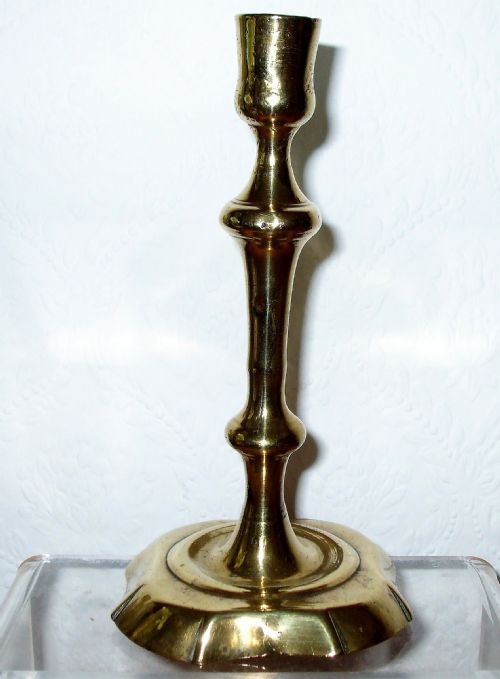


Solid Brass Candleholder
These solid brass candleholder pieces bring genuine period weight and warm metal tones to a room.
Solid Brass Candleholder
A solid brass candleholder serves as a practical and decorative lighting form spanning multiple centuries of British and continental design. When you search for a solid brass candleholder, you encounter heavy cast and turned metal objects designed to support taper candles safely upon tables and mantelpieces.
The selections on this page draw predominantly from the eighteenth, nineteenth, and early twentieth centuries. You find formal column candlesticks alongside Gothic Revival iterations, Arts and Crafts designs, and regional variations like Anglo-Indian or Swedish bell brass pieces.
Most examples appear in pairs, though individual candlesticks and larger multi-branched candelabra also occur. The forms range from plain, functional pedestals to ornate neoclassical shafts with stepped bases and teardrop columns.
Manufacturing and Materials
The primary material recorded in these pieces is brass, supplemented by occasional examples in solid bronze. Makers utilised casting and turning techniques to shape the molten or heated alloy into sturdy stems, sockets, and heavy bases.
Surface finishes and construction methods reflect the period of origin, from early sand-cast bell brass with visible cooling marks to later nineteenth-century machined components. Components were frequently cast in separate sections and joined to create the final pillar or column silhouette.
Solid Brass Candleholder Retail Price Guide 2026
Typical asking prices for solid brass candleholder among the pieces listed under this phrase on Sellingantiques today, from the lower quarter to the upper quarter. They describe what is for sale here now, not the wider market.
Several pieces shaped like bronze cobras remind us that nineteenth-century drawing rooms loved a touch of unexpected exotic danger.
Judging Quality
Quality in these metalwork items rests primarily upon the heft of the casting and the crispness of the turned detail. Superior examples display thick gauge metal with substantial weight in the base, ensuring stability, whereas lesser pieces feel thin and light in the hand.
The refinement of the decorative motifs, such as fluting on columns or precision in stepped bases, separates standard production items from finer workshop pieces. Patina and wear patterns that emerge naturally from age also contribute to the visual depth of the metal.
The Solid Brass Candleholder Glossary
- Bell brass
- A high-copper alloy traditionally used for bells, known for its resonant quality and golden tone. It appears in early continental and English lighting.
- Column candlestick
- A lighting form modeled after classical architectural columns, featuring a capital, a distinct shaft, and a stepped square or round base.
- Candelabra
- A branched lighting fixture designed to hold multiple candles simultaneously. This form provides a larger focal point than a single candlestick.
- Teardrop column
- A candlestick shaft decorated with bulbous, droplet-shaped turnings. This profile offers a tactile grip and distinct silhouette characteristic of certain Victorian designs.
Solid Brass Candleholder: Frequently Asked Questions
How do I date an old brass candlestick?
Dating relies on examining the construction methods, base style, and assembly seams visible beneath the piece. Earlier examples often feature push-up ejector mechanisms or heavy sand-cast components rather than mass-produced threaded joints.
Stylistic cues such as neoclassical columns or Gothic Revival pointed arches also help narrow the decade of production. Comparing the patination and wear to documented period pieces confirms the age further.
Were these pieces made individually or in sets?
Many surviving examples were created as matching pairs to flank mantelpieces or sideboards in formal rooms. Single candlesticks also appear frequently, often having lost their original partner over centuries of use.
Candelabra with multiple branches were typically produced as individual statement pieces for dining tables. The presence of matching height and identical casting marks indicates whether disparate items formed an original pair.
How should I clean antique brass?
Cleaning should be kept minimal to preserve the dark oxidation and warm highlights accumulated over generations. Warm water and a soft cloth remove surface dust without stripping the character of the aged metal.
Avoid harsh chemical polishes that erase historical patina and leave an overly bright, modern shine. Gentle dusting remains the best routine maintenance for display pieces.