

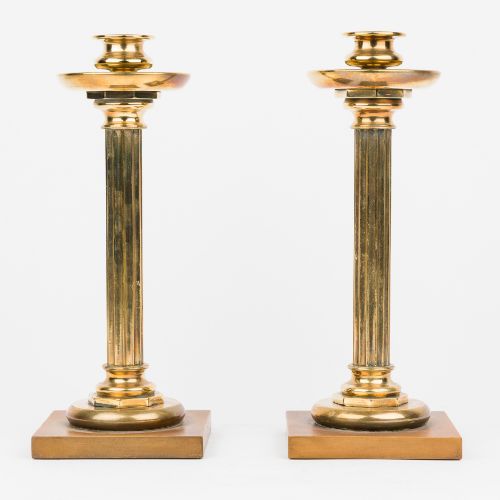
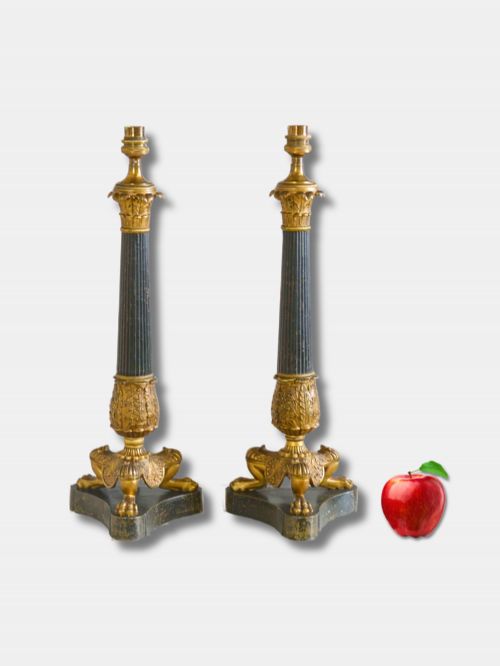
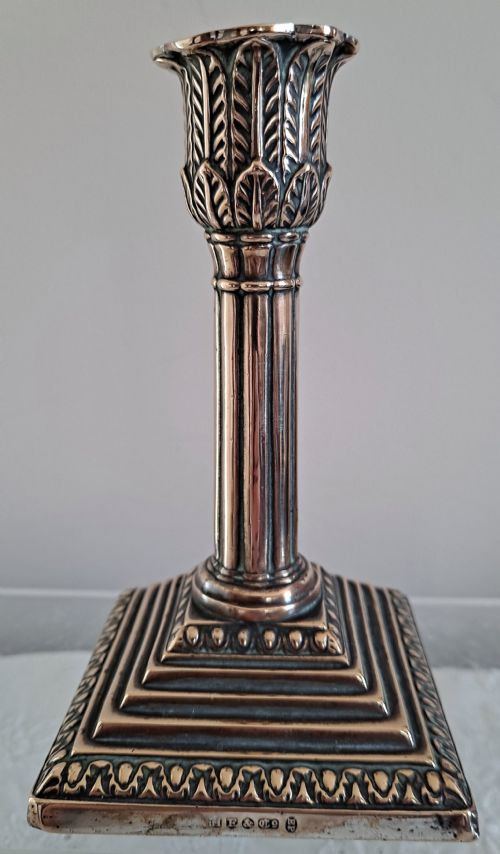


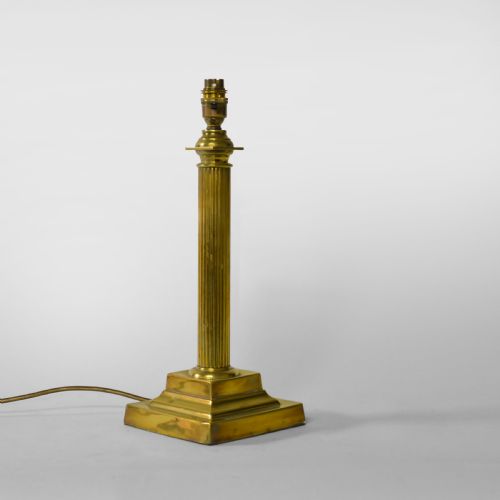


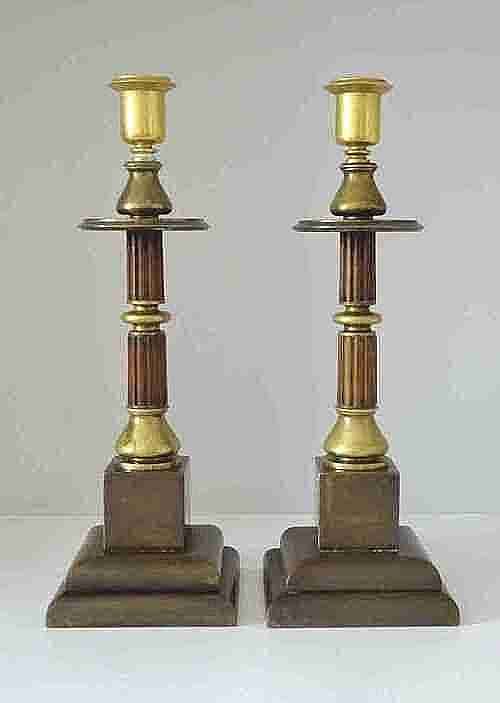


Fluted Column Brass Candlestick
These fluted column brass candlestick pieces offer structured neoclassical form and heavy metal weight that interiors collectors seek out.
Fluted Column Brass Candlestick
A fluted column brass candlestick brings formal architectural proportions into domestic lighting, drawing directly on classical antiquity. When buyers search for this phrase, they find upright metal shafts cut with vertical grooves, often topped with Corinthian or ionic capitals.
The versions most commonly met across these listings combine cast brass columns with stepped square bases, appearing either as standard single sticks or converted table lamps. Dating spans from the Georgian and Regency eras through the Victorian period and into the early twentieth century.
Makers frequently adapted the column format for both wax illumination and electrical fittings, incorporating materials such as bronze, ormolu, and even porcelain de Paris alongside the primary brass structure. Pairs dominate the selection, offering symmetrical presence for mantelpieces and side tables.
Materials and Construction
The primary material, brass, was shaped through traditional foundry casting before being turned on a lathe to achieve crisp, clean fluting down the shaft of the column. Craftsmen combined this with heavier bronze components or gilded ormolu to provide structural stability and rich surface contrast.
Surface finishes varied from polished golden metal to patinated dark bronze, occasionally accented with contrasting elements like tortoiseshell boulle-work or marble bases. Components were mechanically joined using threaded stems and bolts, allowing tall columns to remain rigid and upright.
Fluted Column Brass Candlestick Retail Price Guide 2026
Typical asking prices for fluted column brass candlestick among the pieces listed under this phrase on Sellingantiques today, from the lower quarter to the upper quarter. They describe what is for sale here now, not the wider market.
Materials span beyond standard brass to include bronze, ormolu, marble, and porcelain de Paris.
Judging Quality and Execution
Quality rests in the crispness of the casting and the depth of the metalwork, where superior examples show sharp, unblurred flutes and finely detailed acanthus leaves on the capitals. Heavy gauge metal indicates a better grade of manufacture, preventing the wobbles common in lighter, mass-produced hollow stems.
The transition between the base, column, and capital reveals the maker's hand; finer pieces feature seamless joints and well-balanced proportions rather than awkward steps. Original surface patination and weighty cast bases separate standard utility items from pieces designed for formal reception rooms.
The Fluted Column Brass Candlestick Glossary
- Fluting
- Vertical parallel grooves cut into the shaft of a column. This decorative technique creates subtle play of light across the cylindrical metal surface.
- Corinthian capital
- The ornate crowning head of a column decorated with carved acanthus leaves. It frequently tops the tallest and most formal brass candlesticks.
- Ormolu
- Finely ground high-carat gold applied to a bronze base using a mercury amalgamation process. This technique yields a brilliant golden finish seen on French empire and Regency examples.
- Patina
- The surface sheen and colour acquired by metal through age and handling. A natural patina shows the gentle darkening of brass over generations.
- Ionic capital
- A column top distinguished by twin scroll-like ornaments called volutes. It offers a simpler classical alternative to the heavily leafed Corinthian style.
Fluted Column Brass Candlestick: Frequently Asked Questions
How do I date a brass column candlestick?
Dating relies on examining the assembly methods, base weight, and stylistic details of the capital. Earlier Georgian and Regency examples often feature heavier cast components and hand-turned bases.
Later Victorian and Edwardian pieces introduce machine-threaded fixings and standardised components. Comparing the column style against known neoclassical revival periods helps narrow the decade of manufacture.
Were these candlesticks originally wired for electricity?
Most examples began as pure wax candleholders before being adapted for modern lighting during the twentieth century. Conversions were frequently executed with minimal alteration to the original brass structure.
Some later pieces from the early twentieth century were manufactured specifically as electric lamps. The presence of threaded central wiring channels often indicates a later adaptation.
How should I clean polished brass columns?
Maintenance requires gentle dusting and occasional cleaning with a soft cloth to preserve the metal surface. Harsh abrasive cleaners strip away age-appropriate patination and can scratch the softer brass.
Leaving a mature golden tone untouched is generally preferred by collectors over aggressive polishing. Keeping the metal dry prevents corrosion in the deep grooves of the fluting.
What is the difference between brass and ormolu?
Brass is an alloy of copper and zinc cast into solid forms for durable domestic objects. Ormolu consists of gilded bronze where a thin layer of gold is bonded to the underlying metal.
Ormolu typically exhibits a brighter, warmer golden lustre than standard polished brass. It appears most frequently on high-status French and Regency pieces in this selection.