


Early Brass Candlesticks
Early brass candlesticks bring domestic illumination from past centuries into modern rooms through substantial metal forms and centuries-old foundry work.
Early Brass Candlesticks
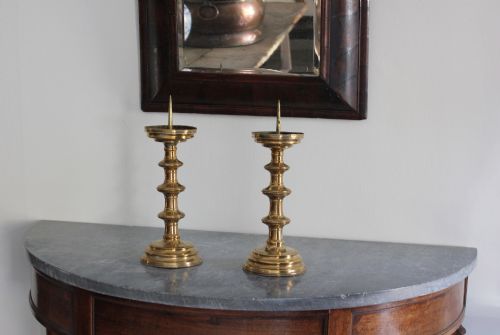
Early brass candlesticks comprise domestic lighting implements cast and turned from copper alloy, spanning centuries of interior design from the sixteenth through the early twentieth century. Collectors encounter various regional designs, including English pillar forms, continental bell metal pieces, and seventeenth-century Heemskerk types.
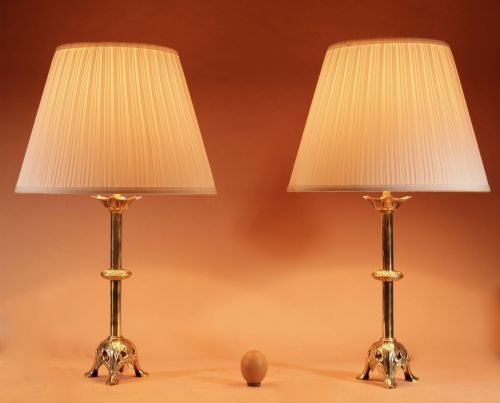
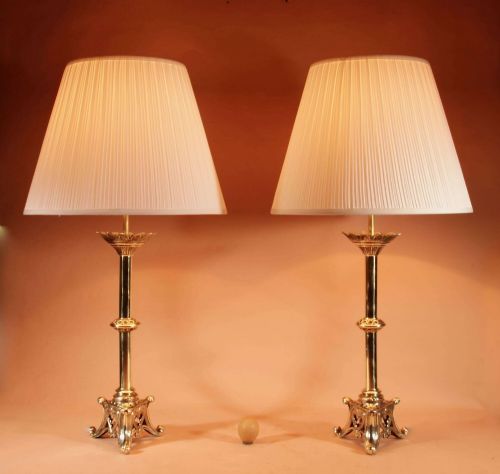
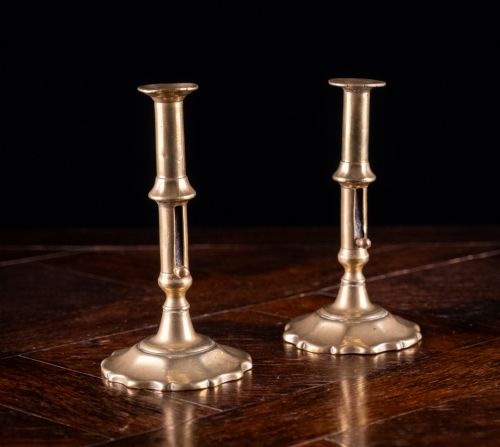
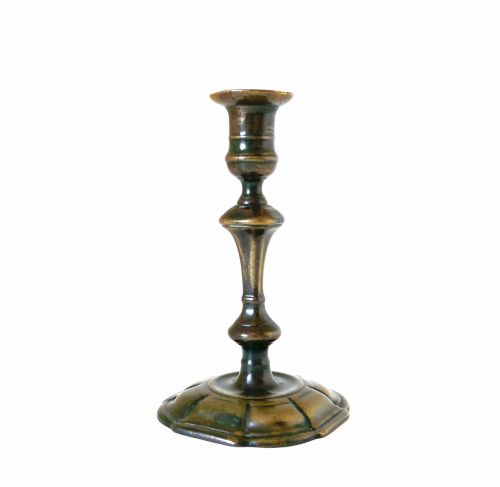
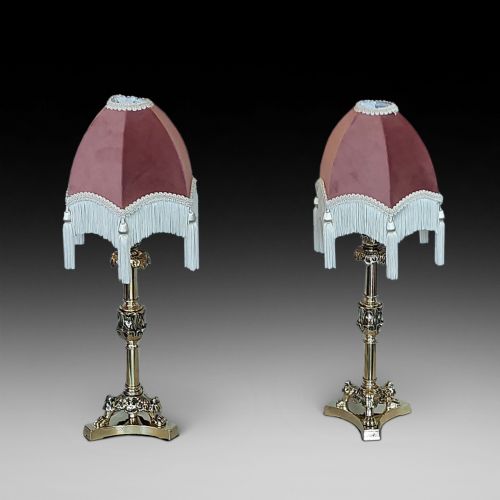
The selection ranges from simple seventeenth-century domestic examples to ornate eighteenth-century Georgian and Regency specimens featuring hexagonal, octagonal, or petal bases. Later Victorian and Edwardian iterations often incorporate conversions to electric table lamps alongside traditional pillar and column designs.
Determinants of Quality
Weight and casting thickness distinguish substantial early pieces from lighter later reproductions, with bell metal examples offering particular resonance and heft. Crispness of detail in turned mouldings and bases indicates superior workshop proficiency.
Originality of components, including matching ejector mechanisms and undisturbed patination, governs the desirability of surviving pairs. Comprehensive retention of form across matching pairs separates ordinary domestic items from superior surviving examples.
Listings feature brass alongside bell metal, ormolu, gilt bronze, and wrought iron across multiple centuries.
The Early Brass Candlesticks Glossary
- Bell metal
- An alloy of copper and tin producing a hard, resonant material utilised for durable domestic candlesticks.
- Pricket candlestick
- A lighting device featuring an upright metal spike that secures the base of a candle rather than a socket.
- Ejector
- An internal sliding mechanism operated by a side thumbpiece to push residual wax or candle stubs out of the socket.
- Ormolu
- Finely ground high-carat gold applied to a bronze base, frequent in French Empire and Regency lighting.
- Heemskerk
- A heavy seventeenth-century Dutch candlestick style characterised by a central drip pan and multi-baluster stem.
Early Brass Candlesticks: Frequently Asked Questions
How do I date an early brass candlestick?
Dating relies on observing base shapes, manufacturing methods, and assembly techniques such as seamed construction or lathe-turned profiles. Seventeenth and early eighteenth-century examples typically display distinct petal, hexagonal, or octagonal foot configurations.
Later nineteenth-century pieces often present heavier column forms or industrial casting signatures. Comparing patination and wear patterns against documented period styles confirms the age of the metal.
What is a Heemskerk candlestick?
A Heemskerk candlestick is a distinct seventeenth-century Dutch design featuring a heavy bell-shaped base, a prominent central drip pan, and a multi-baluster stem. These pieces were imported widely into Britain and remain prized by metalware collectors.
Their substantial weight and characteristic multi-tier silhouette make them easily distinguishable from later Georgian pillar styles.
Are converted candlesticks worth collecting?
Converted candlesticks are early lighting implements that were later adapted to hold electrical wiring for table lamps. Many collectors appreciate these pieces for retaining period brass work while serving functional modern lighting needs.
Unconverted pairs retain their original domestic context, while wired examples integrate period materials into contemporary interiors.
How should I clean antique brass?
Antique brass requires minimal intervention to preserve the historic patination accumulated over centuries of exposure. Gentle dusting with a dry cloth prevents dirt accumulation without disturbing the surface oxidation.
Harsh metal polishes strip away the aged skin that collectors value, diminishing both the historical character and the visual depth of the metal.