


Brass Petal Base Candlesticks
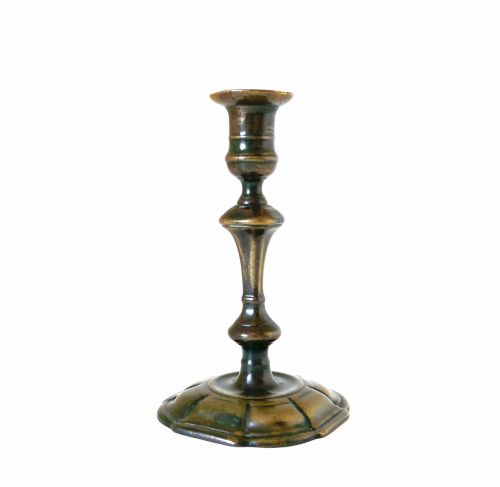
Brass petal base candlesticks are characterful lighting fixtures defined by scalloped footings, offering collectors authentic Georgian metalwork.
Brass Petal Base Candlesticks
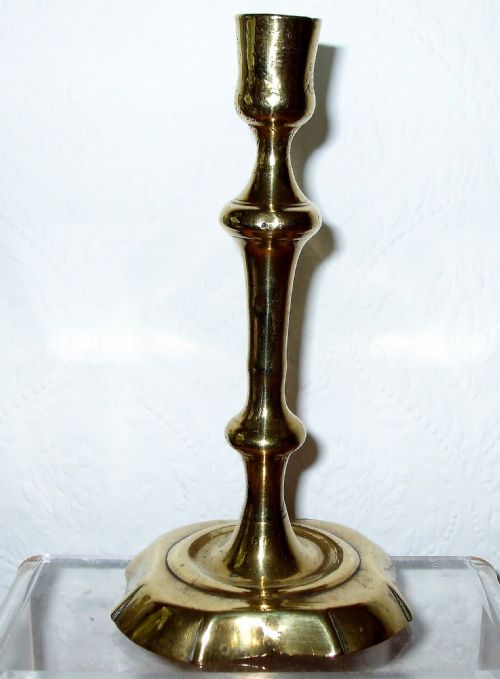
Brass petal base candlesticks combine practical domestic illumination with distinctive scalloped footings that mark them out as characteristic examples of Georgian design. When you search for brass petal base candlesticks, you meet sturdy forms shaped during the eighteenth century, alongside later reinterpretations from the arts and crafts period.
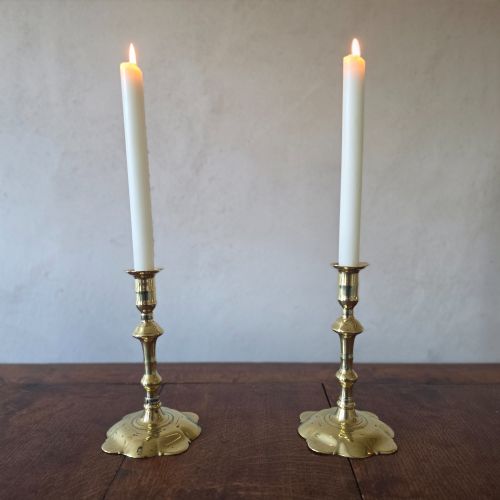
Most examples appearing in trade take the form of matched pairs intended for mantelpieces or dining tables, constructed with multi-knopped stems and generous drip pans. The footings themselves draw inspiration from natural floral forms, cast with curved lobes that distribute weight outwards and give the sconce a firm footing.
Originating largely from English workshops, these pieces bridge the gap between utilitarian candle holders and decorative table ornaments. While eighteenth-century Georgian specimens dominate the available selections, occasional late nineteenth-century examples reflect revivalist movements and individual design influences.
Materials and construction methods
Makers utilised cast brass and bell metal, pouring molten alloy into multipart sand or loam moulds to create thick, durable components. Individual sections such as the base, stem and sconce were cast separately before being joined together.
Seamed construction appears frequently in eighteenth-century work, where sheet metal was rolled and soldered down a vertical joint. Cast components often show evidence of lathe turning during the finishing stage, leaving subtle concentric rotation rings on the underside of the petal foot.
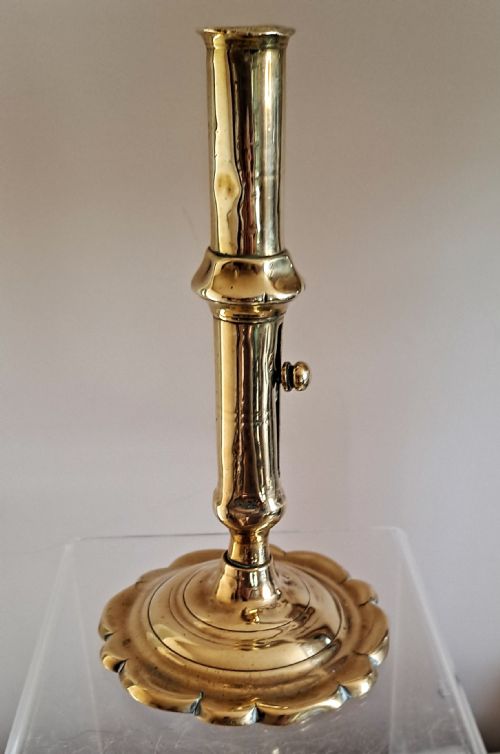
Early models sometimes hid clever side ejector slides, acting as tiny eighteenth-century elevators for stubborn candle stubs.
Assessing quality and craftsmanship
The crispness of the casting defines the upper tier of these objects, separating sharp, deeply defined lobes from soft, worn variations. Superior examples retain their original proportions without excessive thinning of the metal from aggressive past polishing.
Surface patination plays a major role in desirability, where untouched natural ageing and warm golden tones outweigh over-buffed, bright surfaces. The presence of working side ejector mechanisms or original multi-knopped stems further elevates a piece within its category.
Dr Christopher Dresser
The Brass Petal Base Candlesticks Glossary
- Bell metal
- A hard alloy of copper and tin traditionally used for bells and high-grade domestic vessels. It produces a clear resonant tone when struck and offers exceptional durability.
- Sconce
- The socket at the upper end of a candlestick designed to hold the candle firmly in place. It often includes an integral drip pan to catch melting wax.
- Knop
- A protruding bulbous swelling on the stem of a candlestick. Multi-knopped stems feature several decorative nodes that improve grip and visual rhythm.
- Ejector slide
- A small internal mechanism operated by a thumbpiece on the stem. It pushes the remaining candle stump upward for easy removal.
- Seamed
- Describes metalwork formed by bending sheet material into a tube and joining the edges. This technique preceded advanced casting methods for certain hollow stems.
Brass Petal Base Candlesticks: Frequently Asked Questions
How do I date these candlesticks?
Dating relies on examining manufacturing techniques, alloy composition and stylistic markers like stem knops and base shapes. Eighteenth-century examples typically show heavier casting and distinct tool marks from lathe finishing.
Later Victorian revival pieces often display machine-driven precision and different alloy mixes. Comparing the base construction and wear patterns against known period benchmarks clarifies the age.
Were these made as pairs?
Many surviving examples were produced and kept together as matched pairs for symmetrical placement on furniture. Workshops cast them in coordinated batches to ensure uniform proportions across both items.
Single survivors do turn up regularly, often separated over centuries of use. Finding an intact pair remains a primary goal for collectors seeking formal display arrangements.
How should I clean brass candlesticks?
Maintenance requires minimal intervention to preserve the historic surface patination developed over generations. Gentle dusting with a soft dry cloth removes surface particles without disturbing the metal.
Harsh chemical polishes strip away the aged character and should be avoided entirely. Letting the natural warmth of the brass show through light cleaning maintains its integrity.