



Small Victorian Walnut Cupboard
A small victorian walnut cupboard brings rich timber grain and compact storage into a room, spanning bedside cabinets, pier displays and miniature chests.
Small Victorian Walnut Cupboard
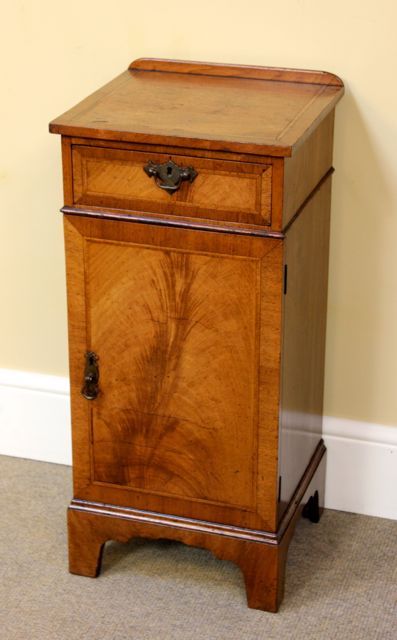
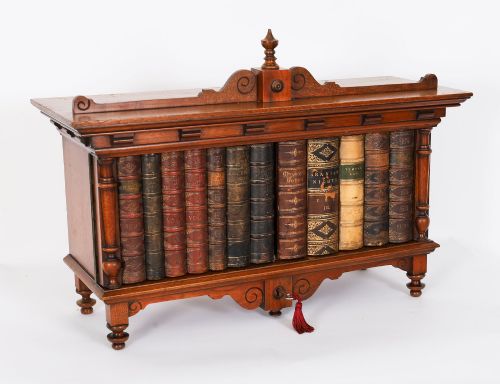
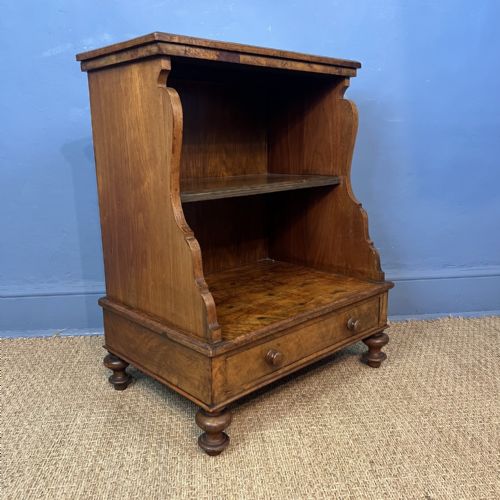
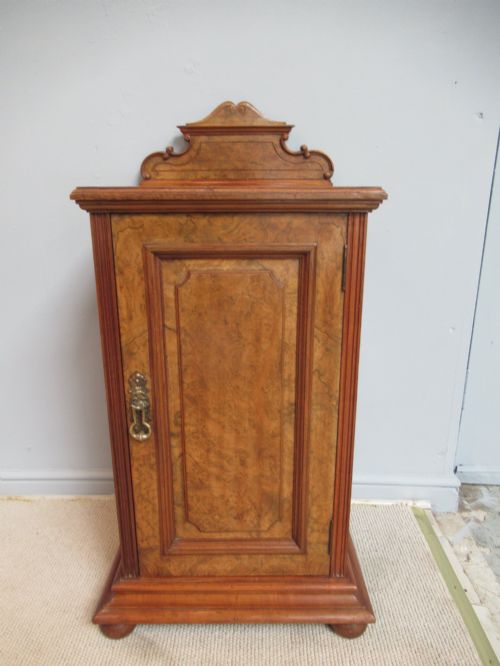
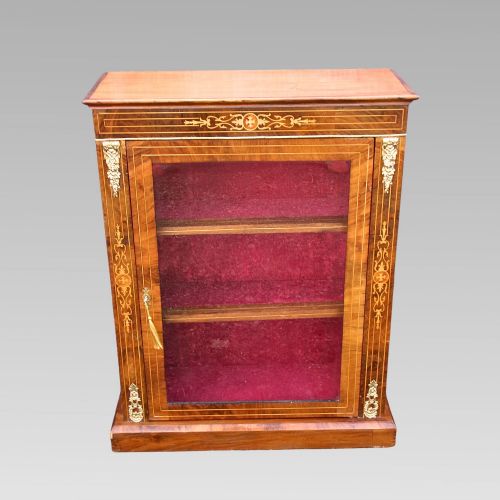
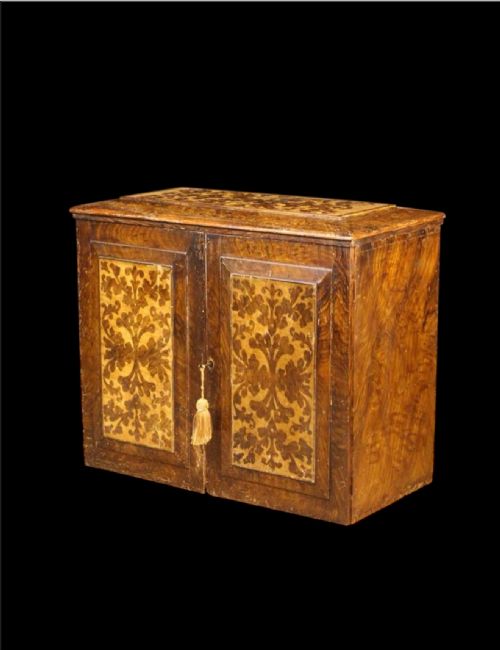
When you search for a small victorian walnut cupboard, you encounter a varied group of nineteenth-century furniture built primarily as bedside cabinets, pier cabinets, and compact chests of drawers. The selection on this page also includes tabletop collectors' cabinets, music cabinets, and bookcases spanning the Victorian period and the wider nineteenth century.
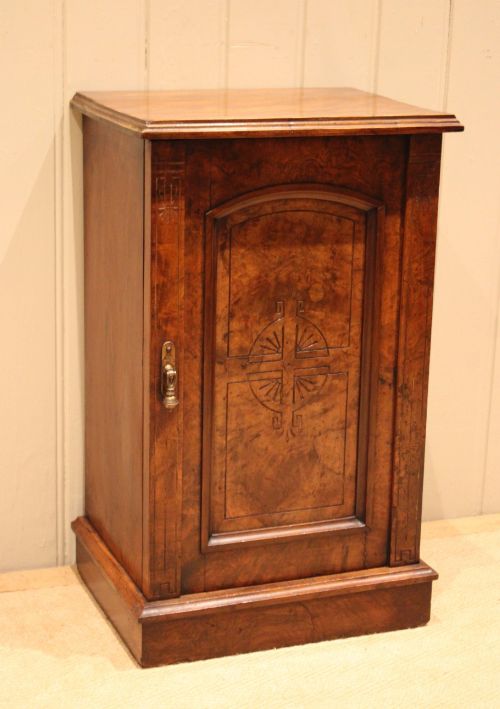
Bedside cabinets and lockers form a large portion of these listings, often appearing as matched pairs with panelled doors or small drawers. Pier cabinets and display cupboards provide glazed storage for small objects, while miniature furniture and shop chests offer scaled-down proportions suited to tabletop placement.
Judging Quality in Walnut Cabinets
Quality rests heavily on the selection of the timber and the expressiveness of the burr walnut veneer, where superior pieces display matched grain patterns across the entire front. The crispness of wood inlay and the weight of brass hardware distinguish finer commissions from standard utility items.
Construction methods also separate the tiers, visible in the dovetailing of drawers, the fitting of doors, and the preservation of original polished surfaces. Finer cabinets maintain balanced proportions and integrated decorative mounts without secondary alterations.
The listings span the Victorian era alongside the Aesthetic Movement and Regency styles, utilising solid walnut, burr walnut veneer, and brass hardware.
The Small Victorian Walnut Cupboard Glossary
- Burr walnut
- A prized wood veneer harvested from the growth excrescences of walnut trees, notable for its swirling, highly decorative grain patterns.
- Pier cabinet
- A low, slender display cabinet designed specifically to fit against the narrow wall space between windows during the nineteenth century.
- Ormolu
- Gilded bronze ornamentation applied to furniture, adding metallic lustre and formal architectural detail to cabinet doors and mounts.
- Aesthetic Movement
- A late nineteenth-century design style focusing on artistic visual value, often seen in the clean lines and subtle details of these cabinets.
- Campaign style
- Furniture construction featuring brass corners and flush handles, originally designed for portability during military travel.
Small Victorian Walnut Cupboard: Frequently Asked Questions
Where did people use these small cupboards?
Bedside cabinets and lockers served bedrooms for nighttime storage, while pier and display cabinets occupied drawing rooms to hold ornaments and books.
Tabletop collectors' cabinets and miniature chests functioned in studies or libraries for specialised items and correspondence.
How do I identify burr walnut?
Burr walnut shows dense, swirling grain formations full of small knots and circular patterns rather than straight timber lines.
Cabinetmakers utilised this figured veneer on primary display surfaces like doors and drawer fronts to catch the light.
Are pairs common in these cabinets?
Matched pairs appear frequently among bedside lockers and small chests of drawers intended to flank a bed or fireplace.
Finding a matching pair of nineteenth-century walnut bedsides remains unusual compared to single standalone examples.
What is a pier cabinet?
A pier cabinet is a shallow, upright display piece built to stand against the narrow section of wall between two windows.
These pieces often feature glass doors and ormolu mounts to showcase collected objects in formal nineteenth-century interiors.