




Small Two Tier Stand
A small two tier stand offers practical surface space in a compact footprint, drawing on Victorian and Edwardian craftsmanship.
Small Two Tier Stand
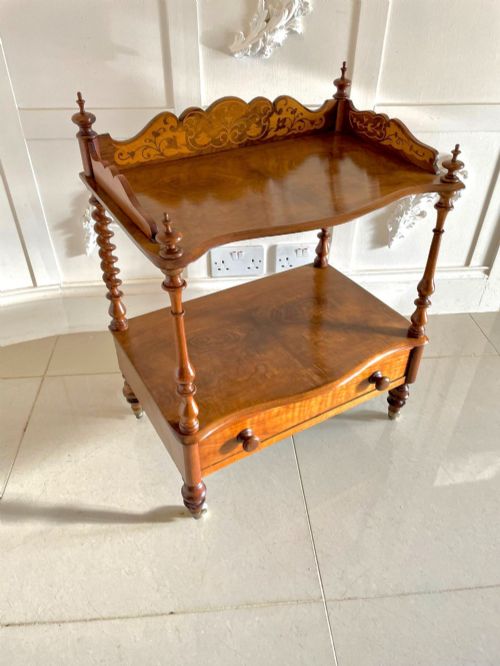
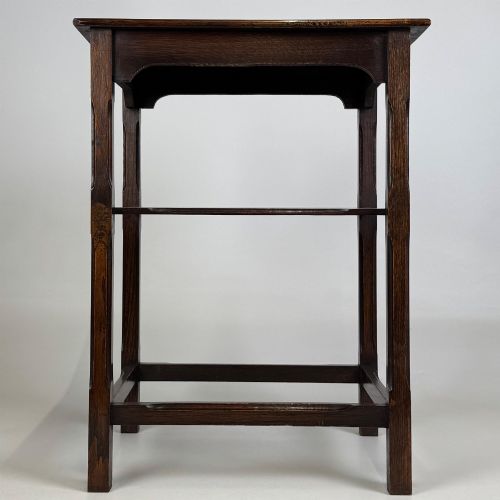
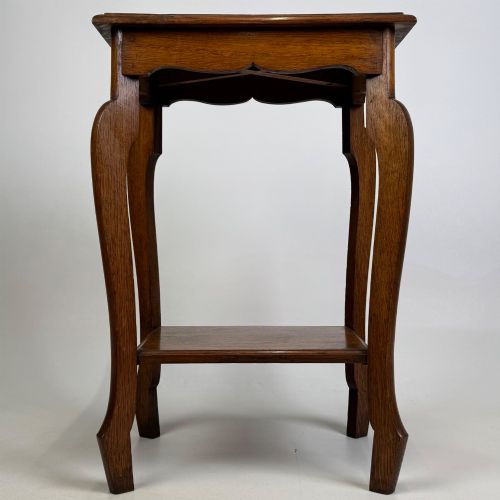
A small two tier stand provides double the surface area of a single table without dominating a room, making it useful beside chairs or in hallways. When searching for a small two tier stand, buyers encounter pieces primarily from the Victorian and Edwardian eras, alongside later twentieth-century examples.
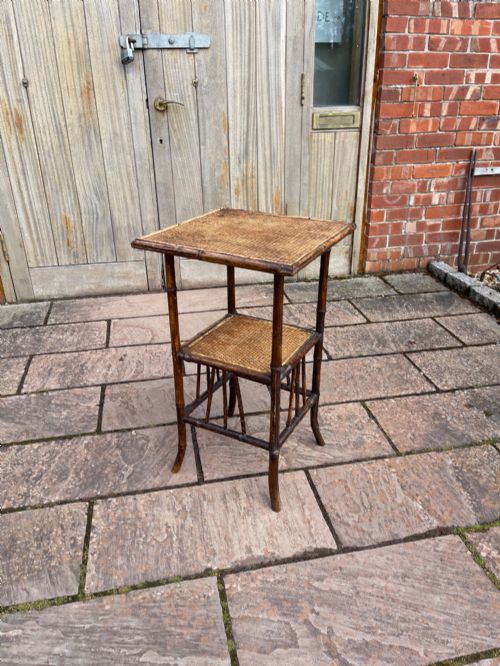
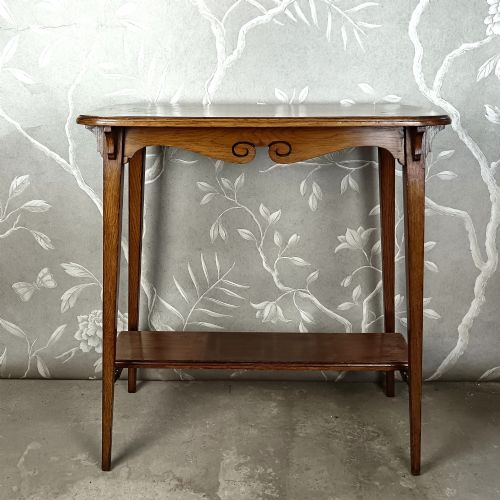
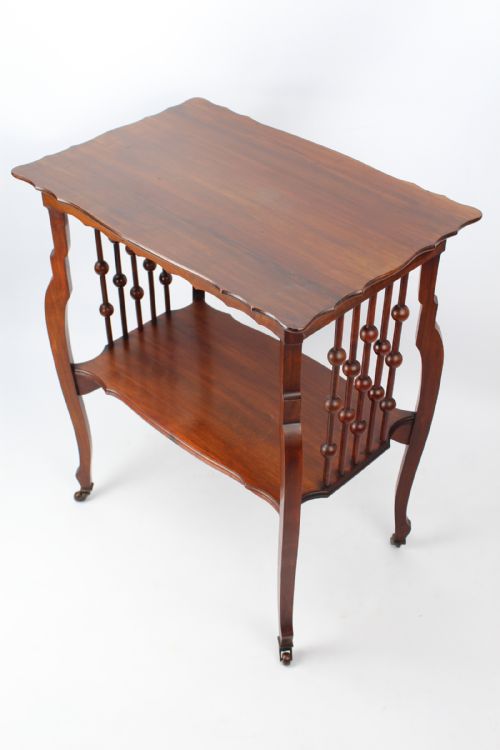
The form encompasses occasional tables, plant stands, and small bookcases with a primary surface and a secondary shelf below. These items originate from British and continental workshops, reflecting regional preferences for compact utility.
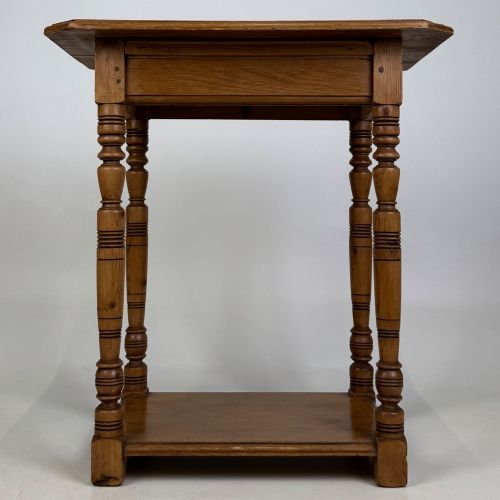
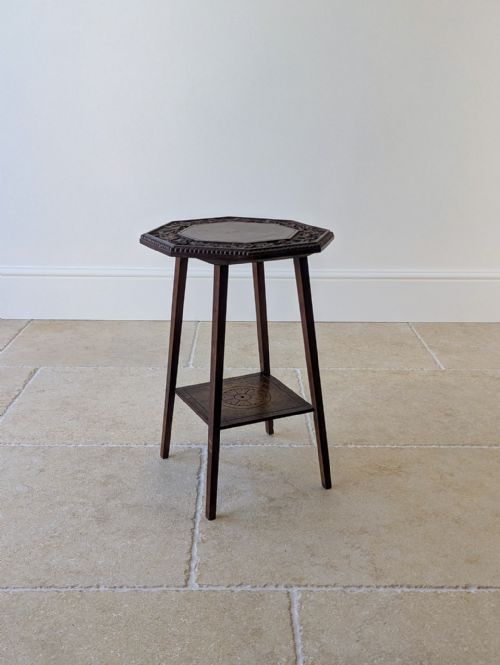
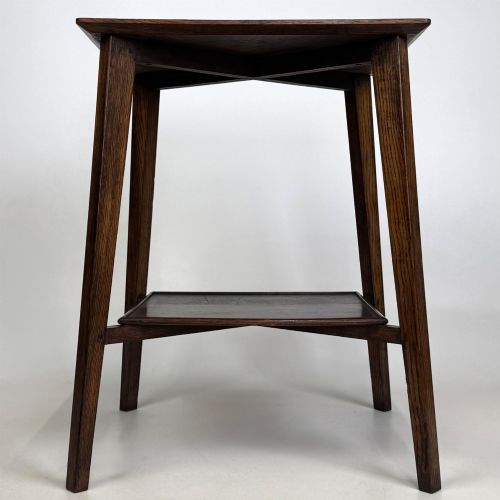
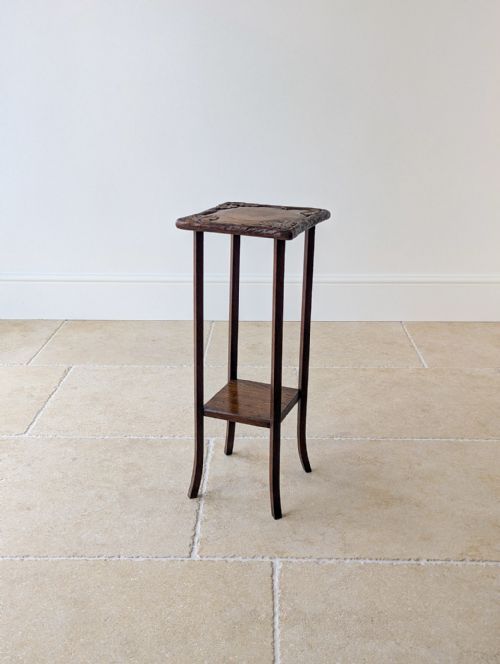
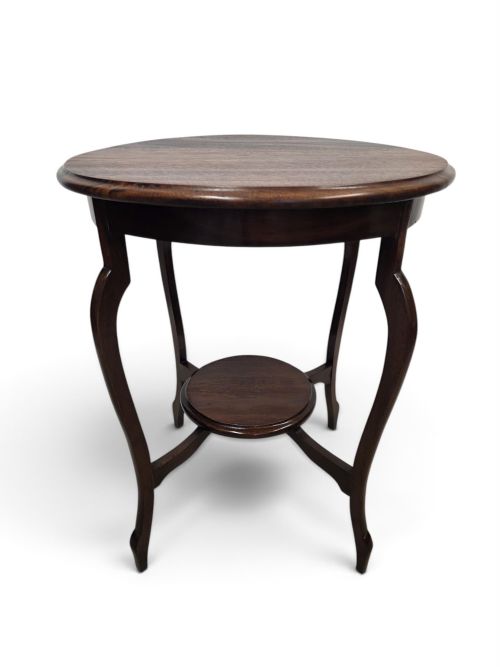
Common iterations include square, circular, and six-sided tops supported by turned legs or upright supports. The lower tier often provides storage for books or a display space for small decorative objects.
Materials and construction methods
Cabinetmakers utilised hardwoods such as mahogany, oak, and walnut, frequently selecting burr walnut or rosewood for decorative impact. Grain patterns dictate the visual character of the primary surfaces.
Inlaid decoration in satinwood or contrasting timbers appears on Sheraton Revival and Edwardian pieces, adding geometric or floral motifs. Brass fittings and ormolu mounts occasionally secure or accent the structure.
Joinery methods rely on traditional tenon and dowel joints to connect the legs and lower shelves securely. Turned wooden legs and shaped edges demonstrate the lathe work and hand-shaping common to the period.
Some nineteenth-century occasional stands feature six-sided tops, offering an unexpected geometric twist to traditional parlour furniture.
Distinctions in quality
The choice of timber underpins the overall grade of the piece, with solid mahogany and figured walnut sitting above basic stained softwoods. Grain alignment across table tops and matched veneers indicate deliberate material selection by the maker.
Rigour in joinery determines structural longevity, visible in tight joints where the lower tier meets the legs without movement. Hand-turned components and crisp inlay work separate standard utilitarian pieces from workshop items intended for formal reception rooms.
W. Turner Lord & Co·Gordovil Spain·Liberty and Co
The Small Two Tier Stand Glossary
- Occasional table
- A small, movable table designed for light, specific uses rather than dining. These pieces are easily repositioned around a room as needed.
- Étagère
- A piece of furniture consisting of a set of open shelves for displaying small objects. This French form often incorporates delicate woodwork and brass mounts.
- Crossbanded
- A border technique where thin strips of veneer are laid perpendicular to the main grain. This creates a contrasting frame around the tabletop edge.
- Satinwood
- A durable, yellowish timber prized for its lustrous sheen and smooth texture. It is frequently employed for stringing and decorative inlay work.
- Turned
- Shaped on a lathe by rotating the timber against a chisel. This method produces symmetrical legs, pillars, and spindles.
Small Two Tier Stand: Frequently Asked Questions
Where should I place a small two tier stand?
These stands fit well beside armchairs, sofas, or beds where extra surface area is required. The lower shelf provides a convenient spot for books or small items while keeping the top clear.
In hallways, they serve as compact tables for incoming post or a small lamp. Their modest footprint allows them to occupy awkward corners without cluttering the room.
How do I identify an Edwardian stand?
Edwardian pieces often feature lighter timbers such as mahogany and oak, occasionally finished with satinwood inlay. The styling draws on eighteenth-century revival designs but tends to be lighter in proportion.
Turned legs and simple tier supports are characteristic of the period between eighteen-eighty and nineteen-ten. Construction prioritises domestic utility and brighter, more open interior aesthetics.
What is the difference between an occasional table and a plant stand?
Occasional tables are built primarily for general surface utility beside seating, featuring wider tops for lamps or tea service. Their second tier acts as a shelf for books or magazines.
Plant stands generally feature taller, narrower proportions and smaller top surfaces designed specifically to elevate potted plants. Their lower tiers provide additional stability and supplementary display space.
How do I care for antique veneer?
Keep wooden stands away from direct heat sources and strong sunlight to prevent the timber and underlying glue from drying out. Consistent indoor humidity protects delicate veneers from lifting.
Dust regularly with a soft, dry cloth and apply a quality beeswax polish occasionally to nourish the wood. Avoid silicone-based sprays which can damage historical finishes.