

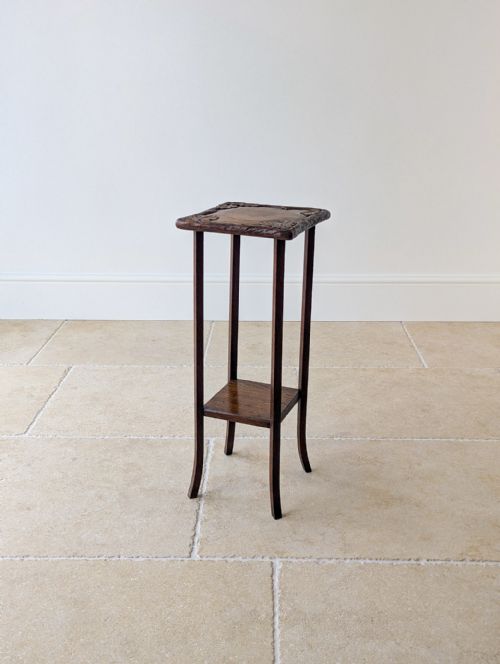
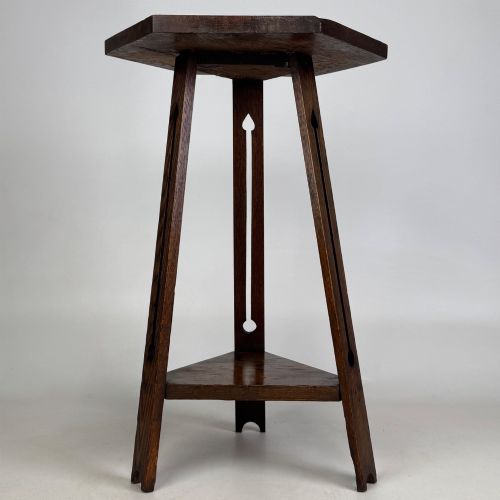
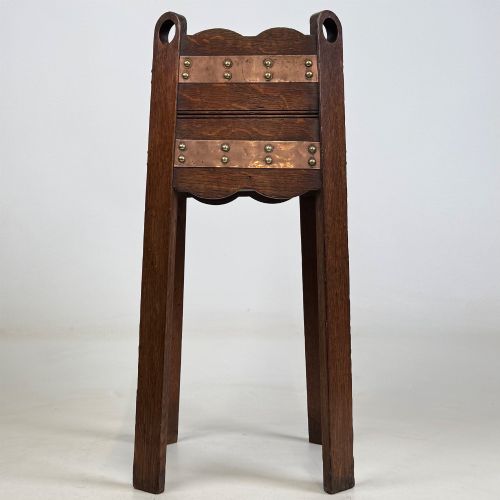


Dark Oak Jardiniere Stand
These dark oak jardiniere stand pieces bring substantial timber and purposeful display to a corner, built to hold heavy plants with quiet presence.
Dark Oak Jardiniere Stand
A dark oak jardiniere stand provides a raised platform for indoor plants, combining functional display with robust woodwork. Buyers searching for a dark oak jardiniere stand encounter sturdy furniture pieces designed to support heavy planters without tipping.
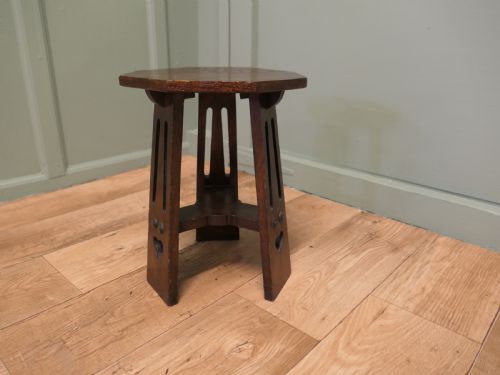
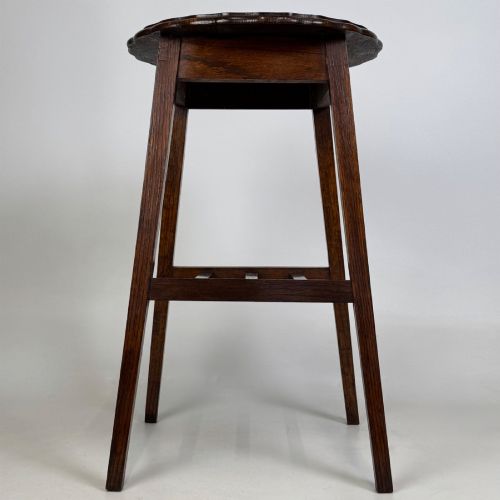
The selections available here stem largely from the Edwardian era and the late nineteenth century, alongside pieces dated around nineteen-twenty. These variations span straightforward plant stands, side tables, two-tier designs, and coopered planters on matching supports.
Makers and workshops of the period drew upon distinct stylistic influences, producing examples within the Arts and Crafts tradition, as well as Jacobean Revival and Renaissance Revival modes. English country interpretations also appear, bringing simpler lines to domestic interiors.
How They Were Made
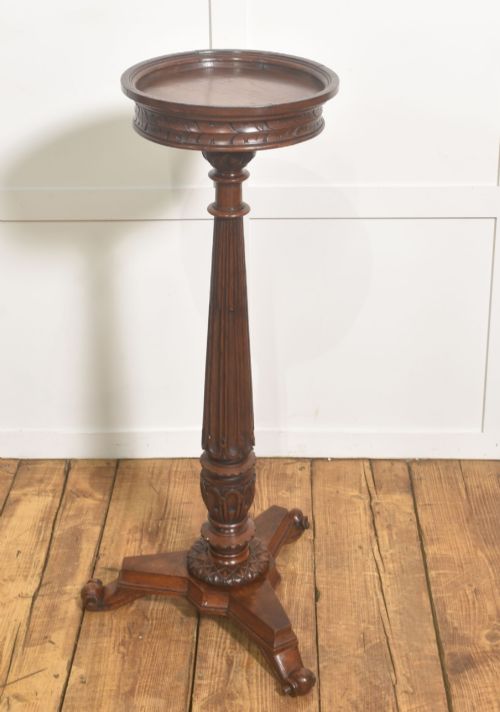
Carpenters utilised solid oak for the primary structures, employing turned elements such as barley twist stems alongside octagonal tops and carved pedestal columns. Coopered construction techniques appear in cylindrical planters, using tight-fitting wooden staves bound with metal bands.
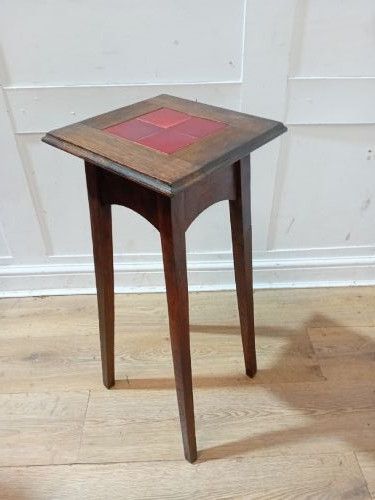
Metal accents in brass and copper complement the dark timber, frequently appearing as liners, decorative bands, or fixings on coopered vessels. Certain items incorporate ceramic components or carved hardwood details to add texture and contrast to the dark wood surfaces.
Dark Oak Jardiniere Stand Retail Price Guide 2026
Typical asking prices for dark oak jardiniere stand among the pieces listed under this phrase on Sellingantiques today, from the lower quarter to the upper quarter. They describe what is for sale here now, not the wider market.
Some coopered planters still harbour faint traces of old potting soil tucked deep inside their wooden staves.
What Varies in Quality
Construction methods dictate durability, distinguishing heavy coopered vessels and rigid mortise-and-tenon joints from lighter assembly. The choice of timber grain and the depth of carving separate standard utility items from more ambitious workshop pieces.
Original metal fittings, such as brass liners or copper bands, retain the integrity of the object better than replaced components. The crispness of carved details and the execution of turned elements like barley twists reveal the maker's hand.
Lister and Co
The Dark Oak Jardiniere Stand Glossary
- Jardiniere stand
- A tall piece of furniture designed specifically to support a plant container. These stands elevate greenery to eye level within a room.
- Coopered
- Constructed from curved wooden staves joined edge to edge, similar to barrel-making. This technique creates rounded vessels suitable for holding planters.
- Barley twist
- A turned wooden column resembling a helix or twisted rope. It represents a common decorative turning style found on legs and central columns.
- Arts and Crafts
- A design movement emphasising handcraftsmanship and simple vernacular forms. Pieces in this style often feature honest construction and unpretentious materials.
- Two-tier
- A furniture design incorporating a main upper surface and an additional lower shelf. The secondary shelf provides extra stability and display space.
Dark Oak Jardiniere Stand: Frequently Asked Questions
What is a jardiniere stand?
A jardiniere stand is a dedicated piece of furniture built to hold a heavy plant pot or planter. It elevates the greenery off the floor to display it properly.
These pieces emerged in various heights and forms, often featuring circular or octagonal tops designed to bear considerable weight without instability.
How were coopered planters made?
Coopered planters utilise vertical wooden staves fitted tightly together around a base, mimicking traditional barrel construction. Metal bands then secure the structure.
This method allowed woodworkers to create watertight cylindrical vessels from solid timber, ideal for holding damp soil and potted plants.
Where should I place a stand?
These stands suit room corners, empty wall spaces, or near windows where plants receive adequate light. Their vertical proportions make use of tight spaces.
Two-tier versions allow for trailing plants on top and smaller items or books placed safely on the lower shelf.
How do I date these pieces?
Dating relies on stylistic markers such as Arts and Crafts influences, turned barley twist stems, and construction methods typical of the late nineteenth and early twentieth centuries.
Edwardian examples often display lighter proportions while retaining heavy timber construction, whereas nineteenth-century pieces lean towards denser Revival styles.