



Small Square Oak Table
A small square oak table is a compact surface built for versatility, bringing honest timber grain and straightforward utility to tight corners.
Small Square Oak Table
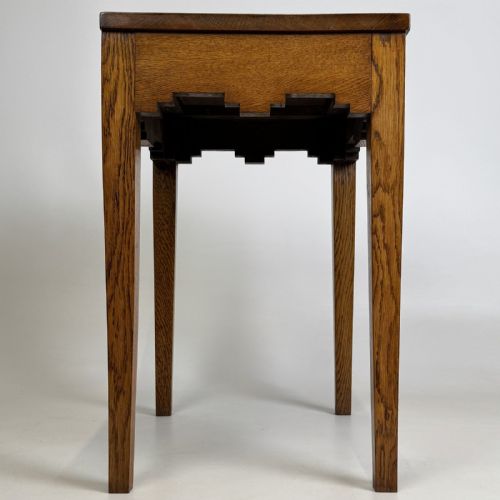
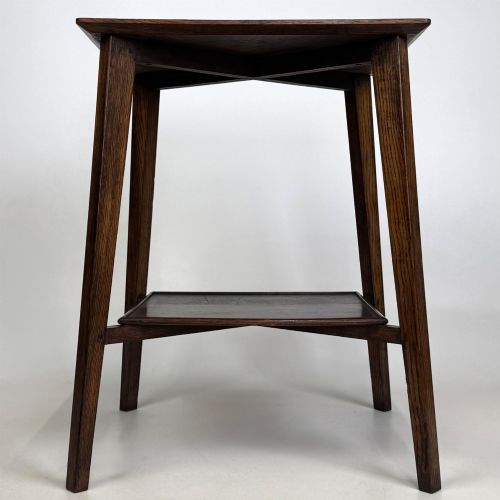
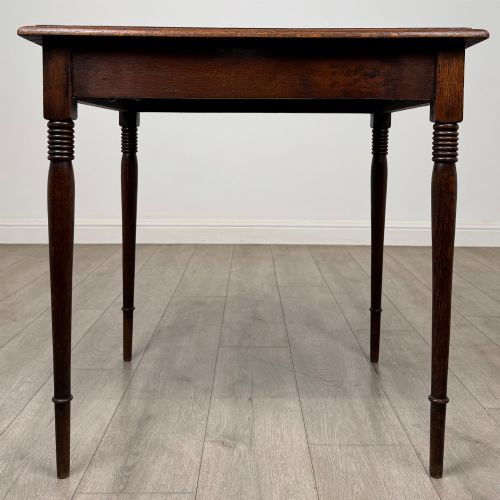
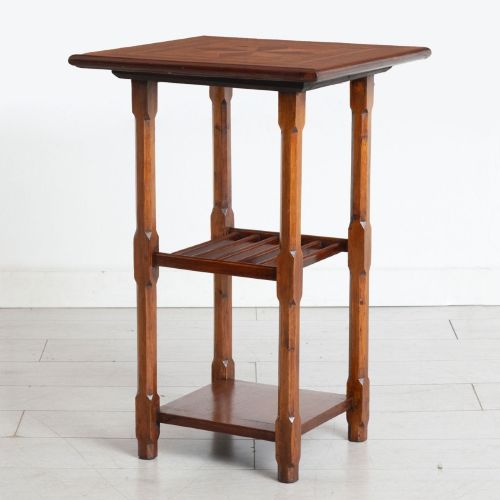
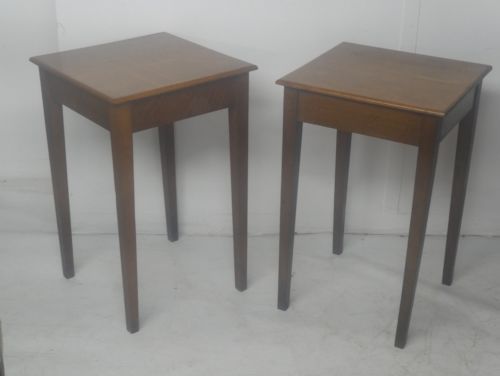
When you search for a small square oak table, you encounter sturdy timber furniture designed primarily as side tables, lamp stands, or occasional tables. These pieces originate predominantly from the late nineteenth century, the Edwardian era, and the early twentieth century.
The versions you are most likely to meet on this page embrace Arts and Crafts simplicity, Edwardian restraint, and occasional Art Deco geometry. Makers utilised the timber's natural figure to create functional furniture that served domestic spaces without dominating them.
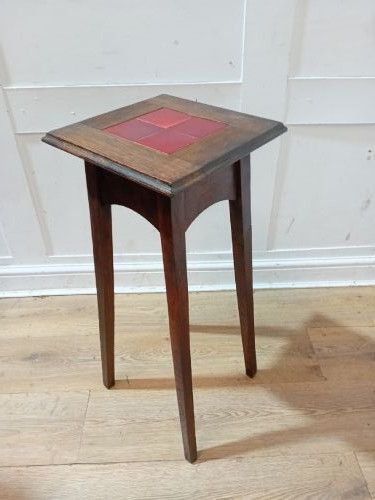
Beyond standard side tables, the listings include specialised forms such as jardiniere stands, tile-topped surfaces, and revolving bookcases. Each piece demonstrates how straightforward dimensions accommodated specific household tasks in period homes.
How they were made
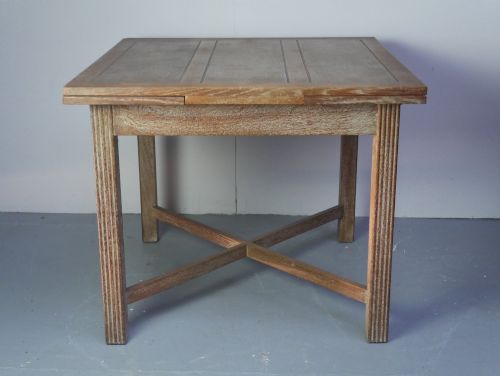
Joiners relied heavily on solid oak, frequently selecting golden or limed variants to alter the surface tone while preserving the characteristic grain. Construction often involved tapered legs, mortise and tenon joints, and occasional carved detailing.
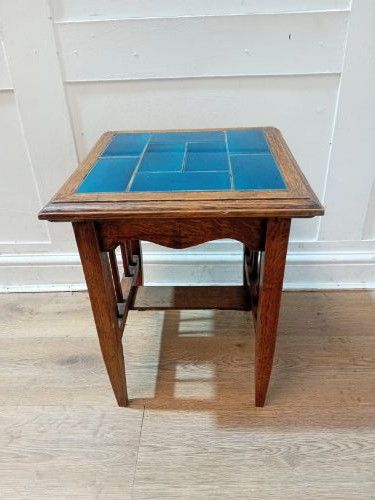
Some examples incorporate ceramic tiles into the top surface, providing a heat-resistant insert for plant pots or hot vessels. Inlaid timber and specimen wood additions appear occasionally, introducing subtle geometric contrast to the primary oak structure.
Listings span from eighteen-fifty through the nineteen-twenties, incorporating oak, beech, ceramic tiles, and specimen wood.
What varies in quality
The distinction between ordinary and superior examples rests on timber selection and joinery execution. Finer pieces display carefully matched oak grain, crisp carving, and robust structural framing that resists wobble.
Attribution to notable retailers or designers elevates certain specimens, while standard workshop production remains functional and honest. The presence of integrated decorative elements like ceramic tiles or inlaid banding further separates standard production from exceptional work.
Heals·Liberty of London·Baillie Scott
The Small Square Oak Table Glossary
- Arts and Crafts
- A design movement prioritising handcraftsmanship, simple forms, and honest materials. It rejected mass-produced industrial ornament in favour of visible construction and natural timber textures.
- Limed oak
- Timber treated with a white pigment or lime finish to highlight the open grain. This technique lightens the wood tone while accentuating its natural texture.
- Jardiniere stand
- A tall, compact pedestal table designed to display a flowering pot or plant. These stands elevate greenery to eye level within a room.
- Occasional table
- A light, movable piece intended for shifting around a room as needed. They serve minor utility functions beside seating areas.
- Specimen wood
- Timber collected from various distinct tree species and assembled to show contrasting colours and grain patterns. It often forms decorative borders or geometric tabletops.
Small Square Oak Table: Frequently Asked Questions
Where should I place a small square oak table?
These compact tables suit narrow hallways, tight corners beside armchairs, or spaces needing a sturdy lamp stand.
Their restrained proportions ensure they function effectively without crowding smaller rooms.
How do I clean an antique oak surface?
Dust the timber regularly with a soft, dry cloth to prevent dirt accumulation within the grain.
Avoid silicone polishes and harsh chemical sprays, opting instead for traditional beeswax when the wood appears dry.
Can these tables support heavy lamps?
Solid oak construction provides inherent stability, making these surfaces well suited for holding table lamps and heavy books.
The frame handles daily domestic weight comfortably when the joinery remains tight.
How do I distinguish Edwardian oak from earlier pieces?
Edwardian examples typically display lighter finishes and more restrained proportions compared to heavier Victorian counterparts.
Construction details and hardware styles help clarify the decade of manufacture.