


Craftsman Oak Table
A craftsman oak table brings honest construction and simple lines into a room, anchored in the ideals of the Arts and Crafts movement.
Craftsman Oak Table
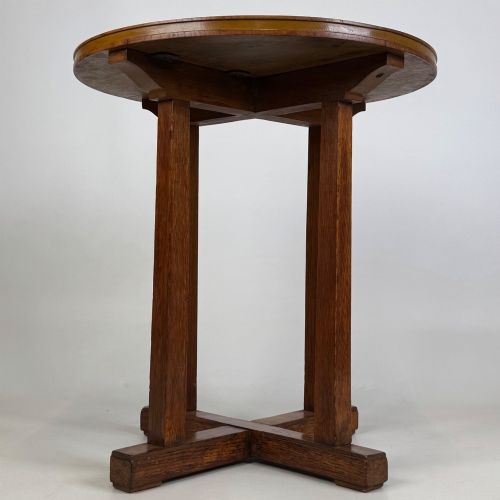
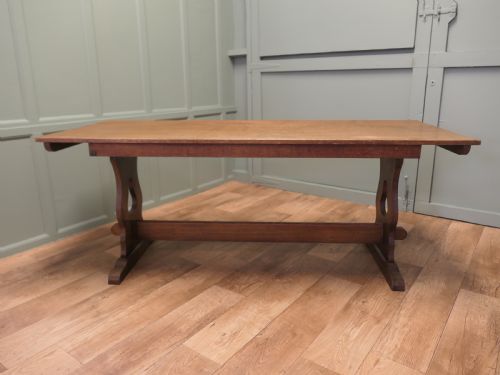
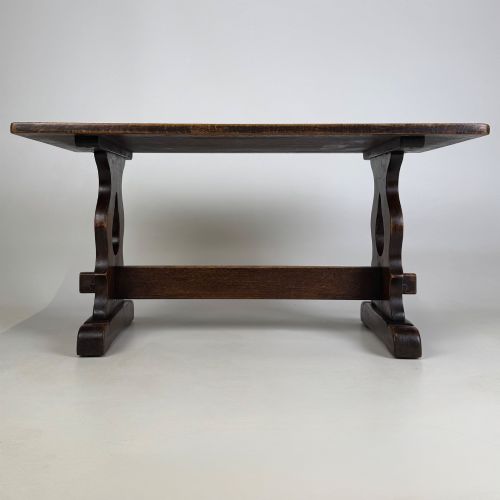
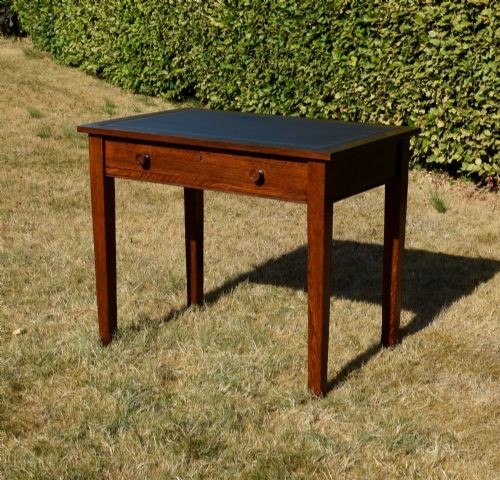
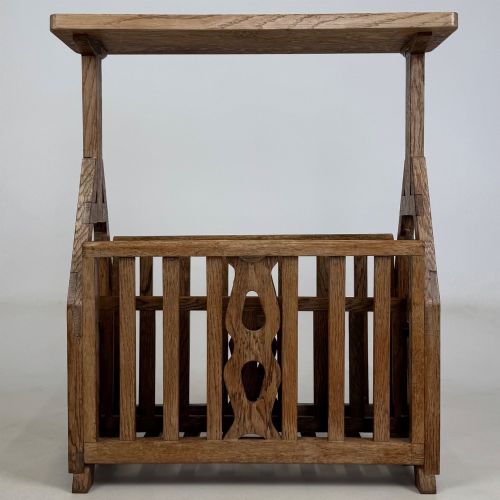
A craftsman oak table represents a tradition of design prioritising utility and visible craftsmanship over superfluous ornament. When searching for a craftsman oak table, buyers encounter forms ranging from compact side tables and plant stands to expansive refectory dining tables and writing desks. Most pieces originate from the late nineteenth century through to the interwar decades, spanning the Edwardian period and the height of the Arts and Crafts movement.
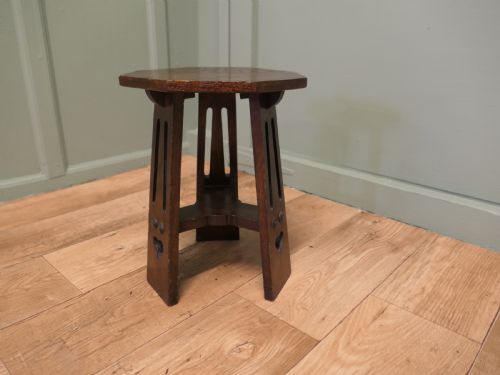
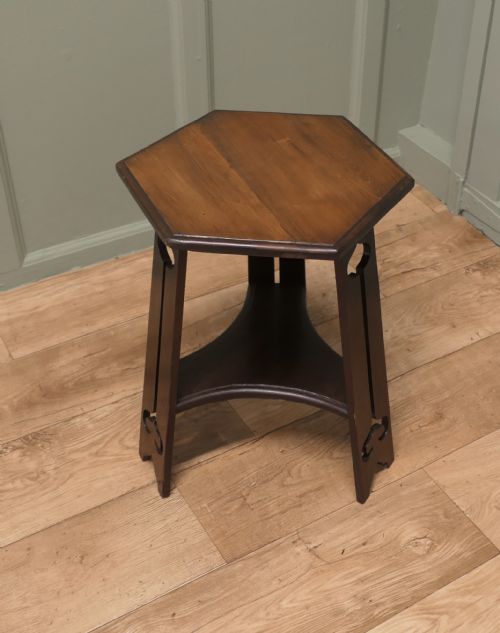
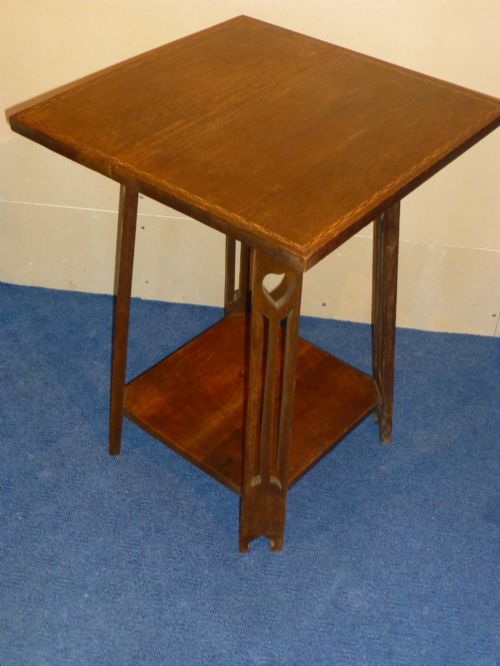
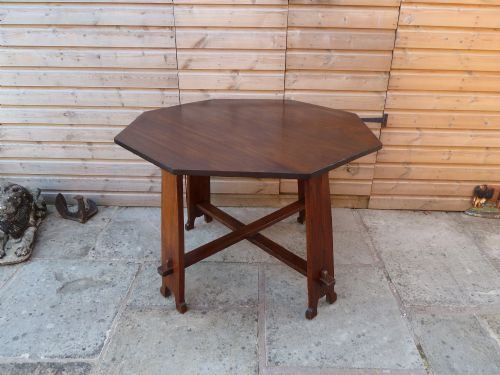
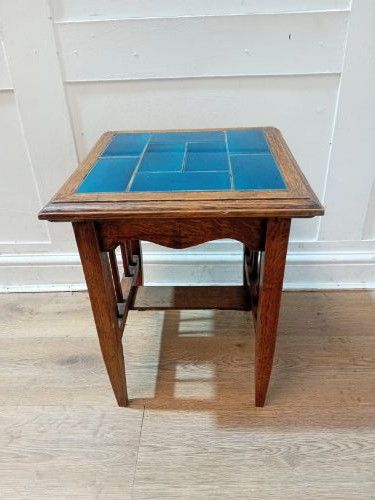
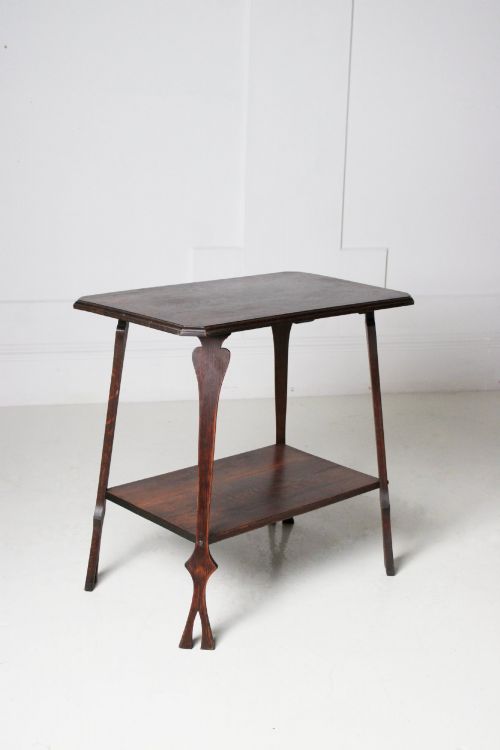
The material palette aligns closely with the style, using solid oak augmented by copper, brass, ceramic tile, and occasional wood inlay. Side tables and occasional tables appear with greatest frequency, often featuring octagonal tops, undershelves, or metal surface inserts. Dining tables and library tables display the heavier timber scantlings and robust underframing characteristic of the period.
Makers working within this idiom drew inspiration from vernacular furniture, resulting in rustic farmhouse influences sitting alongside sophisticated Cotswold School and Liberty productions. Whether utilised as a centre table, a coffee table, or a bedside cabinet, each form maintains an emphasis on sturdy joinery and the natural grain of the wood.
What Varies in Quality
Quality rests upon the integrity of the timber selection and the precision of the joinery. Superior examples utilise quarter-sawn oak displaying prominent medullary rays, combined with tightly fitted pegged joints that withstand centuries of use without loosening.
Design distinction separates standard commercial output from pieces associated with notable designers or workshops. Tables featuring integrated metalwork, such as hand-hammered copper tops or decorative tiles, demonstrate higher artistic ambition when the subsidiary materials harmonise with the structural oak.
An apprentice trial piece reveals a young woodworker practising dovetails on a miniature window seat.
Liberty and Co·William Birch·Baillie Scott·George Walton·Sir Robert Lorimer
The Craftsman Oak Table Glossary
- Arts and Crafts
- A design movement spanning the late nineteenth and early twentieth centuries that championed hand-craftsmanship and vernacular traditions over mass production. It heavily influenced the creation of oak furniture during this era.
- Refectory table
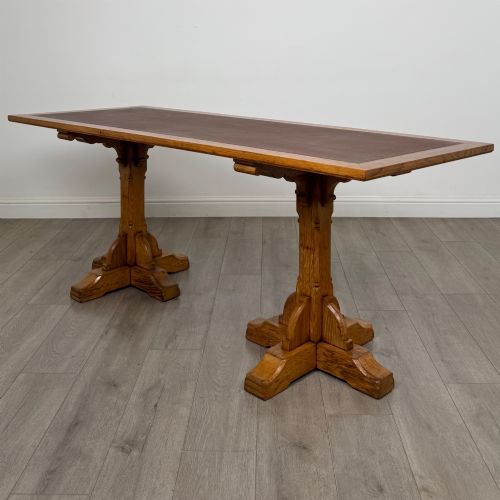
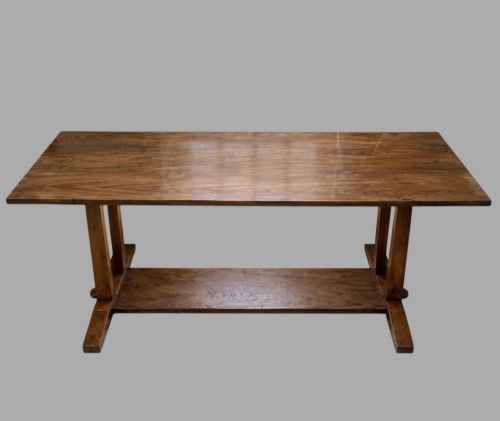
- A long dining table traditionally utilised for communal meals, adapted by Arts and Crafts designers into sturdy domestic forms with thick legs and stretcher rails. These tables often form the centrepiece of a room.
- Quarter-sawn oak
- Timber cut radially from the log, producing a distinct grain pattern marked by silver flecks known as medullary rays. This method yields more stable boards valued in high-quality furniture making.
- Occasional table
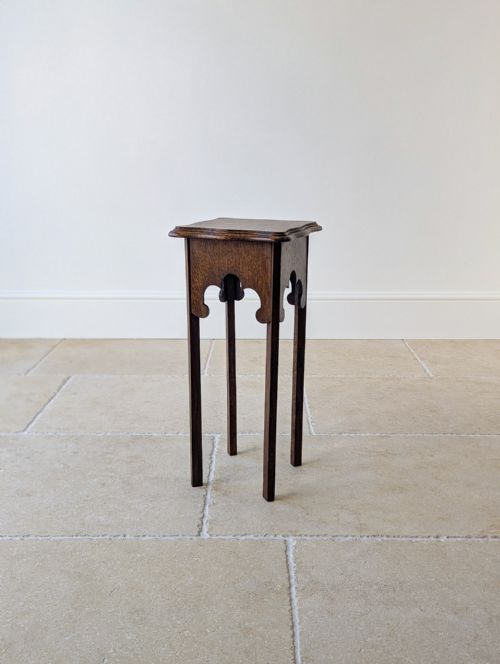
- A small, movable table designed for versatile use around a room, frequently produced in octagonal or square configurations. They served as plant stands, lamp tables, or incidental surfaces.
- Chequered inlay
- A decorative technique involving small alternating squares of contrasting wood or dark and light materials set into the surface. It provides subtle geometric ornamentation on tabletops.
Craftsman Oak Table: Frequently Asked Questions
How do I date a craftsman oak table?
Dating relies on examining construction methods, timber preparation, and stylistic cues recorded across the Edwardian and late nineteenth-century periods. Hand-planed surfaces, pegged tenons, and integrated copper or tile inserts often point towards the height of the movement.
Makers' marks, paper labels, or attribution to specific workshops like Liberty or the Cotswold School provide further chronological markers. Comparing the form against documented pieces helps narrow the decade of production.
What rooms suit an oak side table?
An oak side table adapts easily to living rooms, hallways, and bedrooms due to its modest proportions and sturdy build. They function effectively as lamp stands, plant holders, or bedside cabinets.
The warm tones of golden oak and the tactile nature of copper or ceramic tile accents allow these tables to complement both traditional interiors and minimalist modern spaces.
How should I care for antique oak?
Maintaining antique oak involves applying natural beeswax periodically to nourish the timber and preserve the historic finish. Avoiding direct sunlight and sudden temperature shifts prevents the solid wood from splitting.
Cleaning requires only a soft, dry cloth to remove dust without disturbing the patina built up over decades of use.
What is the difference between a refectory and centre table?
A refectory table is long and narrow, designed originally for dining with robust stretcher rails running between the legs. A centre table is typically square, round, or octagonal and stands freely in the middle of a room for general display or occasional use.
While both utilise solid oak construction, their distinct proportions serve entirely different spatial requirements within a home.