


Small Regency Credenza
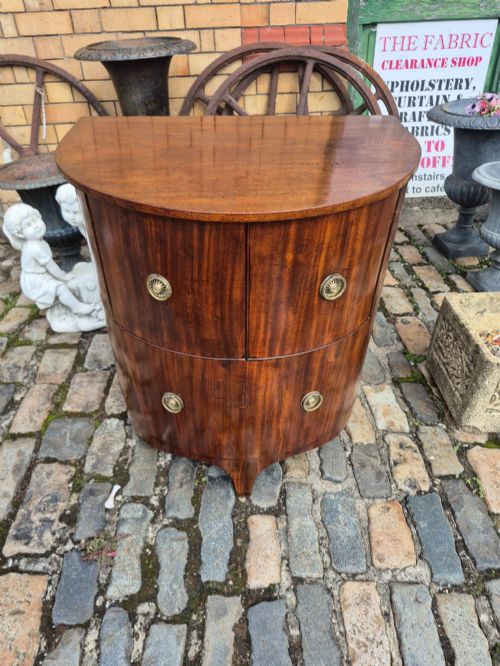
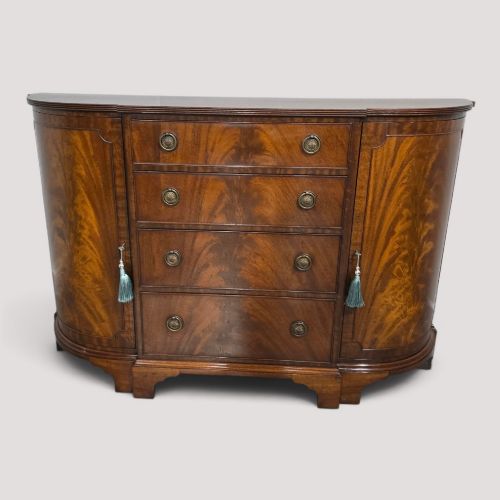
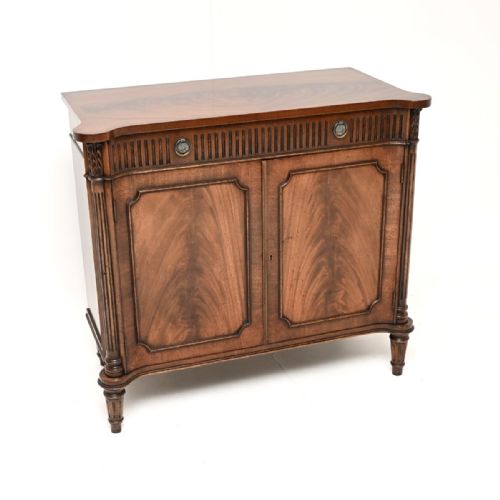
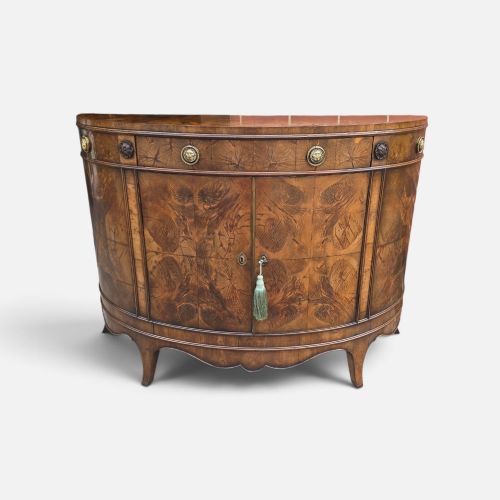
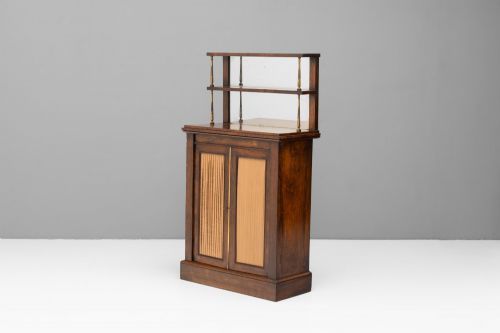
A small regency credenza brings architectural presence and compact storage to a room through figured timbers and brass detail.
Materials and construction
Cabinet makers constructed carcasses using solid timbers like mahogany and rosewood, often applying flame mahogany veneer to primary surfaces for visual depth. Secondary woods such as oak appear in drawer linings and internal framing.
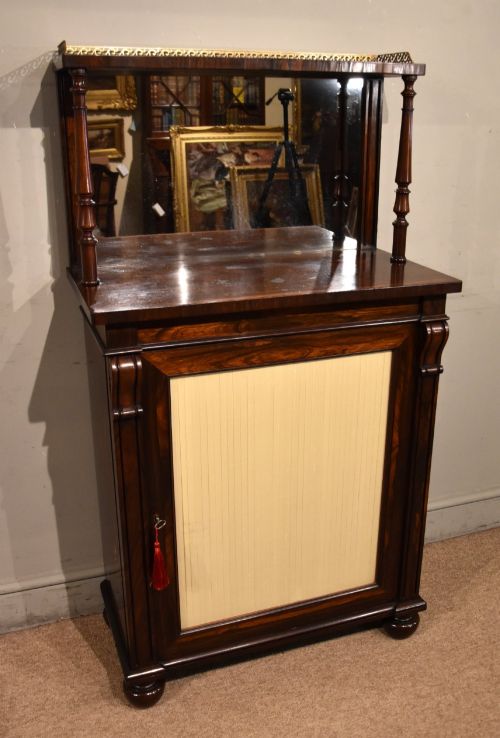
Decorative detailing relies on contrasting materials, including ebony stringing, brass inlay, and silk panels behind glazed doors. Surface finishes highlight the natural grain patterns of the timber without obscuring the material.
Judging quality and execution
Superior examples distinguish themselves through the careful selection of figured veneer and the precision of cabinet joints. Finer pieces demonstrate restraint in ornament, letting the grain and proportion dictate the visual balance.
The integration of secondary elements, such as brass mounts, gallery rails, and glazed doors, separates standard production from workshop pieces of higher distinction. Original fittings and uncompromised structural integrity indicate superior original manufacture.
Several pieces include silk-backed glass doors, offering a discreet way to hide your book collection from curious cats.
Gillows
The Small Regency Credenza Glossary
- Chiffonier
- A low cabinet or sideboard, often featuring a shelf superstructure supported by pillars above enclosed lower doors. This form emerged during the Regency period to hold books, silver, or linens.
- Credenza
- A side cabinet used for storage and display, originating from Italian furniture traditions and later adopted by British cabinet makers. The form provides a low horizontal surface suited for decorative objects.
- Stringing
- A narrow inlay of contrasting wood or light-coloured material set into the surface of a panel or drawer front. This technique defines the edges and geometric panels of Regency cabinetry.
- Flame Mahogany
- A veneer cut from the branch junction of a mahogany tree, producing a distinctive flickering flame pattern. Cabinet makers reserved this timber for prominent drawer fronts and door panels.
- Demi Lune
- A half-moon shape used for the plan of small side cabinets and console tables. This configuration allows furniture to stand flush against a wall while projecting minimally into a room.
Small Regency Credenza: Frequently Asked Questions
How do I identify a genuine piece?
Authentic pieces display construction methods consistent with nineteenth-century workshop practices, including secondary woods like oak and hand-cut joinery. Examining the timber grain and internal linings helps determine the period.
Stylistic markers such as brass stringing, ebony inlay, and proportions typical of the Regency era separate original examples from later reproductions.
Where should I place it?
These compact cabinets fit well in hallways, living rooms, and dining areas as serving or display surfaces. Their narrow depth allows them to stand against walls without obstructing pathways.
Pair them with art or mirrors scaled to match the modest proportions of the cabinet.
How do I care for the wood?
Maintain rosewood and mahogany surfaces by keeping them away from direct sunlight and sudden temperature changes. Regular dusting with a dry cloth preserves the finish.
Apply appropriate furniture wax sparingly when the timber appears dry, following the direction of the grain.