
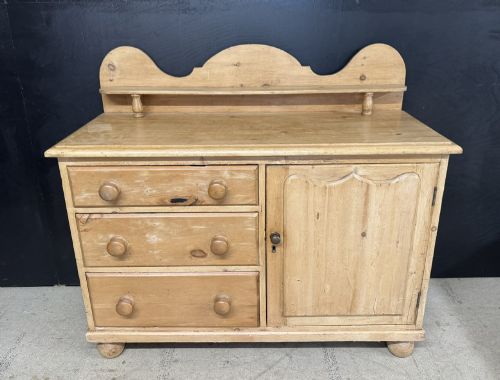
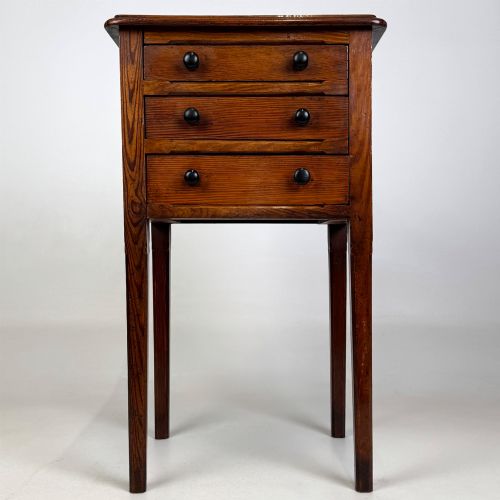
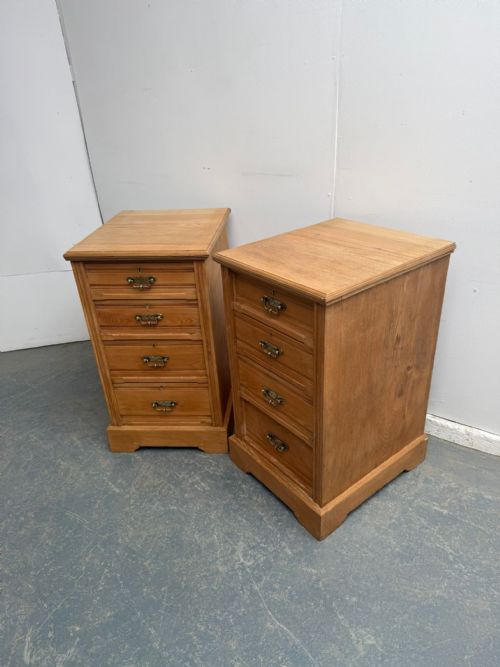
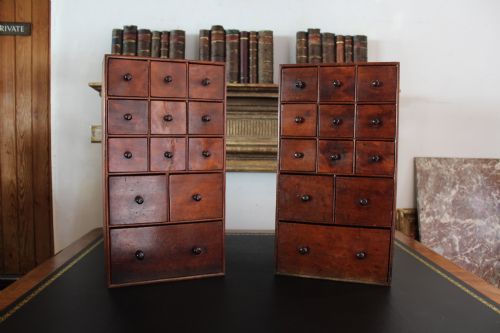


Small Pine Chest
When choosing a small pine chest, buyers seek compact storage built from sturdy softwood during the nineteenth and early twentieth centuries.
Small Pine Chest
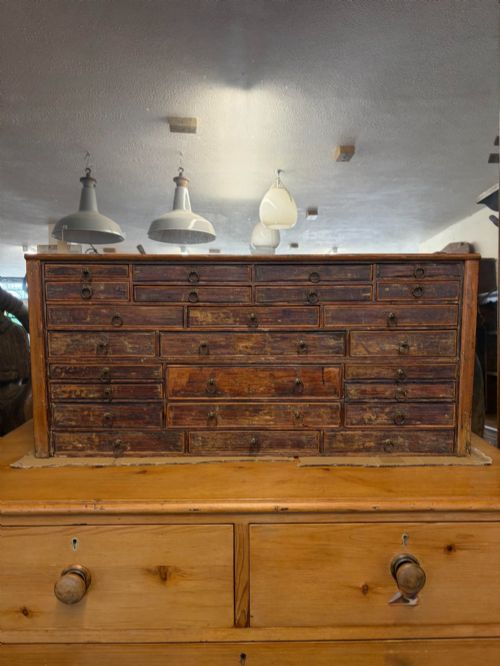
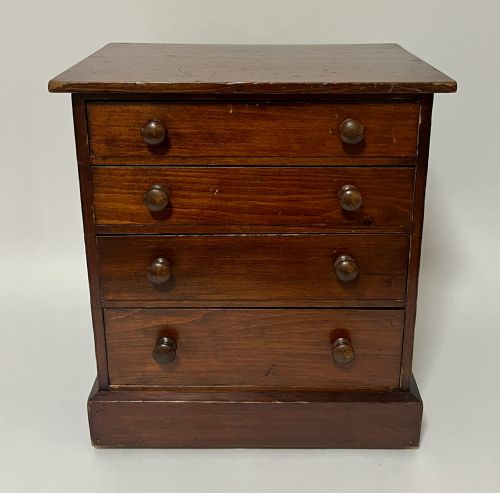
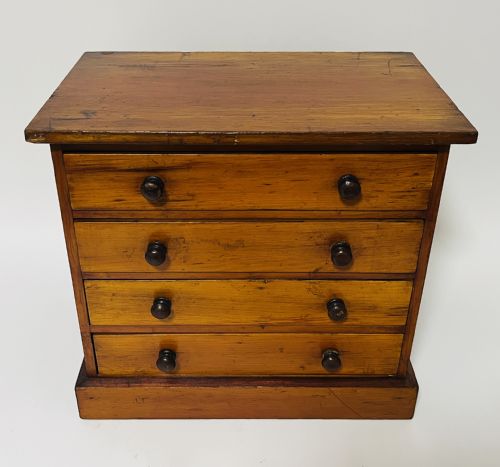
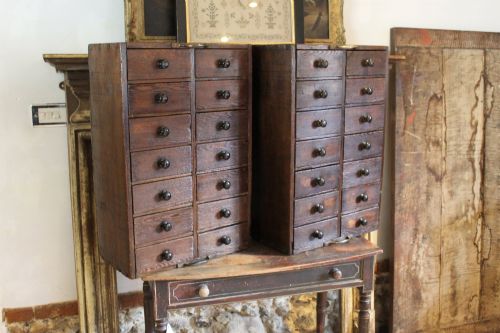
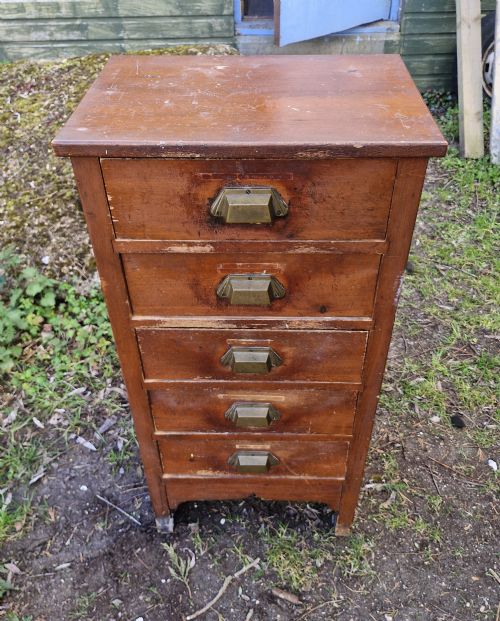
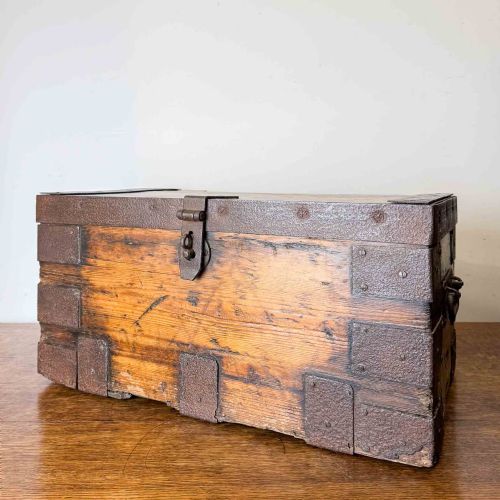
A small pine chest serves as a versatile storage piece, frequently appearing in domestic settings as a chest of drawers, blanket box, or coffer. Pieces in this category range from simple domestic drawer units to specialised specimen cabinets and miniature furniture originating across British, French, and Scandinavian workshops.
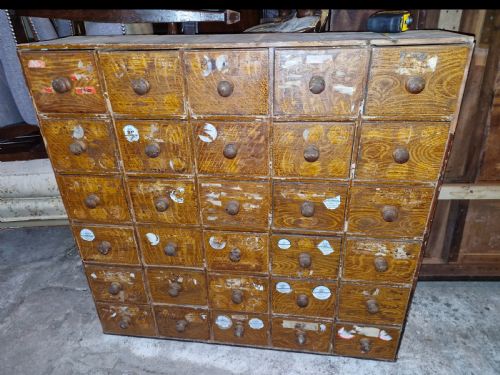
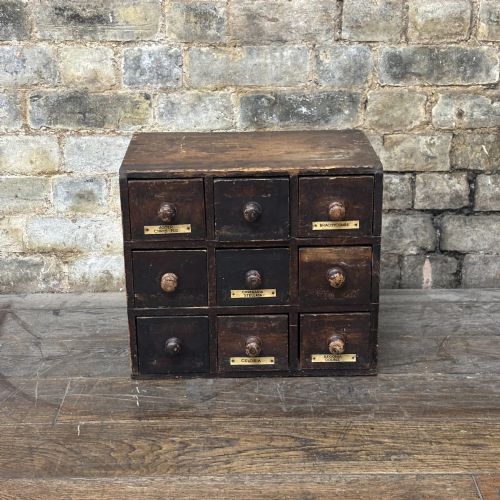
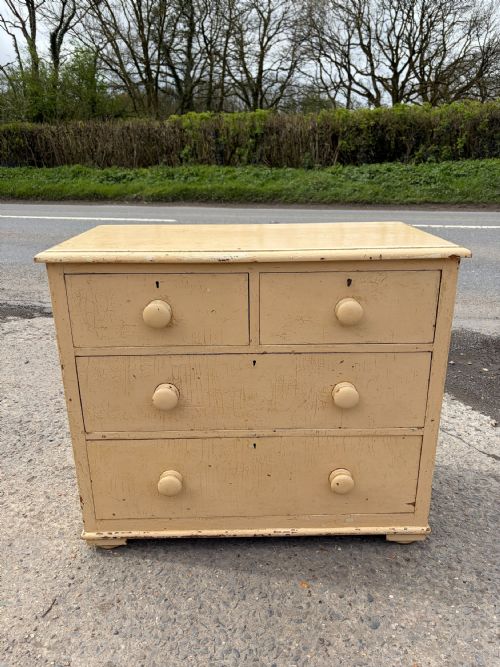
The most common variants on this page include nineteenth-century and Victorian drawer configurations, often arranged as two short drawers over two long drawers. Alongside these, buyers encounter painted storage boxes, bedside cabinets, and compact apothecary or seed chests bearing utilitarian roots.
How they were made
Construction relies primarily on pine and pitch pine timbers, sometimes augmented with secondary woods such as ash, elm, or oak for internal framing and drawer linings. Joinery techniques reflect the period of manufacture, utilising hand-cut joints and solid board construction designed for everyday utility.
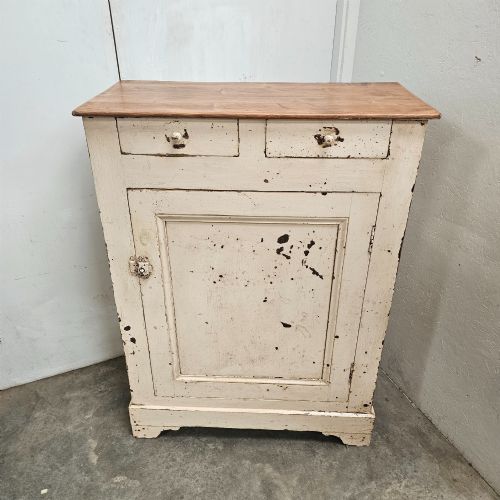
Surface finishes vary widely between original paintwork, simulated wood graining, stained treatments, and waxed natural surfaces. Iron and brass hardware, including period drop handles and strap hinges, complete the construction of these utilitarian and country pieces.
What varies in quality
Quality in a small pine chest often rests on the integrity of the timber, the retention of original surface treatments, and the finesse of the construction. Pieces with untouched original paint or well-preserved waxed patination command greater interest than stripped or heavily altered examples.
Structural refinement also separates standard utility items from finer workshop pieces, seen in dovetailed drawer construction, original brass or iron hardware, and balanced proportions. Minor maker details, such as stamped trade drawers or specific regional locking mechanisms, add distinction to individual specimens.
The Small Pine Chest Glossary
- Pitch pine
- A dense, resinous variety of pine timber often utilised in nineteenth-century cabinetry for added durability and a distinct grain pattern.
- Mule chest
- A traditional storage chest featuring one or more drawers built into the base beneath the main compartment.
- Commode
- A low piece of furniture containing drawers or cupboards, frequently executed in serpentine or shaped continental styles during the nineteenth century.
- Confiturier
- A traditional French storage cupboard originally designed for holding confit and preserves, often constructed in painted pine.
Small Pine Chest: Frequently Asked Questions
Where were small pine chests used?
These compact pieces found utility across the home, serving in bedrooms, hallways, and studies for general household storage. Commercial variants also populated apothecaries, florist shops, and offices for sorting small goods.
Their modest footprint allowed them to fit easily into secondary rooms, rural farmhouses, and urban dwellings alike.
How do I care for a waxed pine surface?
Maintain waxed pine surfaces by applying a traditional beeswax polish sparingly and buffing with a soft cloth to preserve the sheen. Avoid placing timber pieces near direct heat sources or in damp environments to prevent warping.
Regular light cleaning keeps the wood nourished without stripping the historical patination accumulated over the decades.
Are painted finishes usually original?
Painted finishes on nineteenth-century pieces range from untouched original decoration to later decorative coats applied during subsequent decades. Examining the surface under natural light reveals craquelure, wear patterns, and underlying layers that indicate age.
Original folk art or Scandinavian painted surfaces display authentic wear consistent with the period of manufacture rather than simulated distressing.
How can I tell a Victorian chest from an Edwardian one?
Victorian chests generally exhibit heavier proportions, darker stained or waxed surfaces, and traditional brass or wooden knob handles. Edwardian examples often display lighter timber tones, simpler lines, and occasionally Arts and Crafts design influences.
Hardware styles and construction methods within the drawer interiors also help distinguish between mid-nineteenth-century work and pieces made closer to nineteen hundred.