

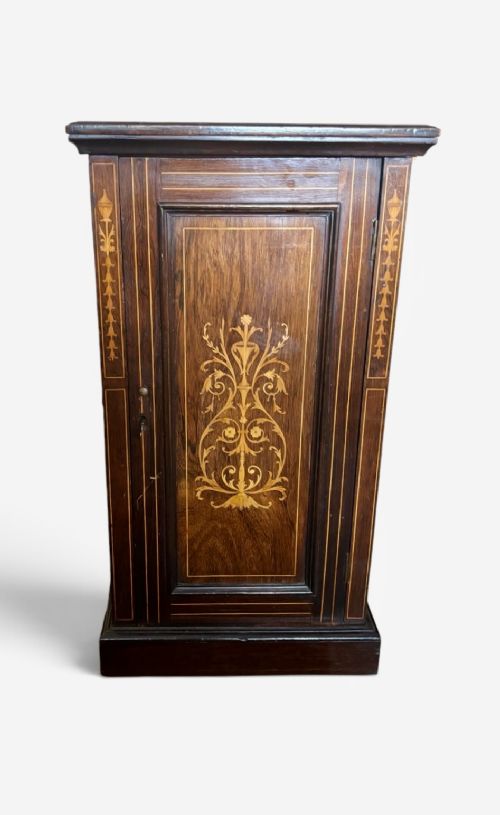
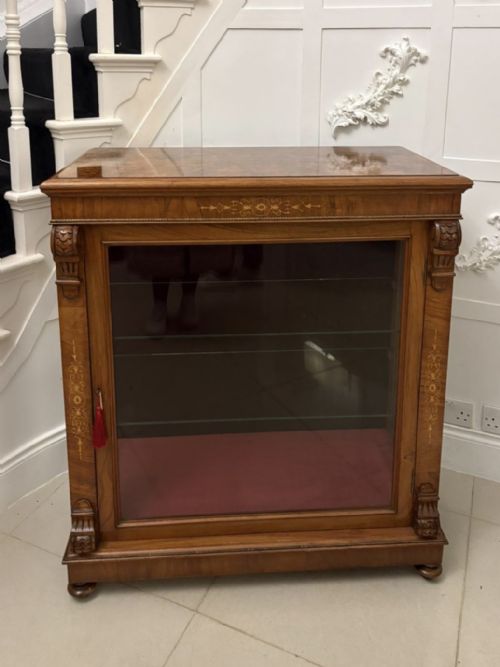
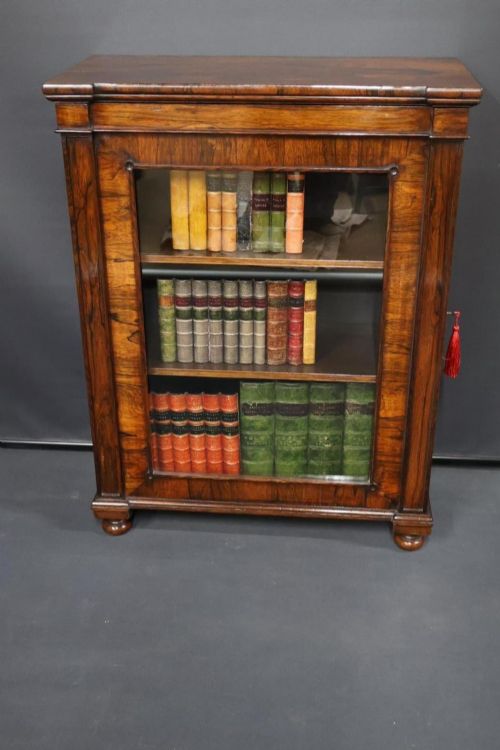
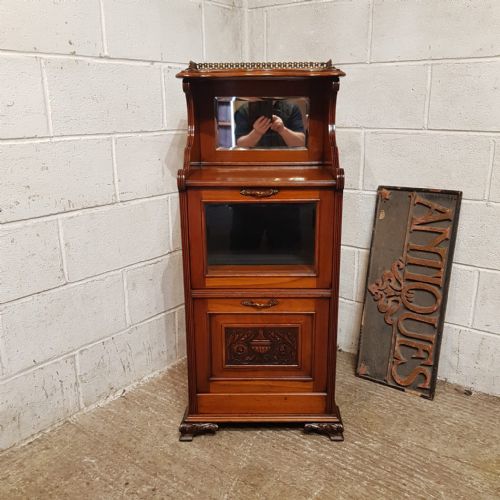




Small Pier Cabinet
A small pier cabinet is a narrow display piece designed for wall spaces between windows, offering elegant storage for precious items.
Small Pier Cabinet
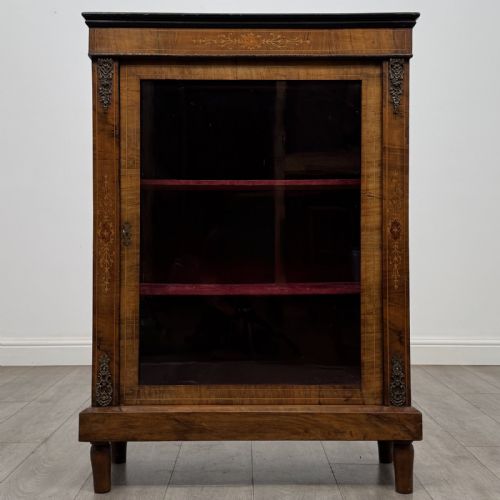
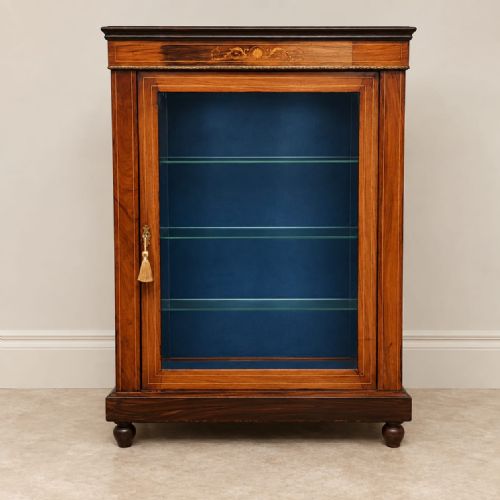
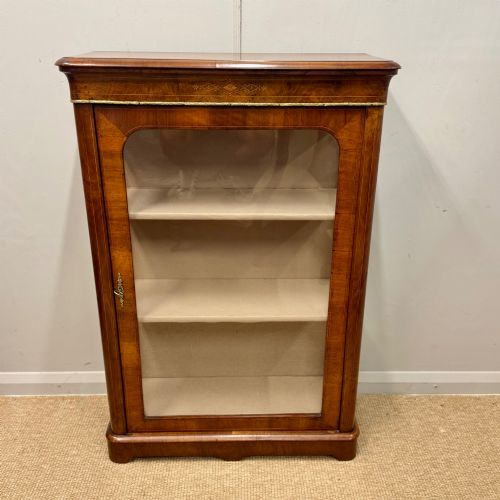
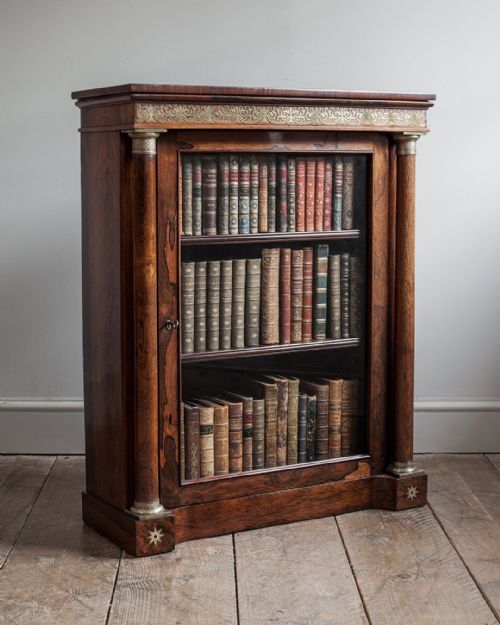
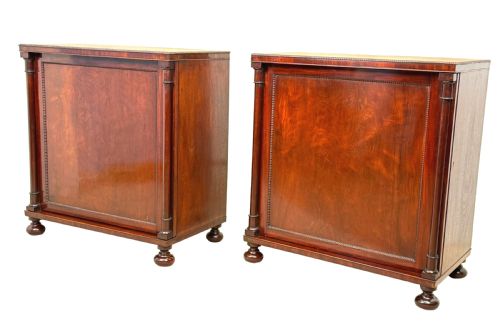
A small pier cabinet provides compact display space for interiors, traditionally positioned against the narrow wall sections between glass windows. The selections here span the Victorian, Regency, and George IV periods, bringing together cabinet forms designed for refined rooms.
Makers and cabinet makers of the period utilised domestic and exotic timbers to construct these narrow units, often incorporating glass panels for display purposes. The forms range from simple rectangular glazed cupboards to serpentine shapes and credenza variants.
Materials and Construction
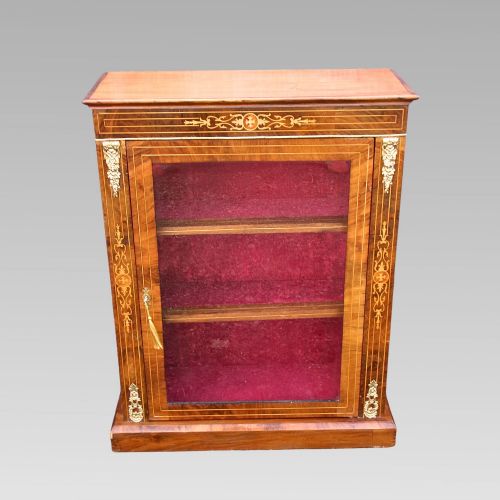
Walnut, burr walnut, rosewood, and mahogany form the primary wooden structures, frequently embellished with intricate boxwood marquetry, satinwood, and ebony inlay. These dense hardwoods allowed cabinet makers to construct narrow frames that remained stable and durable over generations.
Glass doors protect the contents of the display section, while brass and ormolu mounts provide decorative accents along the borders, columns, and feet. Velvet and fabric linings occasionally furnish the interior shelving where delicate porcelain or collectibles rest.
Joinery techniques combined solid timber carcases with fine veneers, allowing workshops to display rich grain patterns across the front doors and top surfaces. Ormolu mounts and brass detailing were cast and applied to accentuate the neoclassical and Louis XVI style influences seen in several pieces.
Small Pier Cabinet Retail Price Guide 2026
Typical asking prices for small pier cabinet among the pieces listed under this phrase on Sellingantiques today, from the lower quarter to the upper quarter. They describe what is for sale here now, not the wider market.
Materials appearing across these cabinet records include glass, brass, ormolu, velvet, and fabric.
Quality Variations
The standard of timber selection largely dictates the caliber of a piece, with figured walnut and richly grained rosewood commanding attention. Cabinets displaying finely executed boxwood marquetry and well-cast ormolu mounts demonstrate superior workshop execution.
Proportion and execution separate standard utility items from high-end display furniture. Pieces featuring serpentine shapes, mirror doors, or intricate inlay work reflect the skill of the original makers and the budget of the first purchaser.
The Small Pier Cabinet Glossary
- Pier cabinet
- A narrow cabinet designed specifically to fit the wall space between two windows. These pieces often feature glazed doors for displaying porcelain or books.
- Marquetry
- Decorative patterns formed by inserting pieces of wood, veneer, or shell into a wood veneer base. This technique creates elaborate floral or geometric designs across the cabinet door fronts.
- Ormolu
- Gilded bronze or brass applied as mounts and decorative trim on furniture. It adds a bright metallic contrast to dark woods like rosewood and walnut.
- Credenza
- A low cabinet or sideboard, sometimes used interchangeably with larger pier and side cabinet forms. These variations often incorporate serpentine shapes and curved glass.
- Burr walnut
- Wood taken from the wart or burl of a walnut tree, yielding highly figured swirling grain patterns. It was frequently used for the veneered panels of high-quality Victorian cabinets.
Small Pier Cabinet: Frequently Asked Questions
What is a small pier cabinet used for?
These narrow cabinets were originally built to occupy the narrow wall spaces between tall drawing-room windows, where bulkier furniture would block light and passage. They provided a secure, dust-free enclosure to display prized ceramics, small books, and decorative objects.
Today, they serve the exact same purpose in modern homes, fitting neatly into tight alcoves or narrow hallways. Their glass doors allow collectors to showcase contents while keeping them protected from daily wear.
How do I tell Victorian from Regency pier cabinets?
Regency pier cabinets generally date from the early 19th Century and often favour dark rosewood with restrained classical lines, sometimes incorporating brass reeding or simpler column details. They lean toward Regency and Neoclassical design influences with understated elegance.
Victorian cabinets, produced from the mid-19th Century onward, frequently showcase figured burr walnut with elaborate marquetry inlay, boxwood stringing, and shaped serpentine fronts. The later Victorian era also introduced ebonised finishes and gilt ormolu mounts reflecting diverse stylistic revivals.
Are all pier cabinets glazed?
Many pier cabinets feature glazed glass doors designed specifically for displaying collections of porcelain, glass, or small books. This transparent front was essential for the original purpose of catching and reflecting light between windows.
However, some variations incorporate solid wooden doors, mirror doors, or take the form of open side cupboards and music cabinets. The selection depends entirely on whether the original maker intended the piece for display or enclosed storage.
How do I clean and maintain the wood?
Maintenance requires simple dusting with a soft, dry cloth to prevent grit from settling into the grain or delicate veneer. Avoid using modern silicone polishes, as they build up over time and attract dust.
Periodically feeding the wood with a quality traditional beeswax preserves the finish and nourishes the antique walnut or rosewood. Keep these cabinets away from direct sunlight and heating vents to prevent the veneer from drying and lifting.