


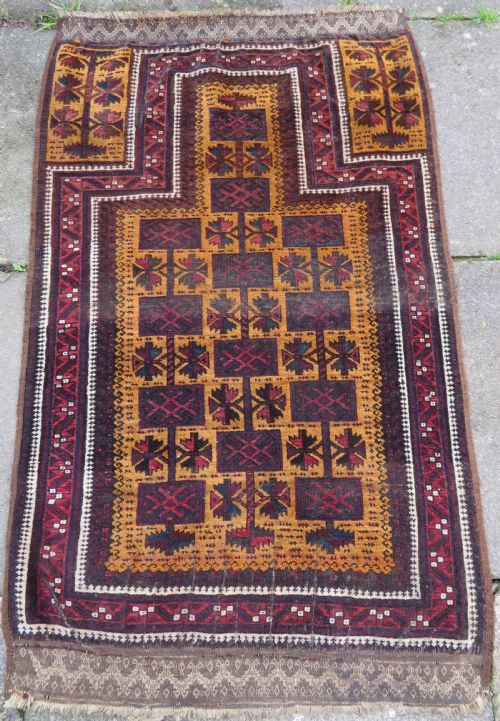


Small Persian Prayer Rug
A small persian prayer rug brings the concentrated artistry of nomadic weavers into domestic spaces.
Small Persian Prayer Rug
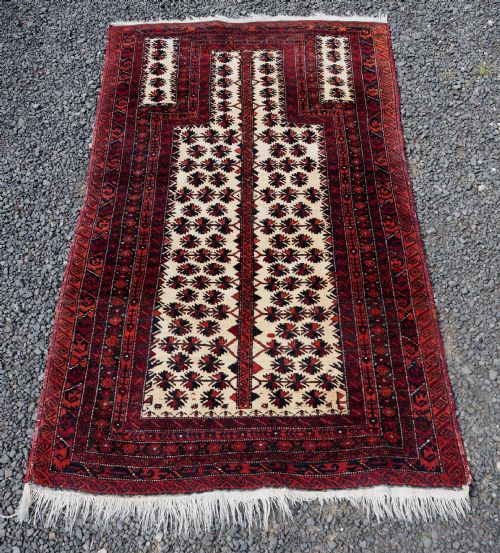
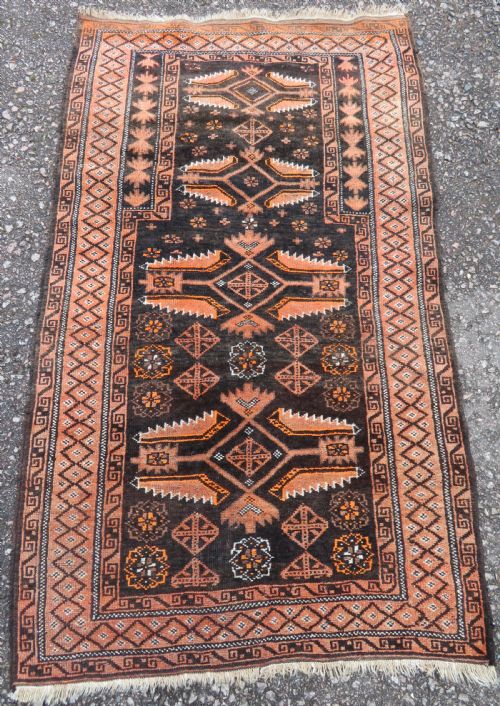
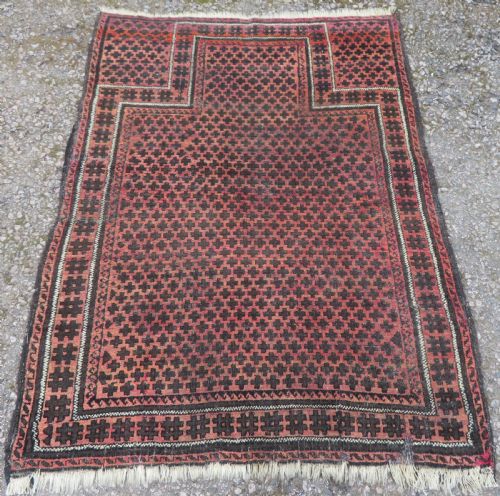
A small persian prayer rug is a portable textile designed for devotional use, defined by a distinct mihrab arch pointing towards Mecca. These portable floors were woven by nomadic and tribal groups across Persia and neighbouring regions.
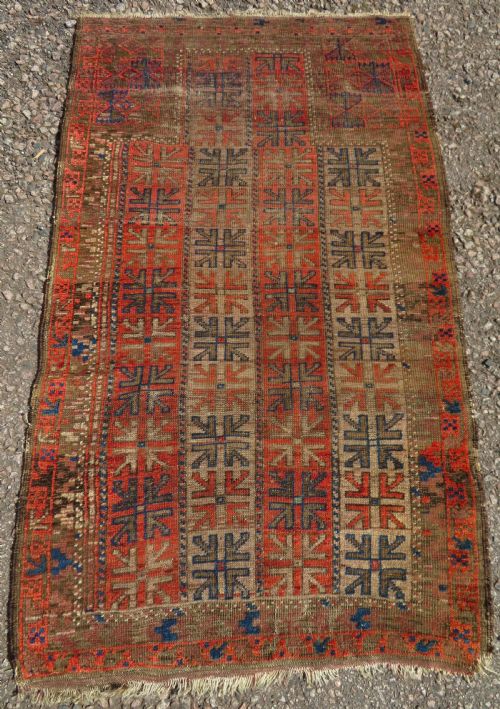
The pieces on this page lean heavily toward tribal origins, specifically Baluch and Afghan workshops from the late nineteenth and early twentieth centuries. They combine practical utility with rich symbolic motifs such as the tree of life and repeat lotus leaves.
How they were made
Weavers utilised natural wool, cotton foundations, and occasionally silk or camel hair to construct these hand-woven floor coverings. The materials reflect the pastoral life of the tribes, who sheared their own flocks for the pile.
Structures vary from sturdy village formats to finer nomadic knots, dyed with traditional pigments that produce deep, earthy tones. Artisans incorporated local wool and camel hair grounds to ensure durability for daily kneeling.
Small Persian Prayer Rug Retail Price Guide 2026
Typical asking prices for small persian prayer rug among the pieces listed under this phrase on Sellingantiques today, from the lower quarter to the upper quarter. They describe what is for sale here now, not the wider market.
Listings span from the late nineteenth century to the 1930s, featuring wool, cotton, silk, and camel hair materials.
What varies in quality
Quality rests upon the fineness of the knotting and the integrity of the natural dyes used across the field. Superior examples display crisp geometry in motifs like the tree of life or multiple mihrabs.
The handling of wool quality and pile retention separates standard village pieces from exceptional tribal survivors. Even when distressed by age, finer weaves maintain the clarity of their design elements.
The Small Persian Prayer Rug Glossary
- Mihrab
- The arched niche in a prayer rug that mimics the direction of the qibla in a mosque. It forms the primary focal point of the devotional design.
- Baluch
- A term describing rugs woven by the nomadic Baluch tribes of eastern Persia and Afghanistan. These textiles often feature dark wool palettes and camel hair grounds.
- Tree of Life
- A symbolic motif representing the path from earth to heaven. It frequently anchors the central field of tribal prayer rugs.
- Seh Mihrab
- A triple-arched design layout found on specific prayer rugs. This configuration multiplies the devotional niche across the upper field.
Small Persian Prayer Rug: Frequently Asked Questions
How were small persian prayer rugs used?
These rugs served as personal, portable spaces for daily prayers performed facing Mecca. Because of their modest dimensions, weavers designed them to be easily rolled up and transported by nomadic families.
In modern interiors, their compact size makes them suitable for hanging on walls as textiles or placing in smaller hallways and bedside positions.
How do I identify a tribal baluch prayer rug?
Tribal baluch pieces are generally recognised by their darker indigo and madder red wool palettes, often complemented by camel hair grounds. Look for traditional motifs such as repeated lotus leaves, octagons, or central trees of life.
Many examples originate from Khorassan or the wider borderlands of east Persia and Afghanistan during the late nineteenth and early twentieth centuries.
What is the significance of the mihrab arch?
The mihrab is the pointed arch at one end of the rug that indicates the direction of prayer towards Mecca. Weavers arranged the field geometry so that the user kneels facing into the niche.
Some unusual variations, such as the seh mihrab, incorporate multiple arches into a single composition while retaining this devotional purpose.
How should I care for an antique wool prayer rug?
Protect antique wool and camel hair textiles by placing them in low-traffic areas away from direct, harsh sunlight. Gentle vacuuming without a rotating brush roll helps remove dust without pulling the hand-woven foundation.
Professional specialist cleaning is recommended for older rugs to preserve the natural dyes and structural integrity of the pile.