

Small Oak Pedestal Table
A small oak pedestal table offers sturdy timber charm and compact proportions for any room.
Small Oak Pedestal Table
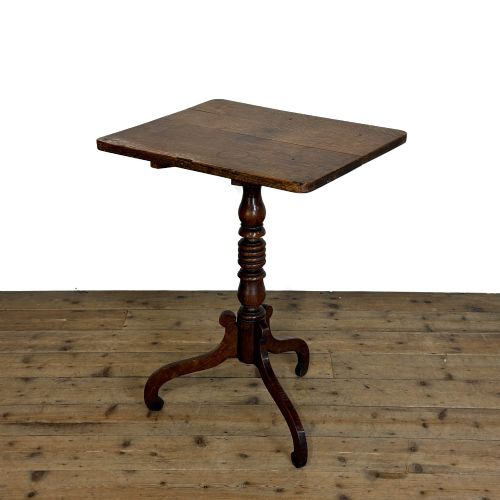
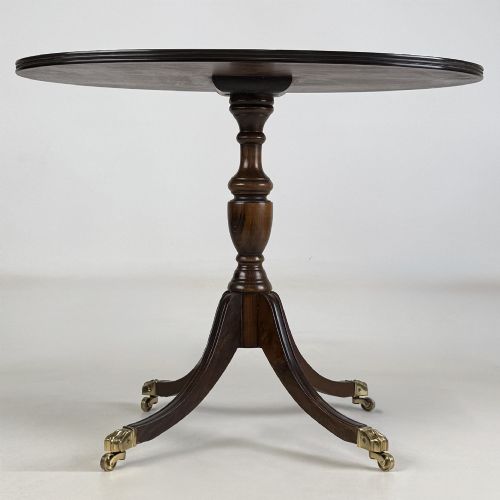
A small oak pedestal table spans multiple periods, appearing across Georgian, Regency, Victorian, and Edwardian eras in various forms. Buyers seek these compact pieces to serve as wine tables, lamp stands, or occasional tables within domestic spaces.
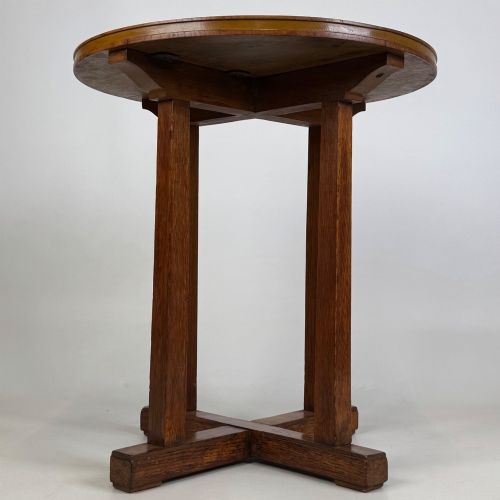
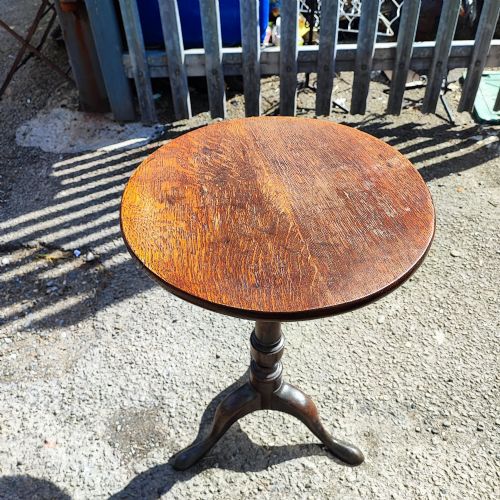
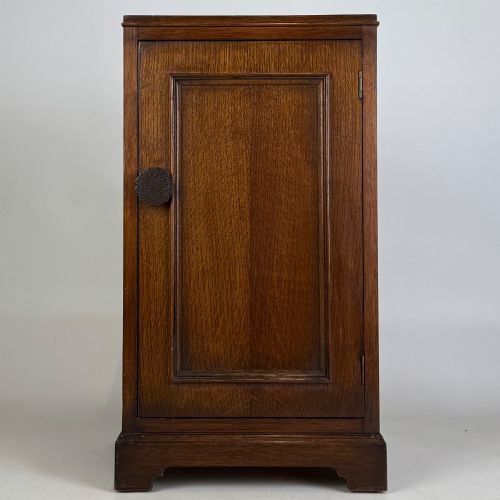
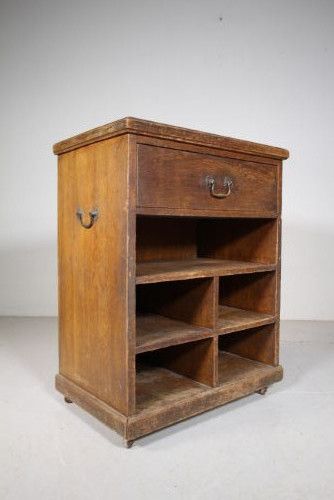
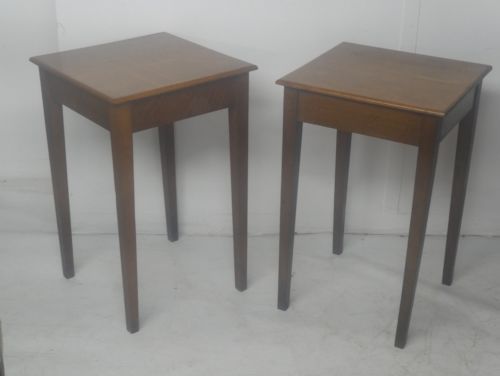
The selections on this page lean heavily towards Edwardian and 19th-century examples, alongside earlier Georgian and 18th-century designs. Tripod bases dominate the older formats, while later pieces introduce shelves, cupboards, and rectangular tops.
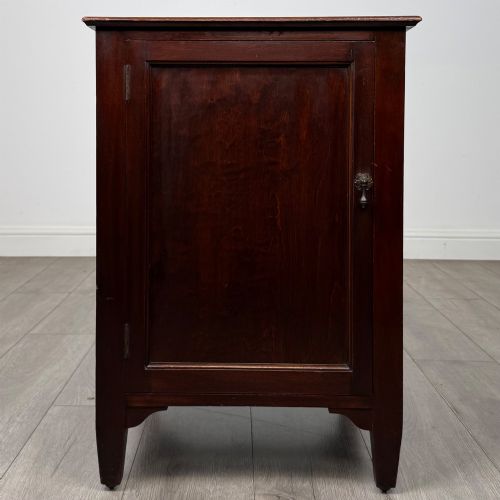
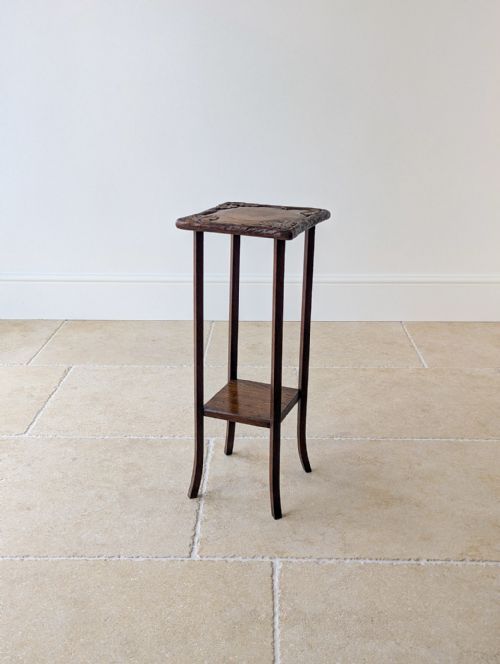
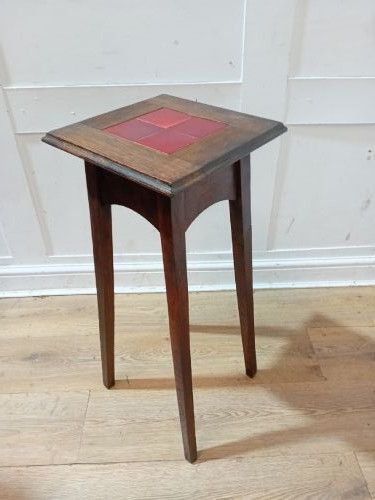
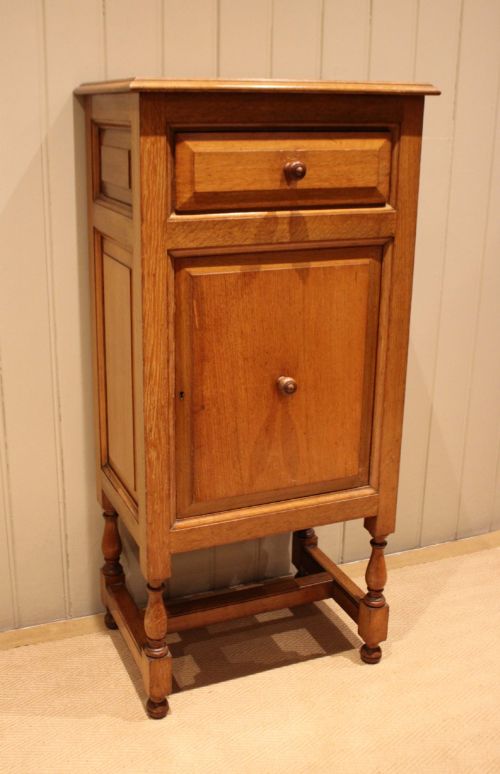
Makers utilised solid oak alongside burr oak, stained wood, and ebonised accents to create functional furniture on a modest scale. These items function as versatile side tables, bedside cabinets, and plant stands in modern rooms.
What varies in quality
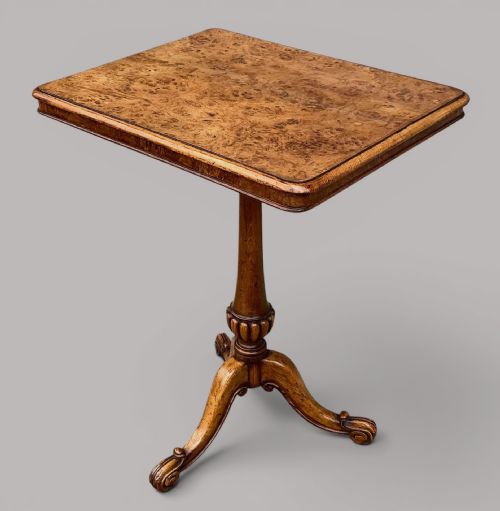
The distinction between standard utility items and superior examples lies in the selection of timber figure, such as burr oak veneers, and the crispness of carved detail. Finer pieces demonstrate careful turning on the pedestal shaft and balanced proportions across the tripod base.
Original surface patination and honest age-related wear distinguish undisturbed historical pieces from heavily restored or later altered formats. Structural rigidity in the central column connection dictates the daily utility of the table.
Listings span multiple eras from the 18th century through to the 1920s, featuring oak, burr oak, walnut, and ebonised wood.
Baillie Scott
The Small Oak Pedestal Table Glossary
- Tripod table
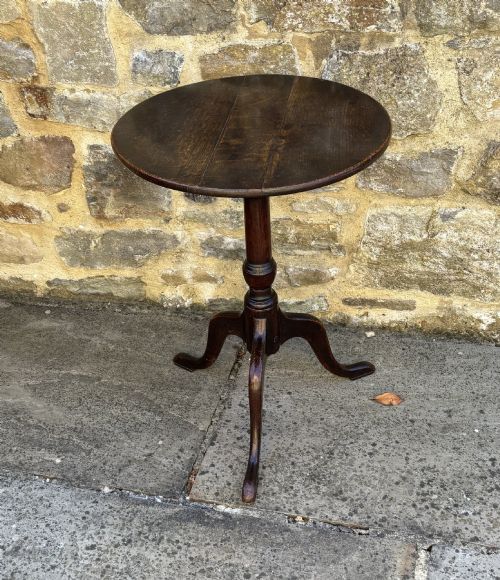
- A small freestanding table supported by a central pillar resting on three legs. These designs became popular during the Georgian period for serving wine or holding candles.
- Barley twist
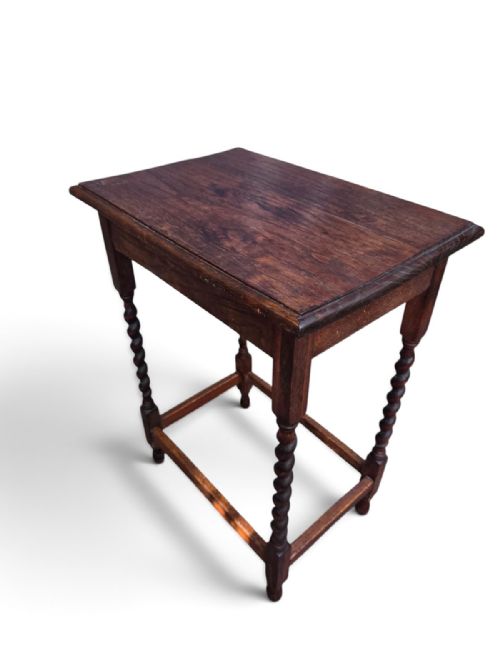
- A spiral turning technique applied to wooden table legs and central columns. This decorative form appears frequently on Edwardian oak furniture.
- Burr oak
- A timber growth formation that produces intricate, swirling grain patterns. Cabinet makers utilised this prized wood for decorative table tops.
- Jardiniere stand
- A tall pedestal or small table designed specifically to hold a plant pot or flower display. These pieces emerged strongly during the Arts and Crafts and Edwardian periods.
Small Oak Pedestal Table: Frequently Asked Questions
How do I date an oak wine table?
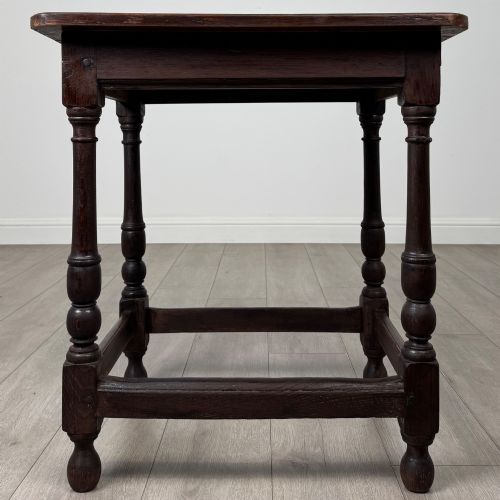
Dating relies on examining the construction methods, leg profiles, and timber characteristics. Georgian and 18th-century examples typically feature hand-turned tripod bases with distinct peg joints.
Later Victorian and Edwardian pieces introduce machine-turned components, decorative carving styles like barley twist, and alternative woods or veneers such as burr oak.
Where should I place a lamp table?
These compact tables fit easily beside armchairs, sofas, or beds to hold lighting and small personal items. Their central pedestal design ensures legs do not obstruct surrounding seating.
They also function effectively in corners or hallways as plant stands and display surfaces for decorative objects.
What is the difference between oak and burr oak?
Standard oak provides a straight, uniform grain pattern valued for structural strength and traditional domestic furniture. It forms the solid body of many historical side and wine tables.
Burr oak comes from a growth deformity on the tree that creates complex, swirling grain patterns. Makers used this striking timber on table tops to create visual impact.