


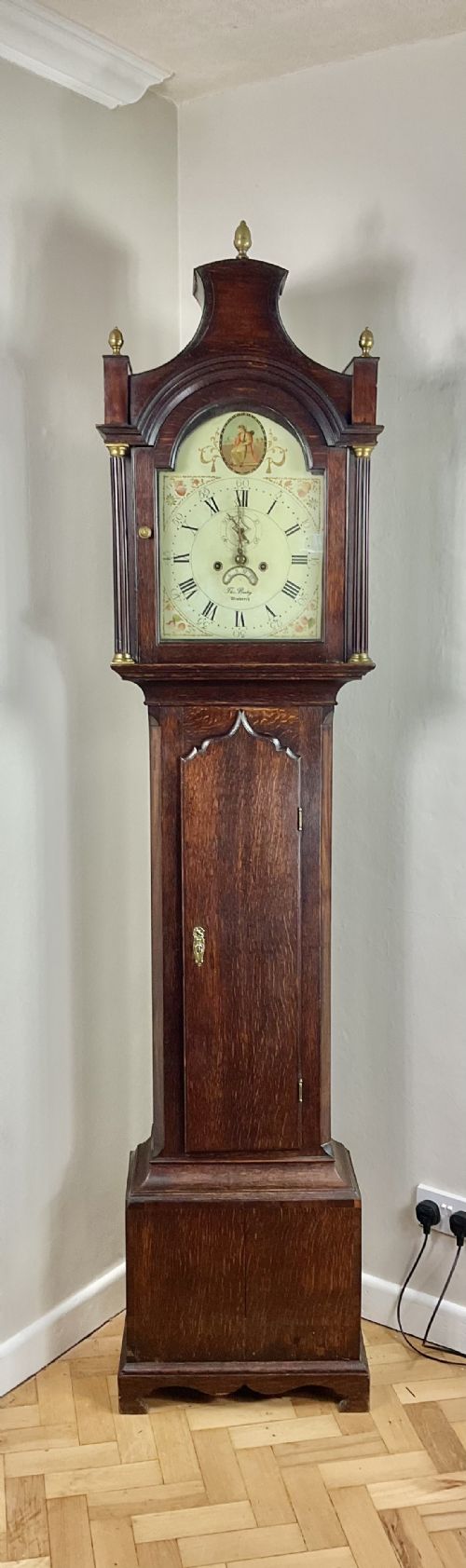


Small Oak Floor Clock
A small oak floor clock brings the steady tick of centuries into a room without dominating the floor space.
Small Oak Floor Clock
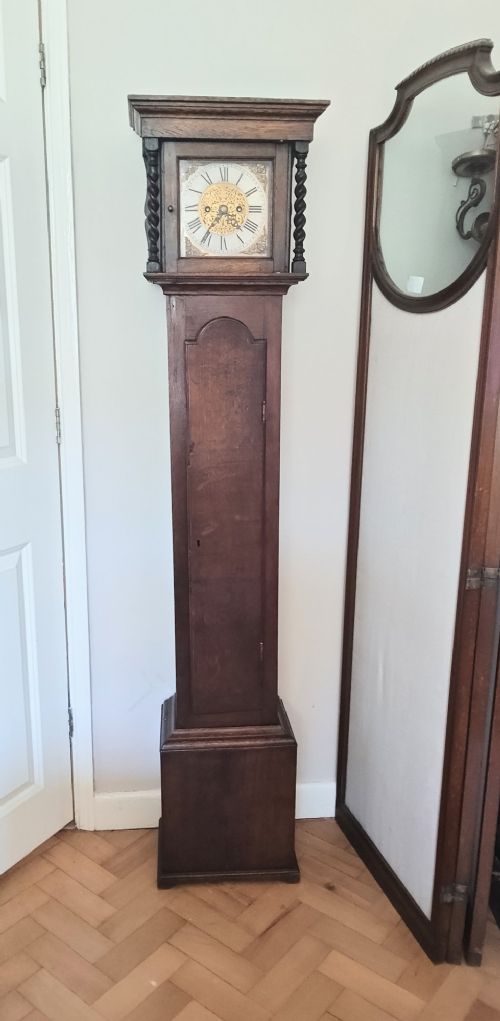
A small oak floor clock is a compact timekeeper designed for domestic spaces, combining the height of a traditional longcase with reduced proportions. These pieces appear across several eras, with Georgian and Edwardian examples forming the core of what you will encounter on this page.
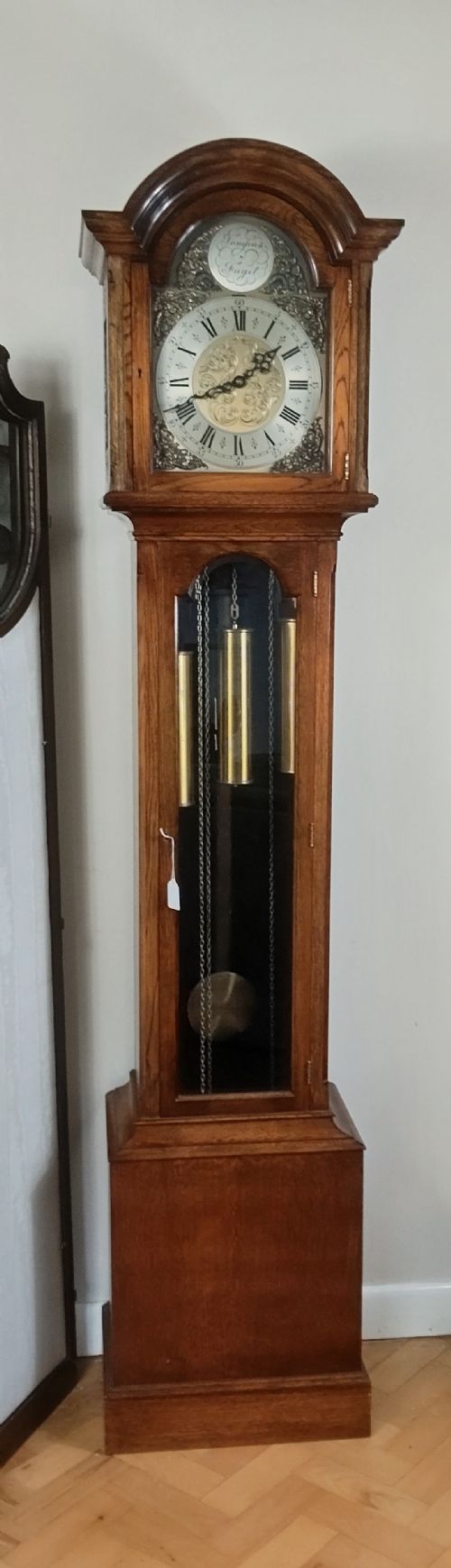
The selection ranges from early Georgian and traditional longcase formats to 1930s chiming models and Edwardian grandmother clocks. Dial sizes often measure ten or eleven inches, housing movements that range from simple eight day strikes to musical and quarter chiming mechanisms.
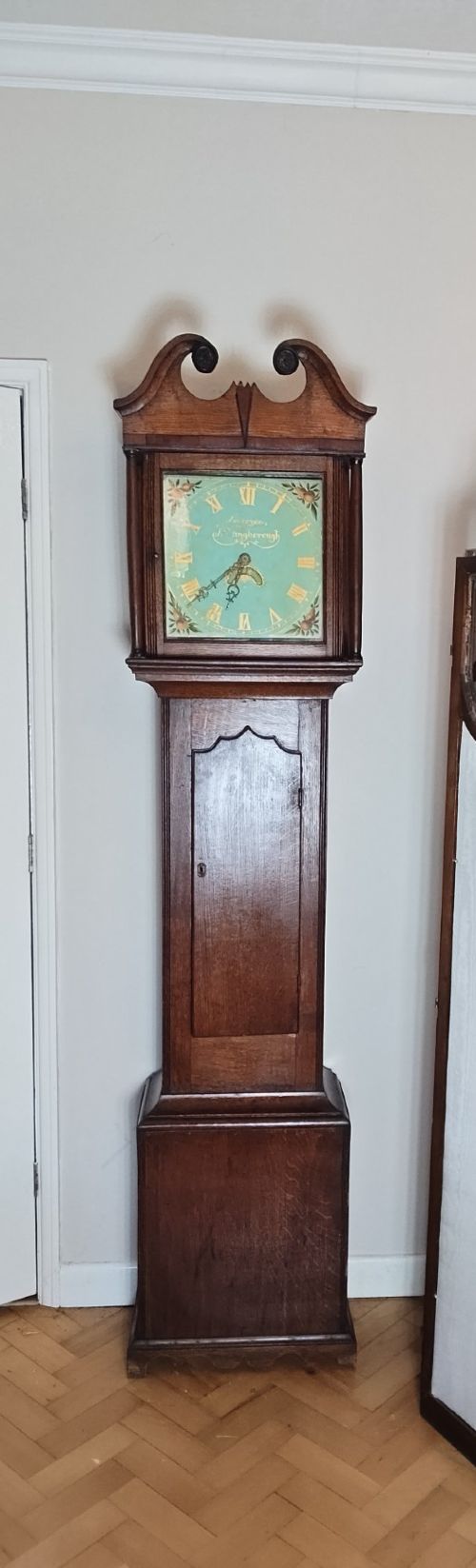
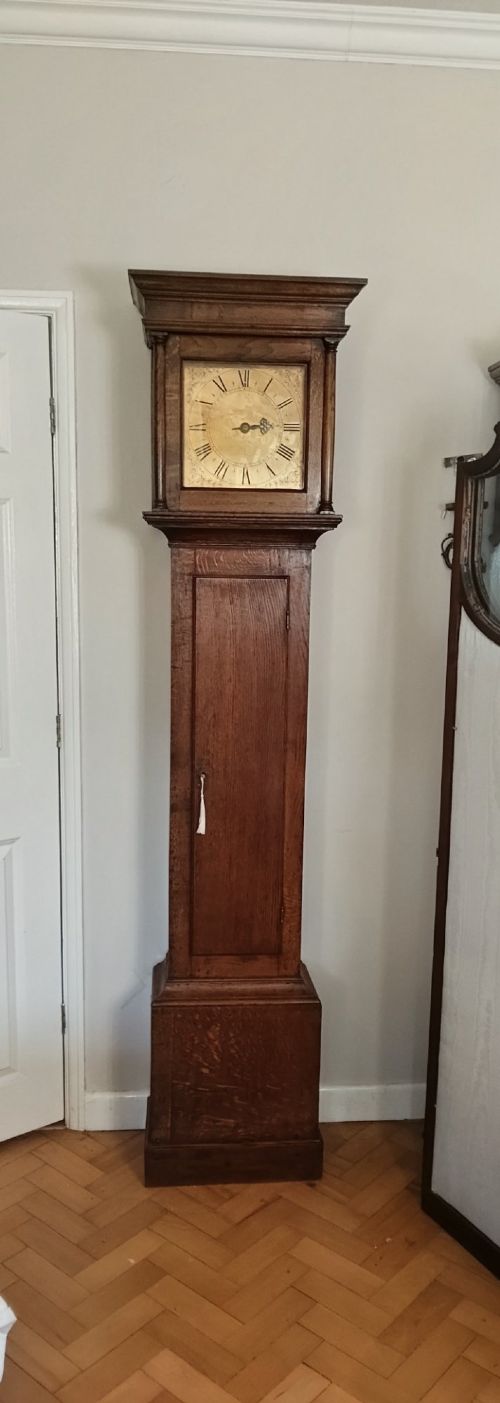
Makers inscribed their work on brass or painted iron dials, connecting provincial towns like Hythe, Chester and Haversham to the finished cabinet. The timber itself varies from warm coloured golden oak to cases accented with mahogany, walnut or subtle inlay.
Understanding quality differences
The refinement of the dial and the sophistication of the movement dictate the upper tier of these timekeepers. Dial engraving, painted scenes in duck egg blue, and complex quarter chiming or musical mechanisms separate standard workshop output from exceptional work.
Proportion and timber figure also govern value, as cabinetmakers who achieved a slim, balanced silhouette produced more desirable pieces. Secondary details such as inlaid banding, brass spandrels and signed dial plates distinguish regional craftsmanship.
Some provincial clockmakers included a delicate duck egg blue finish on their iron dials to soften the contrast against the dark oak grain.
The Small Oak Floor Clock Glossary
- Grandmother clock
- A smaller version of the traditional longcase clock, typically standing shorter and built with slender proportions. These pieces became particularly popular during the Edwardian period.
- Grandfather clock
- A tall freestanding pendulum clock enclosed in a wooden case with a weighted movement. The term describes full sized longcase clocks dating from the Georgian era onward.
- Fusee
- A conical pulley connected to the mainspring by a cord or chain, designed to equalize the driving force as the spring unwinds. This mechanism improves timekeeping accuracy across the duration of the wind.
- Dial
- The face of the clock where the hours and minutes are displayed. On these pieces, dials are fashioned from brass or painted iron and often bear the maker's signature and location.
Small Oak Floor Clock: Frequently Asked Questions
How tall is a small oak floor clock?
These compact timekeepers stand noticeably lower than standard tall case clocks, making them suitable for rooms with lower ceilings. Their reduced height helps them fit into hallways and tight corners.
The listings show varied proportions, from slim Georgian formats down to Edwardian and 1920s examples built for smaller domestic spaces.
What is the difference between a grandfather and a grandmother clock?
The primary distinction lies in height and scale, with grandmother clocks offering a much more slender and compact silhouette. Both utilise weights and pendulums housed in wooden floor cases.
Traditional grandfathers date back through the Georgian periods, while smaller grandmother variants appear frequently in Edwardian and early twentieth century listings.
How do eight day movements work?
An eight day movement requires winding once a week via the dial face using a specialised key. The mechanism uses suspended weights that descend slowly as the gear train operates.
These movements range from simple striking clocks to complex models featuring triple weight chiming or musical cylinders.
Where were these clocks made?
Many provincial horologists signed their work directly onto the dial face, recording towns such as Chester, Hythe and Haversham alongside their own names. Regional cabinetmakers built the oak and mahogany cases to house these movements locally.
Retailers also retailed finished pieces, as seen with examples bearing stamps from major establishments like Harrods.