

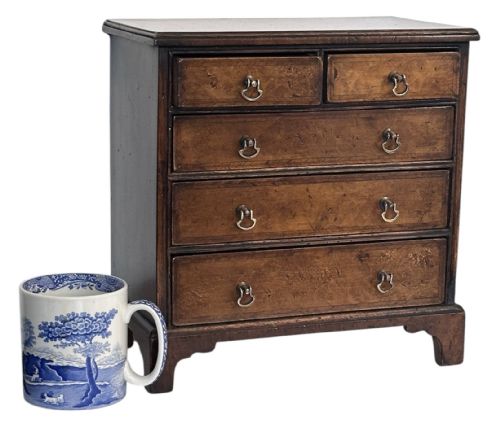


Small Oak Desktop Cabinet
A small oak desktop cabinet offers neat storage for letters and specimens, combining sturdy domestic timber with compact craftsmanship.
Small Oak Desktop Cabinet
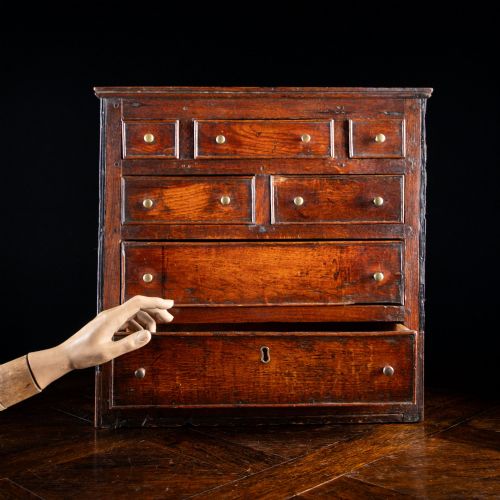
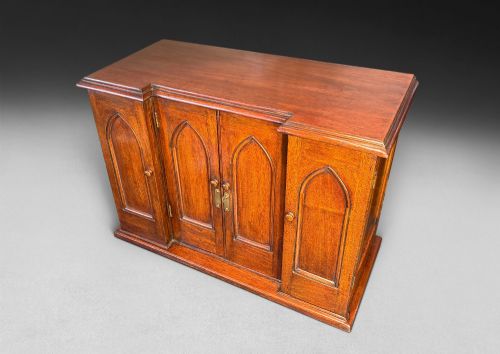
A small oak desktop cabinet gathers tabletop chests, miniature furniture, and countertop display cases designed to organise papers, pipes, or collections within easy reach. These pieces emerge primarily from the Georgian, Victorian, and Edwardian eras, alongside 1930s interwar commercial examples.
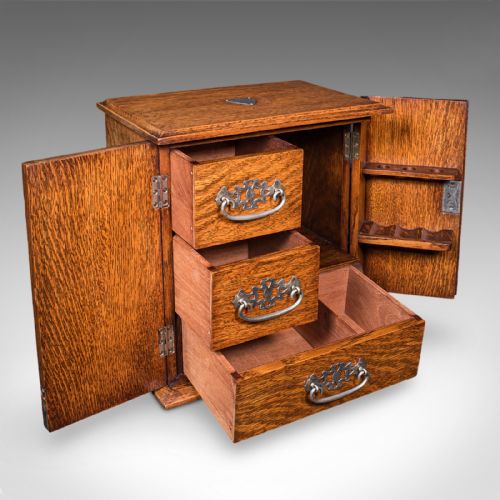
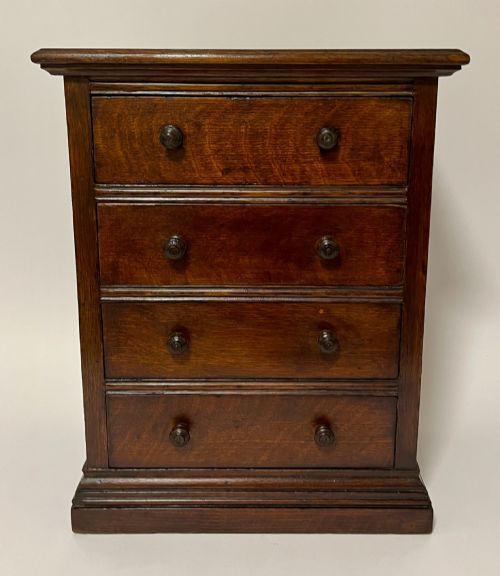
The most frequent version encountered on this page is the 19th century or Edwardian oak collector's cabinet or miniature chest of drawers. Buyers also discover doctor's smoking cabinets, watchmaker's chests, sloped stationery boxes, and small filing drawers.
Origins span English workshops, Welsh cabinet makers, and continental makers such as Flemish examples. Each piece serves to keep small valuables or documents sorted upon a desk, counter, or table.
How they were made
Makers built these cabinets predominantly using solid oak, sometimes figured or golden, paired with brass handles, hinges, and escutcheons. Ebonised wood, walnut, and copper appear alongside glass panels for display purposes and iron fittings.
Construction techniques include traditional joinery for miniature chests of drawers, hinged doors on smoking cases, and tambour fronts on cigar cabinets. Carved details and inlaid decorations mark specific Arts and Crafts and Gothic Revival pieces.
Small Oak Desktop Cabinet Retail Price Guide 2026
Typical asking prices for small oak desktop cabinet among the pieces listed under this phrase on Sellingantiques today, from the lower quarter to the upper quarter. They describe what is for sale here now, not the wider market.
Listings feature oak combined with brass, glass, iron, walnut, and ebonised wood across Victorian, Edwardian, Georgian, and 1930s periods.
What varies in quality
Superior examples display finely figured oak grain and carefully fitted interior drawers that operate smoothly within the cabinet frame. The integration of original brass hardware and working locks with keys elevates the standard of a piece.
Simpler vernacular items, such as rustic Georgian spice cupboards or utilitarian filing drawers, rely on straightforward construction rather than decorative carving or veneering. The presence of documented provenance or unusual configurations distinguishes exceptional miniatures from standard workshop output.
The Small Oak Desktop Cabinet Glossary
- Miniature furniture
- Scale replicas or apprentice pieces built to demonstrate a cabinet maker's proficiency to a guild. These smaller chests mirror full-size tallboys and wardrobes.
- Humidor
- A specialised box or cabinet designed to store cigars at a stable humidity. They often feature cedar or oak linings with secure brass closures.
- Tambour
- A flexible shutter door formed of narrow strips of wood glued to canvas or leather backing. This mechanism slides smoothly around a curve to enclose small shelves.
- Counter-top shop cabinet
- Glazed or open shelving units built to sit upon retail counters for displaying small goods to customers. They utilise glass and oak to protect stock while maintaining visibility.
- Specimen case
- A shallow-drawer cabinet utilised by naturalists or collectors to organise insects, fossils, or coins. These feature tight-fitting drawers to keep dust away from delicate items.
Small Oak Desktop Cabinet: Frequently Asked Questions
What fits inside these cabinets?
Owners typically store stationery, letters, fountain pens, and small collectables such as coins or stamps within the compartmentalised drawers.
Deeper compartments accommodate smoking accessories, cigars, or watchmaker's tools depending on the specific interior layout.
How do I date a cabinet?
Stylistic clues such as Gothic Revival mouldings, Arts and Crafts carved strapwork, or Georgian bracket feet provide a clear indication of period origin.
Construction methods, drawer dovetailing, and the type of brass hardware used also help narrow down the decade of manufacture.
Where should I place one?
These compact pieces suit tabletops, office desks, sideboards, or narrow hallway chests where floor space is limited.
Keeping them away from direct sunlight and radiators protects the oak timber and prevents the wood from drying out.
Were they made for homes?
Many served domestic roles as stationery boxes, writing chests, or gentleman's smoking cabinets in Victorian and Edwardian sitting rooms.
Others originated in commercial settings as shop display counters, doctor's dispensaries, or watchmaker's work storage.