



Small Oak Credenza
These small oak credenza options bring compact timber storage into a room, combining period character with everyday utility.
Small Oak Credenza
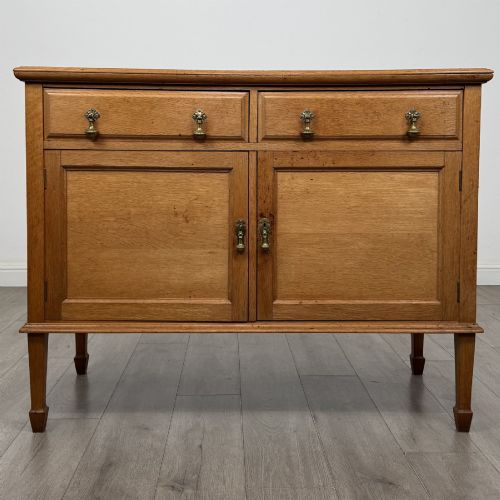
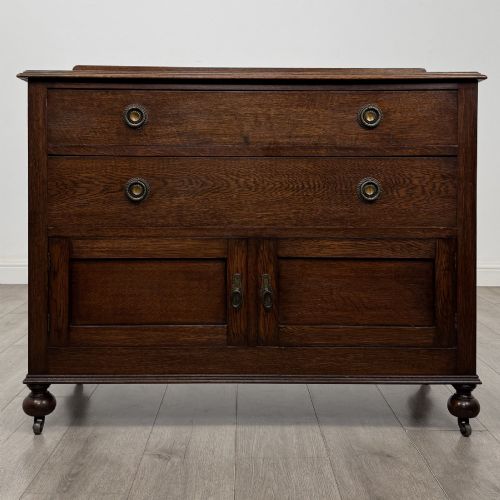
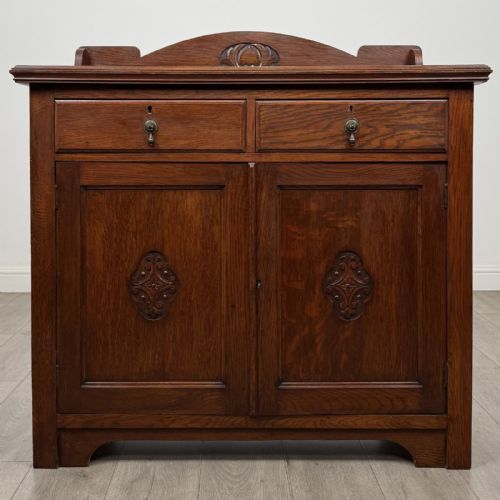
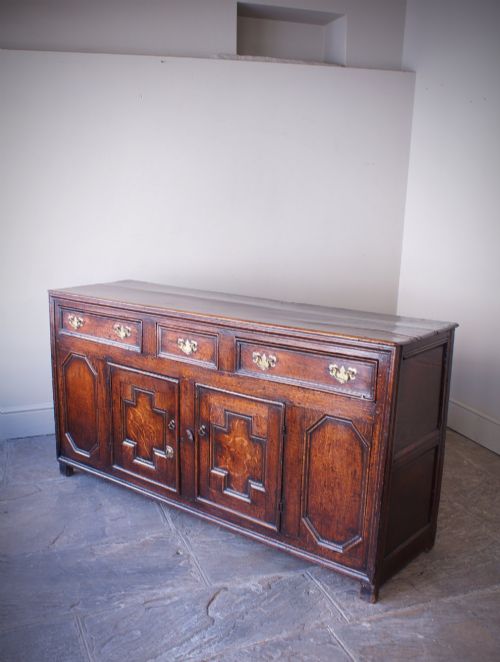
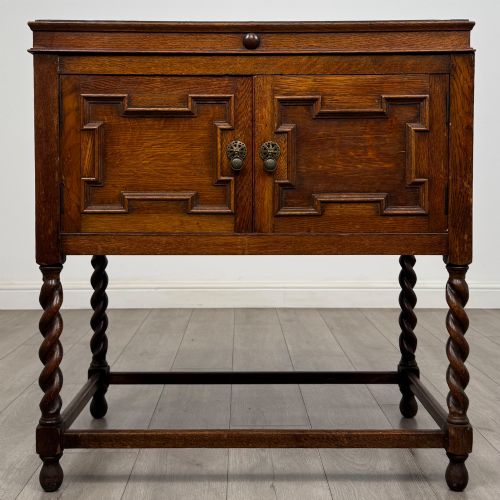
A small oak credenza functions as a compact storage unit, appearing in forms such as low cupboards, side cabinets, and dresser bases. Buyers seeking a small oak credenza will most frequently encounter pieces originating from the Edwardian era and the 1920s, constructed from solid timber.
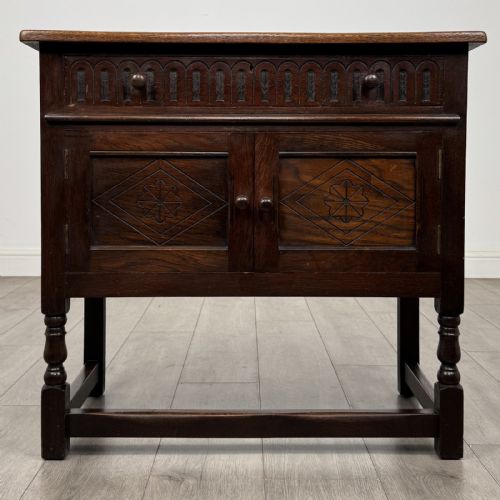
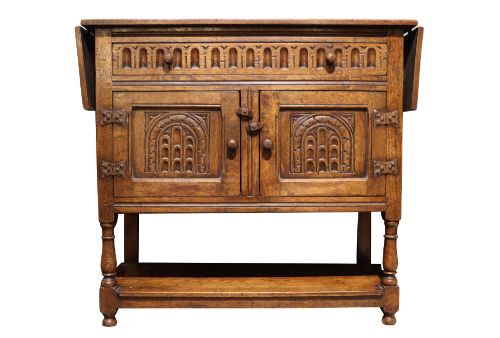
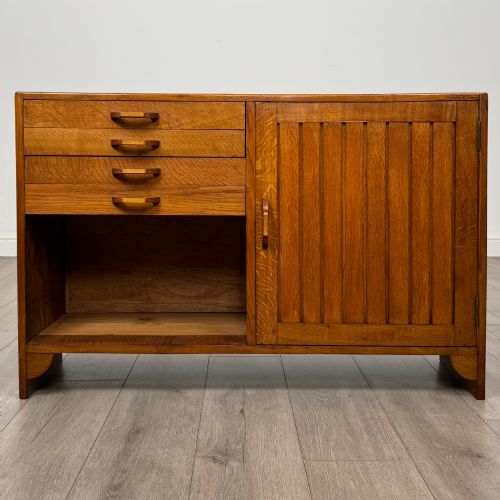
The selection spans historical revivals alongside utility pieces, incorporating Jacobean, Tudor, and Gothic Revival influences. Alongside these revival styles, simpler country and mid-century forms emerge, utilising golden or limed finishes on the timber.
While the primary material remains oak, occasional variants introduce mahogany linings or contrasting brass and iron hardware. Dimensions remain constrained to smaller proportions, suiting halls, dining rooms, and sitting spaces where floor area is limited.
Materials and construction
Carpenters utilised solid oak for these cabinets, sometimes selecting golden or limed variants to alter the surface appearance. Metal fittings in brass and iron appear on doors and drawers, serving both structural and decorative functions.
Small Oak Credenza Retail Price Guide 2026
Typical asking prices for small oak credenza among the pieces listed under this phrase on Sellingantiques today, from the lower quarter to the upper quarter. They describe what is for sale here now, not the wider market.
Some Edwardian cupboards feature linenfold panels that refuse to crease, no matter how many laundered shirts stand nearby.
Factors of quality
Timber selection separates standard production from finer examples, with the grain density and uniformity of the oak determining visual depth. Heavier solid timber construction provides greater rigidity than lighter builds.
The crispness of carved details and the execution of linenfold panels distinguish skilled workshops from basic output. Integrated hardware, such as brass and iron handles or hinges, indicates the original tier of manufacture.
Heals of London
The Small Oak Credenza Glossary
- Credenza
- A sideboard or cabinet used for storage and serving. Originally Italian in origin, the term applies broadly to low sideboards and cupboards.
- Linenfold
- A style of wood carving that imitates folded linen. This motif appears frequently on Edwardian cupboard doors.
- Dresser Base
- The lower section of a kitchen or dining dresser, fitted with cupboards or drawers. These items function independently as low sideboards.
- Limed Oak
- Oak treated with a specialised finish that leaves a white pigment in the grain. This treatment lightened the timber surface.
Small Oak Credenza: Frequently Asked Questions
Where should I place a small oak credenza?
These compact cabinets suit hallways, dining rooms, and sitting areas where floor space is limited. Their low profile allows them to sit beneath windows or mirrors without dominating the room.
They provide concealed storage for tableware, books, or household items while offering a flat surface for lamps or decorative objects.
How do I care for oak furniture?
Oak benefits from regular dusting with a dry, soft cloth to prevent particulate buildup. Avoid placing the timber in direct sunlight or near heat sources to prevent drying and splitting.
Applying a traditional beeswax periodically nourishes the wood and maintains the natural sheen of the finish without sealing the pores.
What is the difference between a credenza and a sideboard?
Historically, credenzas originate from low Italian serving cabinets, whereas sideboards developed in Britain primarily for dining rooms. Over time, the terms have largely merged in the antiques trade to describe low storage furniture.
Both types serve similar functions in modern interiors, though a credenza often emphasises enclosed cabinet space over open shelving or plate racks.
How can I date an oak cabinet?
Dating relies on examining construction marks, hardware types, and stylistic indicators such as linenfold carving or revival motifs. Edwardian and 1920s pieces often display machine-assisted joinery alongside hand-finished details.
Earlier examples from the 17th or 18th centuries feature pegged joints, hand-sawn timber marks, and forged iron hardware unique to their period of manufacture.