
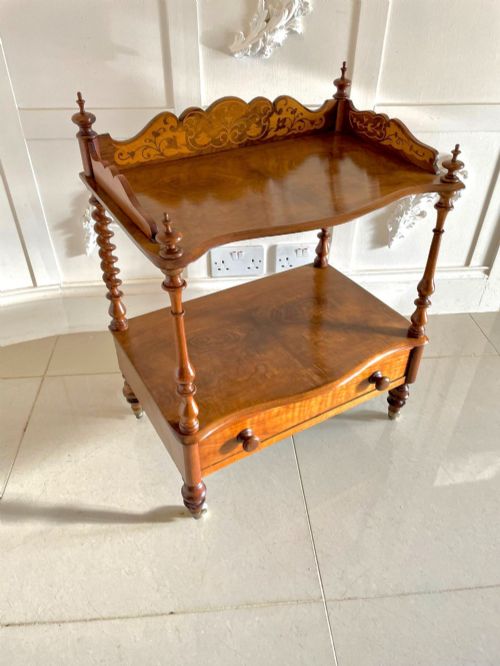
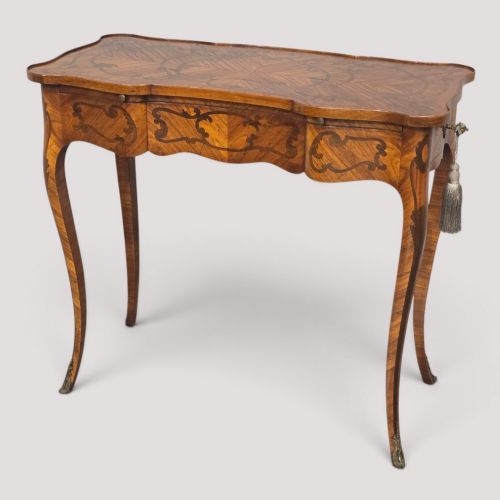
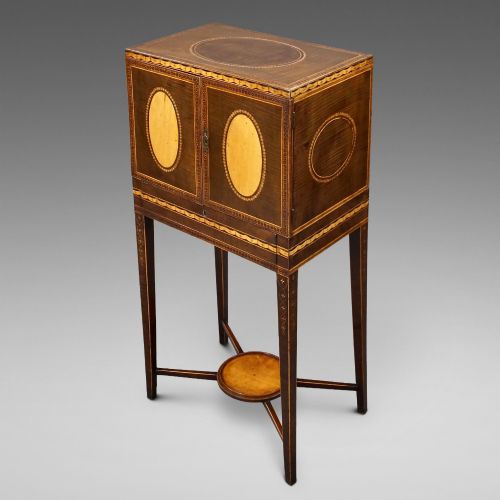
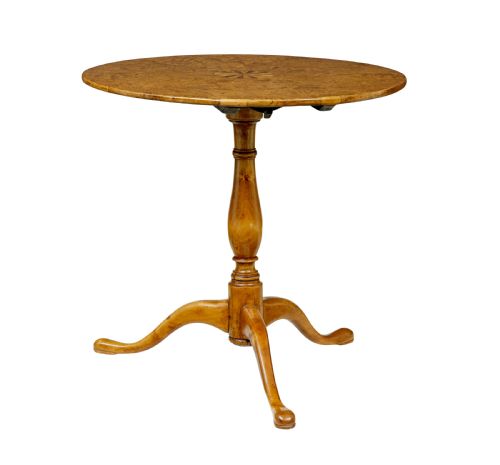
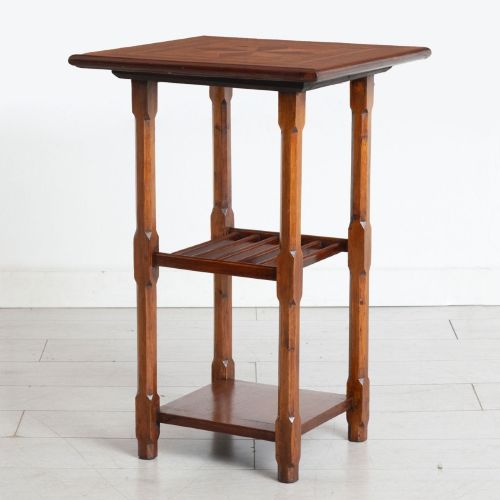
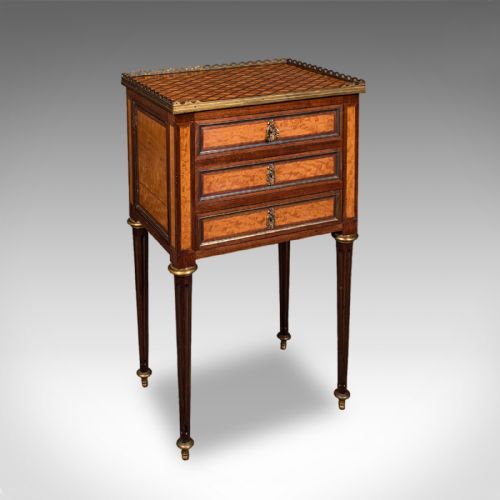
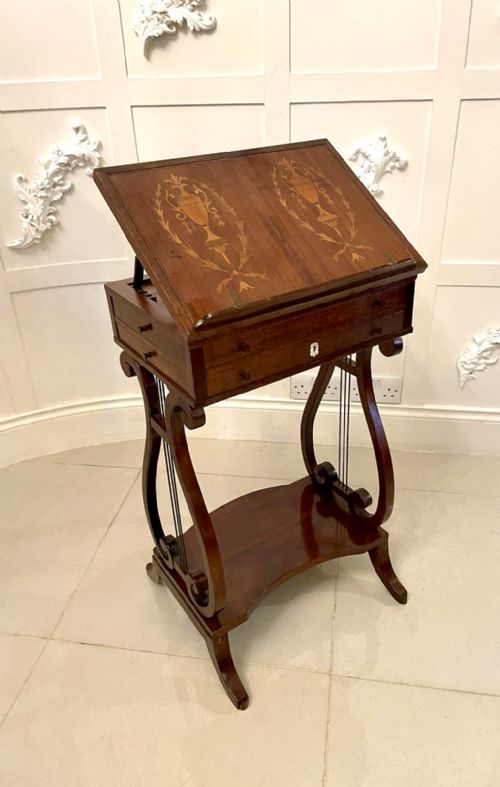
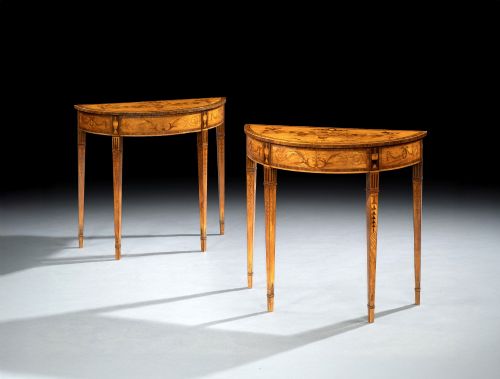

Small Marquetry Table
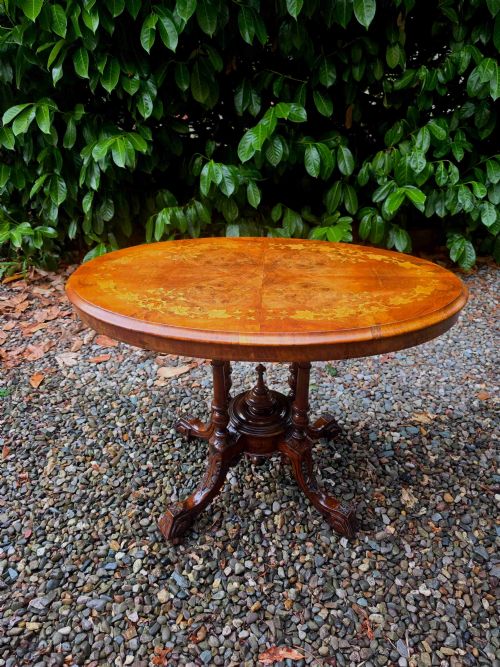
A small marquetry table brings intricate timber pictures into compact spaces, offering surface and storage through centuries of patterned veneer work.
Small Marquetry Table
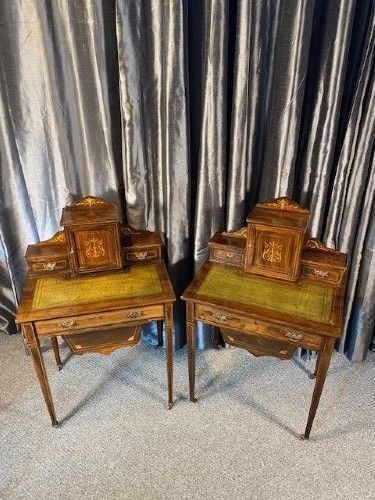
A small marquetry table serves multiple domestic roles, frequently appearing as an occasional piece, a bedside cabinet, or a compact writing desk.
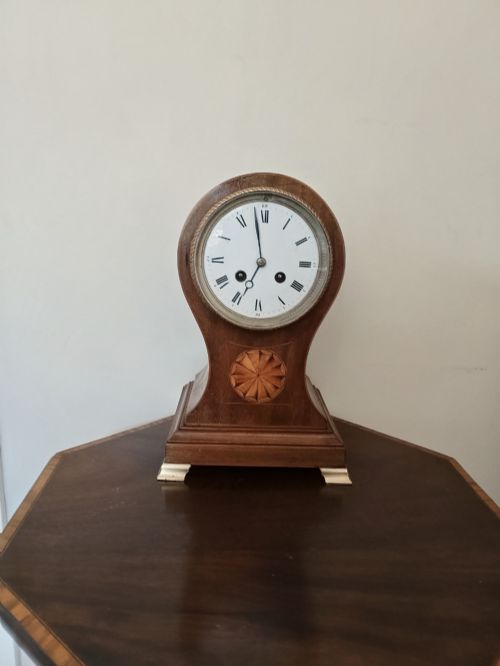
The selections here span the eighteenth, nineteenth, and early twentieth centuries, drawing heavily on English Georgian craftsmanship alongside French and continental revival styles.
Buyers encounter forms ranging from demI-lune side tables and tripod stands to sophisticated kneehole desks and display items.
Judging the work
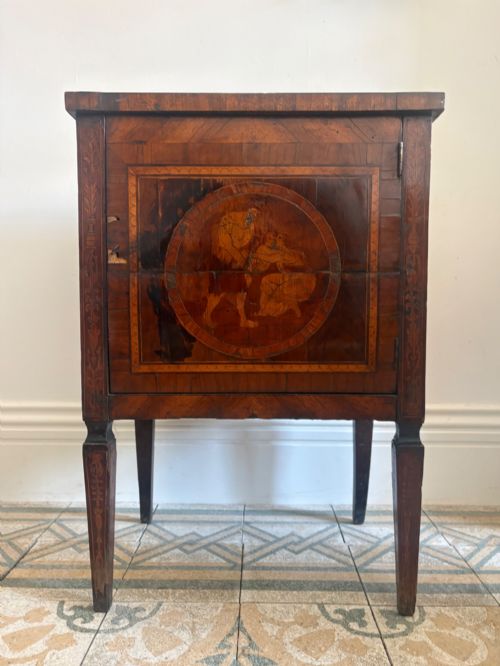
Superior examples demonstrate meticulous alignment in the wood grain and floral motifs, where individual veneer pieces join without visible gaps.
The depth and choice of contrasting timbers dictate the visual success of the top panel, distinguishing refined workshop output from simpler production.
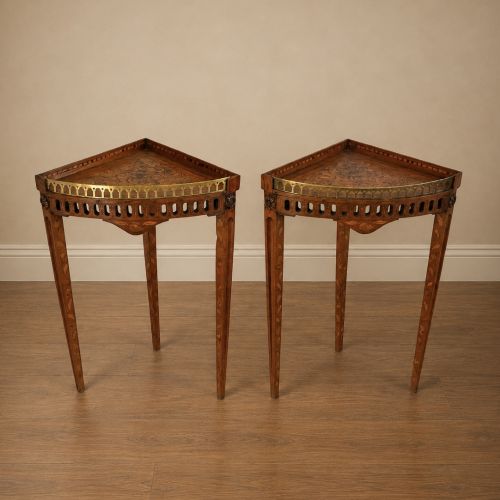
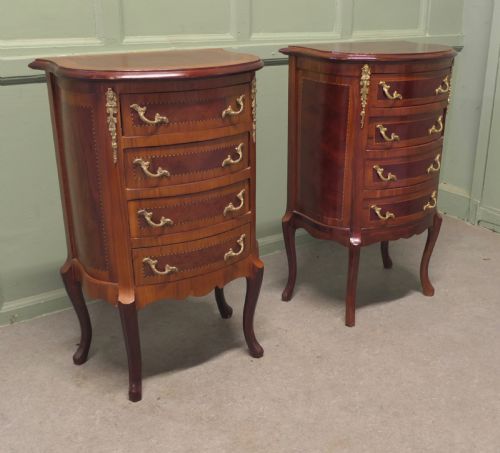
Integration of secondary metals, such as brass galleries or ormolu mounts, reveals the original ambition and tier of the maker.
Some nineteenth-century tables hide entire writing slopes and stationery compartments beneath seemingly flat decorative tops.
Edwards and Roberts·Donald Ross·A Hugnet Paris
The Small Marquetry Table Glossary
- Marquetry
- The art of applying decorative veneer pieces to a structural surface to create pictorial or geometric designs. This technique distinguishes simple wood furniture from highly ornate decorative items.
- Veneer
- A thin slice of figured wood applied over a secondary timber carcase. Cabinet makers select these fine layers to display rich grain patterns without using solid costly lumber.
- Satinwood
- A lustrous, pale yellow timber native to the tropics, frequently utilised in eighteenth and nineteenth-century English and continental furniture. It provides striking contrast in multi-wood inlay.
- Ormolu
- Gilded bronze mounts attached to furniture corners, feet, and edges. French cabinet makers relied on these metal decorations to accent the polished wood surfaces.
- DemI-lune
- A half-moon shape characteristic of side tables designed to stand flat against a wall. These forms often feature elaborate fan or floral marquetry across the top.
Small Marquetry Table: Frequently Asked Questions
How do I spot genuine marquetry?
Genuine marquetry displays slight irregularities under close inspection, reflecting hand-cut veneer assembly rather than printed modern laminates.
Running fingers across the surface reveals the subtle textures of different wood types meeting within the design.
Where should I place a small inlaid table?
These compact items suit hallways, beside seating, or as accent surfaces in drawing rooms where floor space remains limited.
Keeping them away from direct sunlight and strong heat sources protects the fragile natural glues and delicate timber veneers.
What is the difference between marquetry and parquetry?
Marquetry forms pictorial, floral, or scrollwork designs using various tinted woods to build organic scenes.
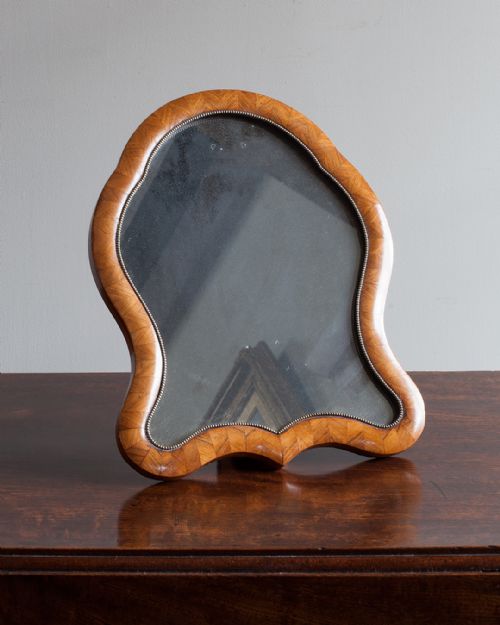
Parquetry constructs geometric, repeating tile patterns like cubes or chevrons using uniform wood pieces.
How do I clean an antique veneered surface?
Dusting gently with a dry, soft cloth prevents surface grit from scratching the aged French polish or wax finish.
Professional wax formulated for antiques restores the sheen periodically without introducing moisture into the historic joints.