
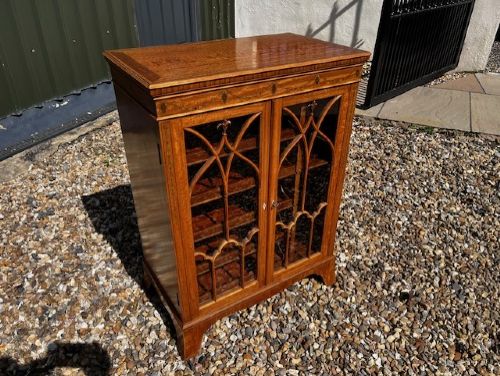
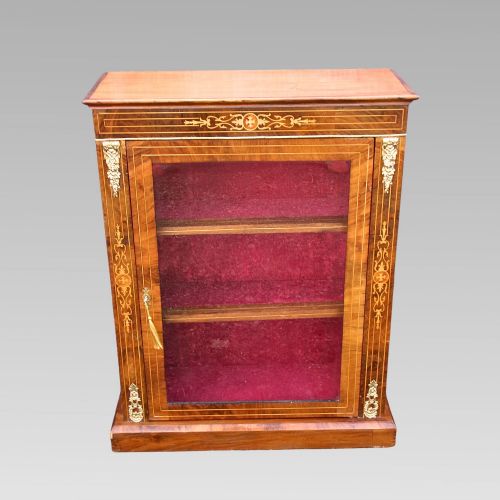


Small Marquetry Display Cabinet
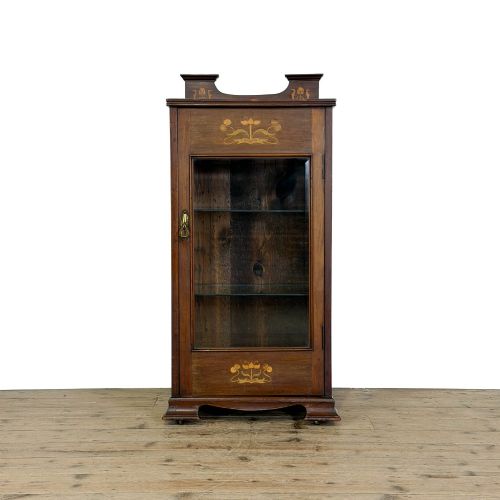
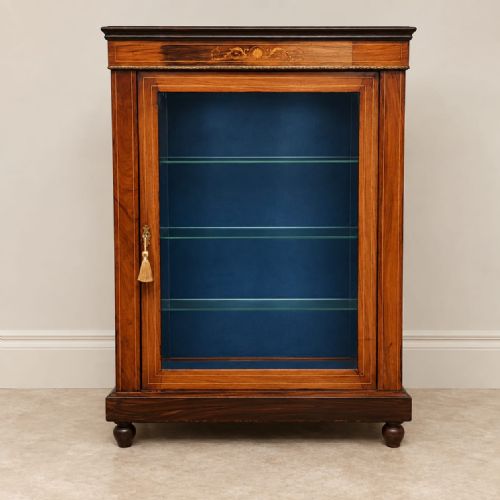
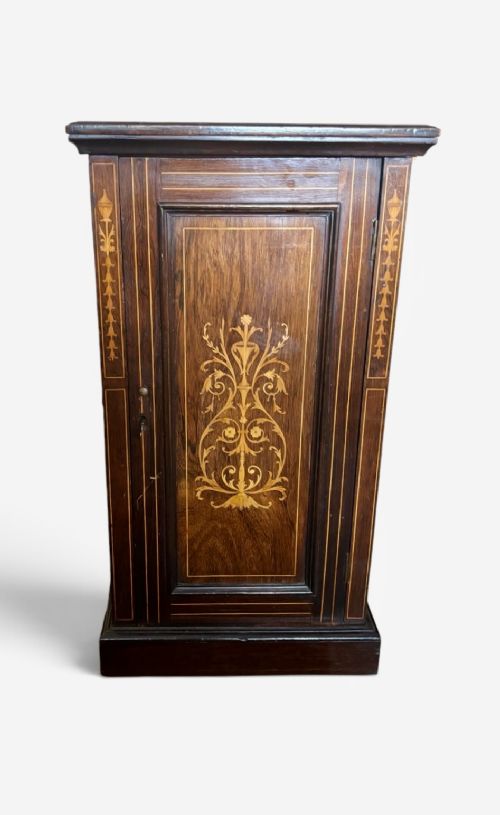
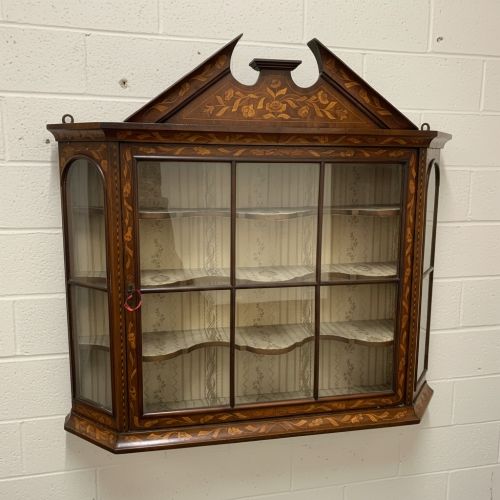
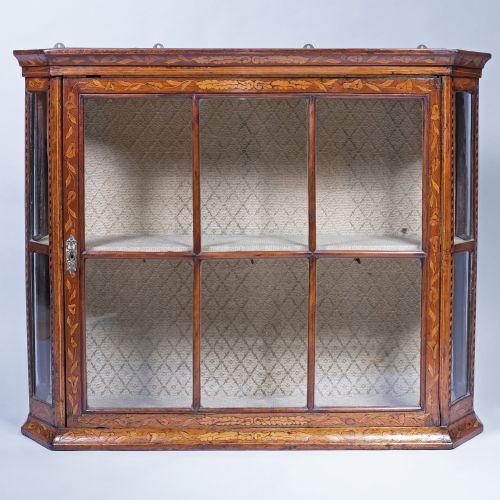
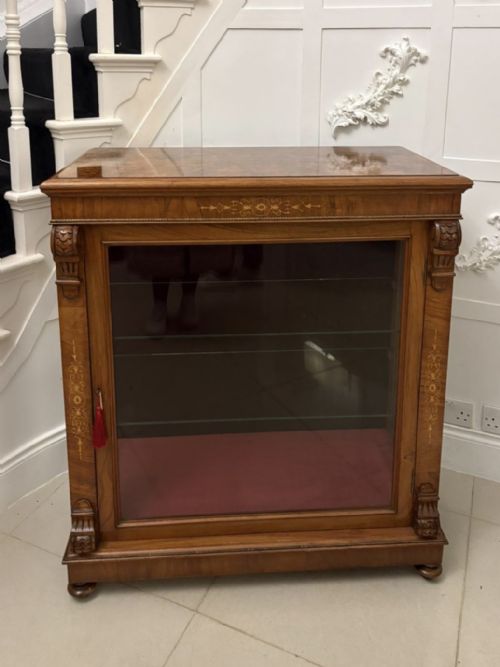
These small marquetry display cabinets bring intricate wood-inlay work and glass-fronted storage together in compact forms from the Victorian, Edwardian, and eighteenth-century periods.
Small Marquetry Display Cabinet
A small marquetry display cabinet serves to exhibit porcelain, books, and curiosities while adding decorative floral or geometric wood patterns to a room. Buyers seeking this phrase encounter pier cabinets, wall-hanging cupboards, and compact freestanding bookcases designed to occupy minimal floor space.
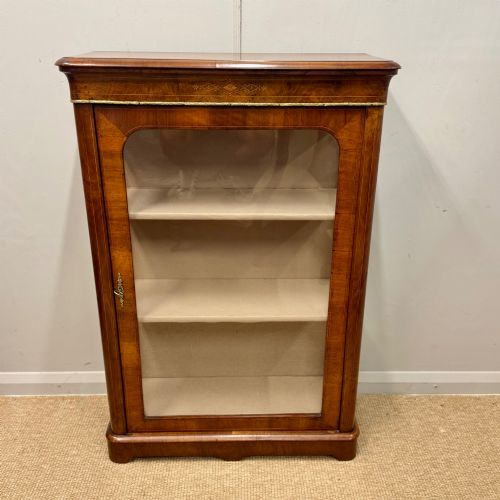
The Victorian era supplies the highest volume of examples on this page, particularly walnut pier cabinets fitted with glass doors and brass mounts. Alongside these sit Edwardian mahogany vitrines, eighteenth-century Dutch wall cabinets, and Arts and Crafts specimen cupboards.
Forms vary from narrow upright pier cabinets to serpentine credenzas and corner units. Most retain original glazed doors and velvet-lined or wooden interior shelving intended for small collections.
Materials and Construction
Cabinet makers utilised dense native and exotic timbers including walnut, burr walnut, mahogany, rosewood, and satinwood as the structural and surface foundation. Cut veneers of contrasting woods such as boxwood and harewood were then applied to create detailed floral and scroll marquetry panels.
Glass panels were secured within wooden frames to protect contents from dust while maintaining visibility. Gilt bronze or ormolu mounts, brass stringing, and ebonised details frequently accented the primary timber frames.
Listings feature walnut as the dominant timber, frequently combined with boxwood, satinwood, and ebony marquetry details.
Quality and Craftsmanship
The standard of a small marquetry display cabinet depends on the precision of the veneer cutting and the complexity of the contrasting wood inlays. Finer pieces demonstrate seamless integration between the marquetry motifs and the figured grain of the walnut or mahogany background timber.
Secondary elements dictate overall distinction, including the weight of the cast ormolu mounts, the presence of original curved glass, and the subtlety of internal shelving arrangements. Superior workshop execution appears in the tight joinery of serpentine fronts and the depth of hand-polished finishes.
Shapland and Petter·Edwards and Roberts
The Small Marquetry Display Cabinet Glossary
- Marquetry
- Decorative veneer work arranged in pictorial or geometric patterns using various coloured woods. It differs from inlay by covering the entire surface rather than being set into hollowed recesses.
- Pier Cabinet
- A narrow cabinet designed specifically to stand against the wall space between windows. These pieces are frequently glazed and form a staple of Victorian drawing rooms.
- Ormolu
- Gilded bronze used for decorative mounts, feet, and keyhole escutcheons. This material provides metallic contrast to dark woods like rosewood and walnut.
- Vitrine
- A glass-fronted display cabinet or table intended for porcelain and small objects. The term derives from the French word for glass.
- Burr Walnut
- Timber taken from the wart-like growth on a walnut tree, yielding highly swirled and mottled grain patterns. Cabinet makers prized it for decorative veneering on door panels.
Small Marquetry Display Cabinet: Frequently Asked Questions
What is a pier cabinet?
A pier cabinet is a narrow freestanding piece built to fit the narrow wall space, or pier, between two windows in a nineteenth-century drawing room.
These cabinets typically feature a single glazed door and flat sides, making them ideal for displaying small ceramics without dominating the floor area.
How do I date a marquetry cabinet?
Dating relies on examining the secondary timbers, the style of the marquetry, and construction techniques like dovetailing. Victorian pieces often use walnut with boxwood stringing, whereas eighteenth-century examples display heavier Dutch floral motifs on oak carcases.
Secondary clues include the type of hinge, the composition of the glass, and whether the interior shelves are adjustable or fixed.
Where should I place a wall cabinet?
Wall cabinets suit hallways, studies, or living rooms where floor space is limited. Hanging them at eye level allows the glazed door and internal collection to become a focal point.
Ensure the wall structure can support the weight of the timber and glass before mounting.
What is the difference between marquetry and inlay?
Marquetry involves assembling a veneer puzzle on a paper backing before gluing the entire sheet onto the carcase surface. Inlay involves cutting recesses directly into solid wood and inserting contrasting pieces.
Most cabinets on this page utilise marquetry veneer techniques rather than solid-wood inlay.