
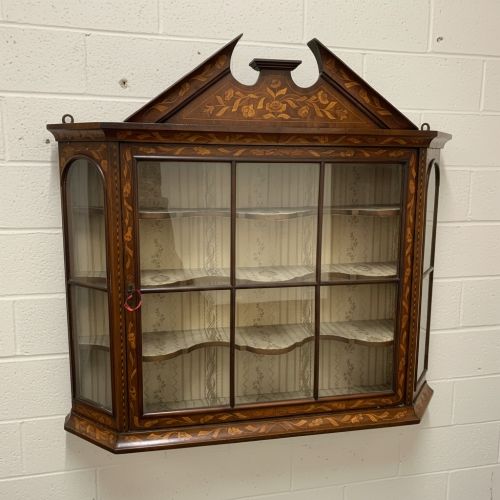


Hanging Curio Cabinet
A hanging curio cabinet puts small treasures on the wall where light catches them.
Hanging Curio Cabinet
A hanging curio cabinet displays small objects and keepsakes upon the wall, saving surface space while framing collections within glass and timber. These wall-mounted pieces range from simple glass-fronted boxes to architectural vitrines designed to catch the eye.
The versions met most often on this page date from the Victorian and Edwardian eras, constructed primarily in mahogany or satinwood for domestic use. Earlier examples such as the eighteenth-century Dutch marquetry wall cabinet appear alongside compact miniatures from nineteen hundred.
Forms span from straightforward rectangular wall cabinets to bow-fronted display cases and painted vitrines. Each variant offers a secure glazed enclosure for miniature ceramics, figures, or curiosities.
How they were made
Cabinetmakers utilised dense timbers such as mahogany and walnut for structural integrity, often applying satinwood veneers or marquetry inlay for decorative contrast. Brass hinges, locks, and glazing bars secure the glass panels that protect the interior contents.
Painted finishes appear on select satinwood and softwood frames, adding delicate surface ornament that complements the polished woodwork. Mirrored backs are integrated into several designs to reflect light through the displayed objects.
Mahogany and satinwood dominate the timber selection across these Victorian, Edwardian, and turn-of-the-century wall cabinets.
What varies in quality
The refinement of the timber and the crispness of any inlay set finer examples apart from standard domestic pieces. Richly figured grain, intricate marquetry, and well-executed painted decoration indicate greater workshop skill.
Joinery detail and original hardware influence the overall character of a cabinet. Clean mitres, well-fitted glass doors, and substantial brass mounts separate superior examples from simpler utilitarian boxes.
The Hanging Curio Cabinet Glossary
- Vitreen
- A glass-fronted display cabinet or wall case designed to exhibit small decorative items. This term often appears in nineteenth-century contexts for wall-hanging display furniture.
- Marquetry
- Inlaid wood veneers forming decorative patterns or pictorial scenes on the surface of a cabinet. Eighteenth-century Dutch examples frequently employ this technique.
- Satinwood
- A lustrous yellow-brown hardwood utilised for fine cabinetmaking and decorative veneers. It provides a bright surface that takes paint or polish exceptionally well.
- Bow-front
- A convex curved front profile found on certain display cabinets. This shape softens the angles of a room and expands the interior viewing area.
Hanging Curio Cabinet: Frequently Asked Questions
How do I hang a heavy cabinet?
Wall-mounted display cabinets require secure fixings into solid masonry or direct wall studs to support the weight of the timber and glass. Using appropriate brackets or internal screw points ensures the piece remains stable.
Distributing weight evenly inside prevents strain on the original hinges and joints of older cabinets.
What periods do these cabinets represent?
The selection spans from eighteenth-century marquetry pieces through Victorian and Edwardian designs up to early twentieth-century miniatures. Victorian and Edwardian mahogany versions form the majority of the current items.
Each period brings distinct timber choices and decorative styles to the wall.
How should I clean the glass and wood?
Dust the polished timber surfaces gently with a dry, soft cloth to protect the finish and any delicate veneers. Avoid harsh modern chemical sprays that can strip older polish.
Clean the glass panels with a mild solution applied to a cloth rather than sprayed directly, keeping moisture away from the timber joints.
Are these cabinets suitable for modern walls?
Their compact depth makes them ideal for hallways, living rooms, and smaller spaces where floor-standing furniture is impractical. They elevate collections to eye level where details can be appreciated.
Selecting a wall space away from direct sunlight preserves both the timber and the objects inside.