




Small Mahogany Specimen Drawers
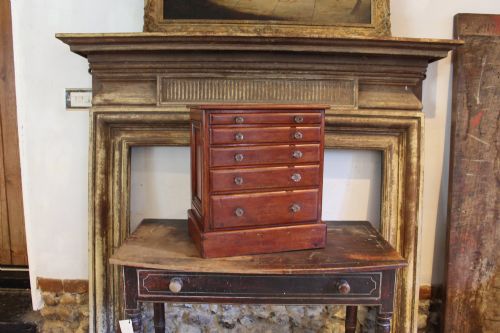
Small mahogany specimen drawers offer compact, orderly storage for natural history items and small treasures, combining dense timber with functional tabletop scale.
Small Mahogany Specimen Drawers
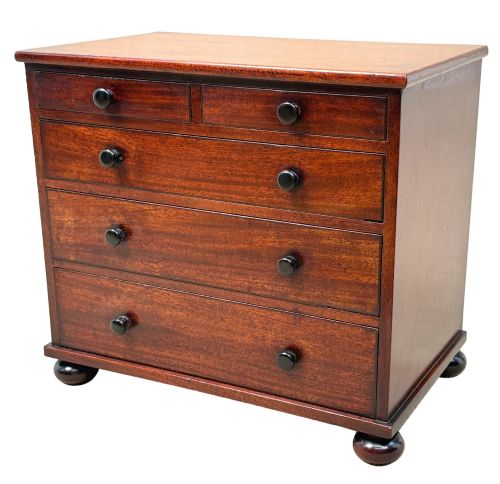
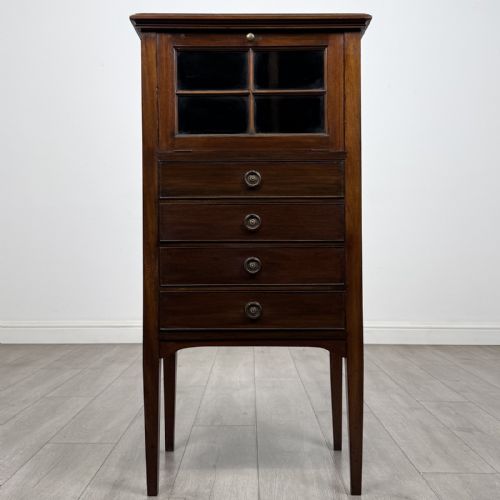
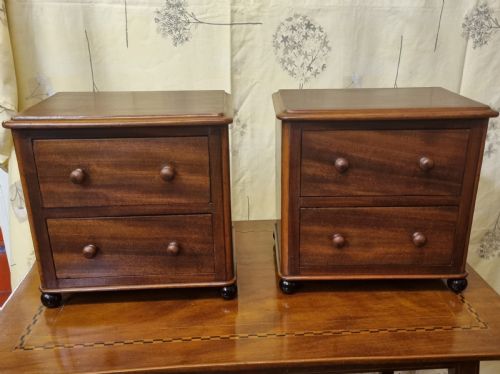
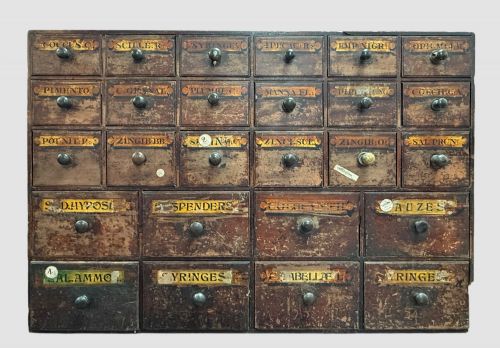
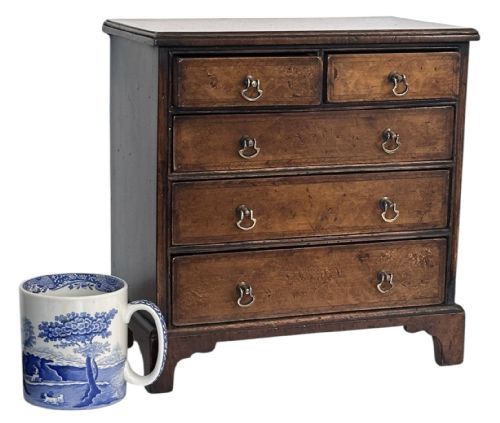
Small mahogany specimen drawers appear in several distinct forms across this selection, including tabletop chests, miniature chests of drawers, and dedicated collectors cabinets. These pieces served practical roles for apothecaries, watchmakers, and naturalists who required secure, compartmentalised storage for delicate items.
The pieces on this page originate predominantly from the nineteenth century, with Victorian examples forming the largest share alongside Georgian, Regency, and Edwardian specimens. Common configurations range from simple banks of drawers to glass-fronted display cases and campaign-style storage units.
How they were made
Makers utilised dense mahogany for the primary carcass and drawer fronts, often pairing it with secondary woods such as pine and oak for internal framing and drawer linings. Solid timber construction provided the necessary stability to protect sensitive contents from environmental shifts.
Metal and glass components completed the construction, with brass drop handles fitted to the drawer faces and occasionally glass panels integrated into doors for viewing collections. Bone elements sometimes appeared on escutcheons or pulls, adding subtle contrast to the dark timber.
Small Mahogany Specimen Drawers Retail Price Guide 2026
Typical asking prices for small mahogany specimen drawers among the pieces listed under this phrase on Sellingantiques today, from the lower quarter to the upper quarter. They describe what is for sale here now, not the wider market.
Listings feature mahogany, pine, oak, walnut, and glass across Victorian, Georgian, Regency, and Edwardian periods.
What varies in quality
The refinement of the cabinetmaking distinguishes higher-grade examples, visible in tight dovetail joints on the drawers and well-fitted back panels. Superior pieces maintain smooth drawer operation within their frames, reflecting precise initial construction.
The selection of the mahogany itself influences the character of the piece, with finely figured grain and uniform colour marking out better workshops. Original brass hardware and intact glass elements preserve the integrity of the design.
The Small Mahogany Specimen Drawers Glossary
- Mahogany
- A durable, reddish-brown tropical hardwood prized for its stability and rich grain. It serves as the primary material for the majority of these cabinets.
- Dovetail
- A traditional interlocking joint used in drawer construction. Fine, numerous pins indicate skilled workmanship.
- Escutcheon
- A small protective plate surrounding a keyhole, often made from brass or bone. It prevents the surrounding wood from wearing down through repeated use.
- Campaign style
- Furniture designed for portability, often featuring recessed brass handles and reinforced corners. These units were built for travel or field use.
Small Mahogany Specimen Drawers: Frequently Asked Questions
What were small specimen drawers used for?
These cabinets served naturalists, apothecaries, and tradesmen for organising small items such as botanical samples, medical supplies, and watch parts.
The compartmentalised layout kept delicate contents secure and separated during daily work or transport.
How do I date a Victorian piece?
Victorian examples span a broad period from the mid-nineteenth century to around nineteen hundred. Stylistic clues and construction methods help narrow down the decade of manufacture.
Inspect the secondary woods inside the drawers and the style of the brass hardware for period indicators.
Are these drawers suitable for modern storage?
The shallow proportions suit the organisation of small stationery, jewellery, and craft supplies on a desk or tabletop.
Keep them away from direct sunlight and strong heat sources to protect the polished mahogany surfaces.
How do I tell an apprentice piece from a cabinet?
Miniature chests often demonstrate the maker's full skill on a reduced scale rather than serving as practice work for learners.
Examine the quality of the timber and the precision of the joinery to assess the maker's intent.