


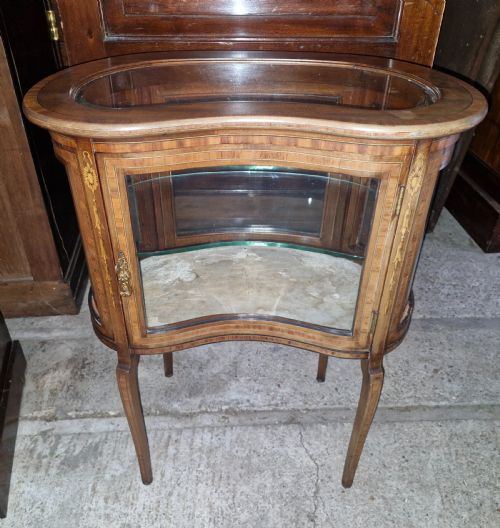


Small Mahogany Kidney Table
A small mahogany kidney table brings a curved, graceful silhouette to a room, offering a compact surface designed for writing, display or occasional use.
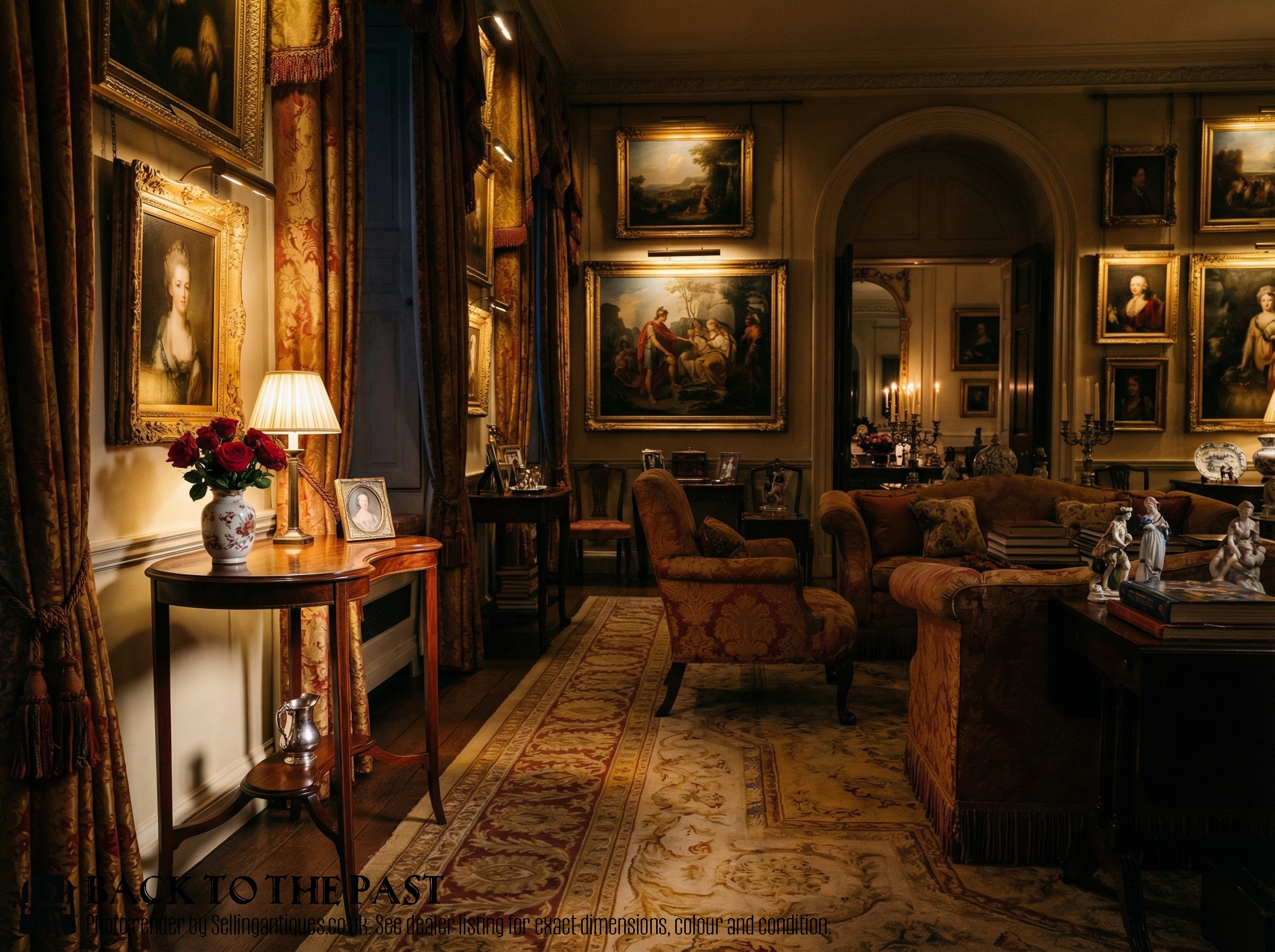
Small Mahogany Kidney Table
A small mahogany kidney table presents a distinct curved top designed to hug the user or fit neatly into tighter spaces within a room. When searching for a small mahogany kidney table, buyers encounter various forms spanning the Victorian, Edwardian, and 19th Century periods, alongside Sheraton Revival and French Revival styles.
The practical function of these pieces shifts across the inventory, appearing as side tables, writing tables, desks, occasional tables, and display cabinets or bijouterie tables. Pieces from 1880, 1900, and surrounding decades utilise the characteristic kidney outline for both utilitarian writing tasks and decorative display.
Most examples found on this page lean heavily into revival aesthetics, particularly Sheraton Revival and Edwardian interpretations of earlier Georgian elegance. The construction prioritises a flowing, curved perimeter that sets these pieces apart from standard rectangular tables.
How they were made
Cabinetmakers constructed these tables primarily from solid and veneered mahogany, shaping the distinctive kidney curve to form the main top surface. This primary timber often served as a rich canvas for contrasting details.
Satinwood inlay and boxwood inlay frequently decorated the surfaces, creating delicate borders and classical motifs typical of Sheraton Revival and Edwardian craftsmanship. Marquetry techniques added intricate floral or geometric patterns into the wood grain.
Brass fittings, such as casters, gallery rails, or key escutcheons, provided functional and decorative accents. Selected pieces also incorporated leather writing inserts, glass panels for display vitrines, or fitted interiors for small writing requisites.
Small Mahogany Kidney Table Retail Price Guide 2026
Typical asking prices for small mahogany kidney table among the pieces listed under this phrase on Sellingantiques today, from the lower quarter to the upper quarter. They describe what is for sale here now, not the wider market.
Listings span the Victorian, Edwardian, and 1900 periods, showcasing mahogany alongside satinwood, boxwood, and glass.
What varies in quality
The refinement of the timber selection and the precision of the inlay work largely determine the standing of an individual piece. Finer examples display crisp, meticulously fitted satinwood and boxwood banding that follows the tight curves of the kidney top without warping or lifting.
Structural integrity in the framework and legs separates standard production from superior cabinetmaking. Tables that maintain rigid joints and balanced proportions despite the complex curved geometry reflect a higher level of original construction.
The integration of specialised functions, such as smoothly operating drawers, well-fitted leather surfaces, or glazed vitrine compartments, distinguishes more elaborate writing and display tables from simpler occasional forms.
The Small Mahogany Kidney Table Glossary
- Kidney table
- A table featuring a concave curve on one side, allowing the user to stand or sit closer to the centre. This distinctive shape gained popularity during the late 18th century and experienced strong revivals later.
- Marquetry
- The art and craft of applying pieces of veneer to a structure to form decorative patterns and pictures. Makers utilised contrasting woods like satinwood and boxwood to achieve pictorial depth.
- Bijouterie table
- A glass-topped display table designed for showing small valuable items, medals, or jewellery. These tables often feature hinged lids and velvet-lined interiors.
- Vitrine
- A glass-panelled cabinet or table designed for the display of curiosities and ornaments. Edwardian examples often incorporate this form into the kidney silhouette.
Small Mahogany Kidney Table: Frequently Asked Questions
What is a kidney table used for?
These pieces served multiple domestic functions depending on their specific sub-form. Writers utilised the curve to sit comfortably at small desks, while drawing rooms employed them as decorative occasional or side tables.
In Edwardian variations, the addition of glass tops and vitrine compartments turned the surface into a display case for small treasured objects and collectibles.
How do I date a kidney table?
Dating relies heavily on secondary timber choices, construction methods, and stylistic revival markers. Pieces bearing Sheraton Revival or Edwardian characteristics typically point towards the late 19th or early 20th century.
Victorian examples often display heavier proportions or darker finishes, whereas pieces marked circa 1900 lean towards lighter satinwood inlays and more delicate leg structures.
Are these tables sturdy enough for daily use?
The curved outline and slender legs mean these tables were originally built for light domestic tasks rather than heavy loads. Writing tables and desks provide adequate stability for stationery and correspondence.
Placing them away from high-traffic areas ensures the delicate inlay and curved veneer remain protected from knocks and structural strain.
What is the difference between a side table and a bijouterie table?
A side table offers a solid wooden surface intended for lamps, books, or decorative objects. A bijouterie table incorporates a glazed top and a shallow display well beneath the glass.
Bijouterie variants allow owners to exhibit items internally while keeping them dust-free, whereas side tables remain strictly open-surface furniture.