

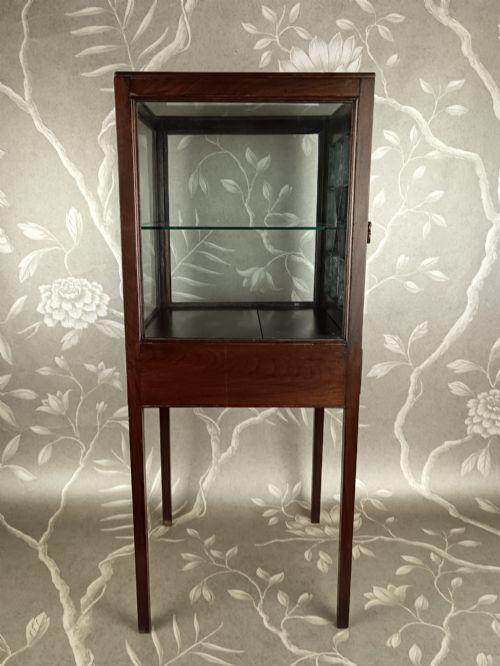
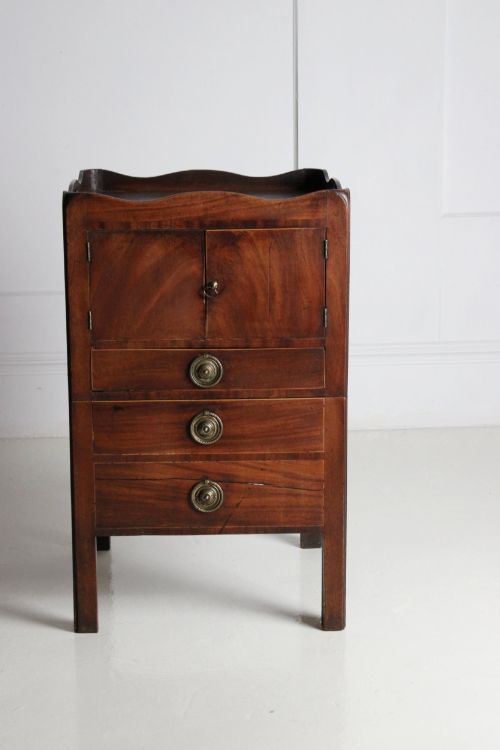
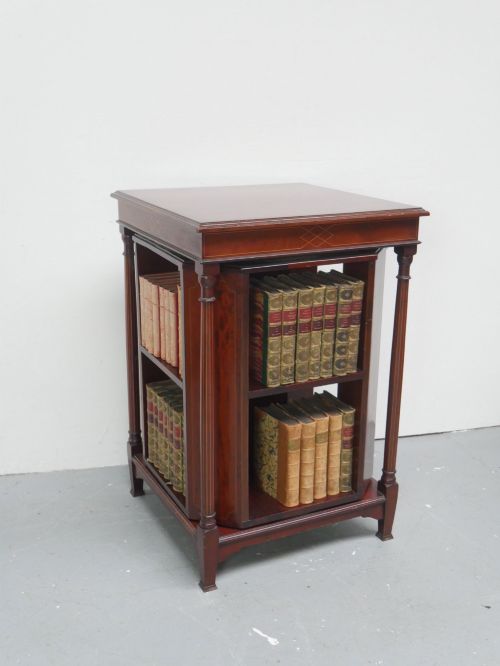
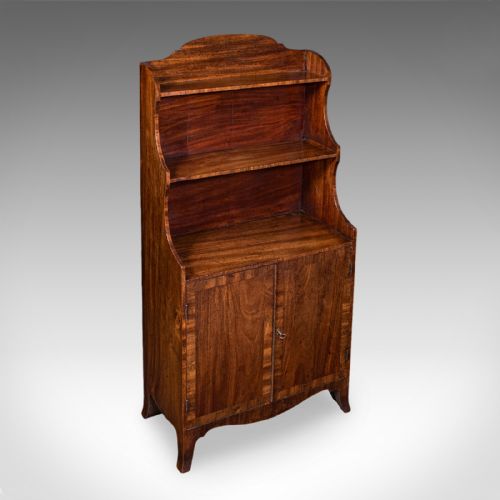
Small Mahogany Cabinet Stand
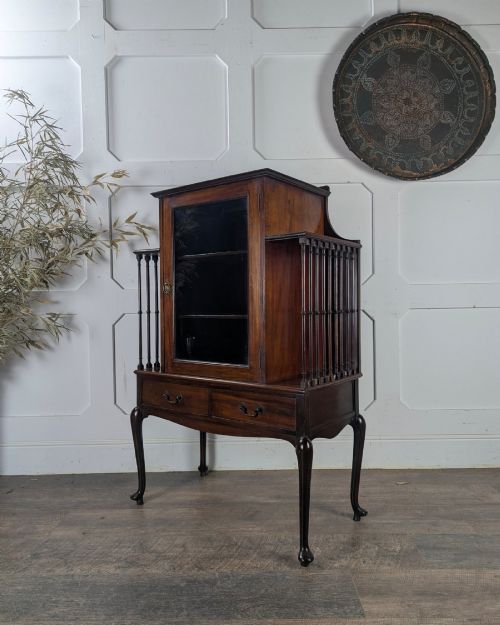
A small mahogany cabinet stand offers compact storage and display, bringing rich timber grain and period charm into domestic spaces.
Small Mahogany Cabinet Stand
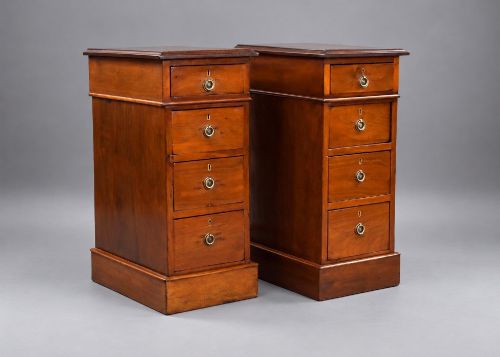
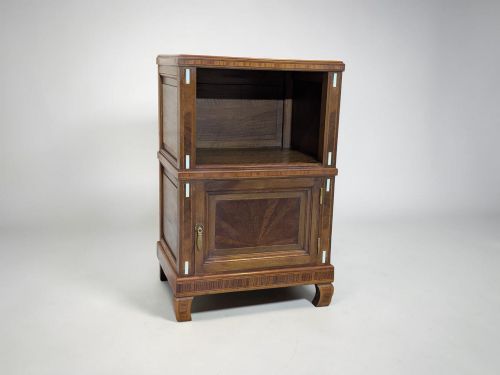
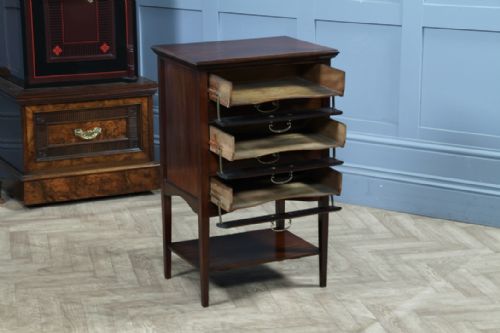
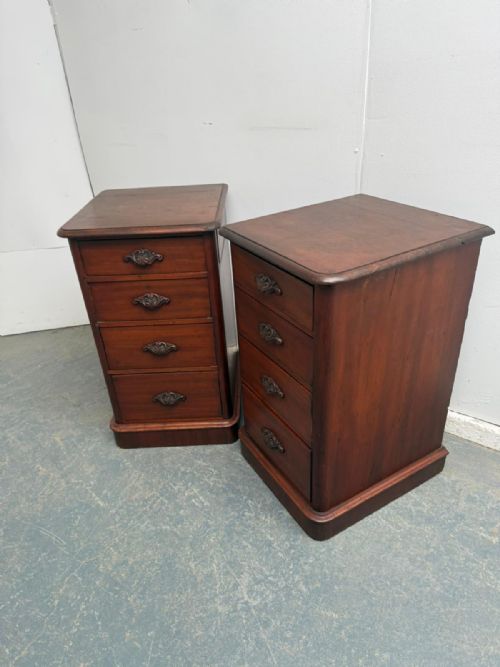
A small mahogany cabinet stand provides practical surface space and enclosed storage, appearing frequently as bedside pieces, night stands, or compact display units. Buyers seeking a small mahogany cabinet stand encounter various forms, including pot cupboards, bedside tables, and miniature cabinets raised on stands.
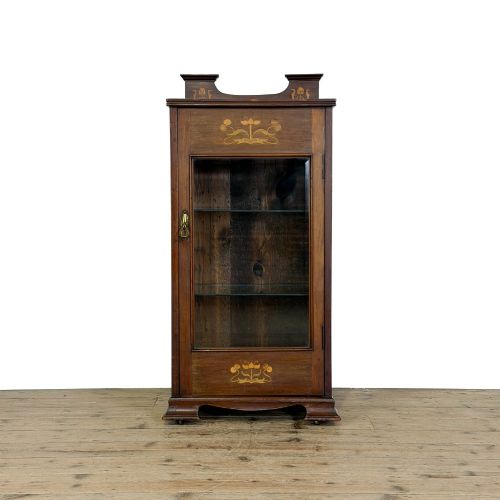
The pieces span multiple historical periods, originating predominantly from the Georgian, Victorian, and Edwardian eras. Craftsmanship adapts across these decades, shifting from Georgian functional bedside stands to ornate Edwardian glazed display cabinets and inlaid vitrines.
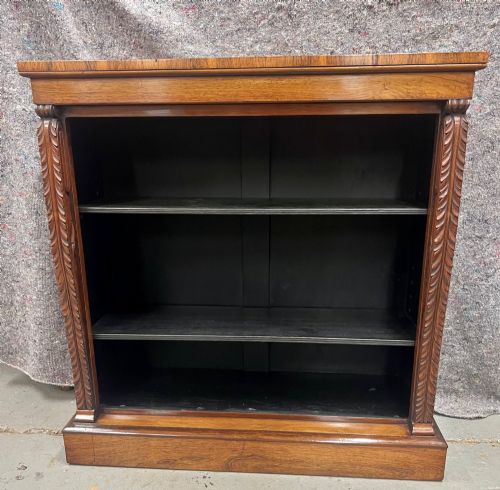
Makers utilise the rich reddish-brown tones of mahogany across diverse domestic settings, from drawing rooms to bedrooms. Structural formats range from open bookcase tops to enclosed cupboards with brass castors and panelled doors.
How They Were Made
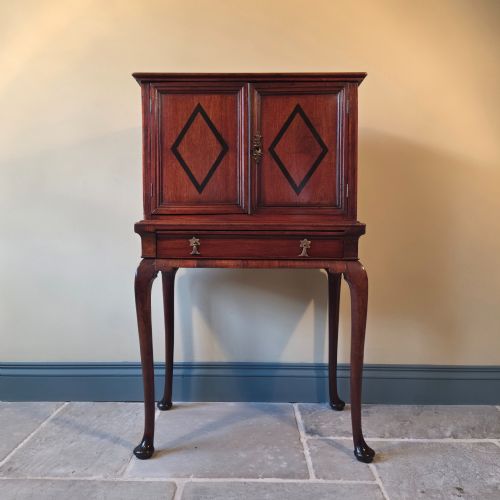
Cabinet makers constructed these pieces primarily from solid and veneered mahogany, frequently enhancing surfaces with satinwood inlay, ebony, and rosewood crossbanding. Structural elements relied on tight joinery and durable timber framing to support daily use in domestic quarters.
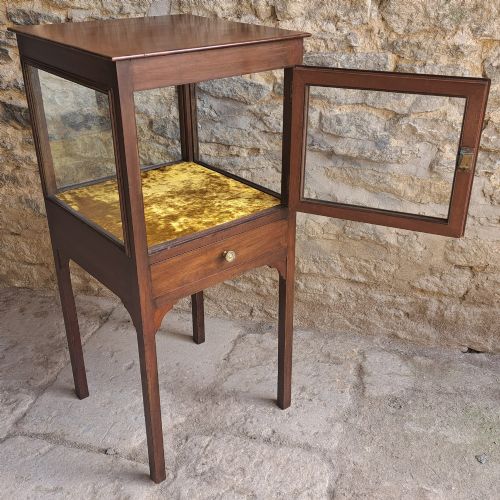
Hardware details such as brass castors, handles, and glass panels complement the timber framework. Finishing techniques involved polishing the wood to accentuate natural grain patterns, while certain pieces incorporated fabric linings within display sections.
Small Mahogany Cabinet Stand Retail Price Guide 2026
Typical asking prices for small mahogany cabinet stand among the pieces listed under this phrase on Sellingantiques today, from the lower quarter to the upper quarter. They describe what is for sale here now, not the wider market.
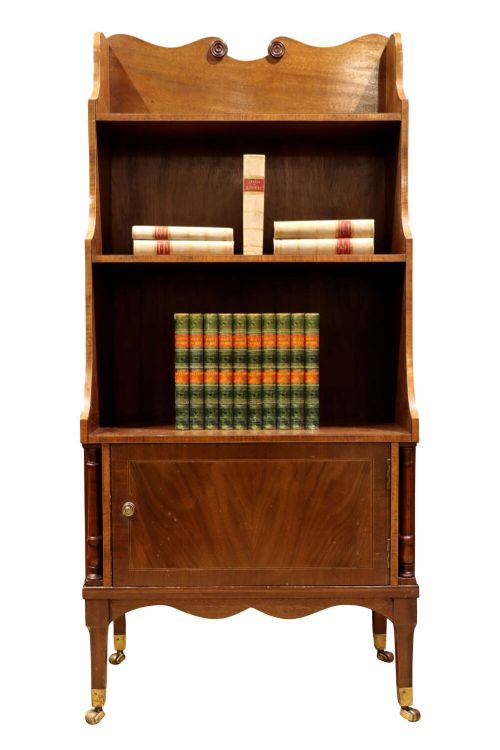
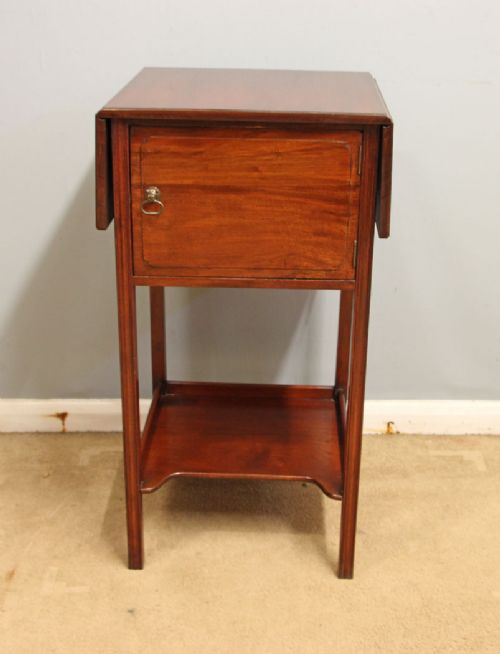
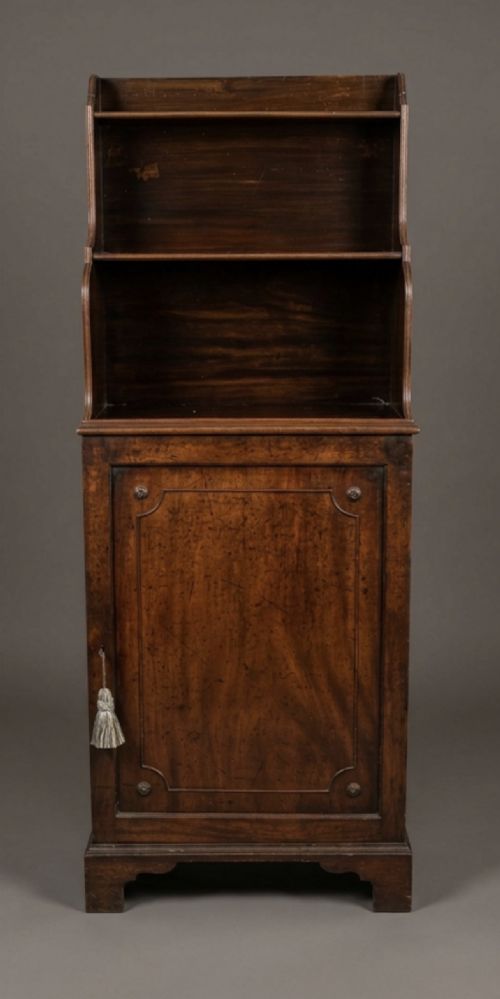
The object types include bedside tables, music cabinets, waterfall bookcases, and cabinets on stands.
What Varies in Quality
Quality rests in the precision of the timber selection and the subtlety of decorative inlays, such as contrasting satinwood banding or fine stringing. Superior examples display balanced proportions, crisp carving, and harmonious integration of secondary woods.
Construction integrity distinguishes standard production from high workshops, evidenced by tight dovetail joints and original hardware like brass castors. The refinement of the polish and the clarity of glazed panels further divide utilitarian items from fine cabinet work.
Howard and Sons·Shapland and Petter·Liberty and Co
The Small Mahogany Cabinet Stand Glossary
- Vitrine
- A glass-panelled display cabinet designed for showcasing porcelain, books, or small collectables. These pieces often feature glazed doors and refined timber frames.
- Pot cupboard
- A small enclosed bedside cabinet historically utilised to house a chamber pot. They frequently feature a single door above a panelled base or short legs.
- Waterfall bookcase
- A set of open shelves diminishing in depth from bottom to top. This stepped profile creates a cascade effect popular during the nineteenth and early twentieth centuries.
- Inlay
- A decorative technique where contrasting woods or materials are inserted into recessed cavities of a timber surface. Cabinet makers employed satinwood and ebony for geometric or botanical motifs.
- Bijouterie cabinet
- A glazed display table or stand intended for small precious items and curiosities. They often include fabric-lined interior compartments.
Small Mahogany Cabinet Stand: Frequently Asked Questions
What is a small mahogany cabinet stand used for?
These pieces function primarily as bedside storage, compact display units, or lamp stands within living spaces. Their small scale allows them to fit efficiently into bedrooms and narrow hallways while offering enclosed or open storage.
They serve both decorative and practical roles, holding books, lighting, or small collectables on their surfaces and within cupboards.
How do I identify a Georgian piece?
Georgian pieces display clean architectural lines, solid mahogany construction, and understated proportions typical of eighteenth-century design. Look for traditional joinery techniques and functional brass hardware without excessive decorative veneer.
These items often take the form of night stands, pot cupboards, or simple cabinets on raised supports.
Are Edwardian cabinets different from Victorian ones?
Edwardian cabinets generally exhibit lighter proportions and brighter timber finishes compared to heavier Victorian counterparts. They frequently incorporate satinwood inlay and delicate Sheraton revival motifs.
Victorian examples tend to display denser wood grains, sturdier frames, and occasionally practical additions like brass castors.
How do I care for mahogany furniture?
Maintain mahogany surfaces by dusting regularly with a soft, dry cloth and avoiding placement near direct heat sources. Excessive sunlight and sudden temperature changes can dry out the timber and affect polishes.
Occasional application of appropriate wax polish helps preserve the natural sheen and depth of the grain.