


Small Leather Top Table
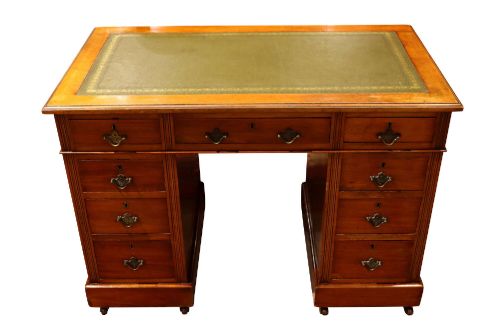
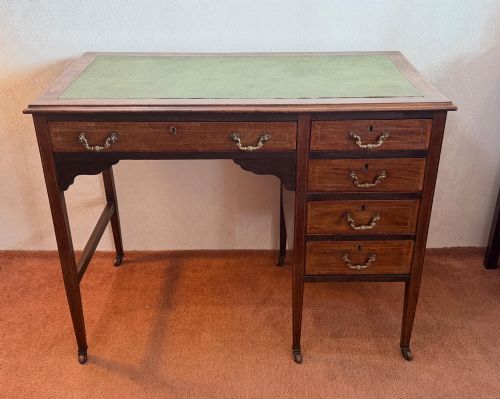
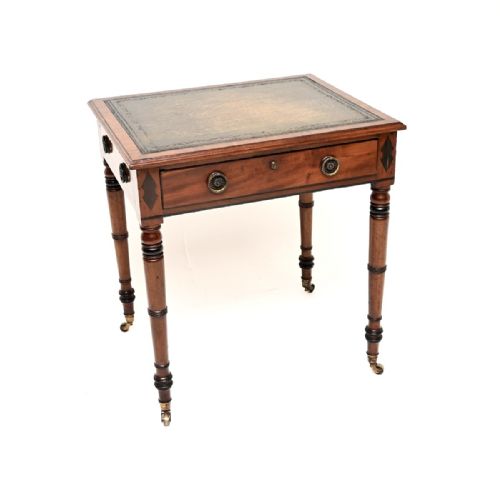
A small leather top table brings writing-surface utility and timber character into a room without dominating the floor space.
Small Leather Top Table
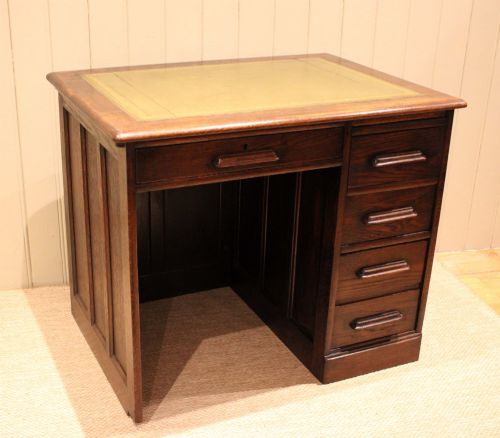
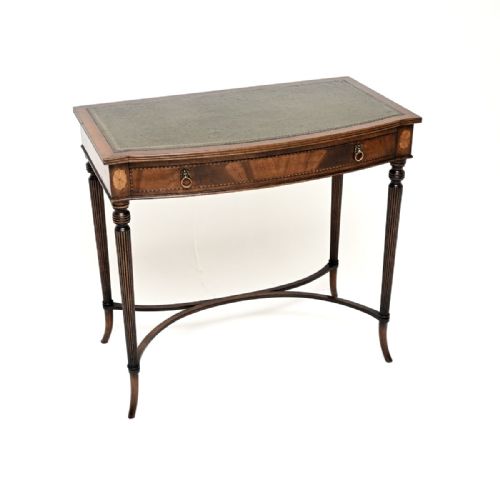
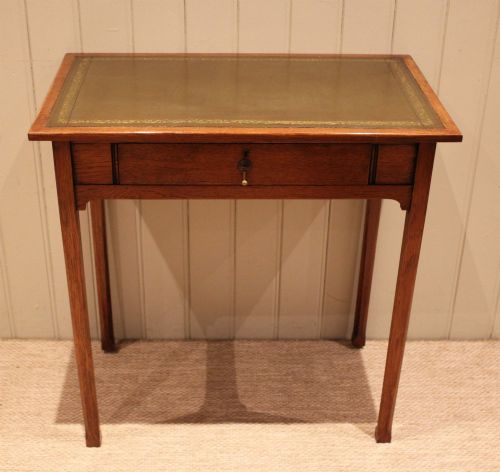
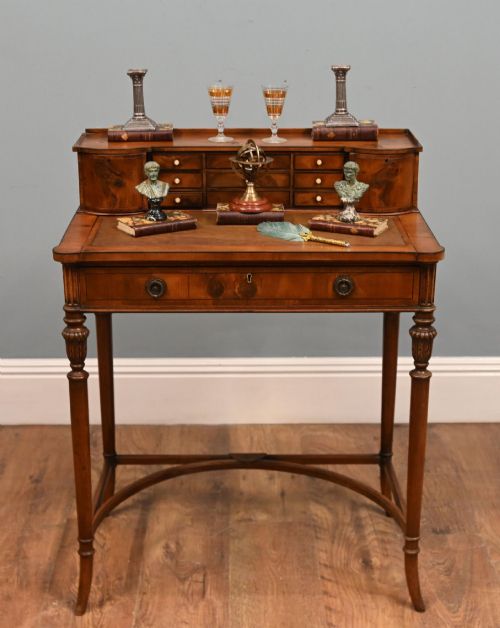
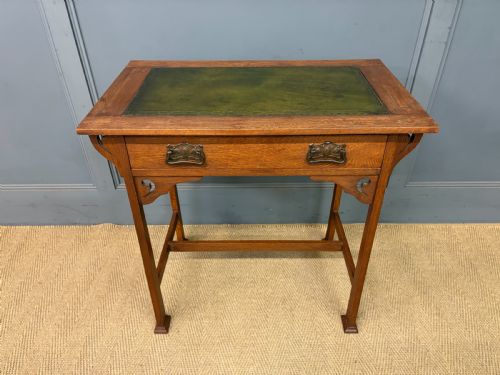
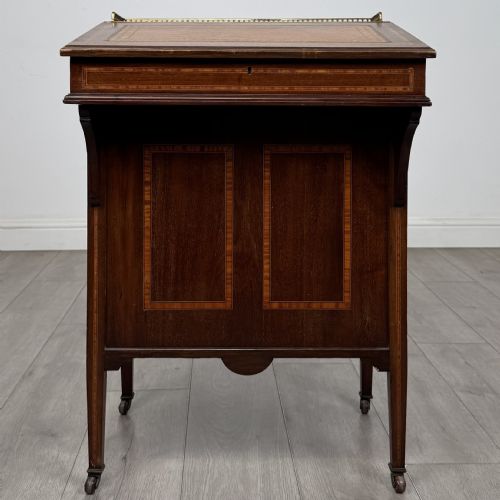
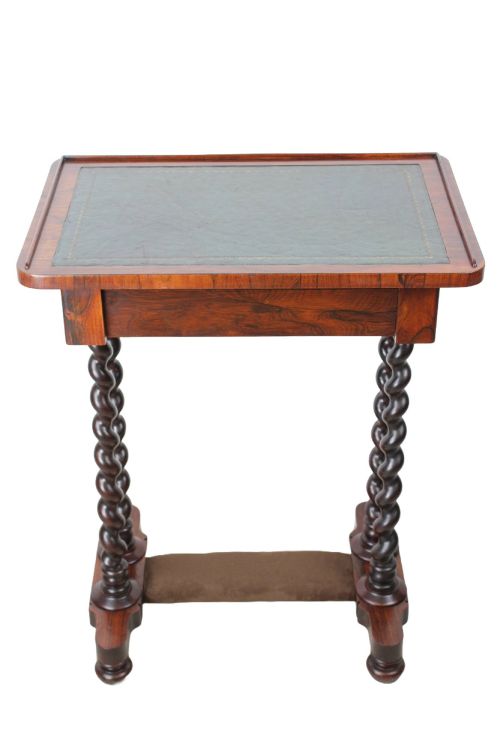
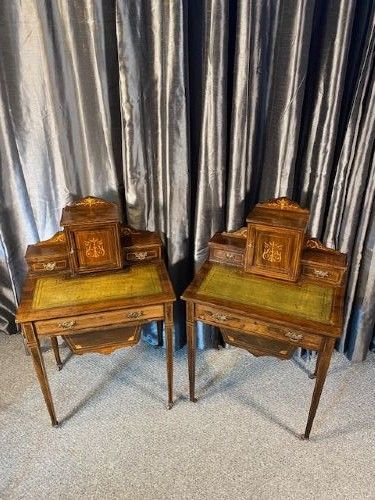
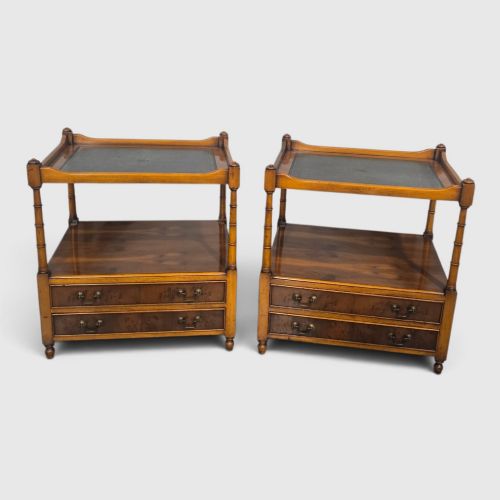
A small leather top table combines compact proportions with an inset writing surface, appearing across forms such as writing desks, side tables, and occasional tables. Buyers seeking this phrase encounter pieces spanning the Georgian period, Victorian era, Edwardian years, and the early twentieth century.
Mahogany and walnut form the backbone of these pieces, alongside rosewood, oak, and satinwood. The surface insert utilises leather, providing a traditional writing plane framed by timber borders.
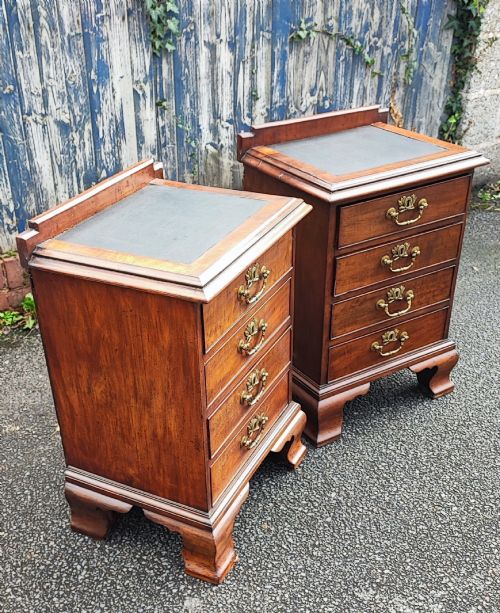
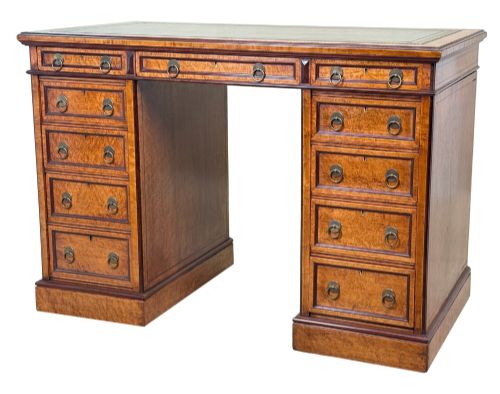
The surviving selection includes pedestal desks, kneehole desks, and two-tier side tables produced across various regional workshops and revival styles.
Materials and Construction
Cabinetmakers constructed these tables using dense hardwoods like mahogany, walnut, and rosewood, often applying satinwood or burr walnut veneers to enhance visual depth. Inset leather surfaces required precise rebating into the timber top to sit flush with the surrounding frame.
Secondary timbers support the primary facades, while brass fittings appear on drawer pulls, caster feet, and occasional gallery rails. Joinery methods relied on dovetailed drawers and pegged or mortised framing depending on the period.
Small Leather Top Table Retail Price Guide 2026
Typical asking prices for small leather top table among the pieces listed under this phrase on Sellingantiques today, from the lower quarter to the upper quarter. They describe what is for sale here now, not the wider market.
Some nineteenth-century ladies desks were built so small that writing required very neat handwriting indeed.
Distinguishing Quality
Quality rests in the selection of timber figures, such as the richness of mahogany grain or the matching of burr walnut veneers across drawer fronts. Superior execution shows in the precision of the leather border tooling and the subtlety of any inlay work.
Proportion and structural integrity separate standard utility pieces from finer examples, particularly in how drawers slide and how cleanly the legs meet the apron. Original brassware and uniform patination across the wood and leather elevate a piece further.
James Shoolbred
The Small Leather Top Table Glossary
- Davenport desk
- A compact writing desk featuring a sloped, leather-inset writing lid above a bank of side drawers. It gained popularity during the nineteenth century for use in small sitting rooms.
- Drum table
- A circular library table containing drawers around the perimeter, frequently set upon a central pillar with spreading legs. The top surface typically incorporates a circular leather insert.
- Kneehole desk
- A pedestal desk featuring a central recess for the user's legs, flanked by smaller drawers. These pieces provide functional writing space within a confined footprint.
- Bonheur du jour
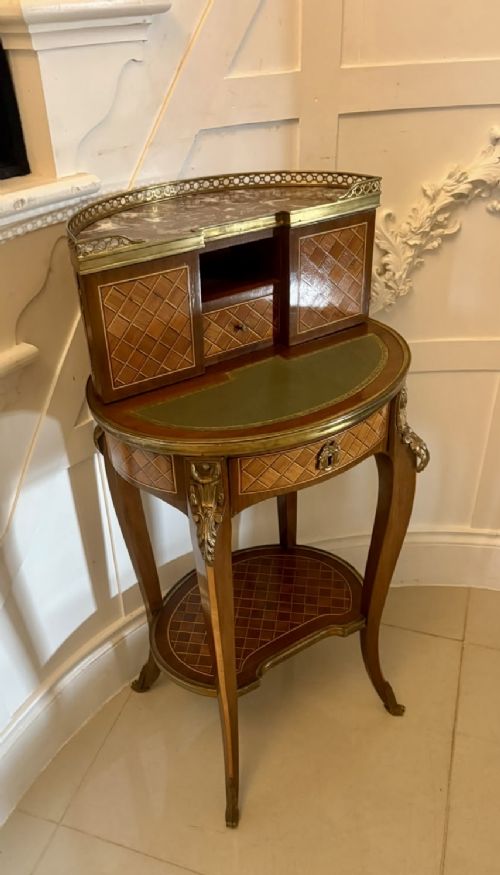
- A light lady's writing desk featuring a small superstructure of drawers or pigeonholes above the main writing surface. The style originated in France and appeared in various revival forms later on.
- Escritoire
- A writing cabinet or desk equipped with a folding or drop-front flap that conceals inner compartments. They combine storage capacity with a compact footprint.
Small Leather Top Table: Frequently Asked Questions
Where were these small tables used?
These tables served primarily in bedrooms, drawing rooms, and private studies where full-sized desks proved too bulky. Owners utilised them for correspondence, diary writing, and holding small personal items.
Their compact footprint allowed placement against walls or freestanding in the middle of smaller chambers. This versatility ensured continuous production across the Georgian, Victorian, and Edwardian eras.
How do I care for the leather top?
The inset leather surface benefits from gentle dusting and occasional treatment with appropriate leather dressings to prevent cracking. Avoiding direct sunlight and excessive moisture preserves both the leather and the surrounding timber.
Maintaining a stable room climate prevents the wood frame from expanding or contracting against the fixed leather border.
How do I identify the period of a table?
Dating relies on timber choice, construction methods, and stylistic cues present in the legs and drawer framing. Georgian pieces often display simpler, robust mahogany framing, while Victorian and Edwardian examples frequently incorporate richer veneers and varied revival motifs.
Examining secondary woods inside the drawers and the style of brass hardware provides further clues to the decade of manufacture.
Are these tables suitable for modern writing use?
Many of these pieces offer sufficient surface area for contemporary notebooks and correspondence, though laptop use depends on the specific knee clearance and drawer depth. Their historical proportions generally suit smaller modern rooms.
Care should be taken to protect the antique leather surface from heavy modern equipment or sharp writing implements.