


Small Jacobean Style Cabinet
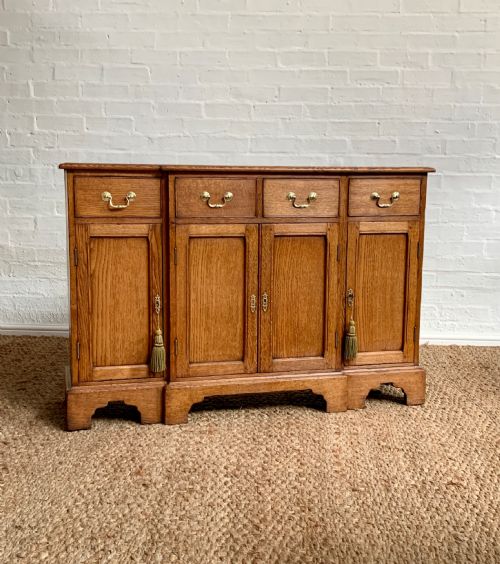
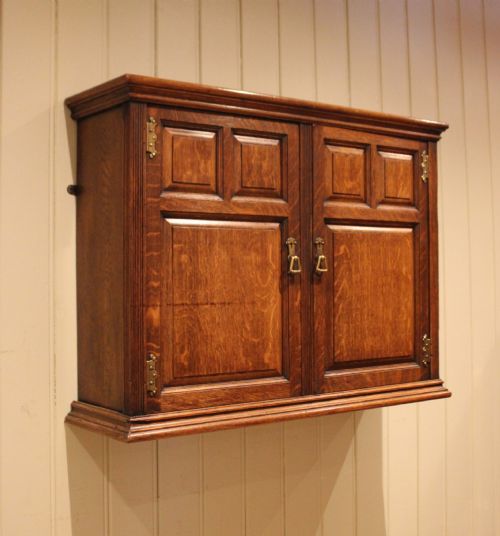
These small jacobean style cabinet pieces bring solid oak construction and 17th century revival character into compact modern spaces.
Small Jacobean Style Cabinet
A small jacobean style cabinet search brings up sturdy storage furniture built in oak across several distinct revival periods. Most examples on this page date from the Edwardian era and the 1920s, adopting earlier motifs for smaller domestic interiors.
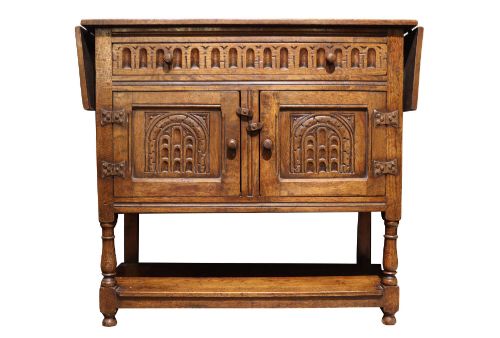
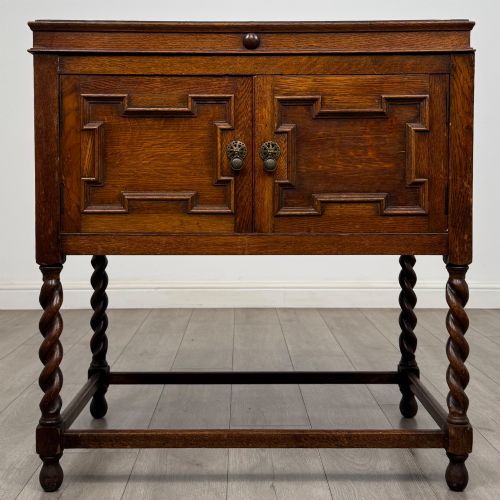
The forms vary from bedside cabinets and wall cabinets to miniature court cupboards and cupboards on stand. Side cabinets and sideboards appear frequently, offering practical enclosed storage within a modest footprint.
Makers drew directly on 17th century styles, incorporating traditional proportions and dark wood finishes. The resulting pieces provide functional storage with pronounced historical character.
How they were made
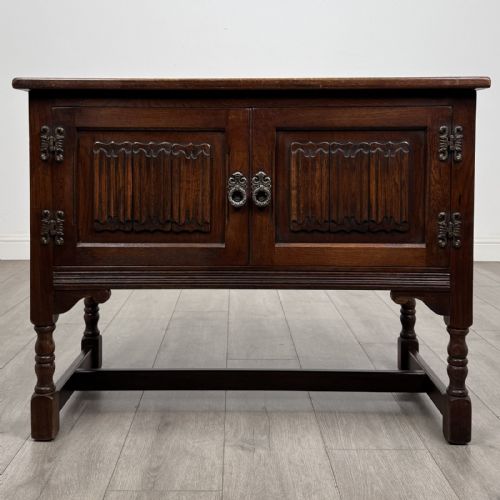
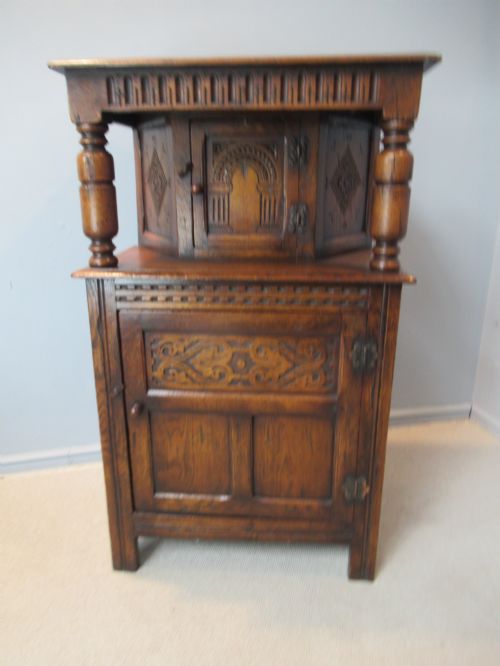
Solid oak serves as the primary material, shaped into panels and frames that give each small jacobean style cabinet its weight and structural integrity. Carved friezes, linenfold panels, and panelled doors demonstrate traditional joinery techniques.
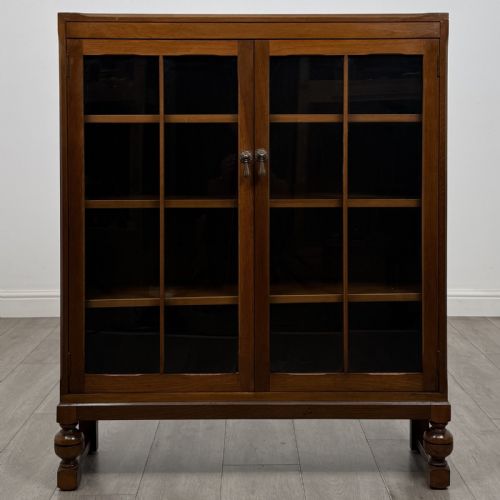
Metal hardware in brass and iron appears on hinges, handles, and mounts, providing functional contrast to the dark oak surfaces. Glass panels are also utilised in specific glazed bookcase and cabinet formats.
Miniature court cupboards let sixteenth-century grandeur fit neatly beside a twentieth-century bed.
What varies in quality
The depth and crispness of the carved ornamentation separate standard production from finer examples. Hand-carved friezes and well-defined linenfold panels show greater artisan involvement than repetitive machine moulding.
The choice of solid timber versus veneered surfaces influences the integrity of the piece. Superior construction employs dense oak throughout, maintaining stability across doors, stands, and panelled sides.
The Small Jacobean Style Cabinet Glossary
- Court Cupboard
- A traditional form of short sideboard or storage cabinet featuring enclosed upper and lower sections. Miniature versions scale down these proportions for smaller rooms.
- Linenfold
- A style of wood carving that mimics folded fabric or linen cloth. This technique is often seen on cabinet doors within revival pieces.
- Frieze
- The horizontal section of a cabinet situated just below the top surface. It is often decorated with carved running patterns or geometric motifs.
- Cupboard on Stand
- A cabinet form raised on a distinct base with legs. This configuration lightens the visual weight of heavy oak furniture.
Small Jacobean Style Cabinet: Frequently Asked Questions
What is a small jacobean style cabinet?
A small jacobean style cabinet is a compact storage piece built in oak during periods like the Edwardian era or the 1920s. These pieces draw on 17th century design motifs to provide enclosed storage within smaller rooms.
They appear in various forms including bedside units, wall cabinets, and cupboards on stands. Each piece relies on solid oak and traditional construction methods.
How do I date a jacobean revival cabinet?
Dating relies on examining the timber preparation, hardware, and structural joinery of the cabinet. Most revival pieces date from the late 19th century through the 1930s rather than the actual 17th century.
Machine sawing marks or modern fixings indicate a later 19th or 20th century construction date. Wear patterns and wood shrinkage also help confirm the age of the oak.
Where should I place a small oak cabinet?
These compact cabinets suit hallways, living rooms, and bedrooms where floor space is limited. Their enclosed storage keeps items tidy while adding historical character to the room.
Bedside cabinets and small sideboards fit neatly against walls alongside other wooden furniture. Their dark oak finish coordinates well with traditional and transitional interiors.
How do I care for solid oak furniture?
Solid oak requires minimal maintenance beyond regular dusting with a dry or slightly damp cloth. Avoiding direct sunlight and sudden temperature changes protects the wood and finish.
Applying occasional natural wax helps nourish the dark oak surface. This preserves the depth of the grain and protects against everyday wear.