




Tudor Style Oak Cupboard
These pieces of tudor style oak cupboard bring robust historic presence into a room, fashioned from solid timber and iron.
Tudor Style Oak Cupboard
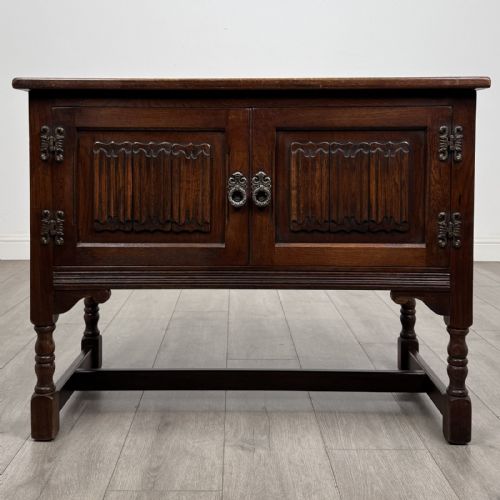
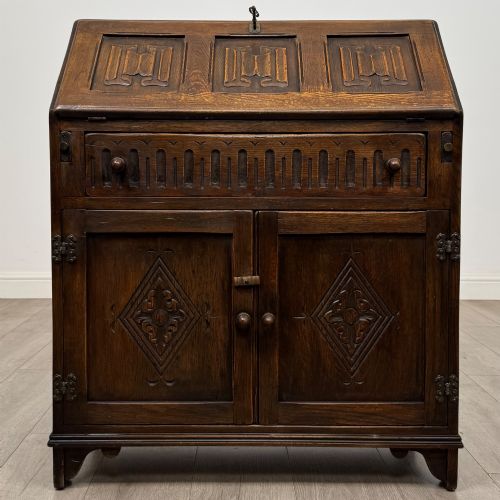
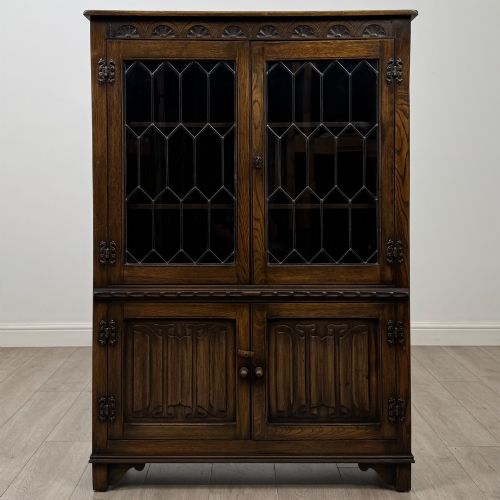
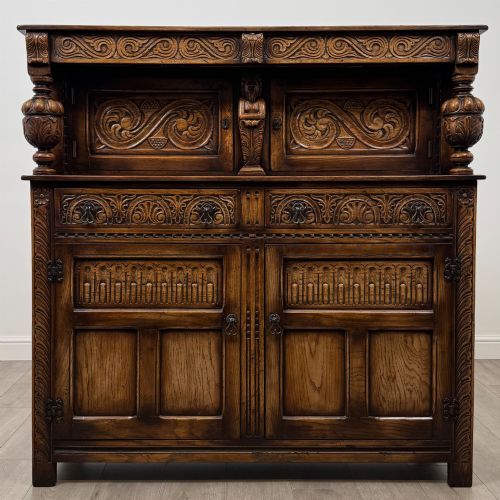
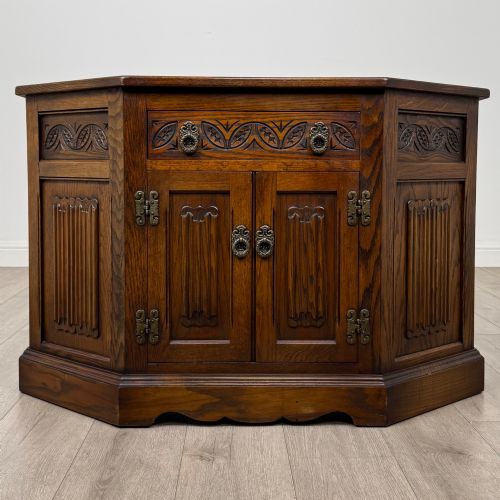
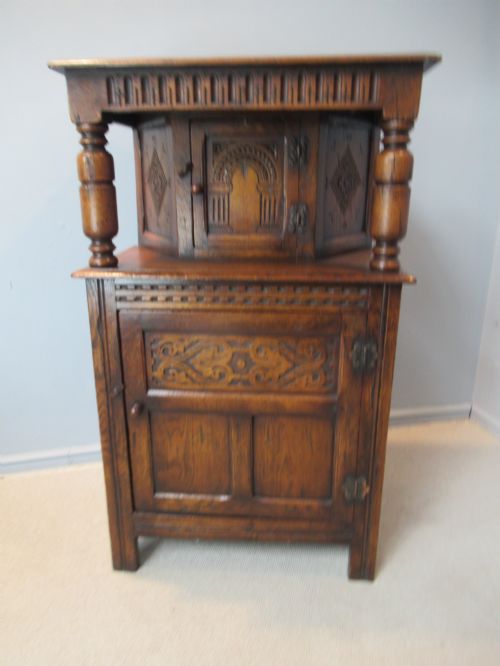
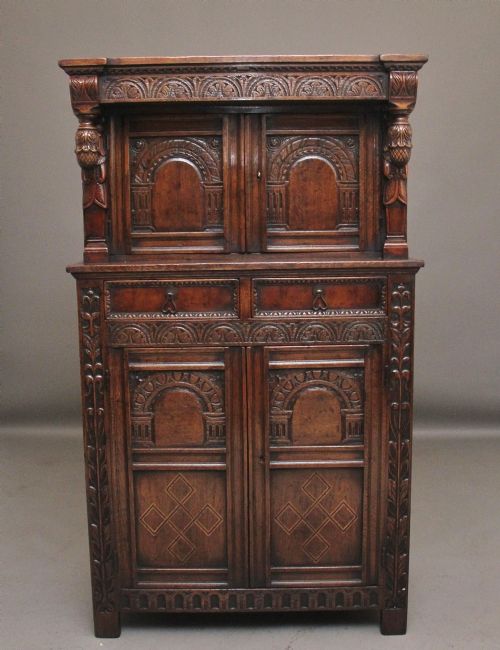
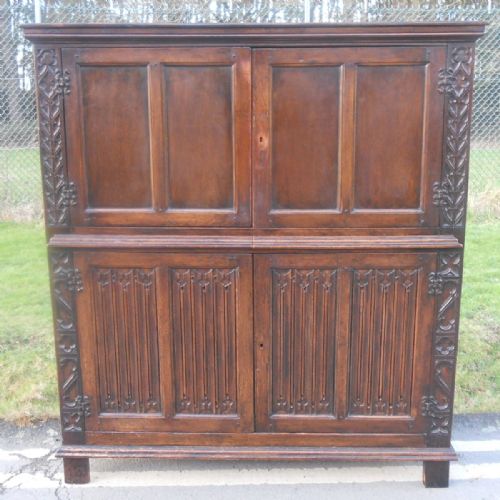
A tudor style oak cupboard encompasses robust items such as court cupboards, linenfold bureaux, display cabinets, side cabinets, and hall robes. Buyers seeking this aesthetic will most frequently meet pieces originating from the Edwardian era and the 1920s, constructed in heavy timber.
The inventory includes specialised forms like open bookcase cupboards and large storage cabinets reflecting Jacobean revival and Gothic revival influences. Surviving examples range from solid oak side units to grand carved court cupboards rooted in earlier historical styles.
How they were made
These items rely on solid oak as the principal structural material, frequently enhanced with intricate hand carving across panels and friezes. Iron and brass fittings such as hinges and handles provide operational hardware, while glass and lead appear in glazed display doors.
Joinery methods emphasise heavy framing and panel construction, notably utilising linenfold carving techniques to create textured wooden drapery effects on doors and stationery fronts. Workshops shaped these solid timbers to withstand centuries of domestic use.
Common object forms include court cupboards, linenfold bureaux, display cabinets, sideboards, and open bookcase combinations.
What varies in quality
Quality in these pieces is dictated by the depth and crispness of the carved ornamentation, distinguishing heavily detailed court cupboards from plain utility storage units. The selection of solid oak timber with rich grain patterns elevates the standing of an individual cabinet.
The integration of authentic metalwork, such as robust iron hinges and brass mounts, separates standard production items from superior revival pieces. Construction heft and the integrity of joints further define the upper tier of surviving examples.
The Tudor Style Oak Cupboard Glossary
- Linenfold
- A style of wood carving that imitates folded vertical folds of fabric, commonly found on cupboard doors and bureau panels.
- Court cupboard
- A traditional heavy sideboard or storage cabinet featuring multiple tiers, often supported by carved pillars or columns.
- Jacobean Revival
- A design movement drawing inspiration from early seventeenth-century British architecture and furniture, marked by dark finishes and geometric carving.
- Gothic Revival
- An architectural and decorative style utilising pointed arches, tracery, and medieval motifs adapted for domestic furniture.
- Hall robe
- A tall vertical storage cabinet designed for entryways or hallways to house outerwear and garments.
Tudor Style Oak Cupboard: Frequently Asked Questions
What defines a court cupboard?
A court cupboard is a multi-tiered storage unit traditionally used for displaying plate and storing household provisions. These pieces feature enclosed lower cupboards and often an upper recessed section supported by carved posts.
They serve as focal points in dining rooms and halls, offering substantial surface space and deep internal storage.
How do I identify linenfold carving?
Linenfold carving is a decorative technique where wooden panels are sculpted to resemble pleated cloth or folded linen fabric. It appears frequently on the doors of Edwardian cabinets and bureaux.
This motif originated in the late medieval period and was revived extensively during later revivalist movements to impart historic character.
Where should I place a large oak storage cupboard?
These heavy wooden cupboards suit spacious rooms where their solid construction and dark timber tones can anchor the interior design. Hallways, living rooms, and dining spaces provide appropriate settings for their scale.
Ensure adequate clearance for doors to open fully without obstructing circulation paths in the room.
How do I care for solid oak furniture?
Solid oak furniture benefits from regular dusting with a soft, dry cloth to prevent grit accumulation on carved surfaces. Avoid placing wooden pieces near direct heat sources or strong sunlight to protect the finish.
Applying a traditional beeswax occasionally helps maintain the moisture balance and natural sheen of the timber.