


Small Fusee Clock
When you want a small fusee clock, you are looking at precision English timepieces built for domestic or office use during the Georgian, Victorian, and Edwardian eras.
Small Fusee Clock
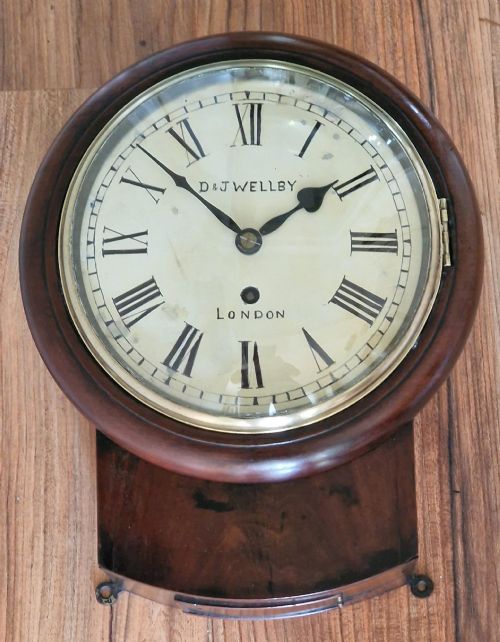
A small fusee clock encompasses several distinct forms designed to fit domestic and public spaces during the eighteenth, nineteenth, and early twentieth centuries. Wall clocks and drop-dial variants dominate the selection, often featuring wooden dials housed in mahogany or oak cases.
Table, mantel, and bracket clocks also appear regularly across the archive and current listings. These encompass classic architectural shapes such as balloon styles, chamfer tops, and delicate four-glass library timepieces.
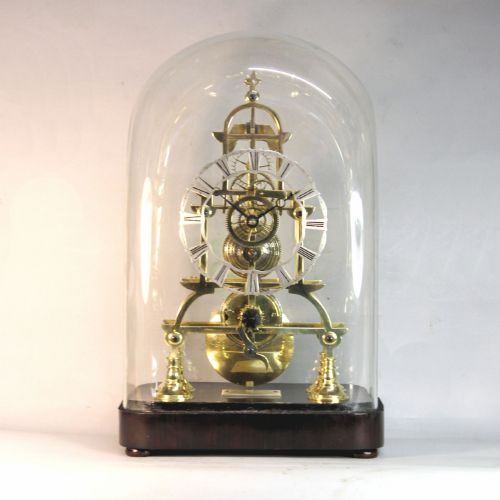
Less common formats include skeleton clocks with exposed brass movements and the occasional compact longcase or grandmother clock. Originating largely from London workshops as well as provincial makers, these pieces represent the pinnacle of nineteenth-century horological downsizing.
How they were made
The construction relies heavily on durable hardwoods such as mahogany and oak for the outer cases, sometimes finished with ebonised wood or decorative veneers. Brass, steel, and glass form the essential components of the interior mechanisms and protective dial covers.
High-grade ormolu and gilt bronze accents appear on finer bracket and skeleton pieces, adding decorative weight to the brass frameworks. Movements typically utilise a fusee cone and chain or cord system to maintain equal power delivery as the mainspring unwinds.
Several clocks hide their complex inner workings inside compact mahogany housings designed to deceive the eye into thinking they are mere ornaments.
What varies in quality
The degree of horological refinement separates standard timepieces from exceptional examples. Finer movements often incorporate striking capabilities, double fusee configurations, or complicated skeleton plates rather than a basic single-train time-only setup.
Cabinetry execution dictates much of the visual appeal. Delicately proportioned cases featuring matched veneers, inlaid details, and well-preserved painted or silvered dials command greater attention than utilitarian office models.
D&J Wellby·Richard Winter·Payne & Co·Joseph Jump·McCabe·John Durden·Arnold & Frodsham·Lambert·Robert Wood·Samuel Jefferson·George Pearce·Partington·F Baetens·Turner·Francis Correll·Kelsey·Perigal·Purvis·Gabriel·Webster
The Small Fusee Clock Glossary
- Fusee
- A conical pulley used in mechanical clocks to equalise the torque of the mainspring as it runs down. This ensures consistent driving force to the escapement for better timekeeping.
- Drop-dial
- A wall clock design where the circular dial sits above an extended wooden trunk or case. This trunk often accommodates a longer pendulum or simply provides balanced visual weight.
- Bracket clock
- A portable table clock originally designed to sit on a wall bracket to aid resonance and visibility. Most later examples function as freestanding mantel clocks.
- Skeleton clock
- A timepiece stripped of its outer case to display the gear train and plates through glass domes or open structures. This style highlights the intricate brass architecture of the movement.
- Library clock
- A compact, portable timepiece frequently housed in a brass-framed glass case allowing light through all sides. These pieces were tailored for gentleman's studies and drawing rooms.
Small Fusee Clock: Frequently Asked Questions
What is a fusee clock?
A fusee clock is a mechanical timepiece driven by a spring connected via a cord or chain to a conical pulley. This ingenious mechanism ensures the clock receives even power as the mainspring relaxes.
Such movements were standard in better-quality English clocks throughout the Georgian and Victorian periods, prized for their superior timekeeping reliability.
Where were wall clocks hung?
Wall clocks and drop-dial variants served practical roles in offices, railway stations, schools, and domestic hallways. Their clear dials and secure wall mountings made them easy to read from a distance.
Today, they function well in kitchens, hallways, and studies where a reliable analog timepiece adds traditional character to the room.
How do I wind my clock?
Winding requires a matching key inserted into the dial aperture to tension the mainspring gently. Care must be taken not to overwind the mechanism, stopping as soon as resistance increases.
Regular weekly winding keeps the fusee chain or cord moving smoothly and prevents the oils from settling excessively in the pivots.
Can these clocks run on furniture?
Mantel, table, and bracket clocks sit comfortably on flat surfaces such as sideboards, mantelpieces, and desks. They require a stable, level foundation to ensure the pendulum beats evenly.
If the surface tilts, the clock may slip out of beat and eventually stop, requiring minor adjustments to the case position.