
Small Drop Side Table
A small drop side table brings compact versatility to any room, offering folding leaves that expand surface space when needed.
Small Drop Side Table
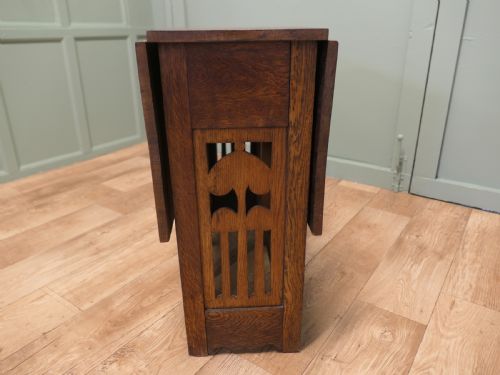
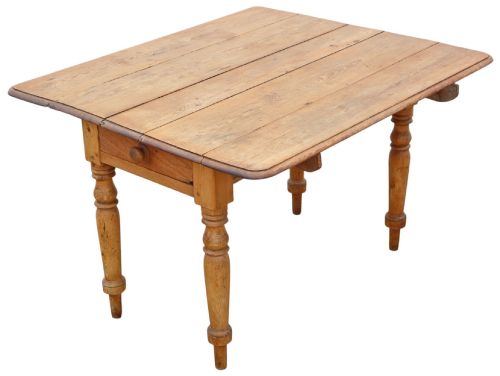
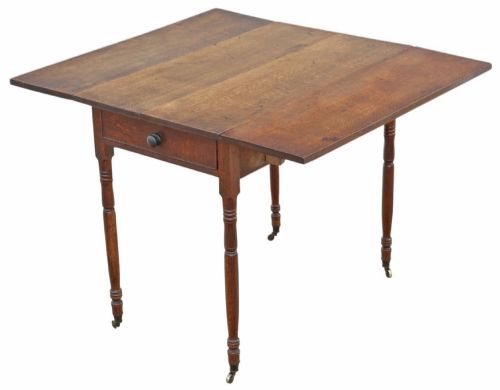
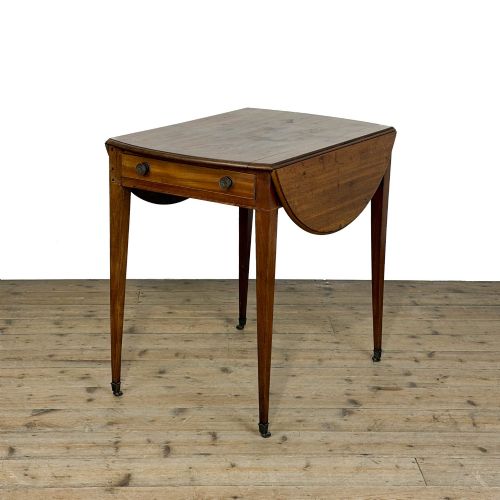
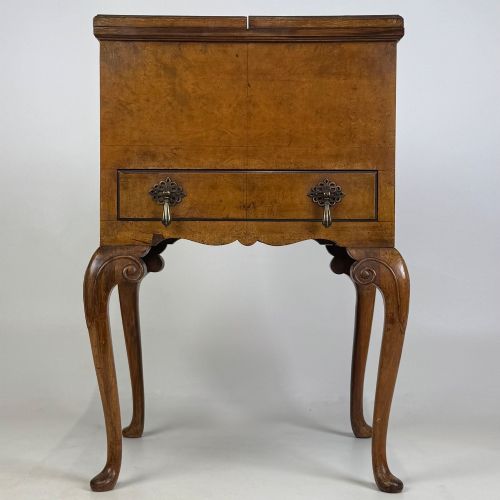
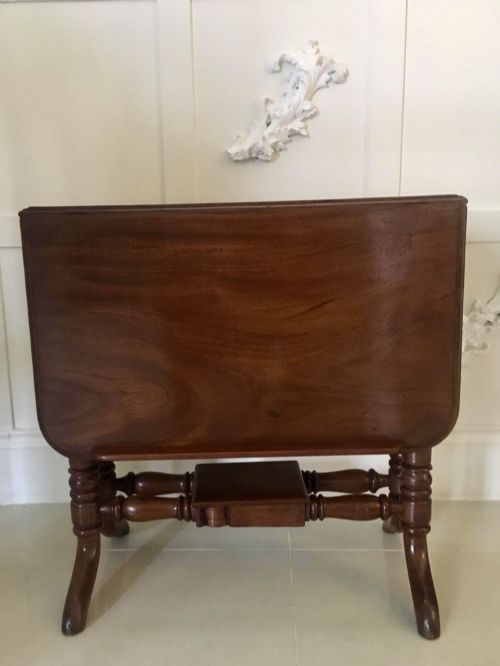
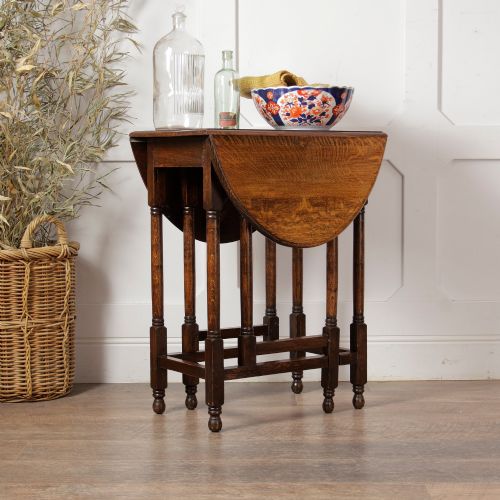
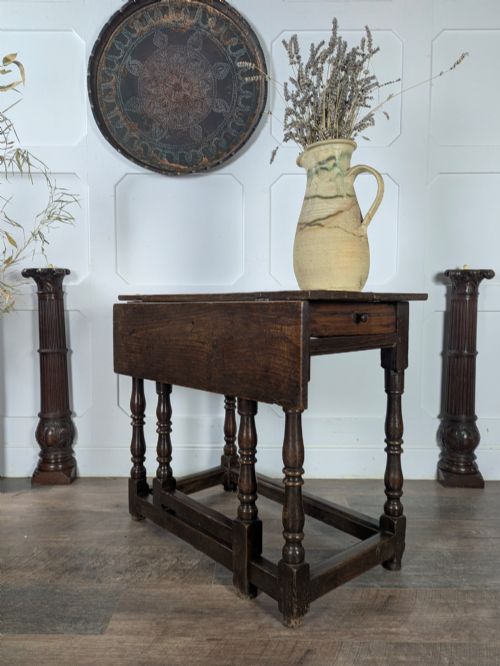
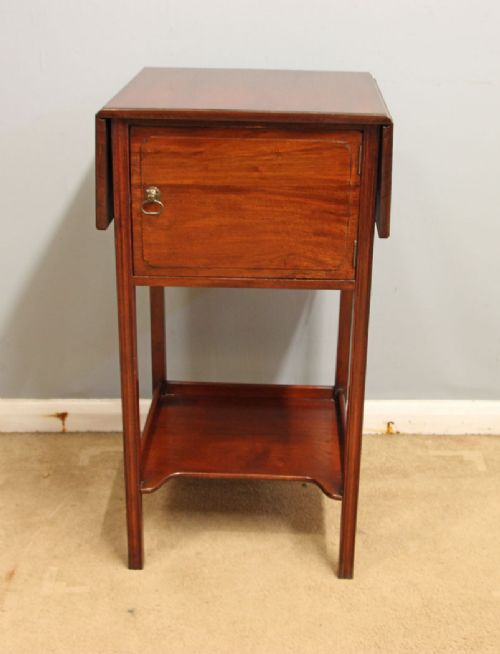
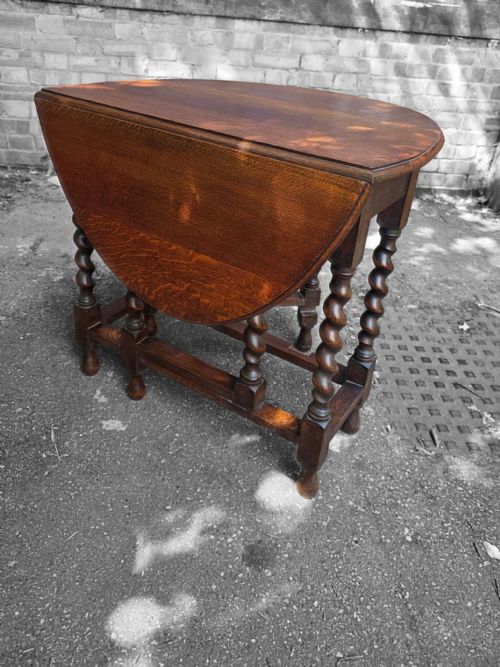
A small drop side table provides a flexible surface through hinged flaps that fold down to save floor space or lift up to extend the top. You will frequently encounter mahogany and oak examples spanning periods from the seventeenth century through to the Edwardian era.
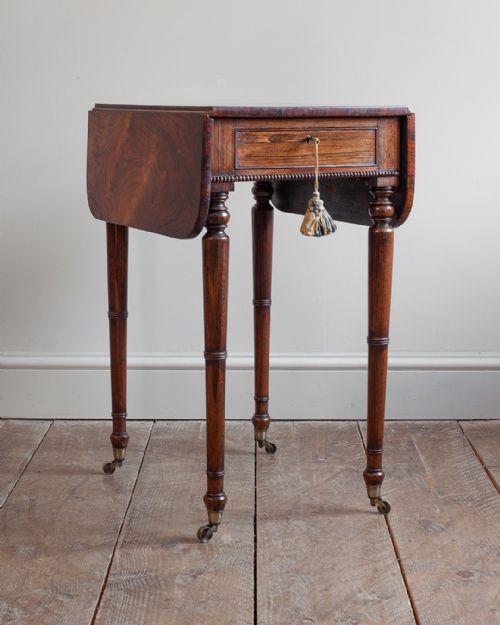
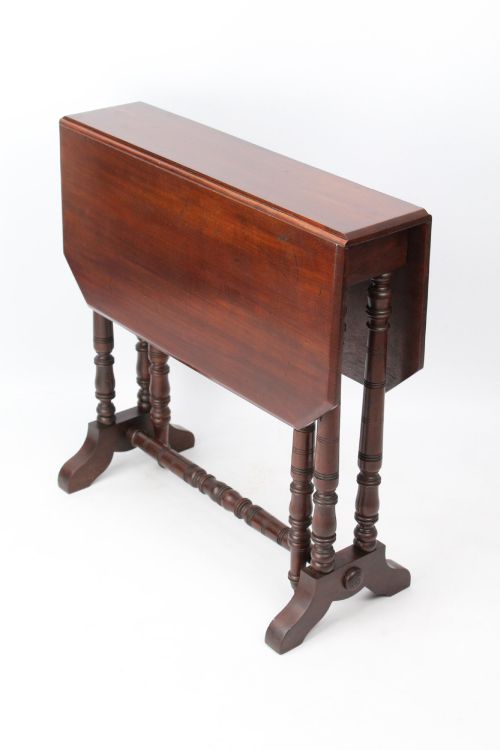
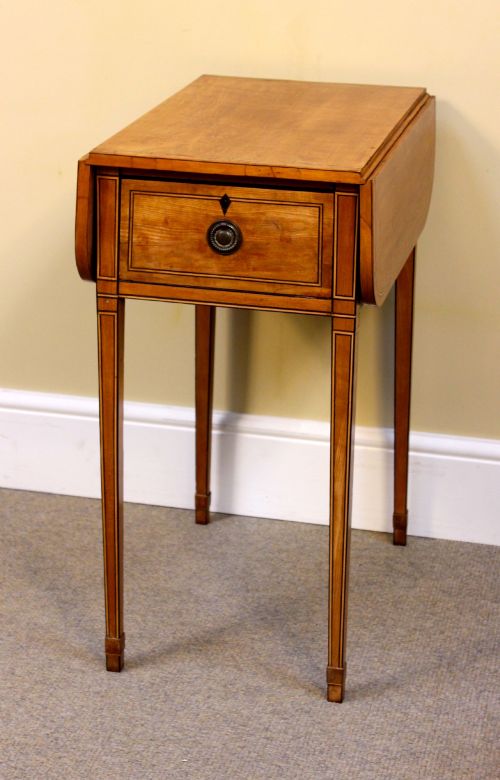
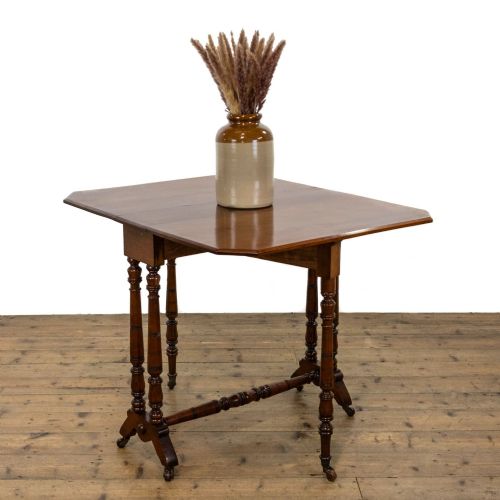
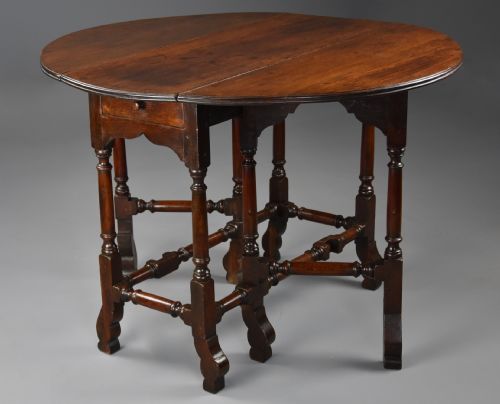
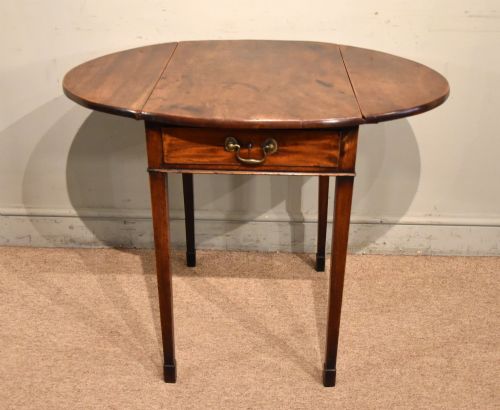
The category encompasses gateleg tables, Pembroke tables, and Sutherland tables, each utilising hinged mechanisms in different ways. These pieces served historically as dining tables, occasional tables, or work tables in smaller rooms.
Most pieces seen here date from the eighteenth and nineteenth centuries, constructed with proportions suited for bedside use, lamp placement, or compact seating areas. Solid timbers and veneered surfaces define the diverse forms available within this grouping.
How they were made
Cabinet makers constructed these tables primarily using mahogany, oak, and walnut, often applying burr walnut veneers or satinwood inlay for decorative contrast. Structural joints relied on traditional carpentry methods including mortise and tenon joinery.
Turning techniques created distinctive legs such as barley twist, bobbin, and bamboo styles, which support the folding leaves via swinging or gateleg frames. Brass hinges and castors frequently appear on nineteenth-century pieces to facilitate movement and flap support.
Periods represented range from seventeenth-century oak pieces to Edwardian and 1920s variations.
What varies in quality
The distinction between ordinary and superior pieces rests on timber selection, such as highly figured burr walnut or dense red walnut, paired with crispness in the turned legs and carving. Original patination and retention of matching grain across the leaves indicate careful initial construction and careful preservation.
Refined proportions and subtle details like inlaid banding or fine structural joinery elevate certain examples above standard utilitarian items. The smoothness of the drop leaf mechanism and stability of the supporting legs demonstrate the maker's original standard of work.
The Small Drop Side Table Glossary
- Drop leaf
- A table featuring a central fixed section and hinged flaps that lower or raise on supporting brackets or legs.
- Pembroke table
- A small occasional table with two hinged flaps on opposite sides and usually a single drawer beneath the top.
- Gateleg table
- A table with hinged leaves supported by swinging legs that pivot outward like a gate to hold the flaps.
- Sutherland table
- A narrow table with exceptionally slender drop leaves that fold down almost vertically, saving maximum space when closed.
- Spider leg table
- A piece characterised by exceptionally thin, delicate turned legs often braced by fine stretchers.
Small Drop Side Table: Frequently Asked Questions
What is a pembroke table?
A pembroke table is a compact form featuring two hinged side flaps and frequently a drawer beneath the main surface. The design originated in the eighteenth century to provide movable surface space.
These tables work well beside seating areas or as small writing desks. The hinged leaves allow the footprint to expand or contract depending on daily requirements.
How do gateleg tables work?
Gateleg tables utilise pivoting leg frames that swing outward from the central structure to support the lowered flaps. This mechanism bears the weight of the extended leaves securely.
When not in use, the legs swing back toward the centre, allowing the leaves to drop vertically. This clever construction maximises floor space in smaller rooms.
What is a sutherland table?
A sutherland table is a narrow drop leaf table designed with exceptionally thin flaps that fold down nearly flat. The central framework remains compact when the leaves are lowered.
Victorian and Edwardian makers produced these tables in burr walnut and mahogany for drawing rooms and parlours. They provide a wide surface when opened while occupying minimal space against a wall.
How can I date an oak drop leaf table?
Dating relies on examining construction methods, timber characteristics, and leg turnings such as bobbin or barley twist styles. Seventeenth-century and eighteenth-century pieces often display pegged joints and hand-planed surfaces.
Later Victorian and Edwardian interpretations utilise machine-sawn timber and different hardware fixings. Comparing the wood patina and structural wear helps distinguish earlier periods from later revivals.
Where should I place a drop side table?
These tables suit spaces requiring flexible surface areas, such as beside a sofa or as a compact bedside cabinet. The folding leaves allow them to fit into narrow gaps against walls.
Raising one or both flaps provides room for lamps, books, or drinks when needed. Their modest proportions make them adaptable throughout domestic interiors.