

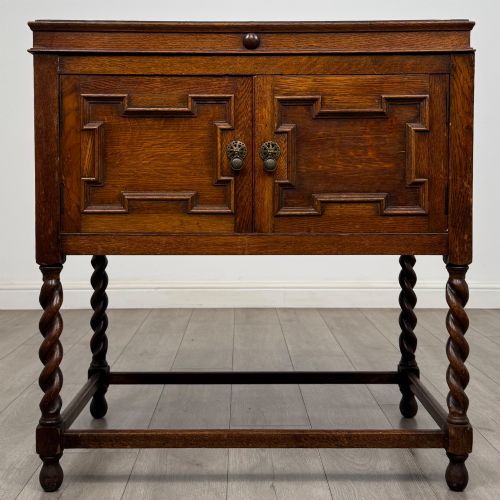
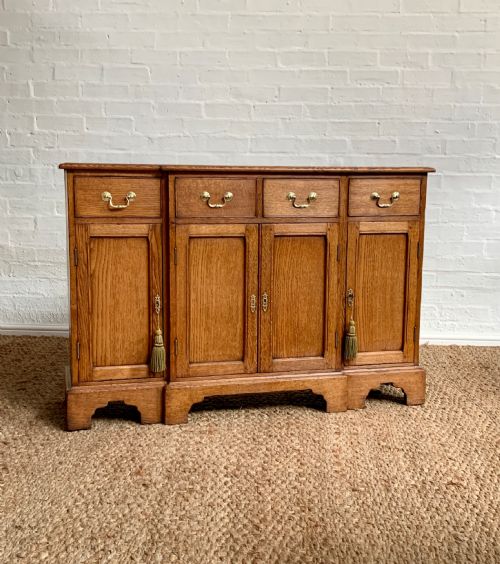
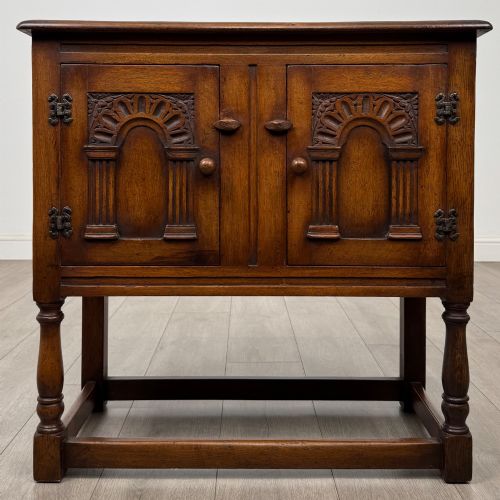
Small Carved Oak Cupboard
A small carved oak cupboard is a compact piece of storage furniture carrying centuries of woodworking tradition into modern rooms.
Small Carved Oak Cupboard
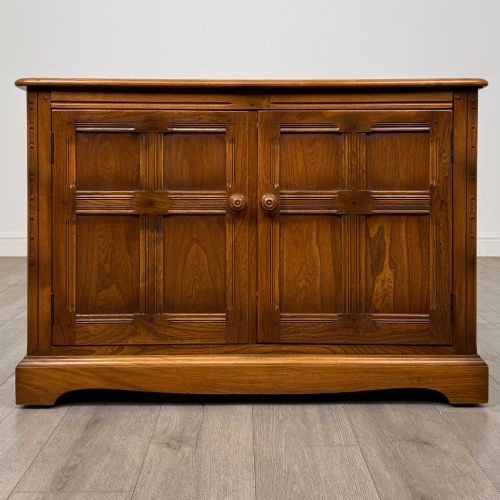
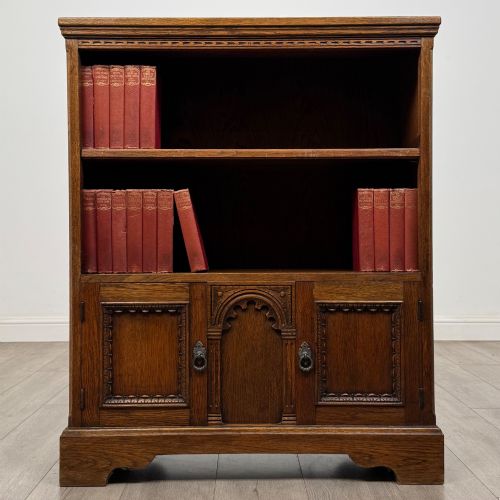
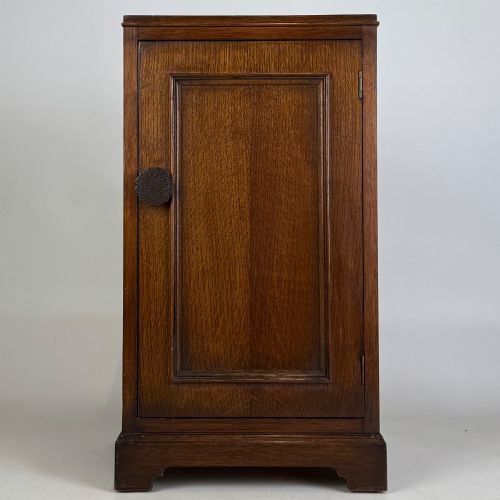
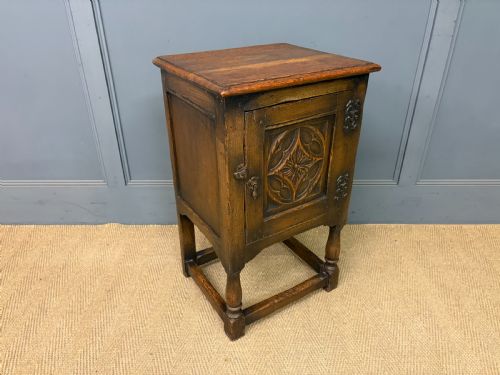
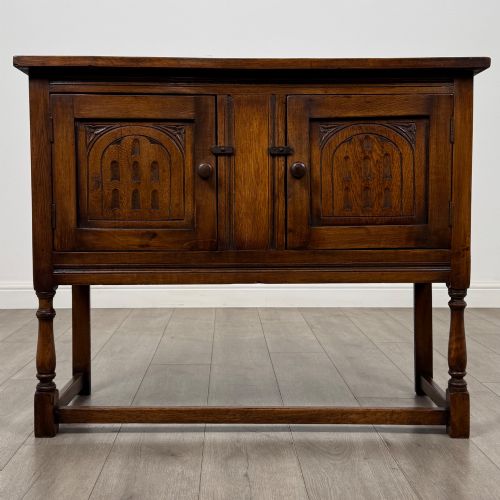
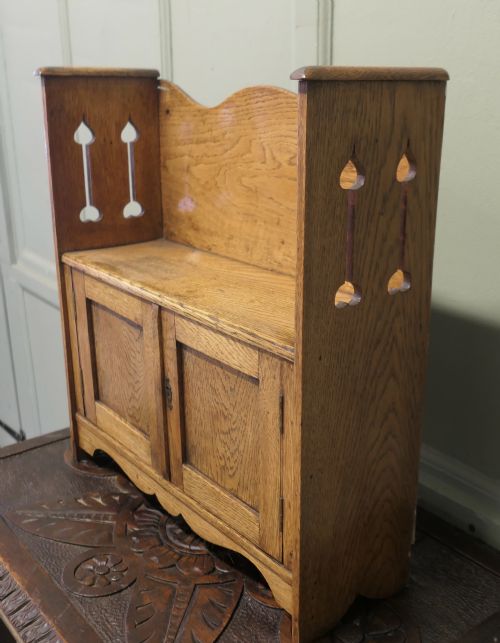
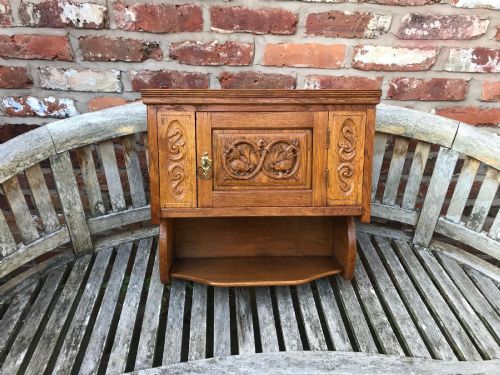
A small carved oak cupboard brings substantial storage capacity to limited spaces without dominating a room. These pieces appear in forms such as wall-hanging cabinets, bedside tables, table-top collectors' cabinets, and miniature court cupboards.
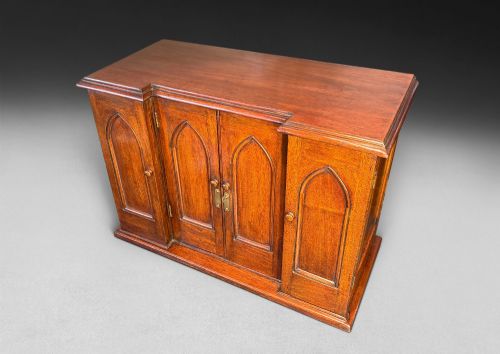
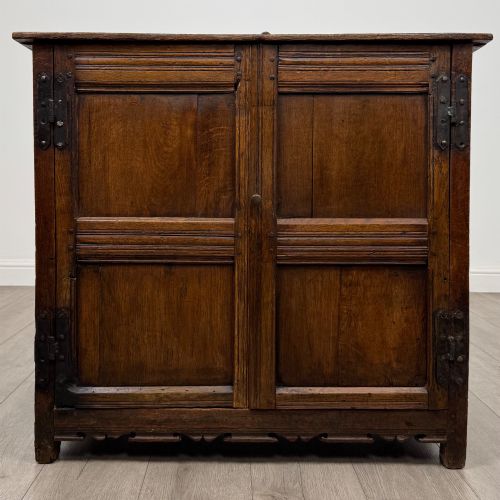
The selection ranges from early examples dating to the seventeenth century through eighteenth-century Welsh country pieces and nineteenth-century Gothic revivals up to twentieth-century Edwardian interpretations. Buyers encounter items made for specific domestic tasks, from holding provisions to displaying precious objects.
Originating primarily from British and European workshops, these cupboards reflect regional tastes and domestic needs across different eras. The enduring appeal lies in the combination of dense timber, compact proportions, and decorative carving.
How they were made
Makers relied principally on solid oak, selected for its strength and distinctive grain pattern, supplemented by brass, iron, and wrought iron for hinges, handles, and locks. Construction methods often utilised pegged joints and panelled doors to accommodate the natural movement of timber over time.
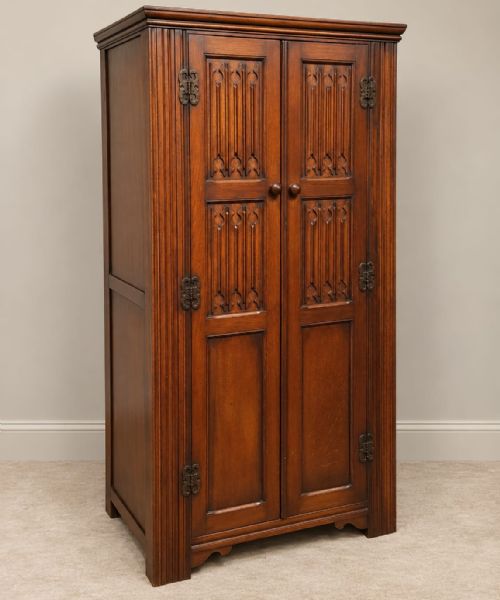
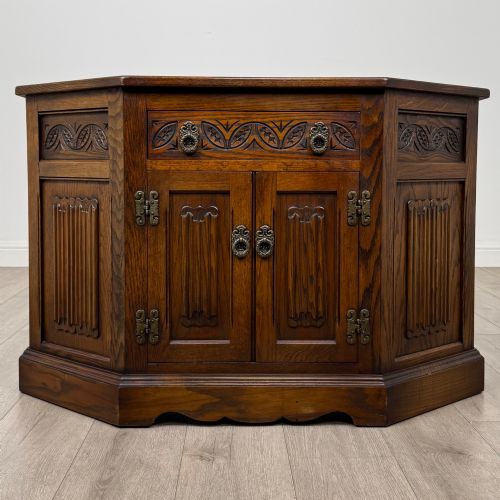
Surface decoration frequently involved hand carving executed in styles such as Jacobean, Gothic, and Arts and Crafts, sometimes incorporating linenfold panels, pokerwork, or geometric moulding. Individual pieces also integrated elements of rosewood and ebony alongside the primary oak structure.
Some nineteenth-century makers concealed tiny Green Man faces among the oak foliage to watch over the household.
What varies in quality
The standard of a small carved oak cupboard depends heavily on the crispness and depth of the hand carving and the integrity of the original construction. Superior pieces display thoughtful integration of decorative motifs that complement the architectural proportions of the cabinet rather than overwhelming them.
The Small Carved Oak Cupboard Glossary
- Court cupboard
- A traditional open or enclosed sideboard used for displaying plate and storing food. These shorter variants often feature tiered shelves and carved lower compartments.
- Linenfold
- A style of relief carving imitating folded fabric or parchment. This motif appears frequently on sixteenth and seventeenth-century panels.
- Peg joint
- A traditional method of securing timber framing using wooden dowels rather than metal fasteners. This technique allows the structure to adapt to humidity changes.
- Gelderse Kussenkast
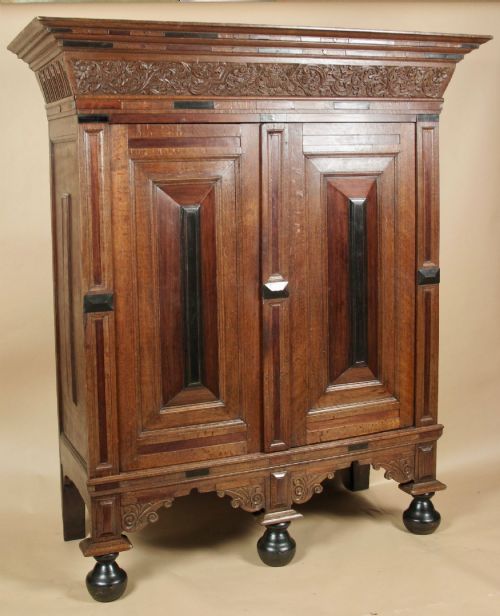
- A heavy armoire type originating from the Gelderland region, characterised by prominent cushion-moulded panel doors. These pieces often combine oak with contrasting exotic veneers.
- Frieze
- The decorative horizontal band running along the upper portion of a cabinet beneath the cornice. Carvers often embellished this area with running foliage or geometric patterns.
Small Carved Oak Cupboard: Frequently Asked Questions
How do I date a carved oak cupboard?
Dating relies on observing construction methods, joinery types, and decorative styles visible across the piece. Tool marks, peg construction, and the specific profile of mouldings help place an item within periods ranging from the seventeenth century to the twentieth.
Changes in hardware styles and the evolution of revival movements also provide reliable clues. Comparing the carving technique to established regional traditions narrows down the era of manufacture.
Where should I place a wall-hanging cupboard?
Wall-hanging cabinets suit spaces where floor area is limited, such as hallways, kitchens, or bathrooms. Securing them directly to wall studs ensures they safely support the weight of solid oak and stored contents.
Placing them at eye level allows the carved details and panel work to be appreciated fully. They function well above sideboards or as standalone accents on plain walls.
How do I care for antique oak furniture?
Maintaining antique oak involves keeping the timber away from direct heat sources and sudden humidity fluctuations to prevent splitting. Regular dusting with a soft, dry cloth preserves the finish without building up residues.
Applying a traditional beeswax occasionally nourishes the wood and enhances the natural grain. Avoiding synthetic polishes protects the historic patina developed over centuries.