

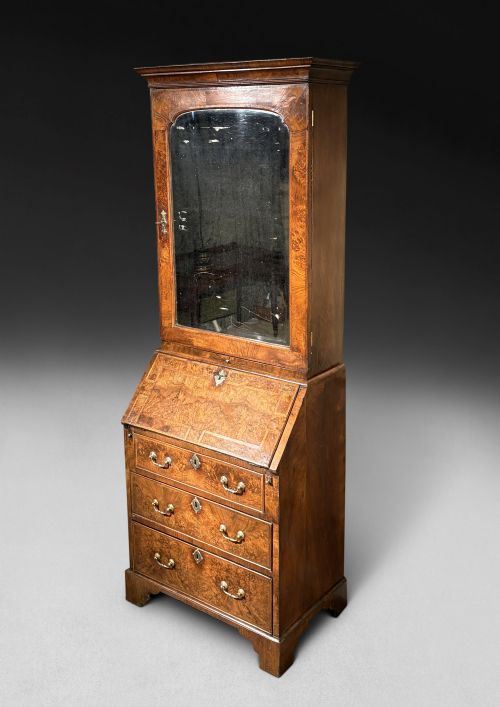


Small Burr Walnut Secretary
A small burr walnut secretary is a compact writing cabinet with figured timber and secret compartments, offering both fine display and private correspondence space.
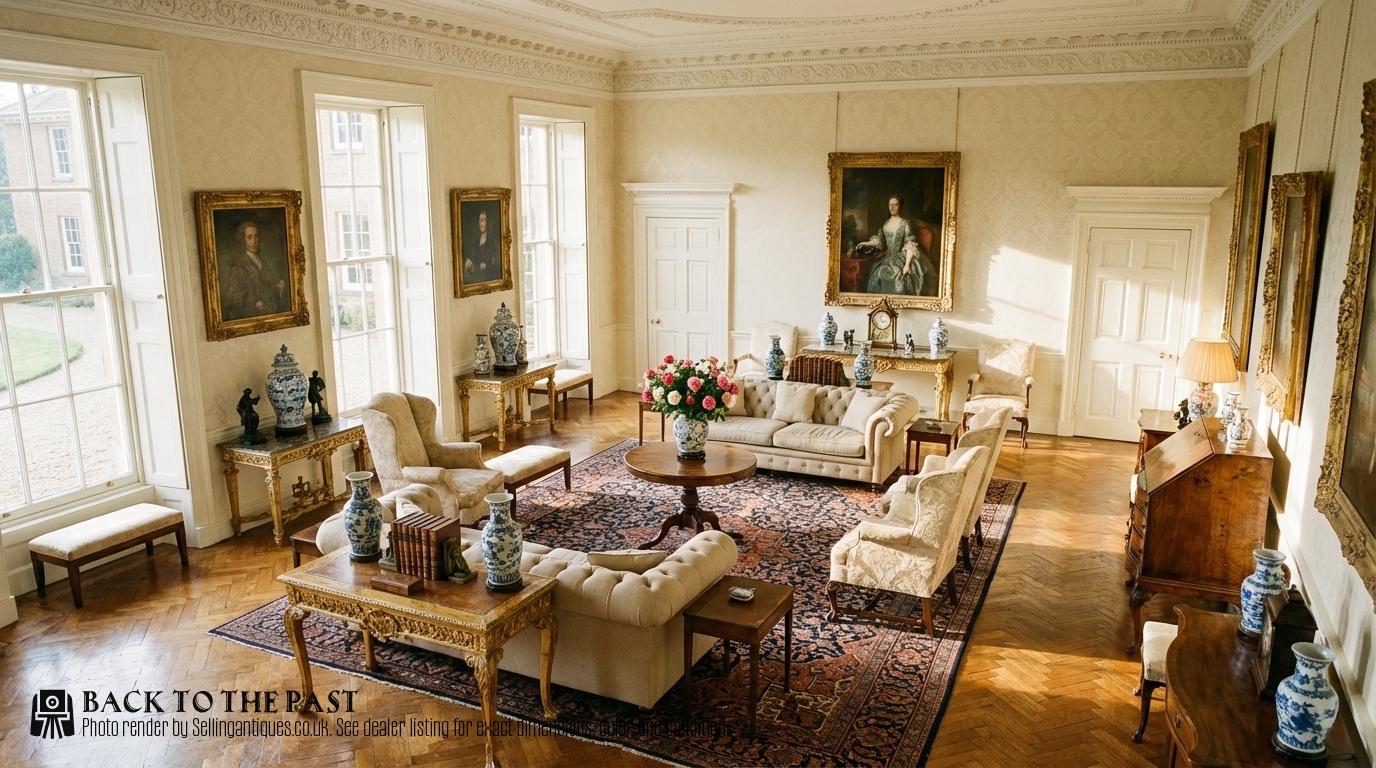
Small Burr Walnut Secretary
When you search for small burr walnut secretary, you are looking at writing furniture designed for domestic use from the eighteenth, nineteenth, and early twentieth centuries. These pieces combine a sloping writing flap or lift-top desk with internal pigeonholes and drawers, sometimes surmounted by a glazed bookcase cabinet.
The versions you are most likely to meet on this page include Victorian and Georgian examples, alongside revival pieces built in the George I Style or Queen Anne taste. They utilise rich timber veneers across forms ranging from freestanding davenports and bureaux to compact bureau bookcases and bonheur de jour desks.
How they were made
Cabinet makers constructed these pieces using solid foundational timbers such as oak, overlaid with carefully sliced burr walnut veneers to create striking symmetrical patterns across the fall front and drawers. Secondary woods like fruitwood appear in delicate inlaid stringing and floral motifs, while desks often incorporate fitted leather writing surfaces.
Hardware played an essential functional and decorative role, featuring cast brass handles, escutcheons, and occasional ormolu mounts. Glazed doors on taller bookcase variants utilised timber framing to house individual panes of glass above the lower writing compartment.
Listings span the 18th Century, 19th Century, and 1920, incorporating Georgian, Victorian, Queen Anne, and French Louis XV Revival styles.
What varies in quality
The distinction between ordinary and exceptional examples rests upon the selection and matching of the burr walnut veneer across the primary surfaces. Finer pieces display seamless grain continuity across drawers and panels, whereas lesser examples show abrupt cuts or mismatched timber patterns.
Depth of execution in the secondary details also defines the tier of a piece. Superior desks demonstrate crisp fruitwood inlay, well-fitted internal drawers, and heavier cast brass hardware rather than simple stamped replacements.
The Small Burr Walnut Secretary Glossary
- Burr walnut
- A figured wood veneer taken from the growth growths of a walnut tree, prized for its swirling, highly decorative grain patterns. It forms the primary decorative surface on these secretaries.
- Bureau bookcase
- A dual-purpose furniture form featuring a sloping writing desk base beneath a tall enclosed shelving cabinet. The upper section often has glazed doors to display books or ceramics.
- Davenport
- A compact pedestal desk with a sloping, hinged writing surface and a set of drawers opening to one side. Victorian makers favoured this specific form for boudoir use.
- Bonheur de jour
- A light lady's writing desk featuring a small superstructure of drawers and pigeonholes above the main work surface. These delicate tables emerged during revival periods.
- Stringing
- Thin inlaid lines of contrasting timber, such as fruitwood, used to create geometric borders around drawer fronts and panels. It highlights the structural geometry of the cabinet.
Small Burr Walnut Secretary: Frequently Asked Questions
What is a small burr walnut secretary?
A small burr walnut secretary is a compact writing desk veneered in highly figured burr walnut, typically featuring a sloping fall front or lift top. These pieces house internal compartments for letters and stationery.
Originating across the eighteenth, nineteenth, and early twentieth centuries, they serve as both functional writing furniture and decorative statements. Their smaller proportions suit domestic rooms where floor space is limited.
How do I date a burr walnut bureau?
Dating involves examining the construction methods, timber choice, and stylistic revival influences present in the piece. Eighteenth-century examples display different cabinet-making joinery compared to Victorian or nineteen-twenties revival items.
Looking at the secondary woods, such as oak or fruitwood internals, helps determine the era. Hardware styles and inlay techniques also provide clear indicators of period manufacture.
Where were these desks placed?
These secretaries were traditionally placed in private sitting rooms, bedrooms, or libraries where correspondence and personal accounts were managed. Their compact size allowed them to fit comfortably against parlour walls.
Freestanding davenports and bureau bookcases were designed to be viewed from multiple angles, making them versatile for placement within open room layouts rather than strictly against boundaries.
How do I care for burr walnut?
Burr walnut veneer requires stable environmental conditions away from direct sunlight and extreme humidity changes. Maintaining consistent indoor temperatures prevents the delicate veneer from lifting or cracking.
Applying occasional appropriate wax polish helps nourish the timber and preserve the historic finish without building up heavy residues. Gentle dusting with a soft cloth keeps the figured grain clear.