

Small Burr Walnut Chest
When you search for a small burr walnut chest, you are looking at compact storage pieces finished in highly figured timber.
Small Burr Walnut Chest
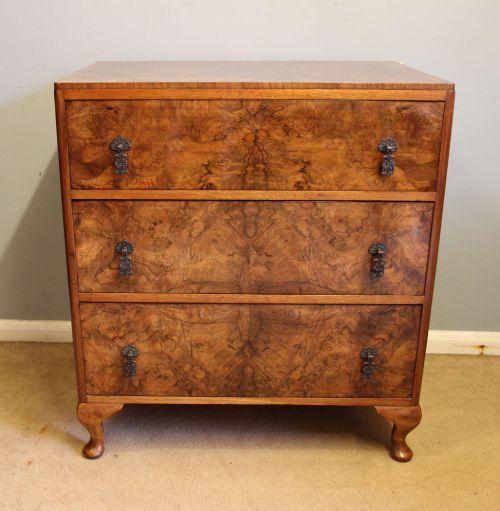
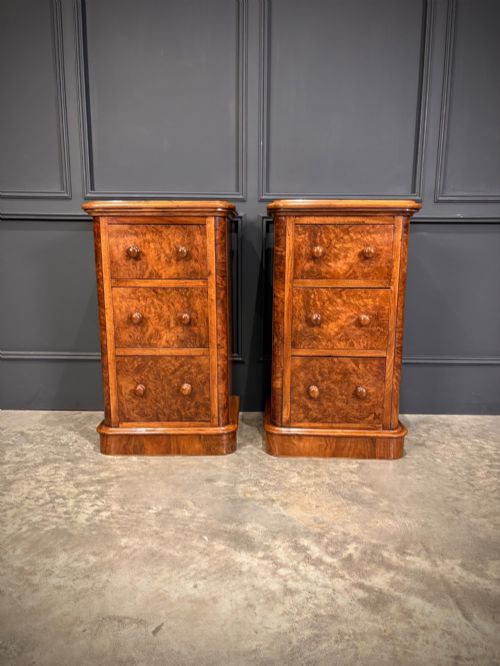
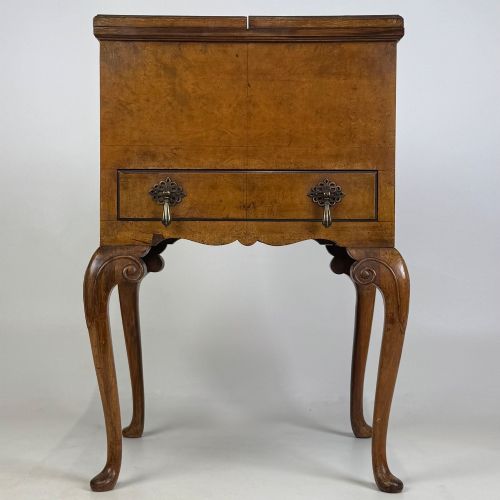
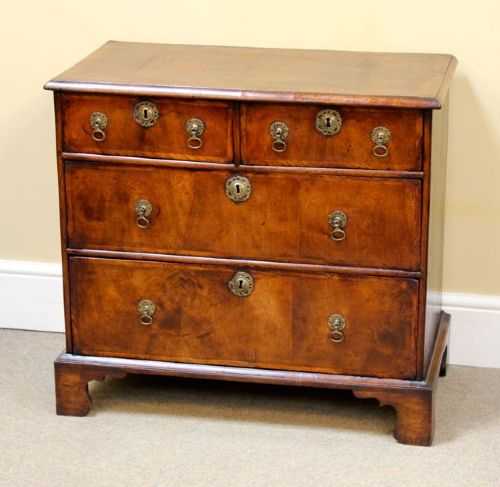
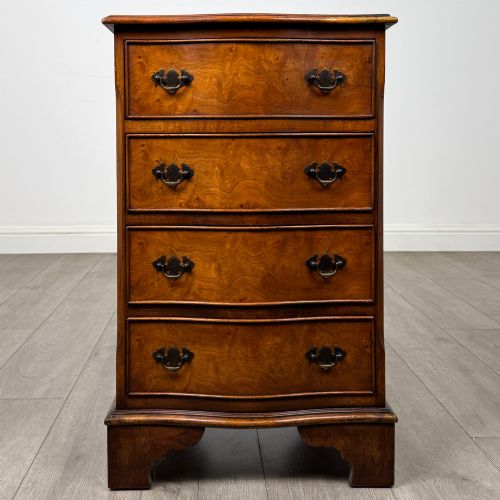
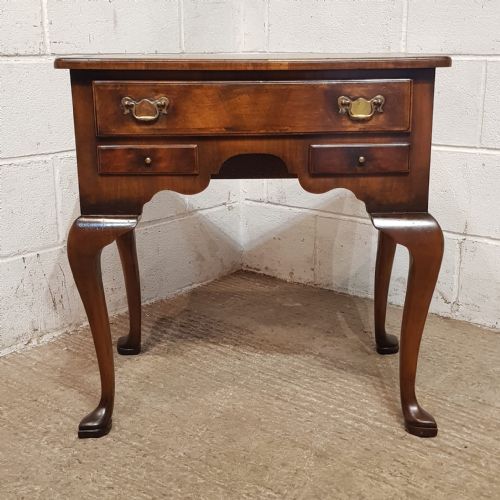
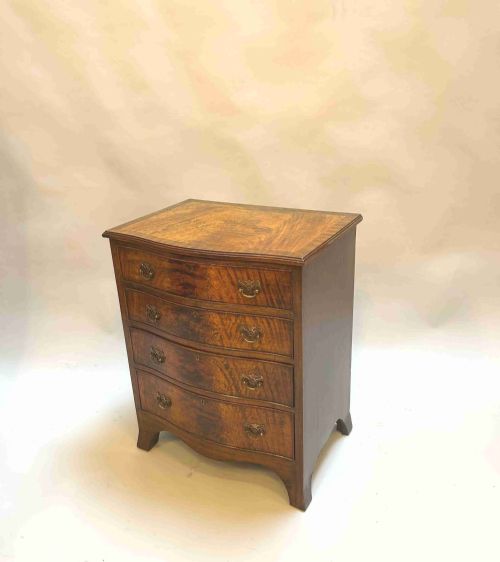
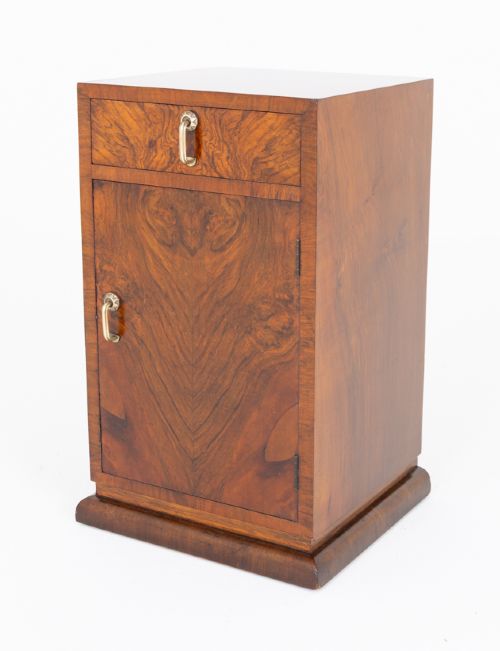
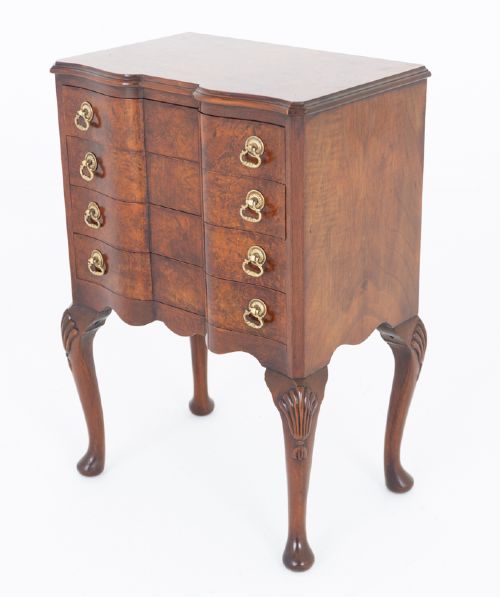
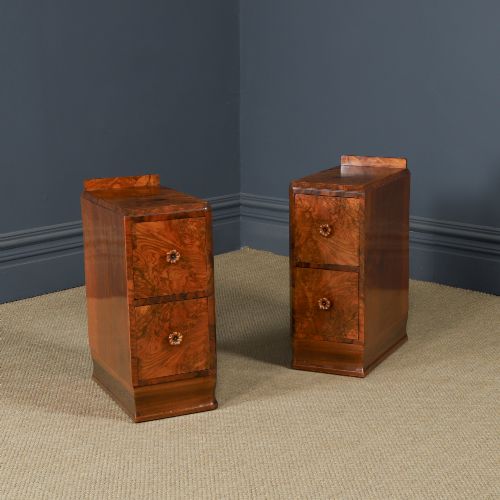
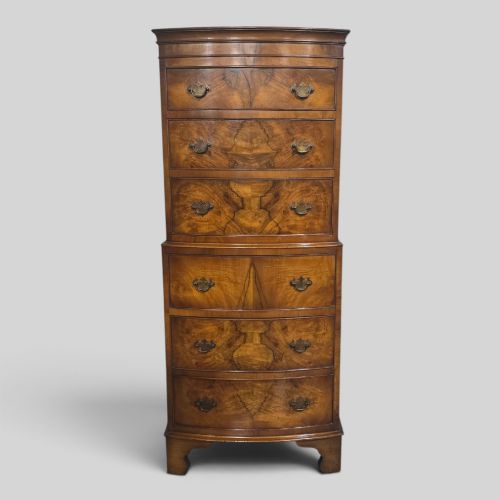
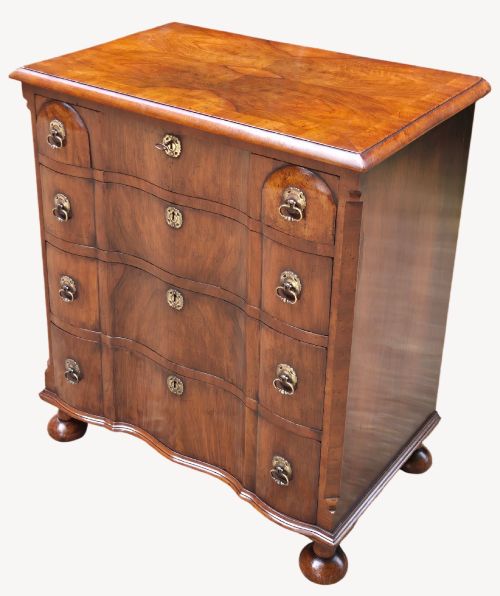
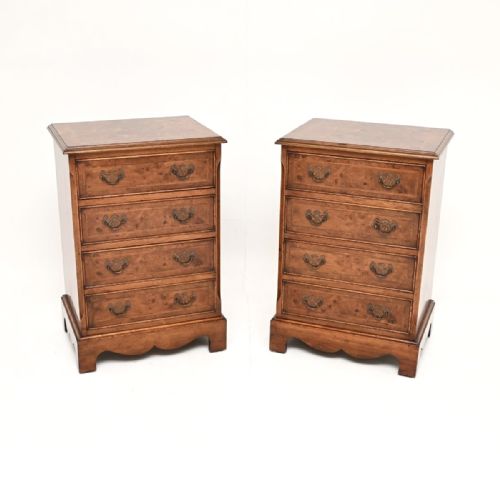
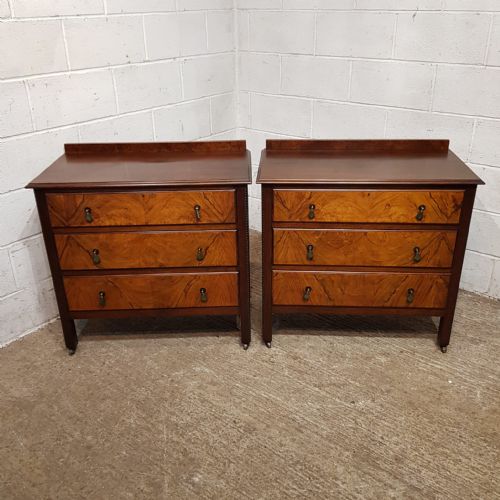
A small burr walnut chest takes the form of a compact chest of drawers, a bedside cabinet, a lowboy, or a miniature chest designed to occupy minimal floor space while providing drawer storage. These pieces frequently appear in revival styles such as Queen Anne and Georgian, alongside Edwardian, Victorian, and 1930s interpretations.
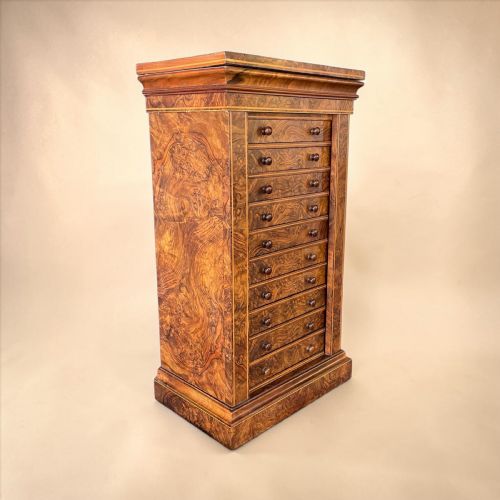
The most common versions met on this page include bedside chests and serpentine or bow-fronted chests of drawers dating from the early twentieth century and the interwar period. Alongside these, 18th-century examples and Victorian pieces with brass mounts or brushing slides occasionally surface.
How they were made
Cabinet makers utilised thin layers of burr walnut veneer laid over secondary timbers such as oak and pine to create complex grain patterns across the drawer fronts and top surfaces. The distinctive swirling figures of the burr come from tree growths, which workers sliced and matched symmetrically.
Drawer construction typically involved solid timber frames joined by hand-cut dovetails, while carcasses received polished finishes to protect the delicate wood. Brass handles, escutcheons, and occasional military-style binding provided functional hardware secured to the structural wood.
Some Victorian lockers include solid brass corner brackets, turning a bedroom chest into travel-ready campaign equipment.
What varies in quality
The visual harmony of the veneer layout dictates much of the distinction between standard examples and exceptional pieces. Grain that is mirrored or book-matched symmetrically across multiple drawers demonstrates superior planning by the cabinet maker.
Proportion and scale also separate simpler utilitarian bedside tables from finely executed miniature chests on stands or serpentine forms. The crispness of edge mouldings and the retention of original brass hardware further distinguish the grade of execution.
The Small Burr Walnut Chest Glossary
- Burr Walnut
- A figured wood taken from the wart-like growths on walnut trees, yielding dense, swirling grain patterns. Cabinet makers prized this timber for surface veneering on high-status furniture.
- Serpentine Front
- A furniture front curving outward at the sides and inward at the centre in a continuous wave line. This shape demands precise woodworking to fit drawers into the curved carcass.
- Bow Front
- A convex, outwardly curved front profile common on small chests of drawers and bedside cabinets. It softens the boxy lines of traditional storage furniture.
- Lowboy
- A small table with one or more rows of drawers, standing on relatively tall legs. These originated in the 18th century as dressing or side tables.
- Brushing Slide
- A pull-out shelf inset just beneath the top of a chest, historically used for folding clothes or writing. They appear frequently on mid-sized and smaller drawer units.
- Wellington Chest
- A tall, narrow chest of drawers secured by a hinged vertical locking side bar that fastens with a key. This design originated in the 19th century for secure document storage.
Small Burr Walnut Chest: Frequently Asked Questions
What is a burr walnut chest?
A burr walnut chest is a small set of drawers or a cabinet surfaced with decorative wood veneer taken from irregular tree growths. These pieces range from bedside tables to miniature chests of drawers.
Craftsmen used the figured timber to create striking visual patterns across the drawer fronts while keeping the overall footprint compact for domestic spaces.
How do I date a walnut chest?
Dating relies on carcass construction, handle styles, and secondary woods like oak or pine found inside the drawers. Georgian and 18th-century pieces show hand-cut joinery and different proportions compared to 20th-century revivals.
Revival pieces from the 1920s and 1930s often incorporate machine-cut elements and modern commercial veneers while mimicking earlier Queen Anne or Georgian silhouettes.
Where should I place a small chest?
These compact chests suit tight spaces such as hallways, landings, or bedrooms where standard furniture proves too bulky. Bedside versions sit naturally beside a bed for surface lighting and small storage.
Serpentine and bow-fronted designs work well freestanding against flat walls where their curved profiles catch the light and add depth to a room.
Are these chests durable for daily use?
Solid secondary timbers and sturdy drawer dovetails mean these pieces handle everyday storage requirements effectively. The veneered exterior requires basic care to avoid moisture damage and direct sunlight.
Treating the polished burr surface with gentle dusting and avoiding abrasive cleaners preserves the wood figure and the original finish over decades of use.