


Small Bowfront Sideboard
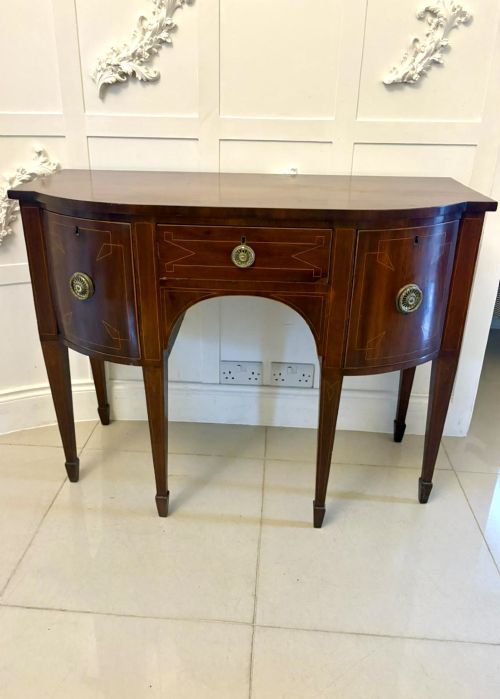
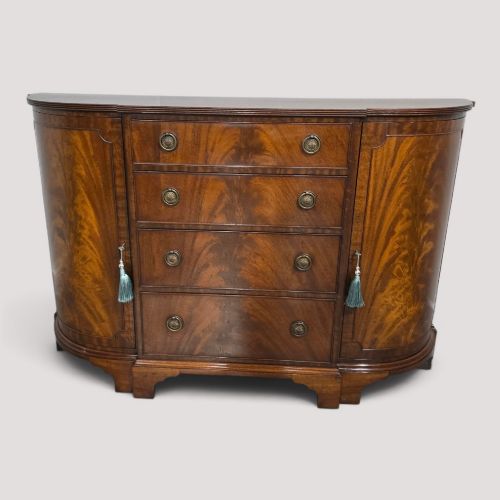
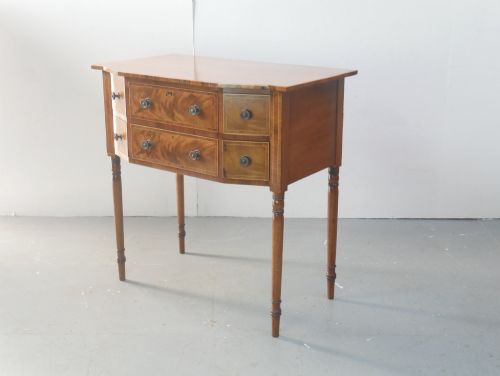
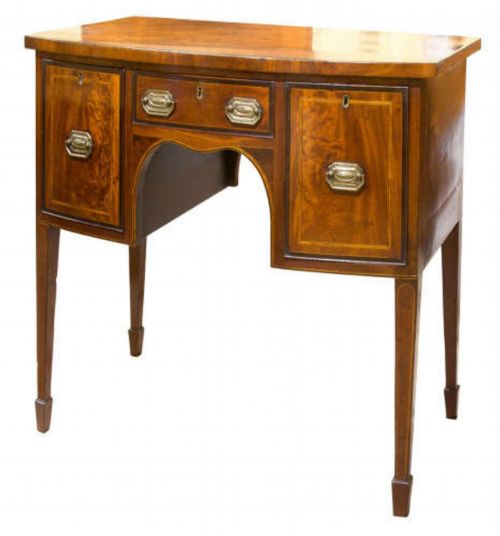
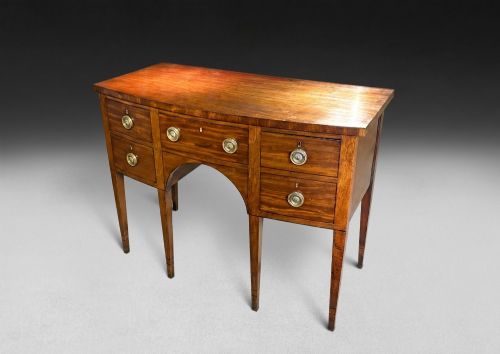
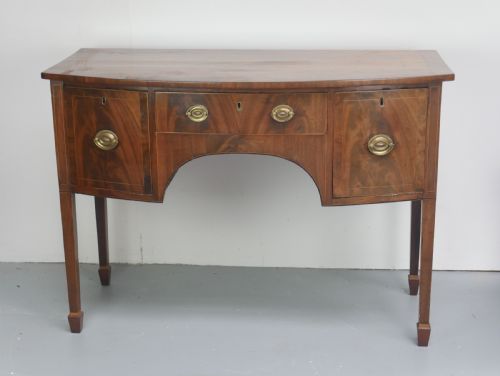
A small bowfront sideboard brings elegant curved lines and compact proportions to a dining room or hallway.
Small Bowfront Sideboard
When you examine a small bowfront sideboard, you are looking at a compact serving piece designed with a convex curved front that projects forward from the wall. These versatile cabinets appear most frequently in Georgian, Regency, and Edwardian interpretations, spanning the eighteenth century through to the early twentieth century.
The version you are most likely to meet on this page is constructed from mahogany, often enhanced with contrasting wood inlays or stringing, standing on tapering legs. Such pieces were originally conceived to hold dining silver, linen, and glassware while occupying a smaller footprint than their grander architectural counterparts.
How they were made
Cabinet makers built these curved carcasses primarily using solid and veneered mahogany, supported by secondary structural timbers such as pine and oak. The distinctive curved front required careful timber selection and specialist bending or shaping techniques to ensure stability across the drawers and doors.
Surface enrichment relied on contrasting timbers like satinwood, boxwood, purpleheart, and ebony, inlaid as stringing or geometric banding. Drawer construction typically incorporated hand-cut dovetails, while brass hardware, including handles and escutcheons, completed the functional assembly.
What varies in quality
The division between ordinary examples and superior specimens rests on the depth of figure in the mahogany veneer and the precision of the inlay work. Finer pieces display carefully chosen timber grains that flow harmoniously across the curved drawer fronts and top surface, rather than mismatched cuts.
Proportion and scale dictate the visual success of the piece, with better workshops achieving a balanced relationship between the depth of the bow and the slimness of the supporting legs. The integration of secondary timbers, original brass fittings, and refined secondary linings also separates standard utility pieces from those made for affluent homes.
The Small Bowfront Sideboard Glossary
- Bowfront
- A convex curved front projecting outward in a gentle arc. This shape softens the linear rigidity of a traditional dining room.
- Stringing
- Thin inlaid lines of contrasting timber set flush into the primary wood surface. It creates delicate geometric framing around drawer edges and borders.
- Dovetail
- A traditional interlocking joint used in drawer construction. Hand-cut variations indicate older craftsmanship before mechanical routing.
- Escutcheon
- A decorative metal plate surrounding a keyhole. It protects the surrounding wood from wear caused by the insertion of keys.
- Dwarf
- A descriptive term for a low or compact furniture form. These pieces sit lower to the ground than standard serving tables.
Small Bowfront Sideboard: Frequently Asked Questions
Where should I place a small bowfront sideboard?
These compact servers sit comfortably in dining rooms, hallways, or drawing rooms where floor space is limited. Their curved fronts allow for easier movement around tight corners.
They provide useful surface space for lamps or serving dishes while offering enclosed storage within drawers and cupboards below.
How do I tell a Georgian piece from an Edwardian copy?
Georgian examples usually display eighteenth or early nineteenth century construction methods, including hand-cut dovetails and older secondary timbers like oak. Edwardian revivals from around nineteen hundred often utilise cleaner machine-sawn elements and different internal woods.
Examine the wear patterns, timber ageing, and the style of the brass hardware to help determine the manufacturing period.
What items can I store inside them?
The internal drawers and cupboards accommodate table linen, cutlery, and flatware. Deeper sections serve well for bottled items or serving accessories.
Their shallow depth means they hold smaller dining items rather than large serving platters or bulky crockery.
What maintenance do these mahogany surfaces need?
Keep the wood nourished with appropriate wax polishes applied sparingly and buffed with a soft cloth. Avoid placing them in direct sunlight or near heat sources to prevent the timber from drying out.
Regular dusting with a dry cloth prevents dirt build-up within the fine inlay lines and carved details.