


Small Apothecary Drawers
Small apothecary drawers are compact multi-drawer cabinets designed for medicine, spice, or specimen storage, offering practical utility and historic character.
Small Apothecary Drawers
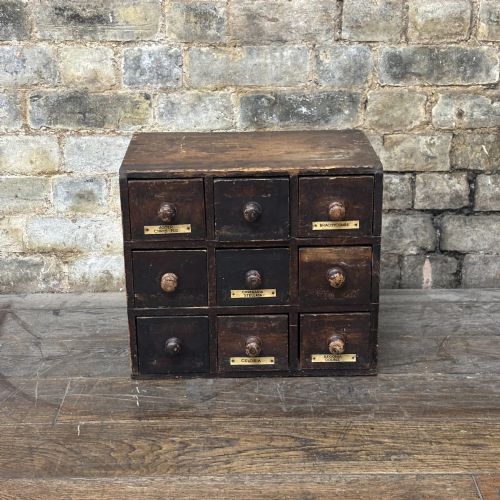
Small apothecary drawers encompass banks of drawers, chemist cabinets, and spice cupboards originating from periods such as the Georgian, Victorian, and Edwardian eras. Buyers looking for small apothecary drawers seek these multi-compartment wooden units to store small items while bringing period authenticity to an interior.
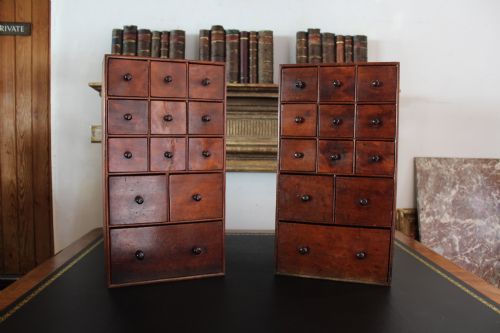
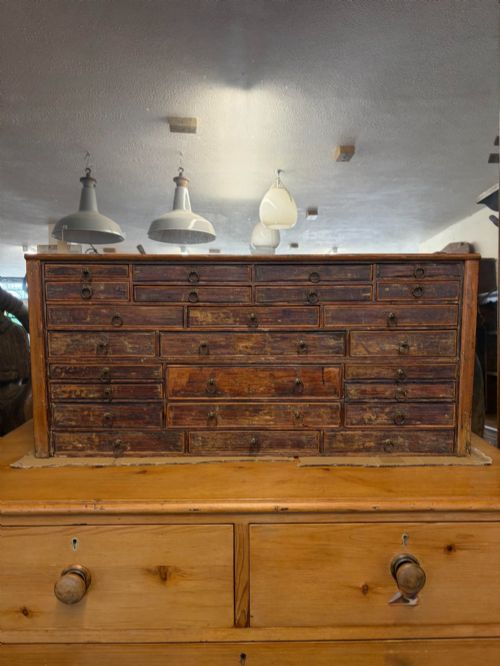
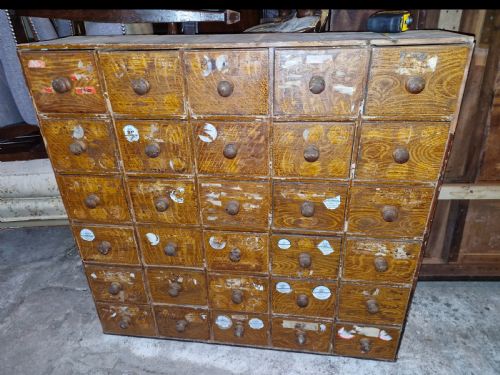
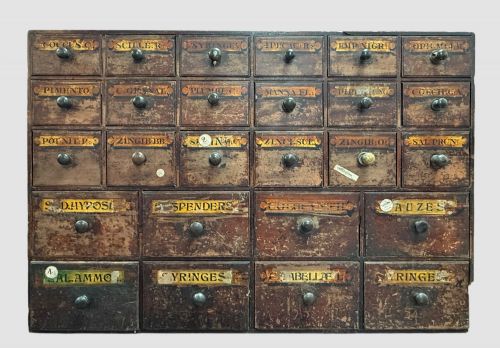
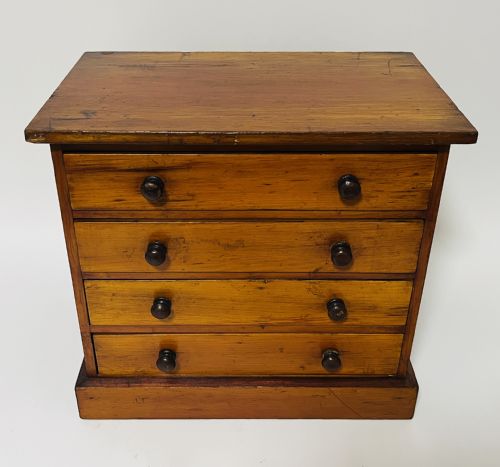
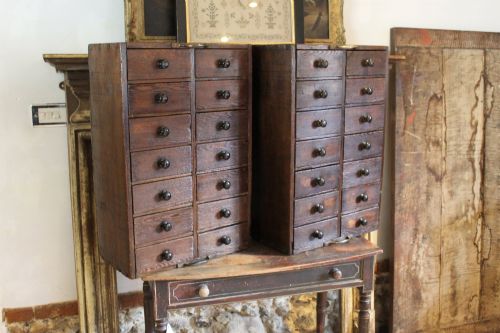
The pieces appearing on this page range from tall banks of twenty-five drawers and apothecary chests to wall-hanging spice boxes and table-top collectors cabinets. Pine, oak, walnut, and fruitwood form the primary body materials, occasionally supplemented by glass fronts or brass and iron hardware.
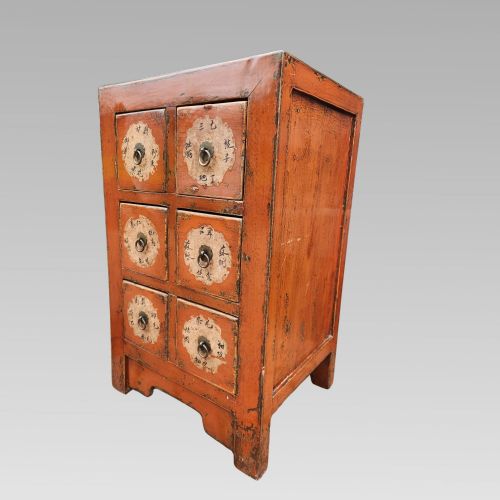
Originating from commercial, medical, or domestic settings, these units reflect varied regional traditions from English country workshops to Chinese medicine cabinets and French ironmongery storage. Their compact proportions make them suitable for modern desktop organisation or display.
Construction and Materials
Carpenters constructed these cabinets predominantly from solid timbers such as pine, oak, walnut, mahogany, and fruitwood, joined using traditional cabinetry methods suited to heavy daily use. Drawer carcasses often featured durable secondary woods like deal or pine, built to withstand the weight of contents ranging from heavy glass apothecary bottles to dense metal hardware.
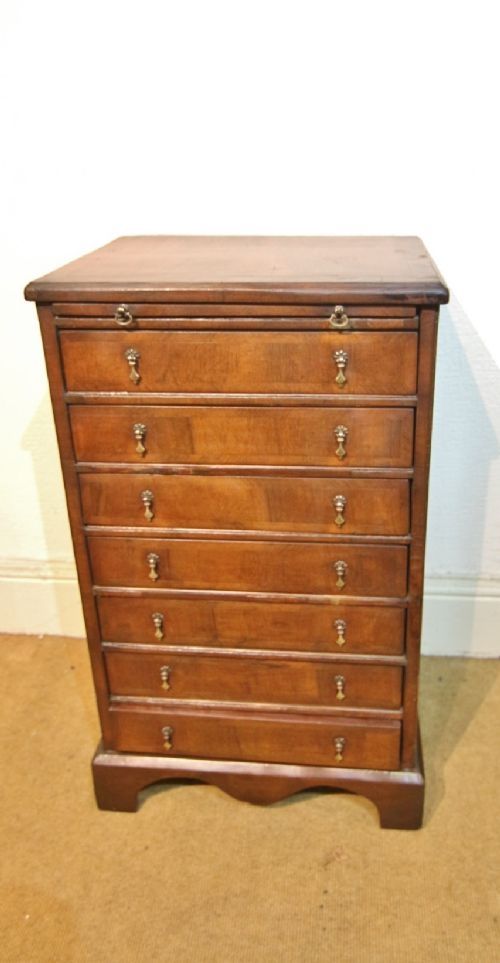
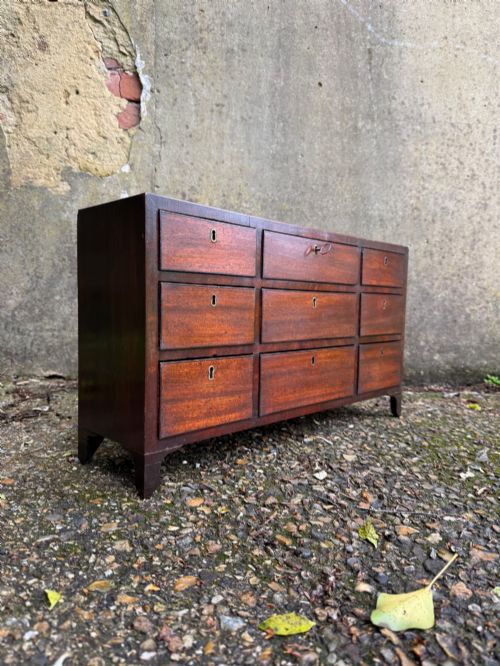
Hardware played an essential functional role, utilising brass drop handles, iron pulls, and occasionally locks with keys to secure valuable contents like homeopathic remedies or watch repair tools. Surfaces received finishes appropriate to their working life, spanning stained deals, waxed pine, and polished hardwoods.
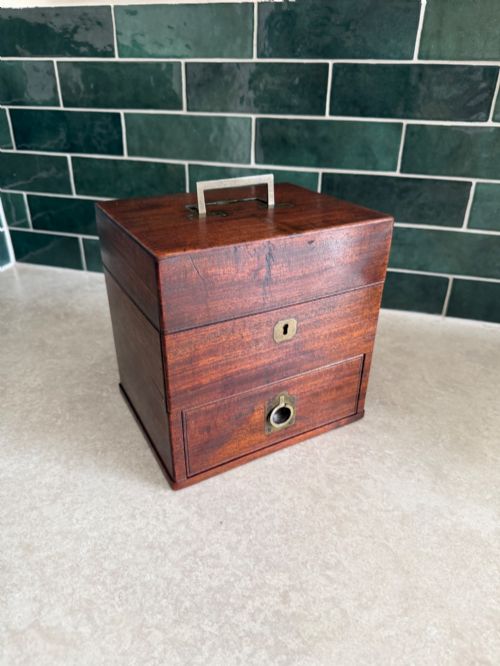
Some miniature medical chests still retain their original microscopic glass vials, whispering tales of 19th-century cures and travelling doctors.
Evaluating Quality
Quality in these cabinets reveals itself through the integrity of the timber selection and the precision of the drawer construction, where tight joints and smooth operation indicate skilled workshop production. Superior pieces maintain their original fitted pulls, backboards, and interior dividers rather than relying on replacement elements.
The visual harmony of the timber grain across numerous small drawer fronts distinguishes finer examples from utilitarian storage, particularly in walnut or figured oak specimens. Provenance and original commercial markings also elevate a piece, connecting standard utilitarian storage to specific historical pharmacies or merchants.
The Small Apothecary Drawers Glossary
- Bank of drawers
- A large multi-drawer unit designed for intensive filing, sorting, or storage in a commercial or domestic setting. These pieces often feature numerous uniform small compartments.
- Spice cabinet
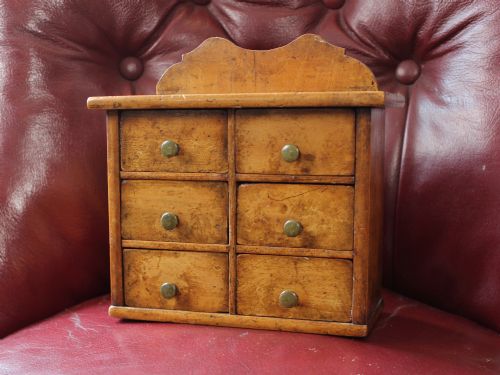
- A small wooden wall-hanging or table-top chest traditionally used in domestic kitchens for culinary herbs and aromatics. Earlier examples from the Georgian and 18th century frequently display decorative panelled doors.
- Collectors cabinet
- A specialist piece of furniture built to house specimens, coins, watches, or natural history items. They often include shallow drawers lined for delicate display.
- Homeopathic chest
- A portable or stationary wooden box fitted with numerous small slots to hold medicinal vials and remedies. These items date predominantly to the 19th century.
- Deal
- A softwood timber, typically fir or pine, commonly used for the secondary framing and interior elements of utilitarian 19th-century furniture. It accepts stains and paint readily.
Small Apothecary Drawers: Frequently Asked Questions
What were small apothecary drawers originally used for?
These cabinets served commercial, medical, and domestic functions, holding dried herbs, pharmaceutical ingredients, homeopathic remedies, and small shop goods. Apothecaries and chemists relied on the numerous small compartments to organise inventory efficiently.
Over time, similar multi-drawer formats were adopted by florists, watchmakers, and collectors for seeds, tools, and delicate specimens.
How do I date a set of apothecary drawers?
Dating relies on examining the construction methods, timber types, and hardware associated with specific historical periods. Georgian and 18th-century examples often feature pegged joinery and fielded panels, while Victorian and Edwardian pieces utilise machine-sawn elements and different dovetail patterns.
Commercial stamps, maker labels, and the style of brass or iron pulls also provide reliable chronological markers.
Are these drawers suitable for modern home use?
Their compact dimensions make them exceptionally practical for desktop organisation, jewellery storage, or general small-item containment in contemporary interiors. The multitude of small compartments allows for neat categorisation of modern accessories.
Placing them on a sideboard or desk provides both functional storage and a striking historic focal point.
What is the difference between a spice cabinet and an apothecary chest?
Spice cabinets were traditionally domestic kitchen fixtures used for food preparation ingredients, frequently designed as wall-hanging boxes with panelled doors concealing internal drawers. Apothecary chests originated in commercial dispensaries and medical practices to store medicinal substances and glass vials.
While both utilise multiple small drawers, apothecary chests generally contain higher numbers of uniform compartments tailored for pharmaceutical inventory.