
Small Table with Leaves
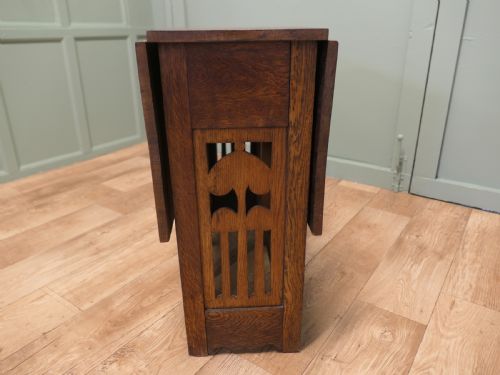
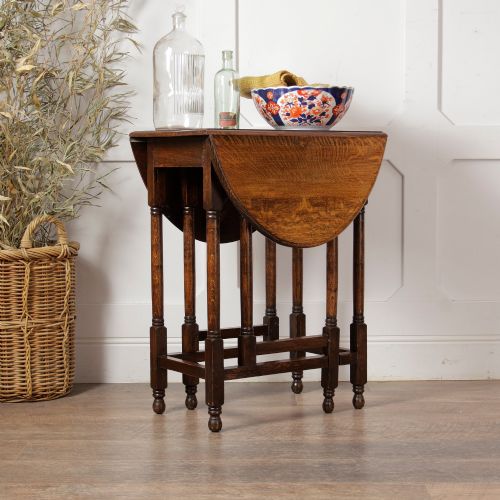
A small antique table with leaves offers folding agility and compact charm, designed to expand when needed and tuck away neatly.
Small Table with Leaves
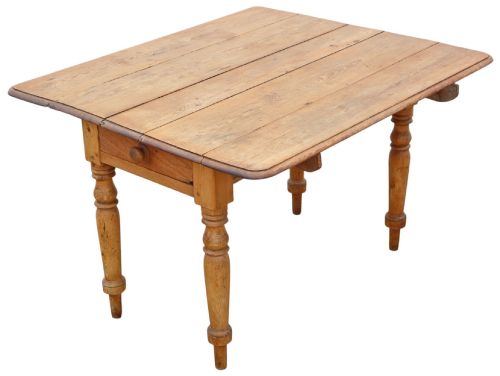
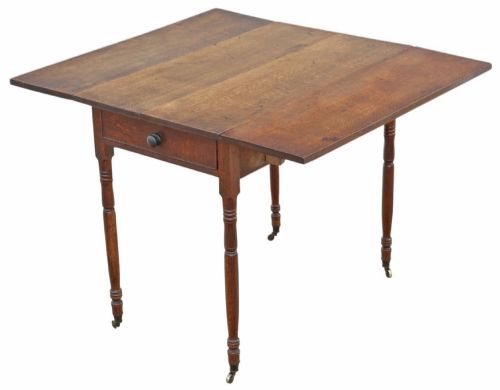
A small antique table with leaves combines practical surface area with space-saving folding mechanisms, appearing across Georgian, Regency, Victorian, and Edwardian periods.
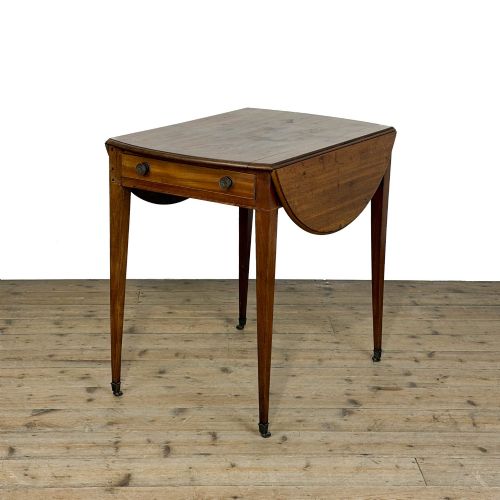
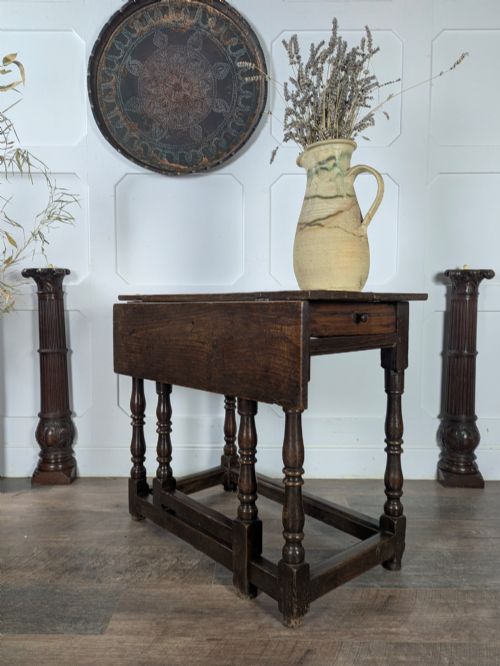
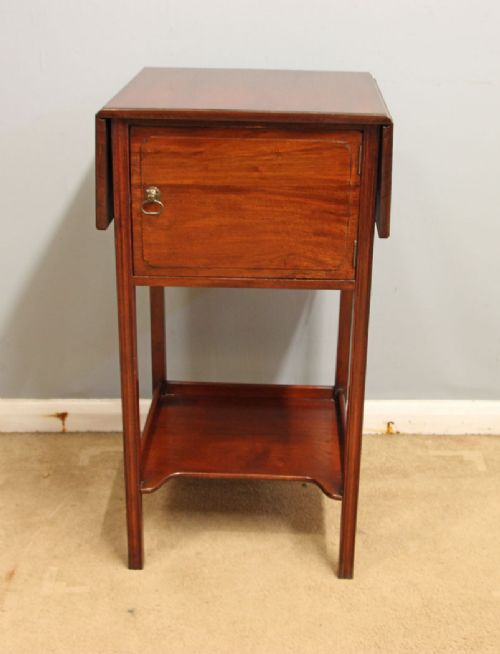
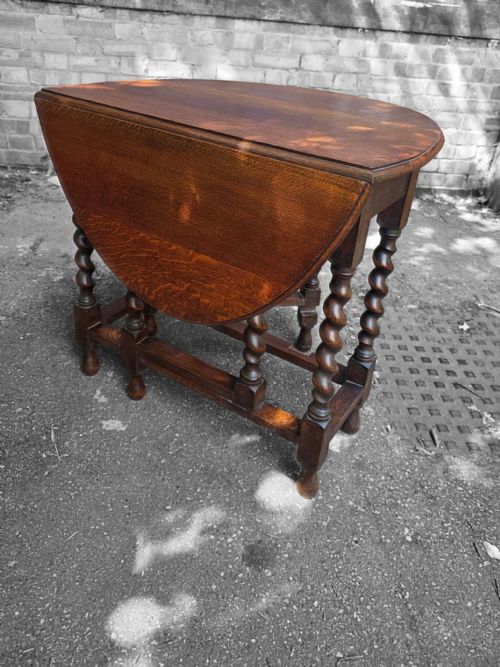
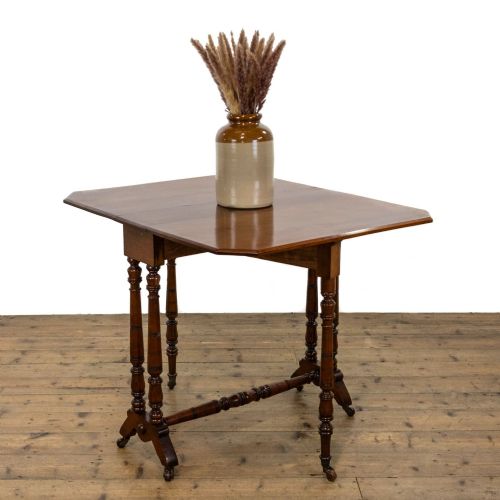
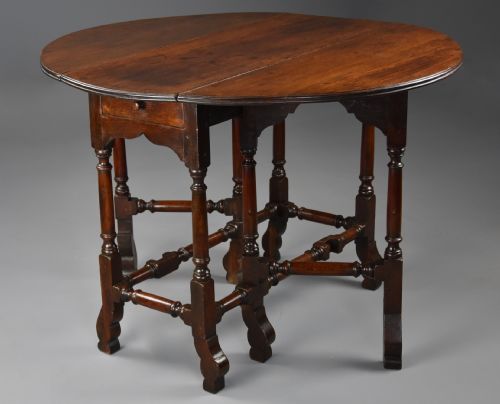
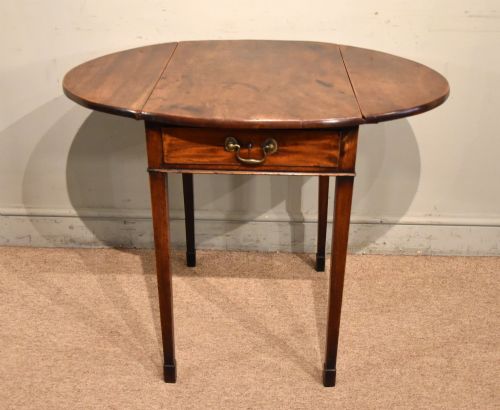
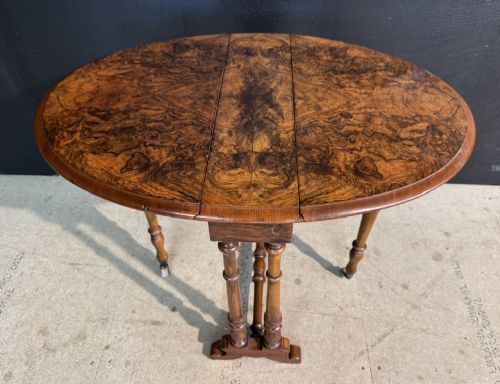
The selections here span drop-leaf, gateleg, Pembroke, and Sutherland formats, constructed primarily in mahogany, walnut, pine, and oak.
Buyers encounter variations ranging from kitchen utility tables to refined occasional and work tables designed for drawing rooms.
Materials and construction
Cabinet makers utilised dense hardwoods like mahogany, walnut, and rosewood alongside utilitarian softwoods such as pine and oak.
Structural flexibility relies on hinged drop leaves supported by swing legs, gateleg actions, or sliding wooden brackets.
Surface decoration incorporates fine wood veneers, inlay, and turned supports including bamboo-turned and bobbin-turned legs.
The listings span the seventeenth through the early twentieth centuries, featuring mahogany, walnut, rosewood, oak, pine, and fruitwood.
Judging execution and finish
Quality rests in the crispness of the turning on the legs and the tightness of the joinery where the drop leaves meet the fixed top.
Superior examples display carefully matched timber grains across the leaves and thoughtful integration of drawers and drop-flap supports.
The distinction between a utilitarian kitchen table and a parlour piece lies in the refinement of secondary woods and decorative detailing.
Jenks & Woods·Liberty & Co.
The Small Table with Leaves Glossary
- Drop-leaf table
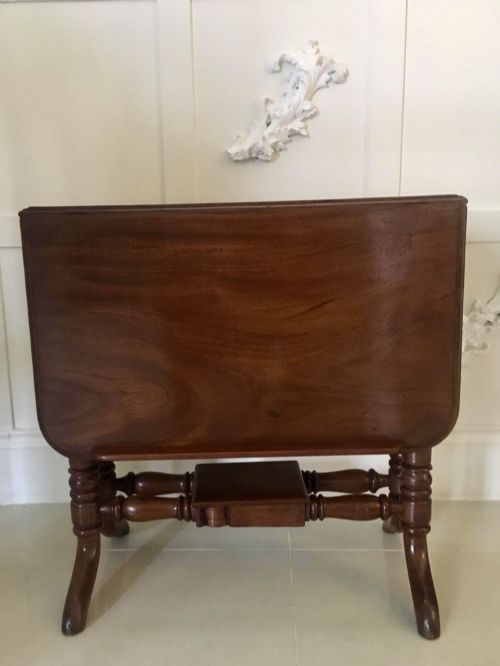
- A table with hinged flaps on one or both sides that fold down to save space. Raising the leaves extends the top surface.
- Pembroke table
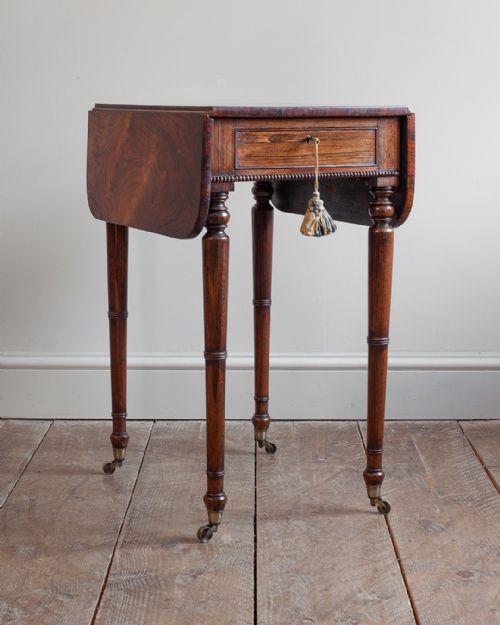
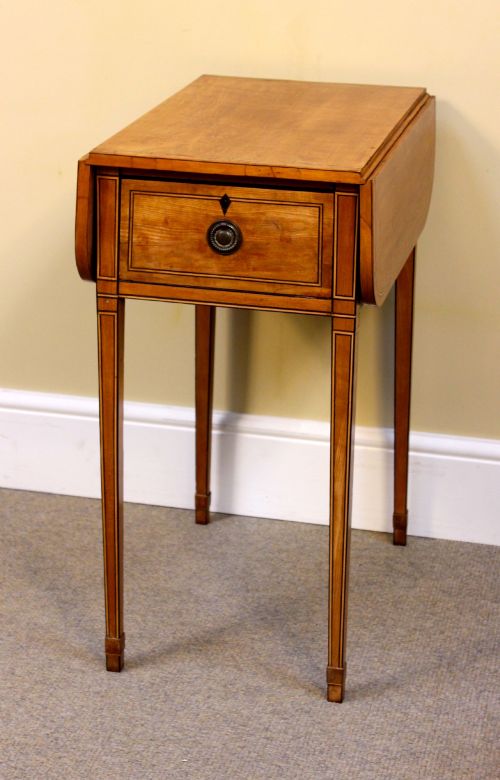
- A small occasional table featuring two drop leaves on opposite sides and typically a single drawer. They gained popularity during the Georgian period.
- Gateleg table
- A table with hinged leaves supported by legs that swing outward like a gate. This design provides sturdy support for larger folding surfaces.
- Sutherland table
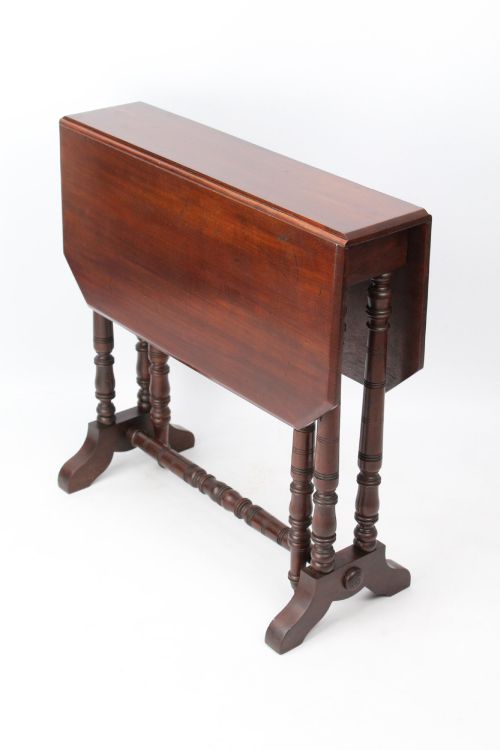
- A particularly narrow style of drop-leaf table featuring exceptionally slender leaves. When folded flat, it occupies minimal floor space.
Small Table with Leaves: Frequently Asked Questions
How do I use a drop leaf table daily?
Keep the leaves dropped against the sides to save space in a hallway or small room, raising them only when you need a surface for writing or dining.
Ensure the swing brackets or gatelegs are securely positioned underneath the raised flaps to support weight safely during use.
Where should I place a Pembroke table?
A Pembroke table fits neatly beside a sofa or chair as an end table, or functions as a compact desk in a study.
The small proportions allow it to sit comfortably against a wall with one or both leaves dropped.
How do I distinguish Regency from Victorian examples?
Regency pieces often display cleaner classical lines, rosewood or mahogany veneers, and restrained brass details dating from the early nineteenth century.
Victorian pieces frequently introduce bolder turnings, darker ebonised finishes, or elaborate aesthetic movement designs from later in that century.
Are these tables sturdy enough for dining?
Tables designed with gateleg actions or solid Pembroke supports provide reliable stability when fully opened for meals.
Check the hinge mechanisms and leg alignment to ensure the leaves remain level under normal weight.