


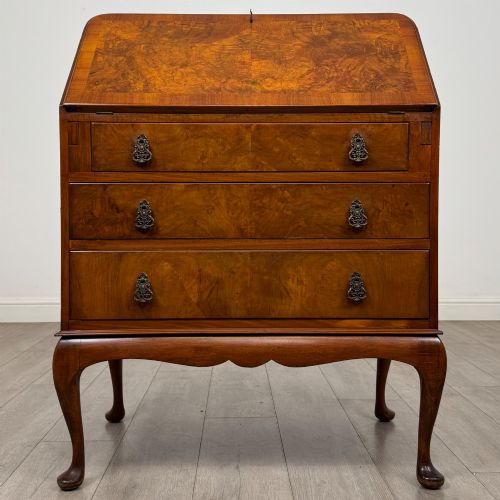
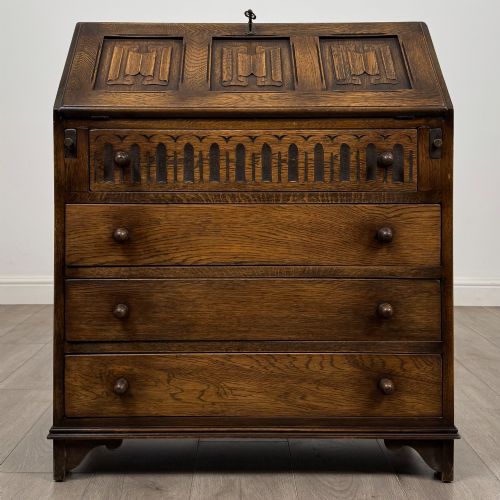
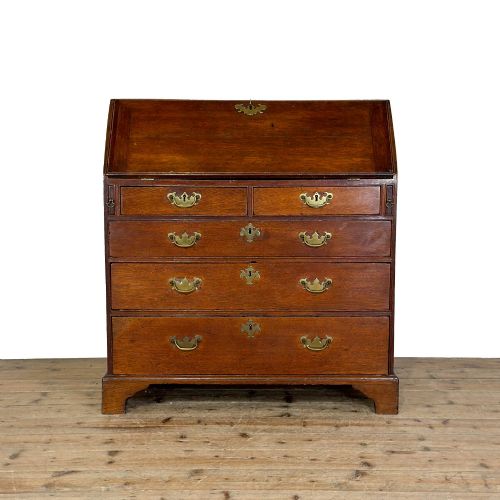
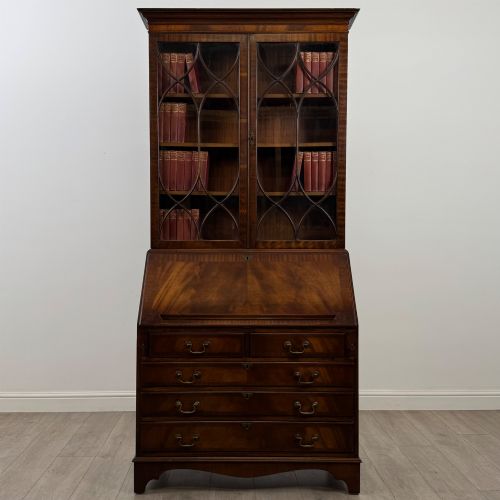
Sloping Writing Desk
A sloping writing desk offers a fitted workspace that conceals correspondence beneath a hinged fall.
Sloping Writing Desk
A sloping writing desk encompasses a variety of formats designed for portable or domestic correspondence, ranging from compact box forms to large bureau bookcases. When searching for a sloping writing desk, buyers encounter pieces spanning the seventeenth century through the Edwardian era, with significant representation from the Georgian and Victorian periods.
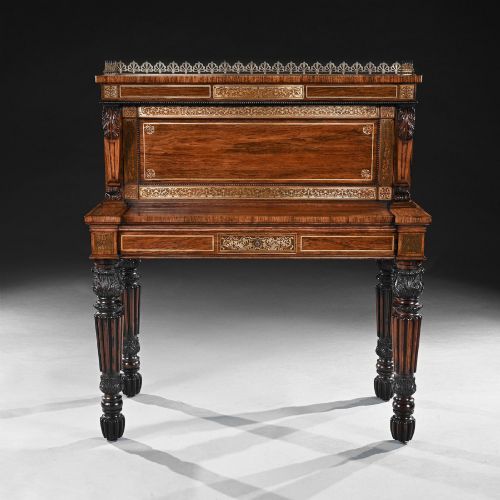
The material palette of a sloping writing desk includes native woods like oak, mahogany, walnut, and yew, alongside exotic timbers such as rosewood and burr walnut. These pieces frequently incorporate structural or decorative metal elements in brass, alongside fitted interiors lined with leather for writing surfaces.
Materials and construction
Cabinetmakers constructed a sloping writing desk using solid timbers and decorative veneers applied to secondary woods, utilising dovetail joints for drawer construction and pegged mortise-and-tenon joints on earlier frameworks. Mahogany, oak, and walnut form the structural core of most pieces, supplemented by specialised surfaces in leather and inlay work.
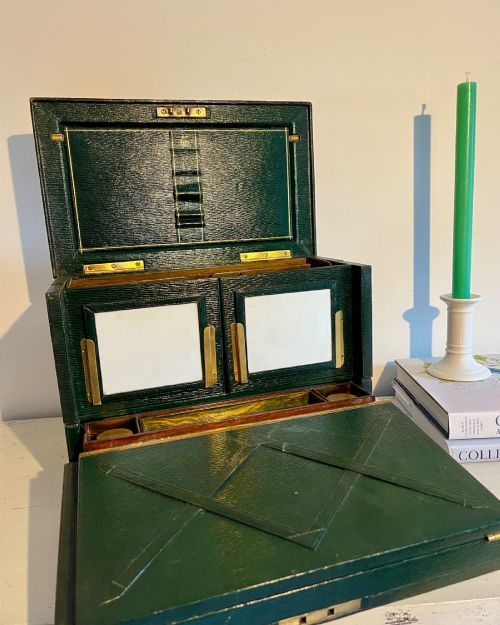
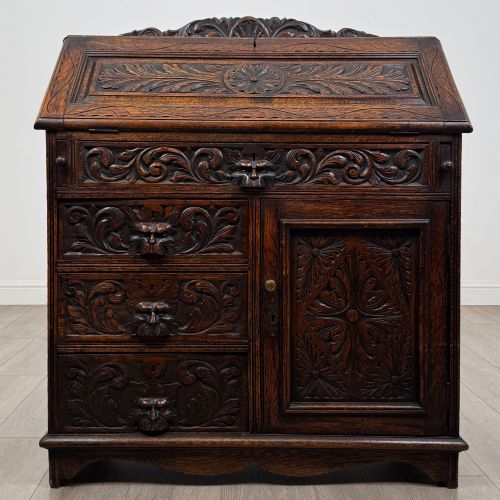
Decorative detailing on a sloping writing desk relies on brass mounts, stringing, marquetry, and carved motifs such as linenfold or green man designs. Portable versions, including campaign slopes, incorporate brass corner binding and flush handles to withstand travel.
Sloping Writing Desk Retail Price Guide 2026
Typical asking prices for sloping writing desk among the pieces listed under this phrase on Sellingantiques today, from the lower quarter to the upper quarter. They describe what is for sale here now, not the wider market.
Several portable writing desks retain hidden spring-loaded compartments for stashing secret correspondence away from prying eyes.
Craftsmanship and materials
The calibre of a sloping writing desk rests upon the selection of timber veneers, such as figured walnut or rosewood, and the precision of the cabinetwork in hidden areas like drawer linings and interior pigeonholes. Superior examples display restrained brass inlay, finely cut marquetry, and cohesive proportions across the fall front and supporting base.
Maker attribution and original fitted interiors elevate the standing of a sloping writing desk, particularly when retaining authentic leather writing surfaces, working locks, and secondary storage compartments. Consistency in the ageing of timber and hardware indicates unbroken historical integrity.
Gillows Oxford Street Workshop·Heals of London·Elkington
The Sloping Writing Desk Glossary
- Bureau
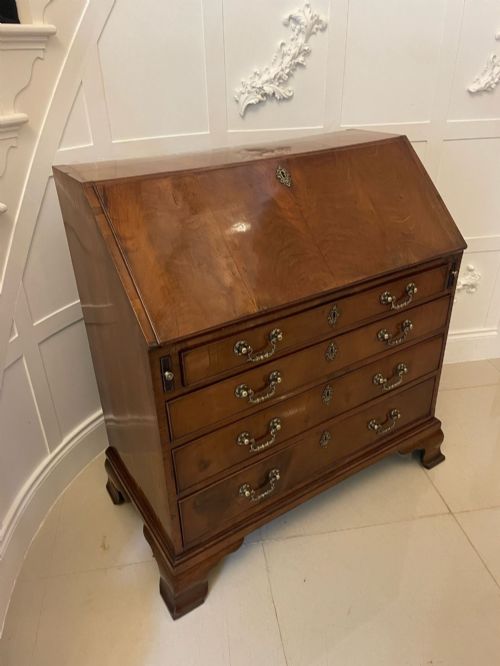
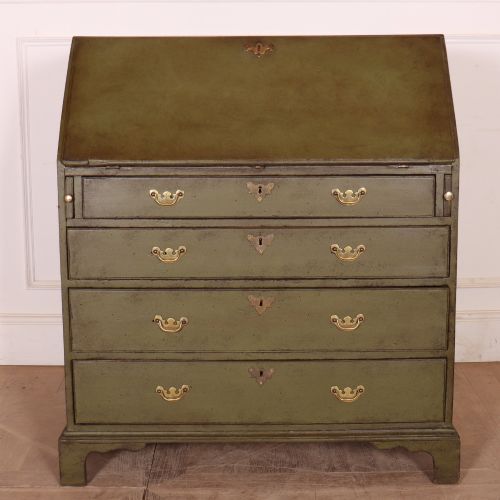
- A writing desk featuring a sloping fall front that opens to reveal internal drawers and pigeonholes. This form often sits upon a chest of drawers or a dedicated stand.
- Writing Slope
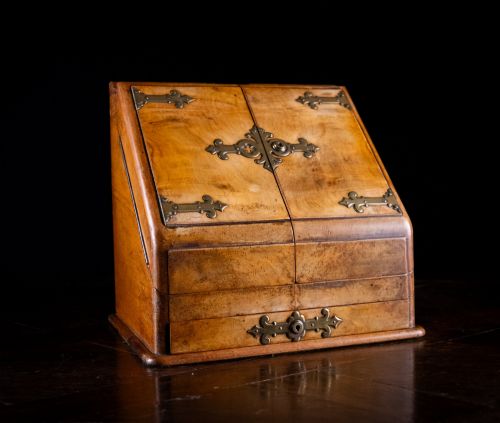
- A portable box with an angled lid that folds down to create a writing surface, often fitted with compartments for inkwells and stationery. These objects were frequently utilised during travel.
- Davenport
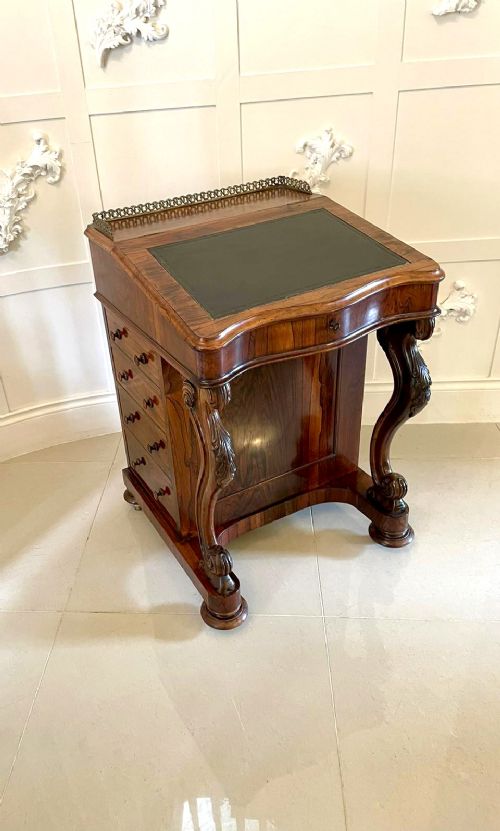
- A compact desk type comprising a sloping writing surface above a pedestal of drawers, originating in the nineteenth century. Many incorporate side drawers and stationary compartments.
- Fall Front
- The hinged panel on a bureau or desk that drops down to form a horizontal or angled writing platform. It conceals the inner stationery compartments when closed.
- Marquetry
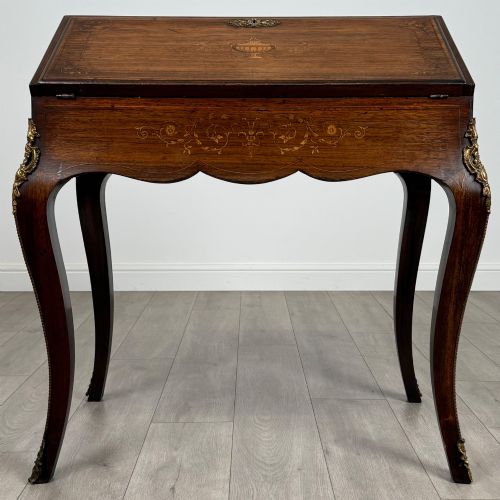
- Decorative veneer patterns formed by fitting together small pieces of wood, ivory, or shell. This technique appears on the exterior surfaces of finer desks and cabinets.
Sloping Writing Desk: Frequently Asked Questions
What is a sloping writing desk?
A sloping writing desk is a piece of furniture designed for composition, featuring an angled writing surface that often conceals internal compartments. These items range from portable boxes to large freestanding furniture.
Cabinetmakers produced these desks in various woods, including mahogany, oak, and walnut, across multiple centuries. The angled lid provides an ergonomic surface for writing by hand.
How do I use a bureau daily?
A bureau provides a concealed workspace where correspondence and paperwork can be stored out of sight behind the closed fall front. Lower drawers offer storage for household documents or linens.
Care involves maintaining the leather writing insert with appropriate conditioning and keeping solid wood surfaces polished with wax. Environmental humidity should remain stable to protect historical veneers.
How do I date an old desk?
Dating relies on examining construction methods, timber choices, hardware styles, and overall decorative motifs associated with specific periods. Georgian pieces often display different secondary woods and drawer joinery compared to Victorian or Edwardian examples.
Labels, stamps, or specific regional characteristics can further narrow the timeline of manufacture. Stylistic shifts from plain oak to figured walnut and rosewood reflect changing aesthetic preferences.
What is a campaign slope?
A campaign slope is a portable writing desk reinforced with brass corners and flush handles, built for transport during military campaigns or travel. These boxes split or fold to contain writing materials securely.
Such pieces are typically constructed from dense timbers like mahogany to withstand rigorous movement. Their fitted interiors often include secret compartments and glass inkwells.