





Sloping Top Oak Box
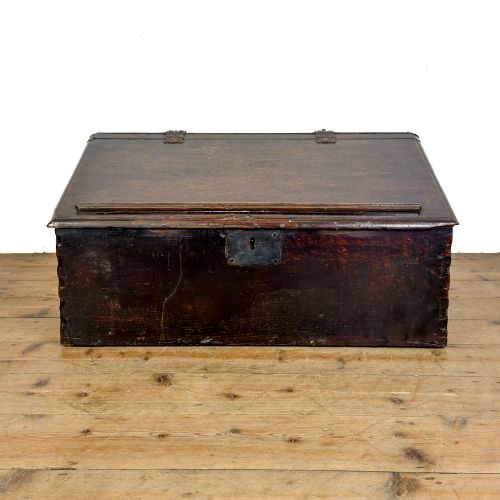
A sloping top oak box offers sturdy historic practicality, functioning as a portable writing desk or secure book repository.
Sloping Top Oak Box
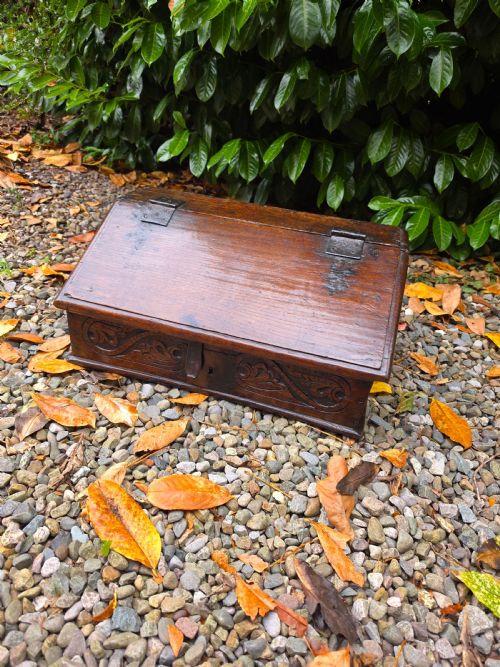
A sloping top oak box serves as a functional desktop writing surface or storage chest, frequently designed to house a bible or valuable papers. These pieces span several distinct eras, encompassing seventeenth century examples alongside Georgian, Victorian, and later nineteenth century interpretations.
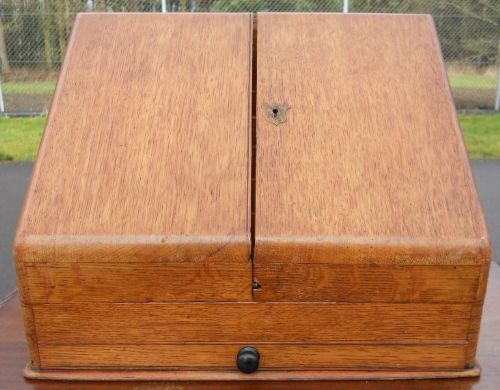
The primary forms encountered include slant front bible boxes, table top bureaus, and storage containers fitted with brass hardware or internal drawers. Certain iterations rest upon later stands or take the form of specialised ecclesiastical items like verger desks.
Origins range from English workshops to Welsh vernacular production, displaying styles from Jacobean and William and Mary periods through to nineteenth century light oak variations. Buyers will frequently encounter compact desktop formats intended for portable utility or domestic stationery storage.
Materials and construction
Construction relies fundamentally on solid oak timbers, frequently complemented by iron hinges, locks, and brass mounts or banding. Master carpenters utilised robust joining techniques suited to daily handling and secure document storage.
Surface decoration on select examples incorporates carved friezes, while interior arrangements feature small fitted drawers or leather and fabric linings. Certain pieces demonstrate nineteenth century adaptations alongside earlier seventeenth and eighteenth century joinery.
Sloping Top Oak Box Retail Price Guide 2026
Typical asking prices for sloping top oak box among the pieces listed under this phrase on Sellingantiques today, from the lower quarter to the upper quarter. They describe what is for sale here now, not the wider market.
Listings feature oak boxes spanning the seventeenth, eighteenth, and nineteenth centuries, incorporating brass, iron, leather, and fabric materials.
Assessing quality and character
Quality rests upon the integrity of the timber, the depth of period detail such as carved friezes, and the originality of internal fittings like small drawers. Pieces retaining their early brass hardware and uncompromised structural joins stand higher in character.
Proportion and surface patination dictate visual appeal, distinguishing vernacular domestic work from more formally styled William and Mary table top bureaus. The presence of contemporary hinges and locks further separates standard utility boxes from superior surviving examples.
The Sloping Top Oak Box Glossary
- Bible Box
- A sturdy wooden receptacle historically used to store a family bible securely. These portable containers often feature the sloping lids that double as reading or writing desks.
- Slant Front
- An angled top lid hinged to allow easier reading or writing access. This formation characterises both early bible boxes and later table top bureaus.
- Frieze
- A decorative horizontal band carved directly into the wooden panels of the box. These carved motifs help indicate seventeenth and eighteenth century workmanship.
- Table Top Bureau
- A compact desk form designed to sit upon an existing table or stand. They feature internal drawers and a sloping writing surface.
- Patina
- The surface sheen and colour developed by aged oak through decades of handling, polishing, and exposure to light. It serves as a key indicator of genuine age.
Sloping Top Oak Box: Frequently Asked Questions
What is a sloping top oak box?
A sloping top oak box is a historic wooden chest featuring an angled lid designed for reading, writing, or secure document storage. These versatile pieces were used across centuries in homes, churches, and administrative settings.
They function as portable writing desks or stationary repositories, often containing internal compartments and small drawers for ink and quills.
How were these boxes used historically?
These boxes served primarily as portable desks for writing letters, keeping accounts, or storing sacred texts like bibles. Their sloping lids provided an ergonomic writing angle before dedicated standing desks became commonplace.
Owners could lock the heavy oak lids to protect confidential papers and valuable books from damage or theft in busy households.
Where should I place a table top bureau?
These compact desks sit comfortably on sturdy side tables, chests of drawers, or dedicated writing tables where their sloped lids remain accessible. They add historic character to studies, living rooms, or hallways.
Ensure the surface is level and protected from direct sunlight and extreme radiator heat to preserve the aged timber and any leather linings.