

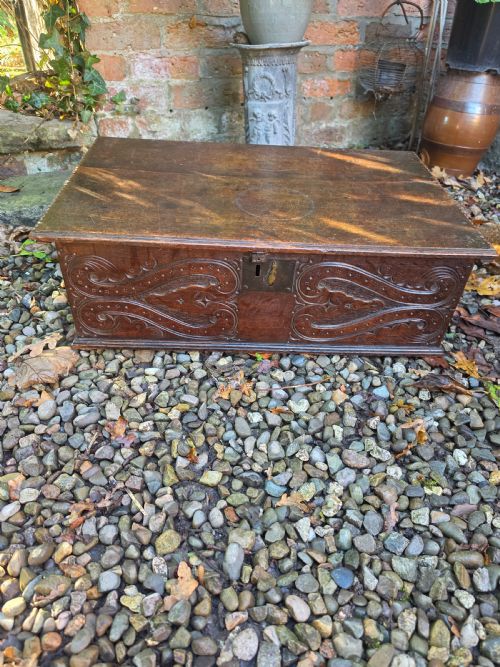
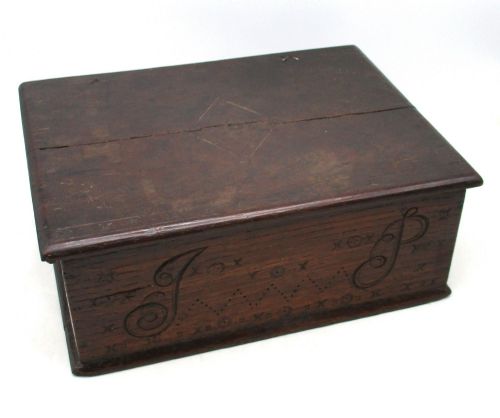
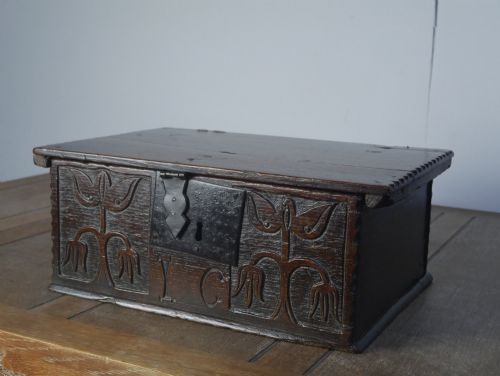
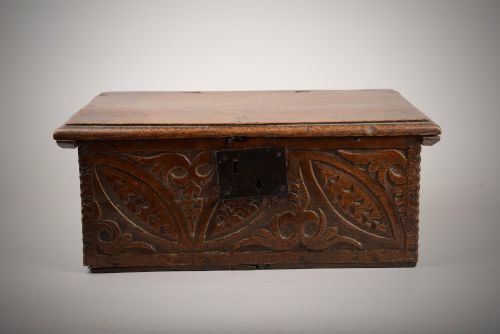
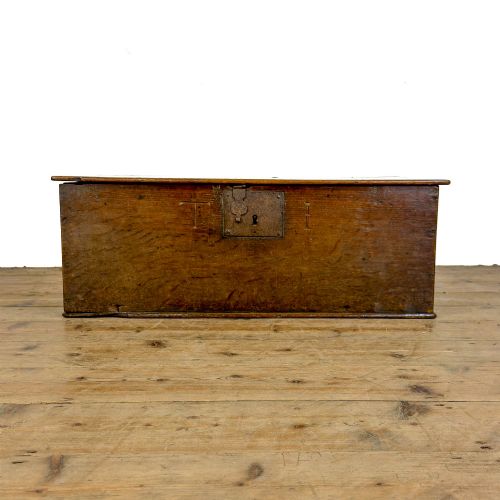
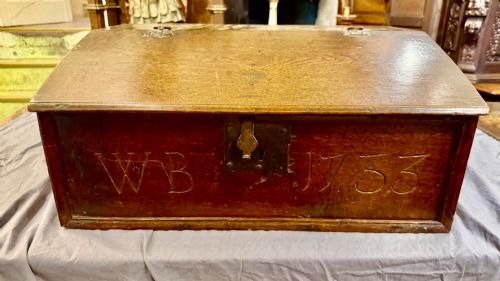
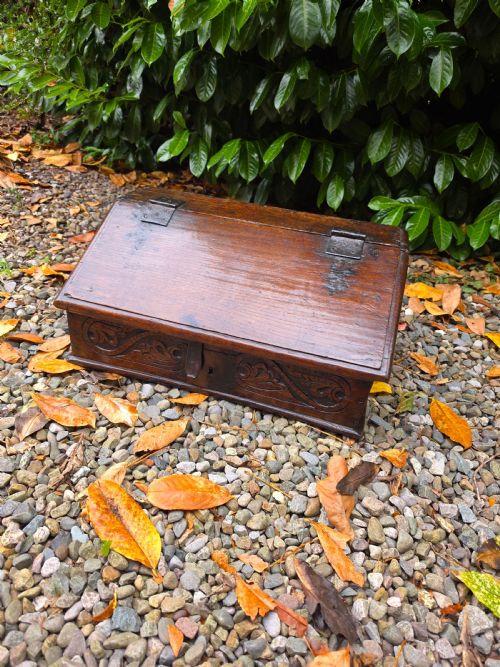
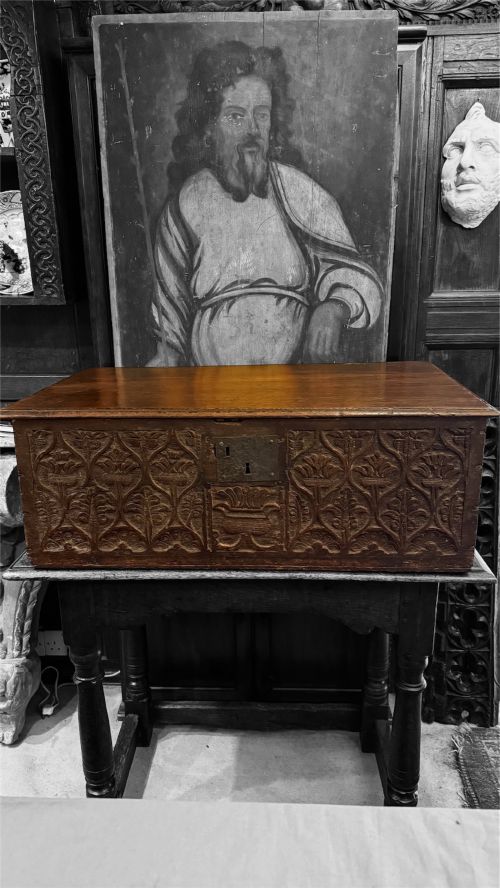
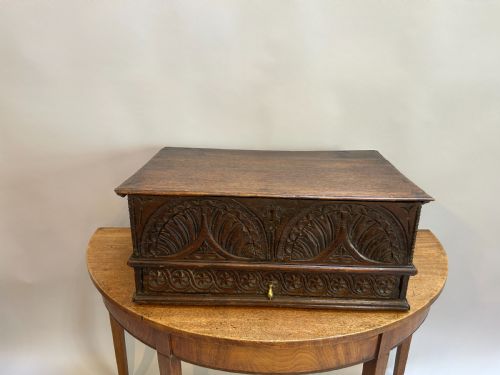
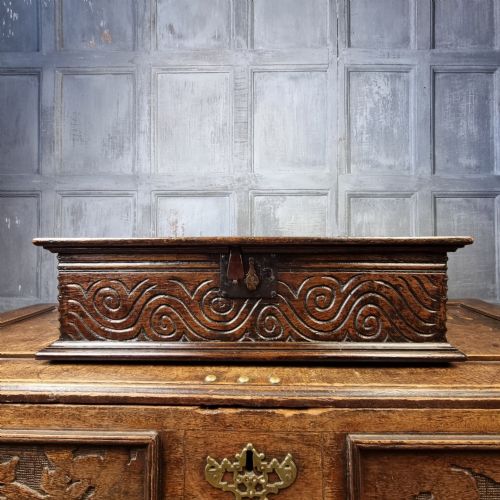


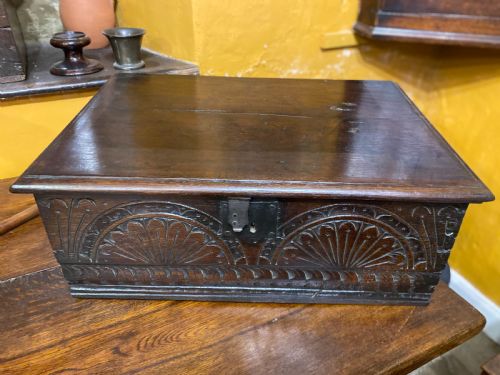
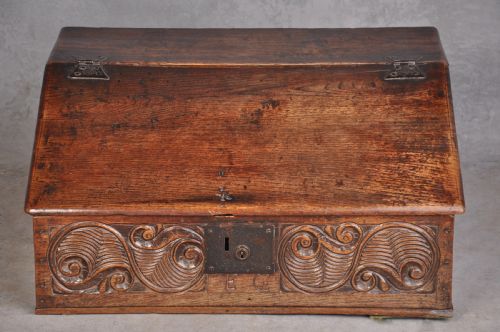

Carved Wooden Bible Chest
A carved wooden bible chest is a compact storage piece designed to hold sacred texts and documents, offering solid construction and period character.
Carved Wooden Bible Chest
A carved wooden bible chest serves primarily as a desk box or table box, often housing documents and personal papers alongside household volumes. These pieces emerge predominantly from the seventeenth and eighteenth centuries, reflecting domestic life and literacy across English and Welsh households.
The most common form on this page is the oak bible box, sometimes equipped with internal drawers, a slant front, or a table stand. Variants include elm boxes with inlaid holly and bog oak, alongside chip-carved Welsh coffer bach examples.
Many survivors carry specific dates and initials, while others display carved friezes or demi-lune front panels. Buyers encounter formats ranging from simple desk boxes to box stools and chest on stand configurations.
Materials and construction methods
Makers relied principally on native oak, complemented by elm for regional variants and contrasting details in holly and bog oak. Joinery techniques ensured durable construction for daily desktop use.
Hardware typically involved wrought iron and brass for hinges, locks, and handles. Surface decoration relied heavily on chip carving and incised panel designs characteristic of the period.
Carved Wooden Bible Chest Retail Price Guide 2026
Typical asking prices for carved wooden bible chest among the pieces listed under this phrase on Sellingantiques today, from the lower quarter to the upper quarter. They describe what is for sale here now, not the wider market.
The listings span the seventeenth and eighteenth centuries, dominated by oak with occasional examples in elm, holly, and bog oak.
Distinctions in quality and execution
Quality rests in the crispness of the original carving and the integrity of the timber used for the panels and lid. Examples featuring internal drawers, original stands, or specific dated inscriptions demonstrate greater workshop ambition.
The balance between structural survival and untouched surface patination dictates the standing of an individual box. Skill in the execution of chip carving and geometric friezes separates standard utilitarian pieces from finer decorative works.
The Carved Wooden Bible Chest Glossary
- Bible box
- A small lidded chest designed to hold a family bible and writing materials. These boxes often sat on tables or desks for daily reading.
- Coffer bach
- A small Welsh coffer or chest, translated literally as little chest. These pieces often feature drawers and regional decorative traditions.
- Chip carving
- A style of relief carving where small chips are removed from a flat wooden surface to create geometric patterns. This technique appears frequently on seventeenth-century panels.
- Box stool
- A dual-purpose seat featuring a box compartment beneath the lid. Examples combine household seating with secure storage.
- Bog oak
- Subfossil oak timber preserved in peat bogs, acquiring a dark colour. Makers utilised this material for contrasting inlay work.
Carved Wooden Bible Chest: Frequently Asked Questions
What fits inside a bible box?
These boxes accommodate manuscripts, letters, small volumes, and writing implements rather than large ledgers.
Interior layouts often include small accessory drawers for ink pots, seals, and quills.
How were these boxes used originally?
Householders placed them on tables or desks to protect sacred texts and family records from damp and damage.
The sloping lids on certain examples provided a convenient slant for reading and writing.
How do I date an oak box?
Dating relies on construction methods, hinge types, carving styles, and occasional carved dates or initials.
Seventeenth-century examples typically display robust oak joinery and chip-carved friezes, whereas eighteenth-century versions introduce slant fronts and internal drawers.
Are stands original to these chests?
Most bible boxes were originally made to sit on existing tables rather than dedicated stands.
Certain pieces, however, incorporate bespoke or period-matching stands such as William and Mary frames.