

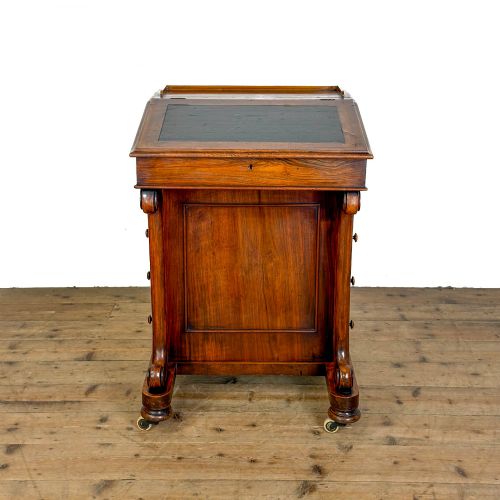
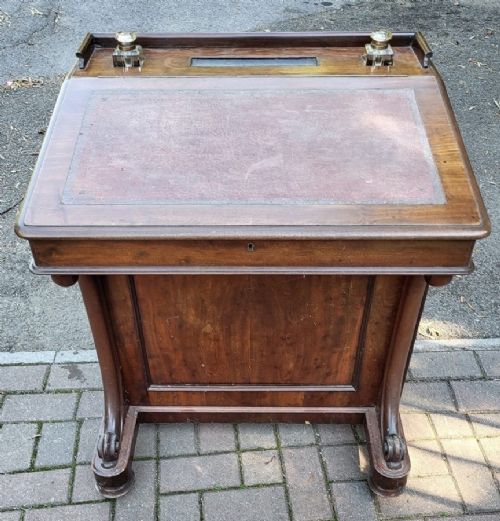

Sloped Top Bureau
A sloped top bureau provides a writing surface that lifts to reveal fitted compartments, combining practical storage with classic proportions.
Sloped Top Bureau
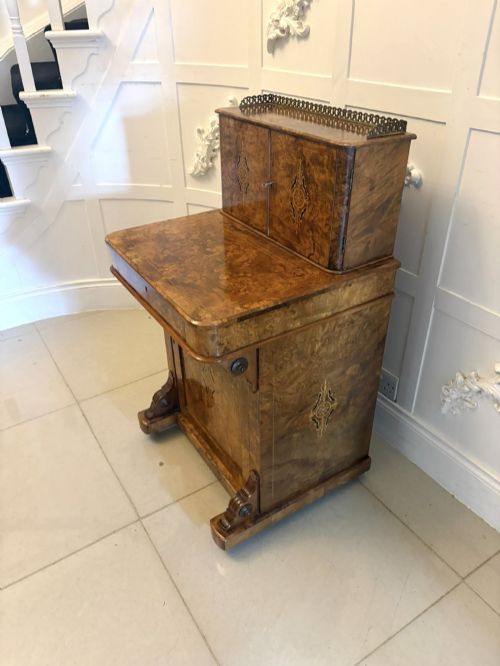
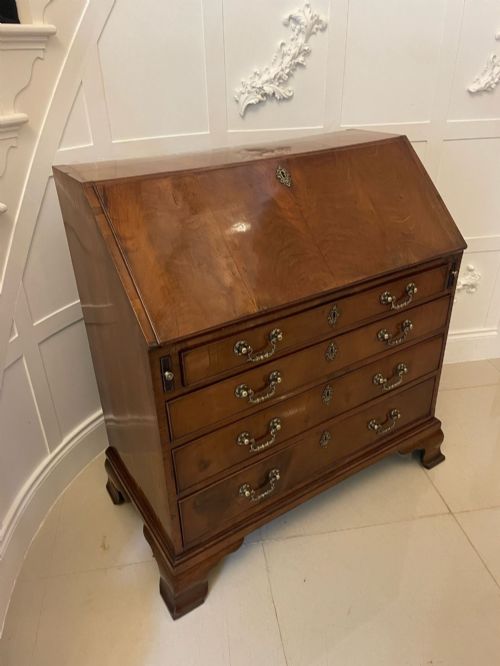
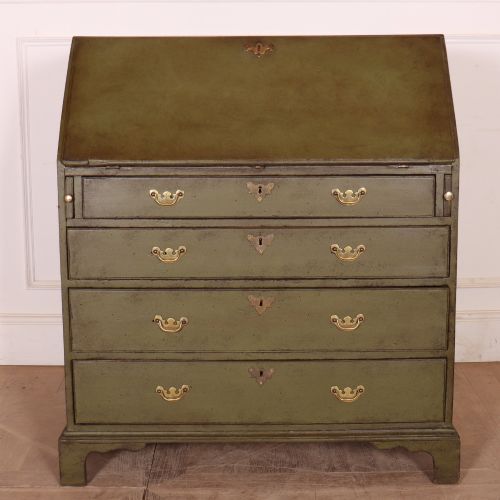
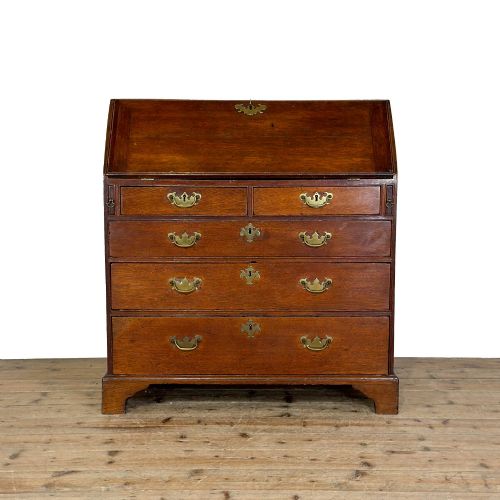
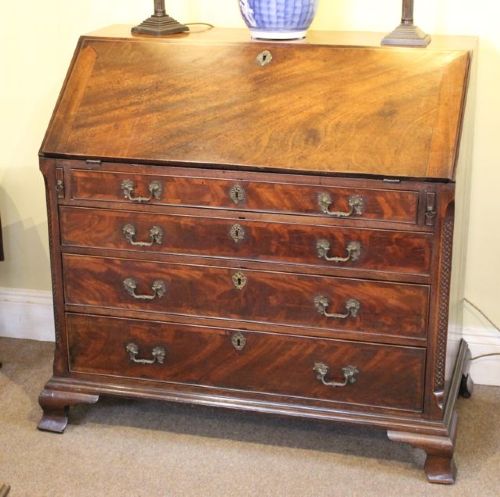
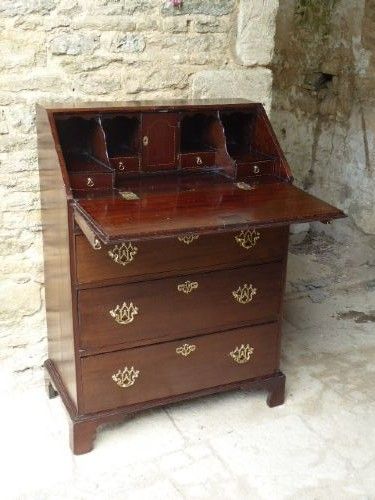
A sloped top bureau groups together traditional writing furniture designed with an angled writing flap. These pieces appear across several centuries, originating in robust vernacular oak and progressing to refined mahogany and walnut iterations.
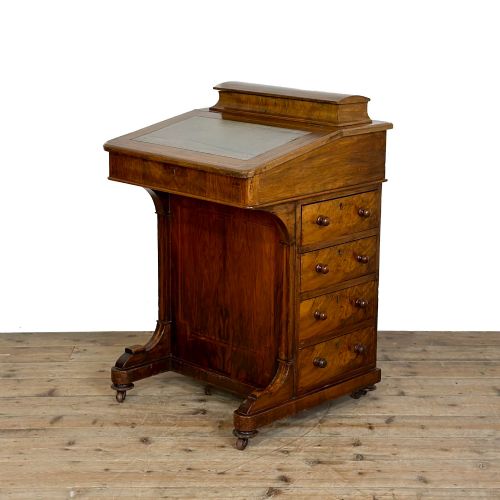
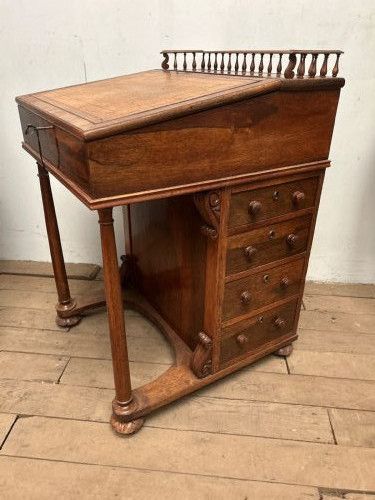
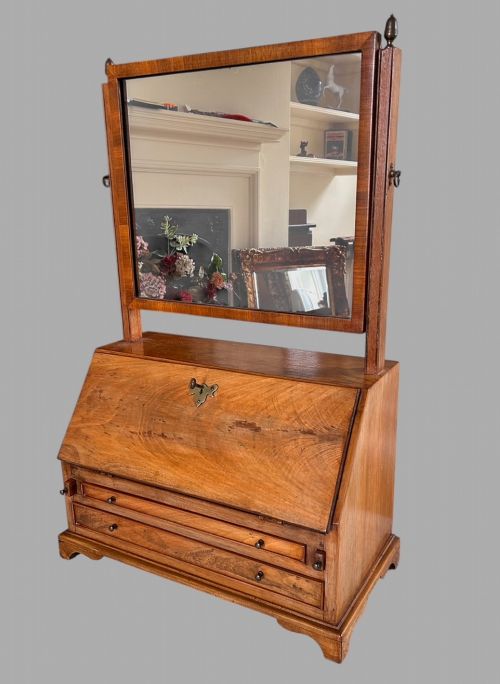
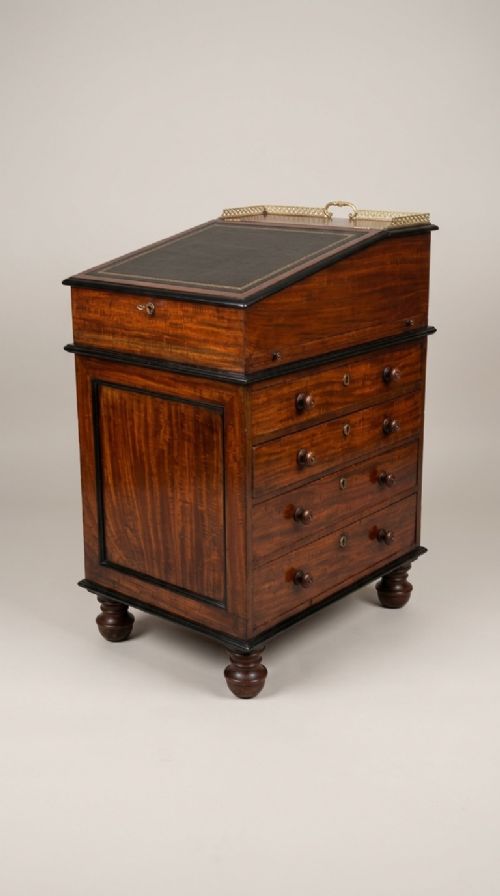
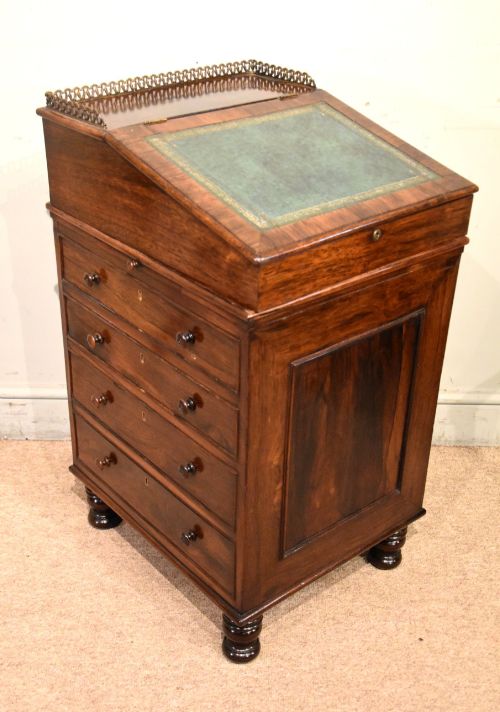
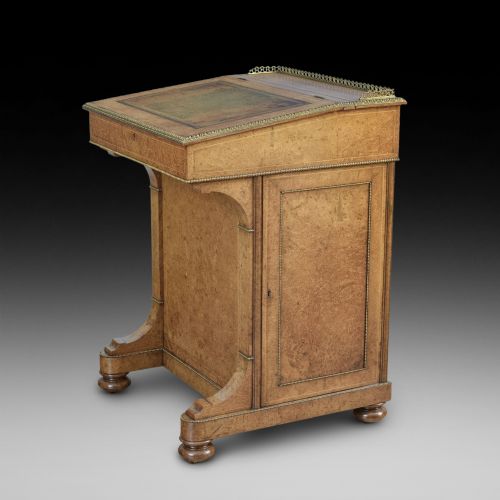
The selections on this page span the 17th, 18th, and 19th centuries, alongside later revival pieces. Buyers frequently encounter compact Davenport desks, tabletop variants, and full-sized floor bureaux from the Georgian and Victorian eras.
Makers utilised various regional woods, producing both modest country pieces and grand urban examples fitted with pigeonholes, secret drawers, and leather writing surfaces.
Materials and construction
Cabinetmakers constructed these desks using dense timbers such as mahogany, walnut, oak, and rosewood, frequently selecting figured veneers like burr walnut or exotic woods including satinwood and amboyna for decorative effect.
Joinery techniques involved precise dovetailing for drawer construction and sturdy framing to support the hinged writing slope. Ironwork hinges, brass handles, and leather or velvet writing inserts completed the fabrication.
Some Victorian desks incorporate secret compartments hidden behind the internal pigeonholes for storing private correspondence.
Assessing quality and finish
Quality rests upon the selection of timber figure, the crispness of internal drawer fitting, and the retention of original hardware such as brass handles and ironwork. Superior examples display thoughtful grain matching across the fall front and drawer faces.
The structural integrity of the sloping flap hinges and the complexity of the interior pigeonholes and small drawers distinguish standard workspace furniture from master cabinetmaker production.
Gillows
The Sloped Top Bureau Glossary
- Bureau
- A writing desk featuring a sloping lid that opens to reveal a fitted interior of small drawers and pigeonholes.
- Davenport
- A compact form of writing desk, popular in the 19th century, typically featuring a sloped writing surface and drawers accessed from the side.
- Dovetail
- A joint used in drawer construction formed by interlocking wedge-shaped fingers.
- Fall front
- The hinged panel on a bureau that drops down to form the writing surface.
- Pigeonhole
- A small compartment within a desk interior used for sorting letters and papers.
Sloped Top Bureau: Frequently Asked Questions
What is a sloped top bureau?
A sloped top bureau is a writing desk equipped with an angled lid that folds down to create a writing surface. These desks usually conceal a fitted interior containing small drawers and letter slots.
Such pieces range from large 18th-century oak and mahogany floor models to compact 19th-century Davenport desks designed for smaller reception rooms.
How do I use a bureau daily?
Using a bureau involves lowering the writing flap to work on the flat surface, while keeping stationery stored securely in the internal compartments above.
When writing is finished, the flap lifts and locks shut to conceal papers, maintaining a tidy room appearance.
How do I date an antique bureau?
Dating relies on examining the timber species, construction joints, handle hardware, and overall stylistic characteristics. Earlier pieces from the 17th and 18th centuries often employ solid oak or walnut with hand-cut dovetails.
Later Victorian and Edwardian examples incorporate factory-produced hardware, satinwood interiors, or machine-cut elements alongside revival decorative motifs.
What timbers were used?
Cabinetmakers utilised a wide array of native and imported timbers depending on the period. Oak and elm predominated in earlier vernacular pieces.
Mahogany, walnut, rosewood, and satinwood became standard during the Georgian and Victorian eras, often enhanced by burr veneers and brass mounts.