

Sloped Stationery Box
A sloped stationery box organises papers and correspondence with fitted elegance, combining practical desk storage with decorative woodcraft.
Sloped Stationery Box
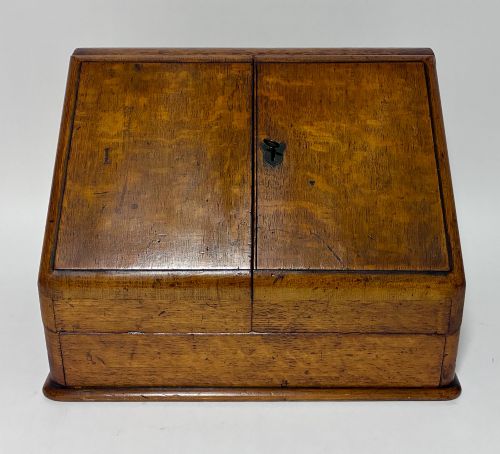
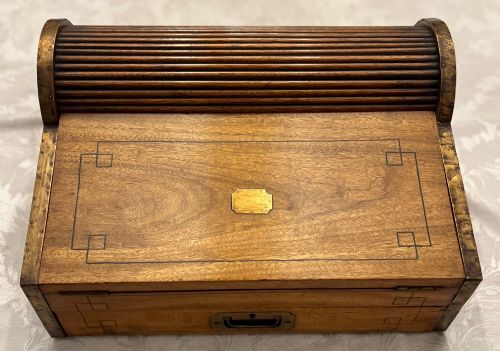
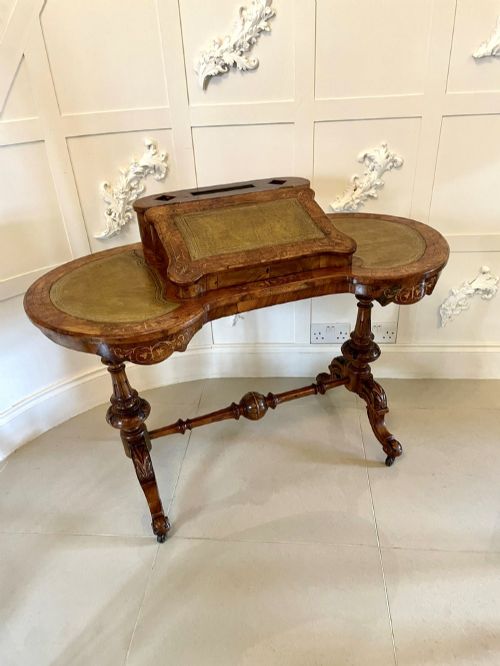
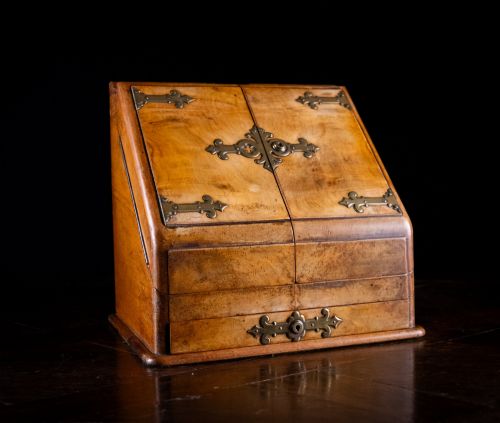
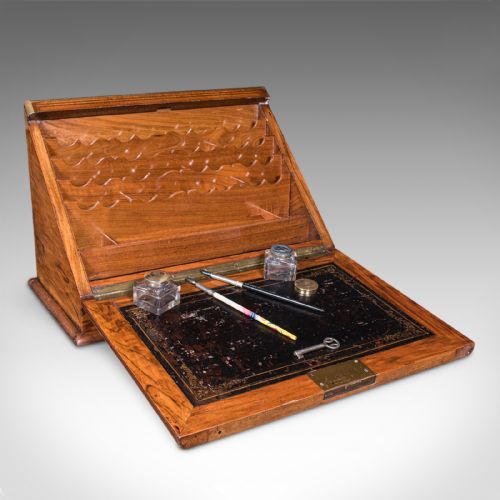
When searching for a sloped stationery box, buyers encounter various forms designed for correspondence, including fall-front desks, cabinet styles, and bi-fold writing slopes. These pieces originate from periods spanning the Georgian era through to the late Victorian period and Edwardian times.
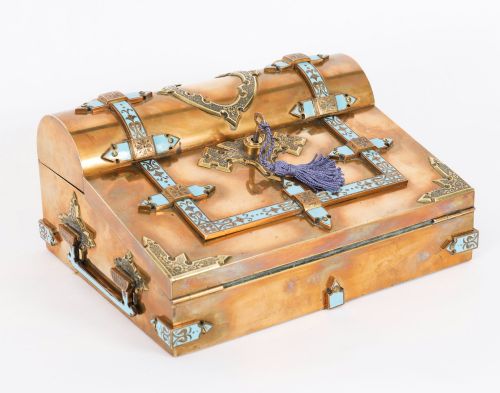
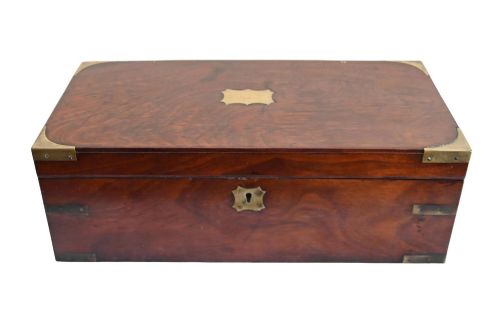
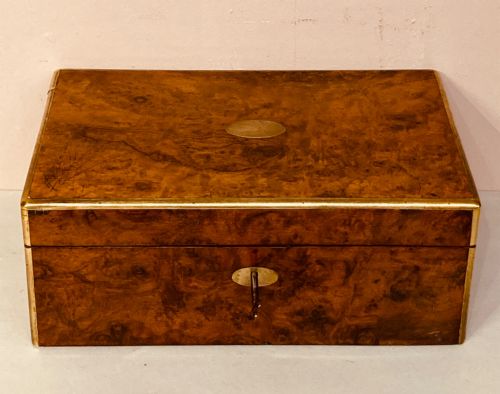
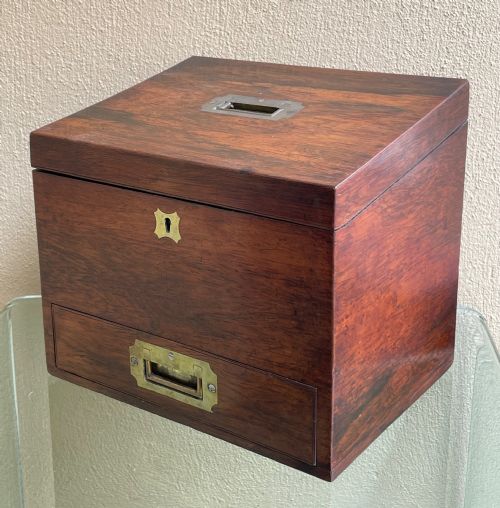
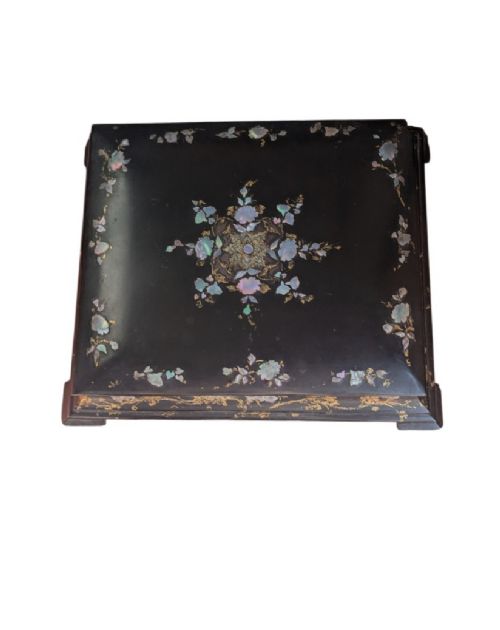
The objects take several shapes, such as campaign boxes bound in brass, hinged-lid desk tidies, and Japanese lacquer containers. Most pieces met on this page belong to the 19th Century and Victorian periods, constructed from dense tropical timbers.
Makers produced these containers to house paper, pens, and documents securely on a desk or table. Many examples combine writing surfaces with internal compartments for letters and stationery.
Materials and construction
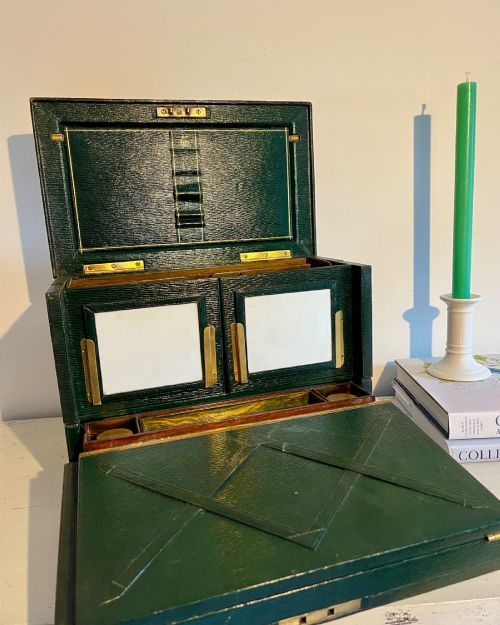
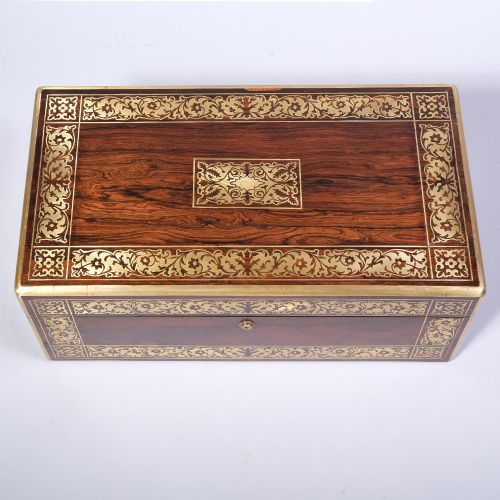
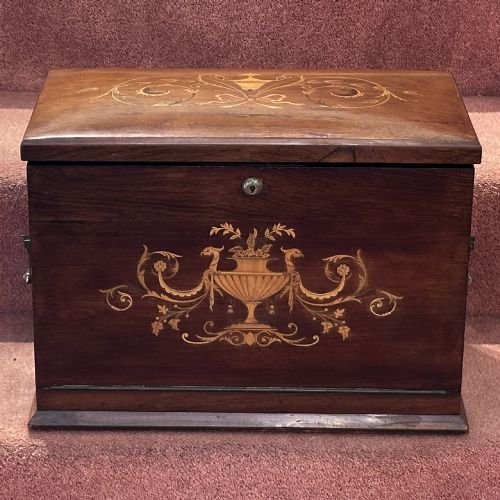
Carpenters utilised hardwoods like mahogany, rosewood, walnut, and burr walnut, often applying brass banding, inlays, or bone and satinwood details. Cabinets and boxes feature hinged lids, fall fronts, or bi-fold mechanisms that open to reveal fitted interiors.
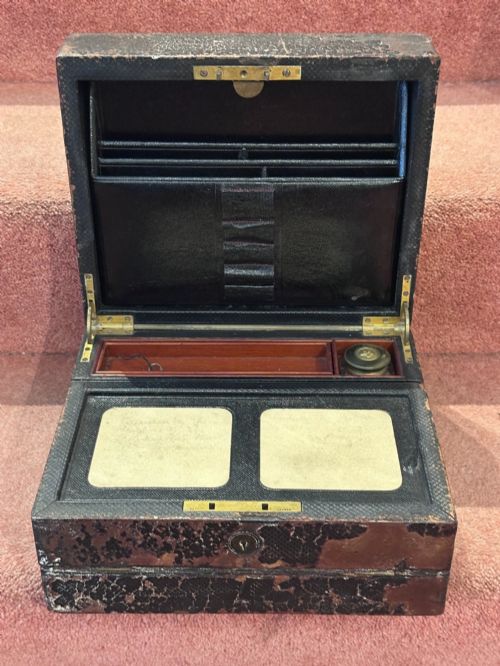
Specialised techniques include Tunbridge ware mosaic decoration, mother of pearl embellishment, and leather bindings. Campaign styles incorporated flush brass handles and corner brackets to withstand travel.
Listings feature woods including mahogany, rosewood, walnut, burr walnut, oak, and camphor wood across the Georgian and Victorian eras.
Evaluating workmanship
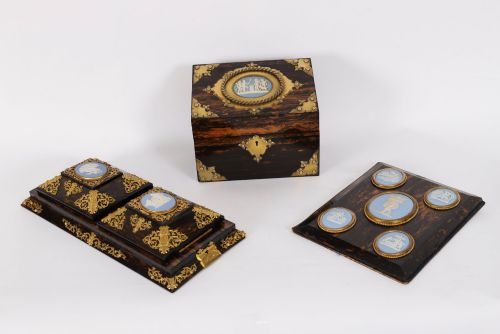
Quality depends on the selection of figured timbers, such as burr walnut or rosewood, and the precision of brass inlay and joinery. Finer boxes include secret drawers, intact fitted leather writing surfaces, and original hardware.
Plain domestic woods or simpler construction methods indicate utilitarian pieces, whereas intricate carving, specialised veneers like coromandel, and integrated compartments denote higher workshop standards.
The Sloped Stationery Box Glossary
- Campaign
- Portable furniture fitted with brass corners and flush handles designed for travel during military campaigns.
- Writing slope
- A box with an angled lid that opens to form a slanted surface for writing letters.
- Tunbridge ware
- Small wooden objects decorated with mosaic patterns created from thousands of tiny tinted wood blocks.
- Fall front
- A hinged vertical panel that drops down to reveal internal compartments and a writing surface.
- Stationery box
- A desk accessory structured to hold envelopes, paper, and correspondence upright or in stacked tiers.
Sloped Stationery Box: Frequently Asked Questions
What is a sloped stationery box?
A sloped stationery box is a desk container designed to hold writing paper, envelopes, and correspondence securely. Many incorporate angled lids or fall-front panels to access stored documents easily.
These pieces emerged in various forms during the Georgian and Victorian periods, serving as functional desk furniture for the home or office.
How do I date a writing box?
Dating relies on timber choices, construction techniques, and hardware styles associated with specific periods. Georgian and Regency pieces often feature simpler mahogany or rosewood surfaces, whereas Victorian examples frequently utilise burr walnut and heavy brass binding.
Interior fittings and lock types also provide clues to the era of manufacture.
How do I care for antique wood boxes?
Antique wooden boxes require stable room environments away from direct sunlight and extreme temperature fluctuations to prevent wood splitting. Regular polishing with traditional beeswax maintains the finish of woods like mahogany and rosewood.
Leather surfaces inside require gentle treatment without excessive moisture.