




Slope Front Desk Box
A slope front desk box is a compact writing cabinet designed for portable correspondence, offering fitted compartments for paper and ink while sitting neatly on a table.
Slope Front Desk Box
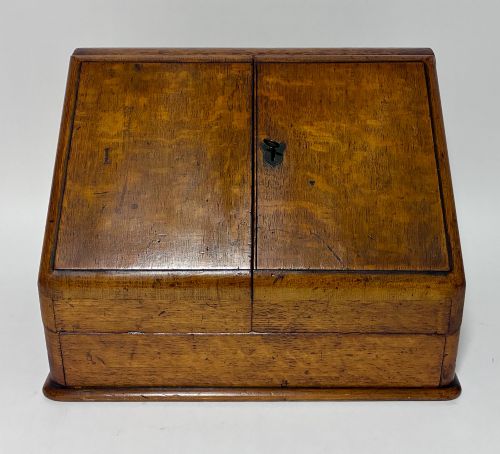
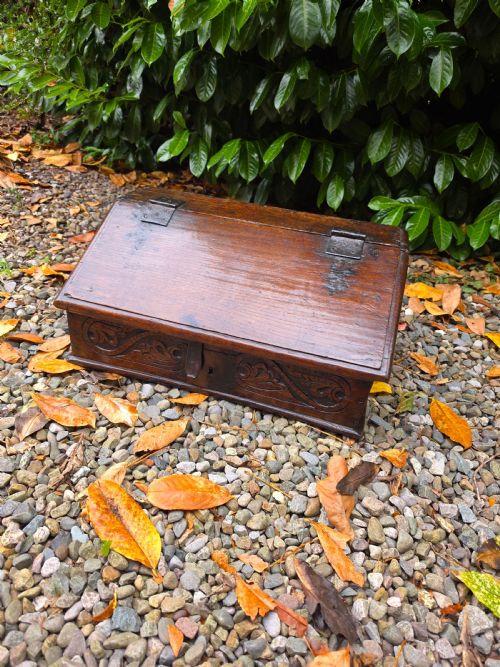
A slope front desk box provides a portable writing surface that folds down toward the user, concealing internal partitions, small drawers, and stationery slots beneath a slanted lid. These functional objects range from 17th-century oak bible boxes and table top bureaux to later Victorian stationery cabinets and mahogany knife boxes adapted for desk use.
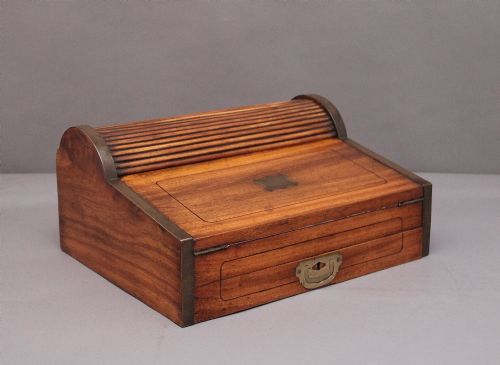
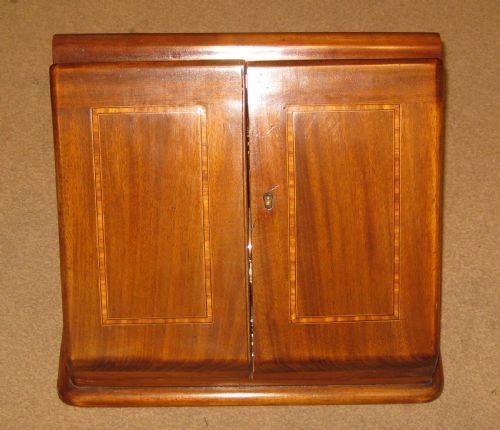
Buyers browsing this selection will encounter numerous examples fashioned from oak, mahogany, and walnut, spanning periods from the 17th century through to the Edwardian era. The forms encompass simple elm table desks, miniature Welsh bureaux, and drop-front stationery cabinets fitted with brass handles and locks.
Early iterations lean toward heavy timber construction with carved decoration, whereas later 19th-century interpretations frequently showcase fine veneers like satinwood, coromandel, and burr walnut, sometimes complemented by hand-painted porcelain or gilt details.
Materials and construction methods
Makers relied heavily on native hardwoods such as oak, elm, and mahogany, selecting timber for strength and grain pattern before shaping panels with hand saws and planes. Joints were typically pegged or dovetailed to withstand the daily strain of opening and closing lids and drawers.
Finer pieces utilise decorative veneers of satinwood, coromandel, and burr walnut applied to a secondary wood base, then polished to a deep lustre. Brass fittings including hinges, escutcheons, and drop handles were cast and hand-finished, securing vulnerable corners and lifting points.
Specialised variations incorporate painted surfaces, leather writing inserts, and inlaid stringing, demonstrating the diverse regional craftsmanship found across English, Welsh, and Scandinavian workshops.
Several early oak boxes still bear the hand-carved initials and dates of owners who wished to stake an undeniable claim on their ink.
Factors that define quality
The integrity of the timber and the precision of the joinery set superior examples apart from utilitarian pieces, visible in tight dovetails and well-fitted internal partitions. Original brass hardware, working locks with matching keys, and intact secondary woods contribute significantly to the standing of a desk box.
The refinement of decorative elements, such as crisp carving on 17th-century oak panels, subtle mahogany figuring, or delicate marquetry and parquetry on later satinwood and walnut cabinets, indicates a higher standard of manufacture. Original stands and unaltered fitted interiors elevate the desirability of table-top bureaux and desks.
The Slope Front Desk Box Glossary
- Fall front
- A hinged panel that drops forward to reveal an interior arrangement of pigeonholes and small drawers. This mechanism allows easy access to writing materials while maintaining a compact exterior profile.
- Bible box
- A rigid wooden chest with a sloping lid, originally intended to hold sacred texts and personal papers. Early versions often feature carved friezes and internal compartments.
- Table top bureau
- A miniature writing desk designed to rest on a larger table or chest of drawers, featuring a sloping fall-front writing surface above a series of small internal drawers.
- Escutcheon
- A protective plate surrounding a keyhole, usually fashioned from brass to prevent the wood from splitting around the lock.
- Stationery cabinet
- An upright desk accessory with doors or a drop front, built to organise letters, envelopes, and writing paper in vertical slots rather than a flat box.
Slope Front Desk Box: Frequently Asked Questions
What is a slope front desk box?
A slope front desk box is a portable or table-top container featuring an angled lid that opens to reveal compartments for writing materials, letters, and ink.
These pieces were built in various sizes to sit securely on tables, providing a stable writing surface before the widespread use of dedicated freestanding desks.
How were slope front boxes used?
They served as personal writing desks for corresponding, keeping records, and storing valuable papers securely within a household or office.
The interior compartments held quills, inkwells, and paper, while the locked lid kept confidential letters away from prying eyes.
How do I date an oak desk box?
Dating relies on examining construction techniques, timber choices, hardware, and decorative motifs such as carved friezes or regional initials.
Seventeenth-century boxes typically display heavy oak construction with pegged joints, whereas 19th-century examples incorporate machine-sawn elements and different veneer styles.
Are stationery cabinets the same as writing slopes?
Stationery cabinets are generally upright or drop-front units designed to store paper and envelopes vertically, whereas traditional writing slopes provide an inclined writing surface.
Both fall under the broader category of desk accessories intended to keep correspondence organised.