


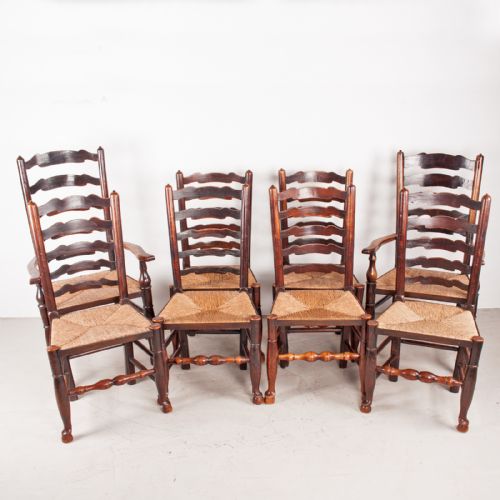


Slatted Oak Armchair
A slatted oak armchair offers robust daily seating built from solid timber with distinct open back designs, prized for both practical utility and lasting character.
Slatted Oak Armchair
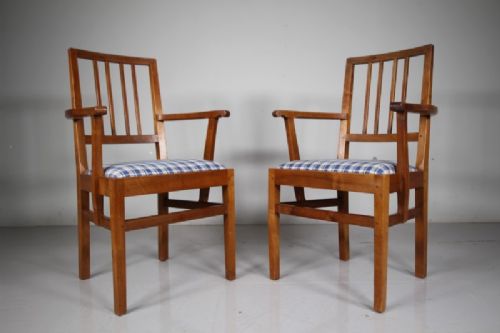
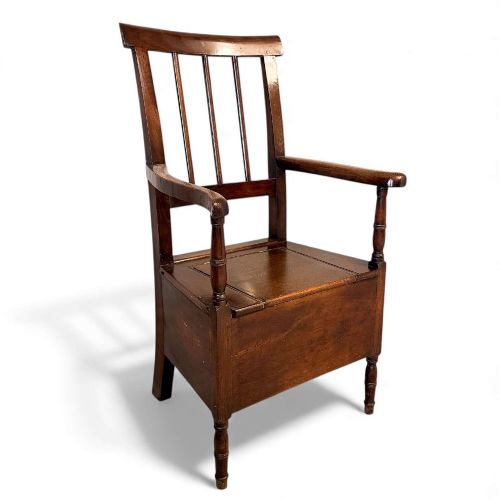
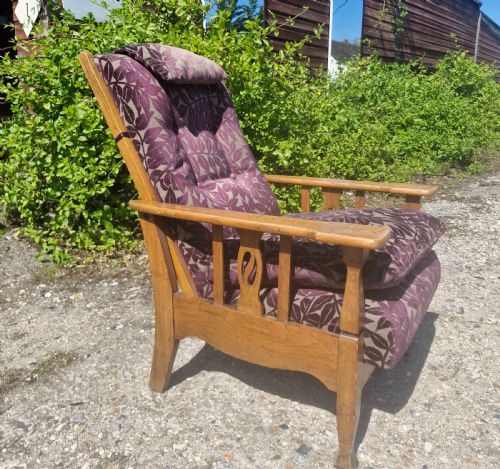
The slatted oak armchair category spans robust dining, desk, office, and fireside seating originating from the eighteenth, nineteenth, and early twentieth centuries. Pieces range from early Georgian commode and Welsh vernacular forms to Victorian Windsor slat backs and Arts and Crafts recliners.
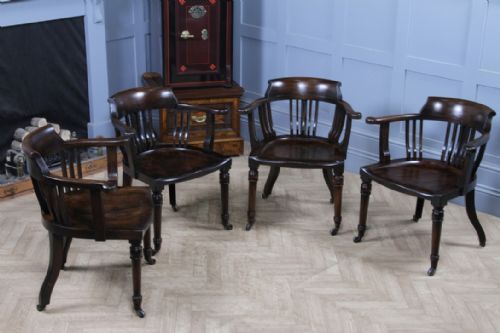
Edwardian office and captains chairs frequently appear alongside rustic farmhouse ladderbacks and solid kitchen seating. Makers and workshops from periods including the Arts and Crafts movement are represented among the heavier solid timber constructions.
Regional variations include Scottish crofter chairs and Welsh examples from Carmarthenshire, alongside French country variants in the broader selection. Construction encompasses pairs and sets alongside single library or desk chairs.
Quality factors
Quality rests upon timber selection, timber thickness, and the integrity of the original joints across the frame. Heavier solid construction and clean execution of carved details elevate specific examples above standard utility seating.
The presence of maker stamps, original surface patination, and intact mechanical systems for reclining or revolving desks distinguish finer workshop pieces from everyday regional vernacular furniture.
Listings feature solid oak alongside elm, beech, and walnut, spanning periods from the seventeenth century through the Edwardian era and the nineteen-thirties.
Edward Barnsley·Liberty's
The Slatted Oak Armchair Glossary
- Slat back
- A chair back constructed primarily from vertical or horizontal wooden slats. This method provides robust structural support while lightening the visual weight of the timber frame.
- Arts and Crafts
- A design movement prioritising traditional craftsmanship, visible construction, and simple forms. Pieces from this style often feature exposed joinery and unadorned oak surfaces.
- Commode chair
- An enclosed chair designed to conceal a chamber pot beneath the seat. Early examples frequently employ fine timber framing and shaped wooden lids.
- Ladderback
- A chair back featuring horizontal wooden rails resembling the rungs of a ladder. These frames are commonly paired with rush seating.
- Carver armchair
- A sturdy wooden armchair traditionally placed at the head of a dining table. They share design traits with matching sets of dining side chairs.
Slatted Oak Armchair: Frequently Asked Questions
How do I identify an Arts and Crafts armchair?
Arts and Crafts armchairs display simplified construction methods, exposed joinery, and an emphasis on the natural grain of solid oak. They often incorporate adjustable reclining frames or distinct slatted back panels inspired by workshop guilds.
Such pieces contrast with heavily turned Jacobean revival models or standard Victorian office seating through their purposeful restraint and functional design.
What is the difference between a captain's chair and a desk chair?
Captain's chairs and desk chairs both serve working environments, but captain's chairs typically feature a rounded enclosing upper rail supported by multiple vertical spindles. Desk chairs in this selection frequently include revolving office mechanisms and solid wooden seats.
Both forms utilise sturdy oak frames designed to withstand daily use in studies, offices, and libraries.
Are these chairs suitable for daily dining use?
Many of these pieces, including sets of dining chairs and farmhouse carvers, were built specifically for heavy domestic dining and kitchen use. Their solid oak frames and robust joinery provide the stability required for regular seating.
Buyers should verify seat heights and widths against their existing tables, as historical proportions can vary significantly from modern standards.
How should I care for a vintage oak armchair?
Maintain antique oak by keeping it away from direct heat sources and rapid temperature fluctuations that can dry out the timber. Regular dusting with a dry cloth protects the surface without building up chemical residues.
Upholstered drop-in seats or rush panels require gentle cleaning appropriate to their specific textile or natural fibre composition.