



Slate Mantelpiece Clock
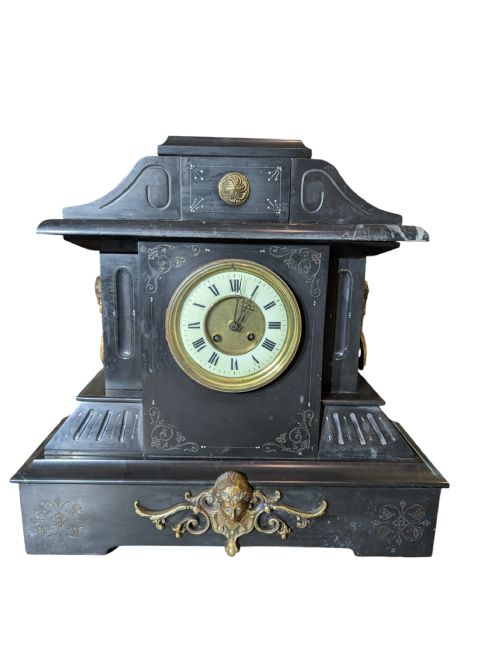
A slate mantelpiece clock brings heavy architectural presence and mechanical reliability to a room, drawing the eye with solid stone and classical detail.

Slate Mantelpiece Clock
A slate mantelpiece clock is a sturdy timekeeper housed in dense stone, frequently appearing alongside marble and ebonised wood in nineteenth-century interiors.
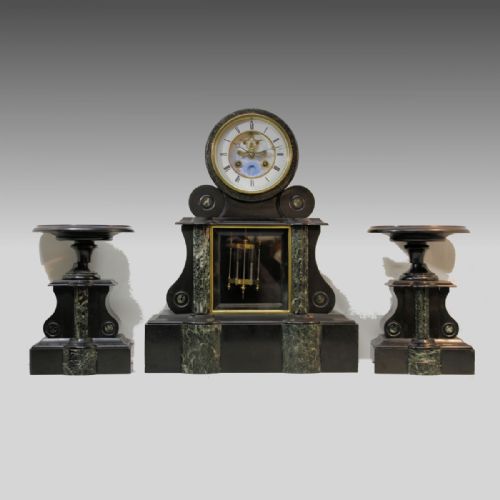
The versions met on this page range from plain Victorian forms to elaborate garniture sets featuring classical revival details and commemorative French movements.
Buyers seeking a slate mantelpiece clock encounter pieces spanning several decades of the nineteenth century, including specific dates from the eighteen-sixties through to the eighteen-nineties.
How they were made
Makers utilised heavy black slate as the primary structural body, often incorporating contrasting coloured marble inlays and patinated bronze or brass ornaments.
Dial faces incorporated crisp enamel protected beneath glass covers, while internal mechanical movements relied on eight-day gear systems to keep time.
Wood elements such as ebonised timber sometimes added further textural contrast to the stonework, reflecting French Napoleon III and neoclassical design influences.
Listings feature items dated across the nineteenth century, spanning the eighteen-sixties, seventies, eighties, and nineties.
What varies in quality
The sophistication of the stone inlay and the harmony of classical revival proportions separate standard household timepieces from more ambitious architectural garnitures.
The crispness of cast bronze mounts and the overall integration of marble and slate determine the visual weight and refinement of the finished piece.
Baby and Jannings
The Slate Mantelpiece Clock Glossary
- Garniture clock set
- A matching set consisting of a central clock flanked by decorative side ornaments such as urns or vases. These arrangements were designed to create a balanced display across a fireplace opening.
- Eight day
- A clock movement that runs for eight days on a single winding. This mechanical capability reduced the frequency required for maintenance.
- Enamel dial
- A fused glass surface fired onto metal to form the numbers and background of the clock face. Such dials offered a durable and legible display.
- Penny moon
- A revolving subsidiary dial showing the phases of the moon. This mechanical feature added astronomical interest to the clock face.
- Neoclassical
- A design style drawing inspiration from classical antiquity, visible in the architectural columns and pediments of these clock cases. It dominated much nineteenth-century ornament.
Slate Mantelpiece Clock: Frequently Asked Questions
How heavy is a slate mantelpiece clock?
These clocks possess substantial physical weight due to their solid stone construction. Buyers must ensure the supporting shelf or mantelpiece can bear the load.
The dense slate and marble materials mean these pieces remain exceptionally stable once positioned in a room.
What is a garniture set?
A garniture set comprises a main clock accompanied by matching side pieces, typically two ornamental urns or vases. They were arranged symmetrically on a mantelpiece.
This format creates a formal decorative scheme that was popular in grand nineteenth-century reception rooms.
How do I wind the movement?
Most nineteenth-century examples utilise an eight-day mechanical movement wound via key holes set directly into the dial face. Care must be taken not to over-wind the springs.
Regular servicing by a professional horologist keeps the internal gears functioning smoothly.
Where were these clocks made?
The examples on this page reflect British Victorian production alongside significant French manufacturing traditions. French makers frequently supplied sophisticated movements and garniture sets.
Both origins share a heavy reliance on architectural stone cases and classical design motifs.