


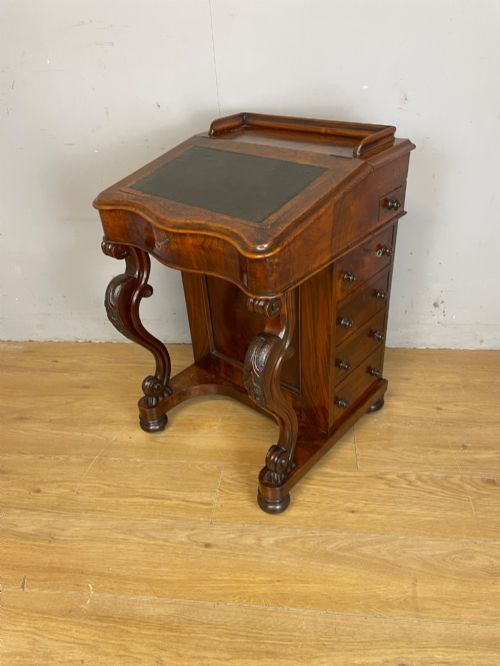
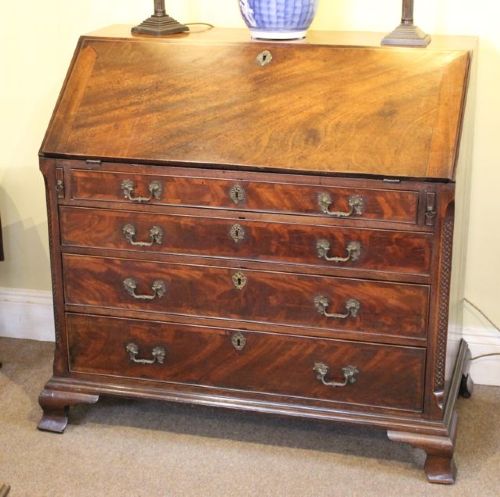
Slanted Writing Slope
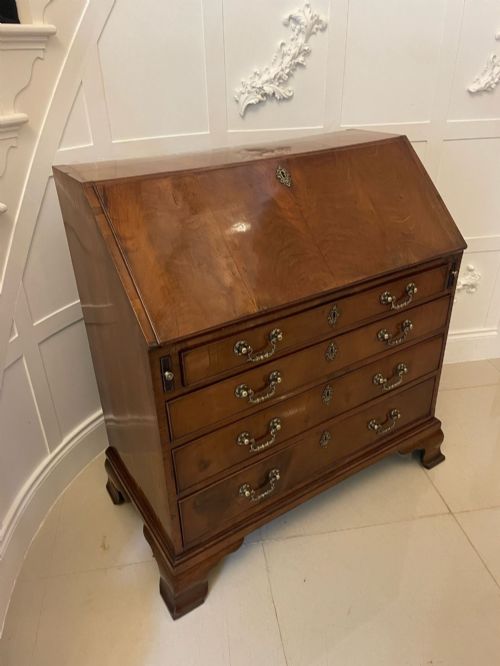
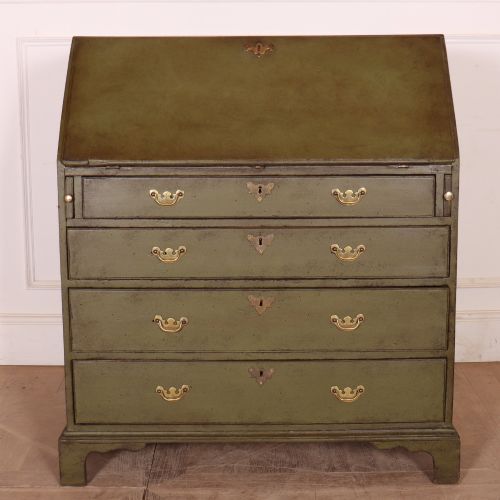
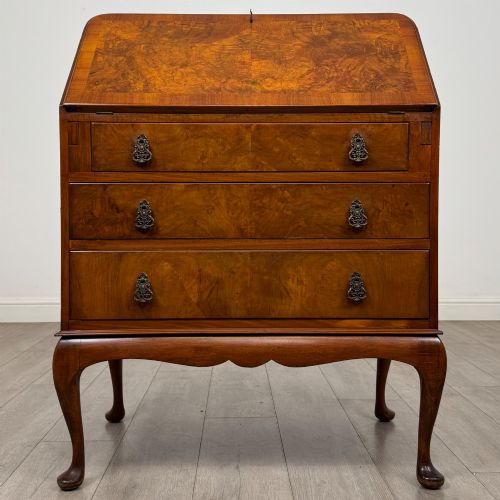
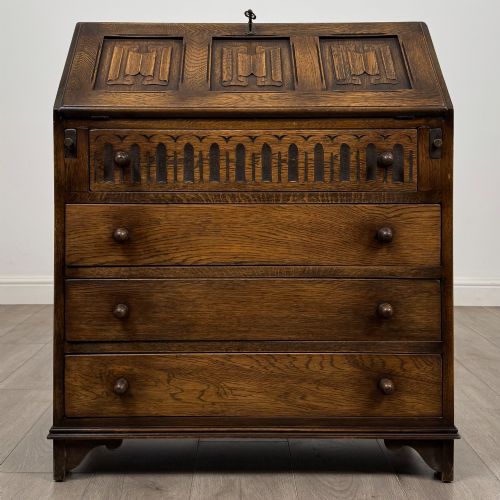
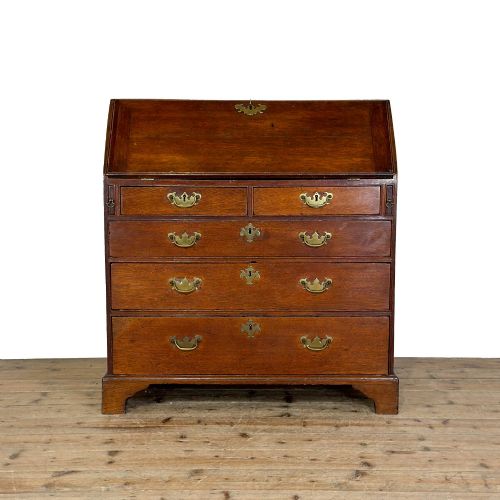
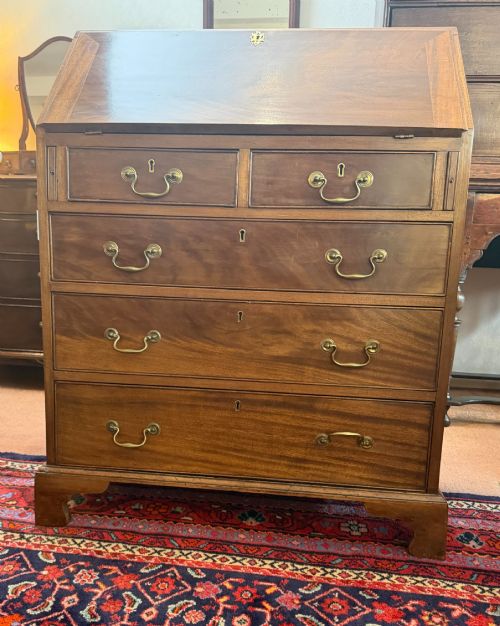
A slanted writing slope provides a dedicated writing surface, often taking the form of a bureau, bureau bookcase or portable desk box.
Slanted Writing Slope
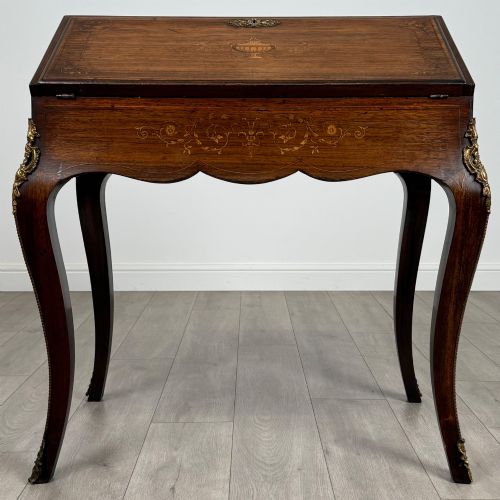
When you search for a slanted writing slope, you encounter portable boxes, compact table-top pieces and full-sized standing bureaux designed for correspondence and storage. These pieces combine a sloping fall front or writing surface with internal compartments, pigeonholes and small drawers.
The versions you meet most frequently on this page date from the eighteenth century through the Edwardian period, constructed in woods like mahogany, oak, walnut and rosewood. Formats range from simple seventeenth-century writing slope boxes to elaborate George II and Victorian bureau bookcases.
How they were made
Cabinet makers utilised dense hardwoods such as mahogany, oak, walnut and rosewood, frequently employing burr walnut, satinwood or floral marquetry for decorative veneers. Brass hardware, including hinges, carrying handles and escutcheons, secures the structural joints and drop fronts.
Writing surfaces frequently incorporate inset panels of leather to provide a suitable texture for handwriting. Structural elements rely on dovetail joinery for drawers and sturdy framing to support the angled writing plane.
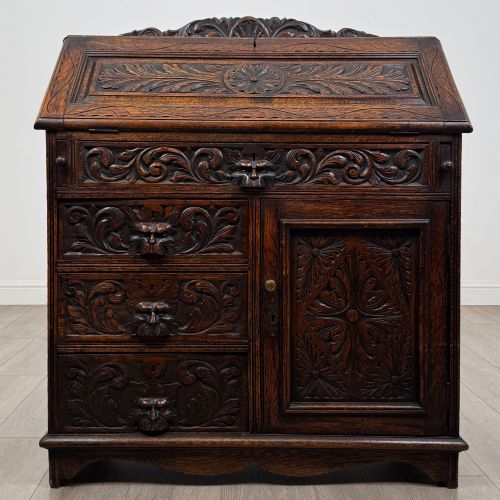
Some nineteenth century pieces conceal private correspondence behind carved green man masks or sliding secret compartments.
What varies in quality
Quality in a slanted writing slope reveals itself in the selection of timber, such as highly figured burr walnut, rich mahogany or intricate floral marquetry. The sophistication of the internal layout, including well-fitted secret compartments, satinwood pigeonholes and small drawers, distinguishes finer examples from simpler provincial pieces.
The crispness of carved details, such as Edwardian linenfold motifs or Victorian green man carvings, alongside the integration of brass fittings, marks the distinction between standard production and exceptional craftsmanship.
Heals of London
The Slanted Writing Slope Glossary
- Bureau
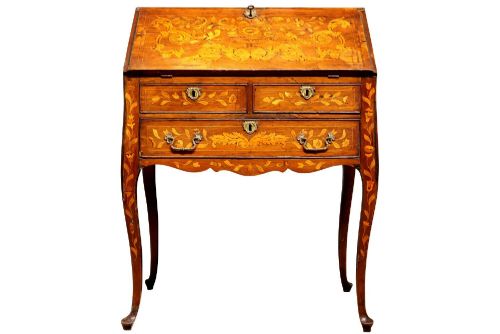
- A writing desk with a sloping flap that covers a set of drawers and pigeonholes. It provides a concealed workspace that can be closed when not in use.
- Davenport desk
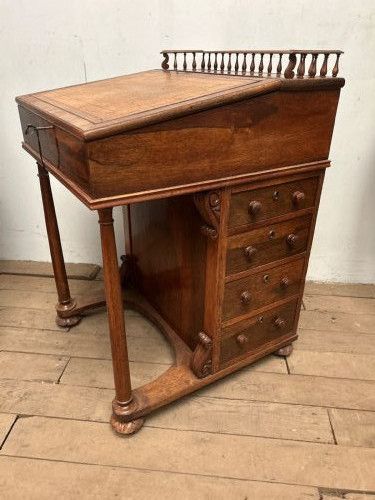
- A small compact desk featuring a sloping writing top and a pedestal of drawers to one side. It originated in the nineteenth century and often includes a stationery compartment above.
- Fall front
- The hinged panel on a bureau or slope that drops down to create a flat writing surface. This panel conceals the internal pigeonholes and small drawers.
- Marquetry
- Decorative inlay work using various woods and other materials to create pictorial or floral designs on furniture surfaces. Dutch pieces frequently display this technique.
- Writing slope box
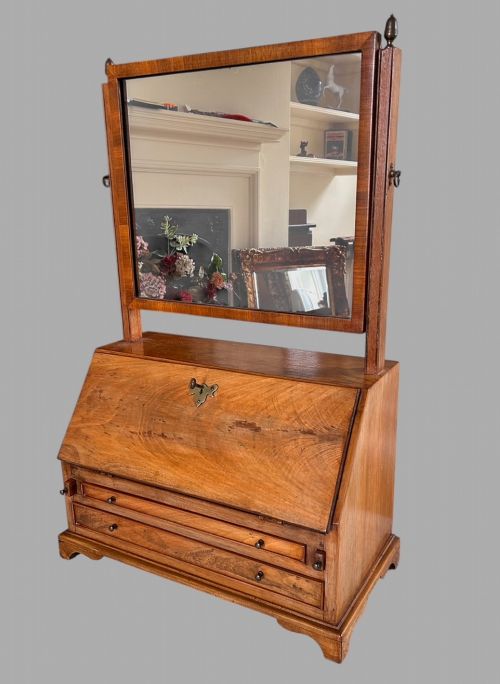
- A portable box with an angled lid designed to hold writing materials and provide a sloping surface. These portable pieces date back to the seventeenth century and earlier.
Slanted Writing Slope: Frequently Asked Questions
What is a bureau bookcase?
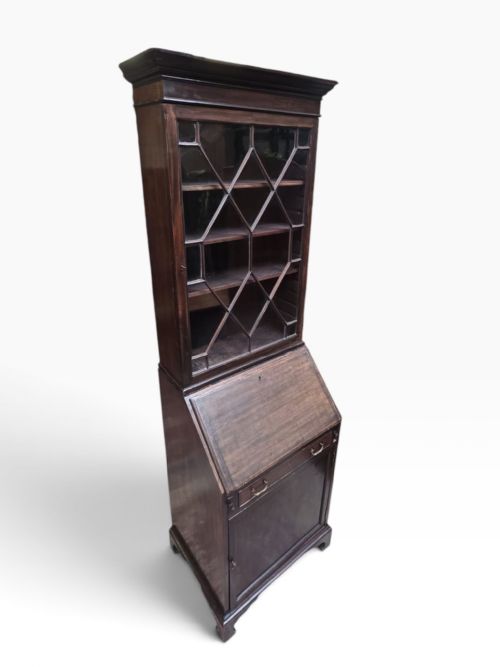
A bureau bookcase combines a slanted writing slope and drawers in the lower section with glazed or panelled shelving doors above. This dual-purpose furniture piece served both storage and writing functions in domestic interiors.
Such pieces often display refined cabinet work in mahogany or walnut, dating from the eighteenth century into the Edwardian era.
How do I use a Davenport desk?
A Davenport desk provides a compact workspace where the user sits directly at the sloping top while papers and writing implements store neatly within the pedestal drawers below. The upper compartment often houses inkwells and stationery.
Its compact footprint makes it suitable for placement in living spaces or smaller studies.
What is the difference between a desk box and a bureau?
A desk box is a portable container with a sloping lid designed to be placed on a table for writing. A bureau is a larger, freestanding piece of furniture incorporating a fall front over a chest of drawers.
Both items fulfill similar writing purposes but occupy very different scales within a room.