
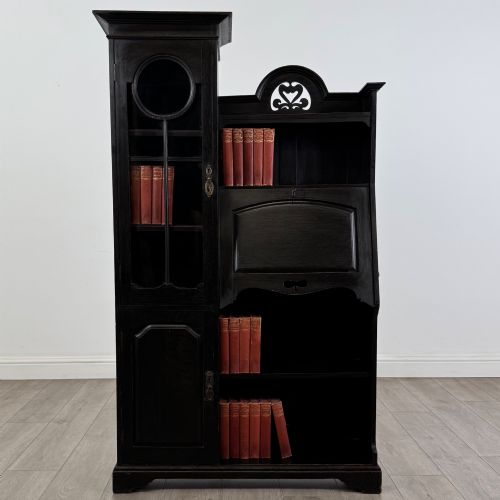
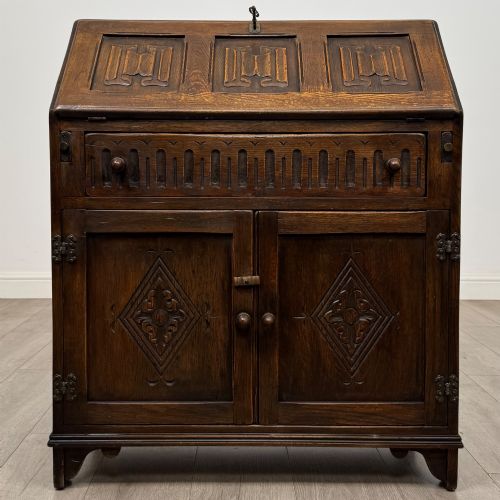
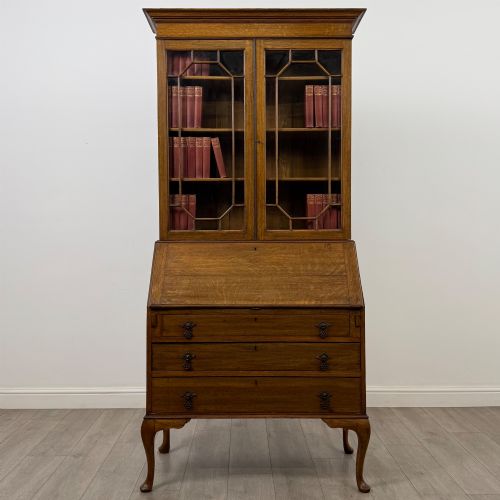
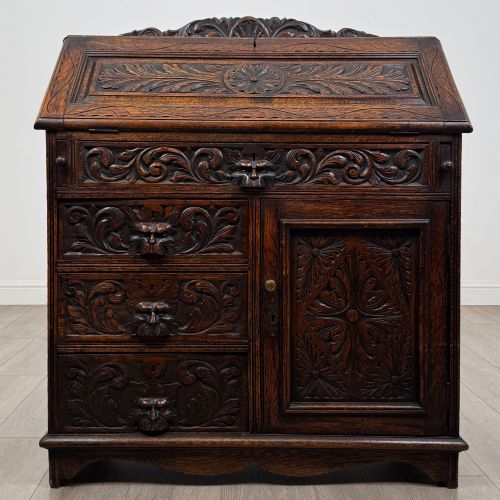

Slanted Oak Desk
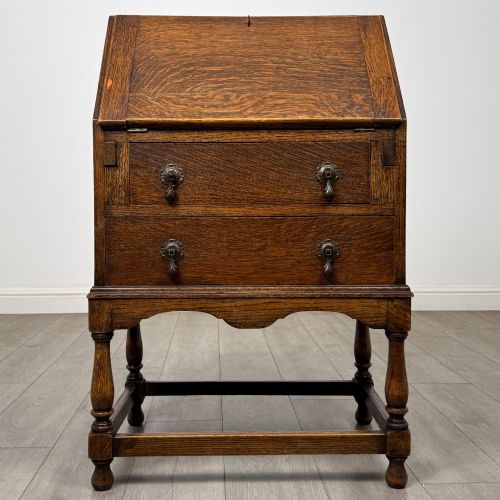
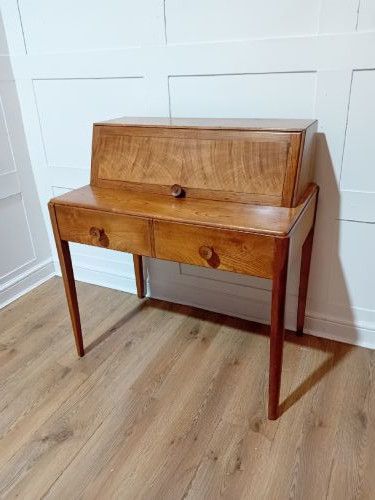
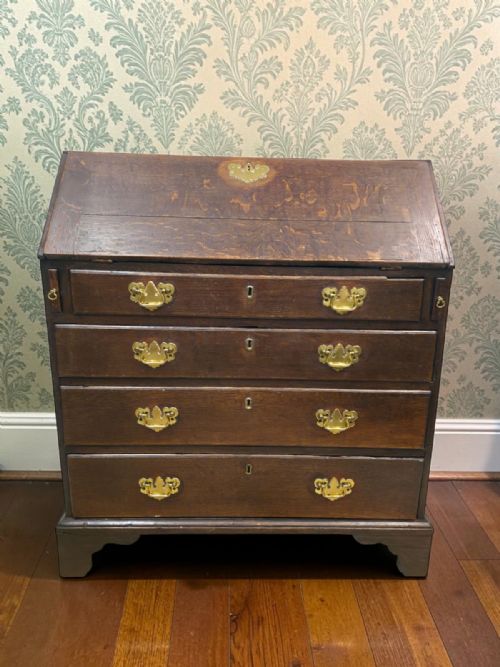
A slanted oak desk offers a hinged writing slope that conceals fitted interior compartments, combining practical timber construction with traditional workspace storage.
Slanted Oak Desk
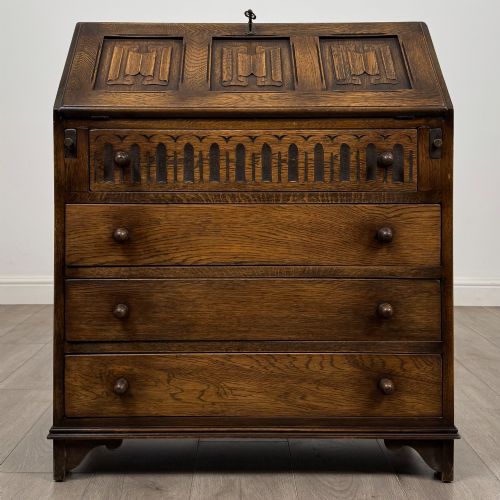
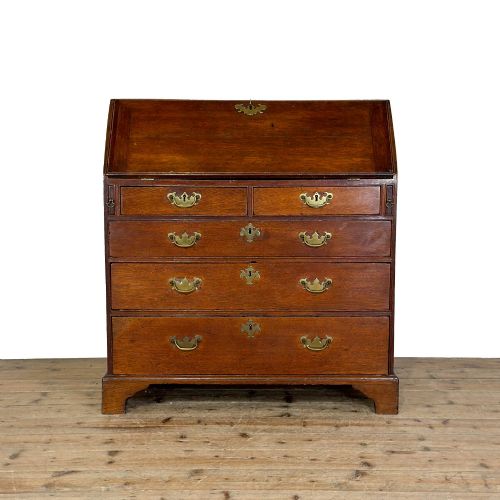
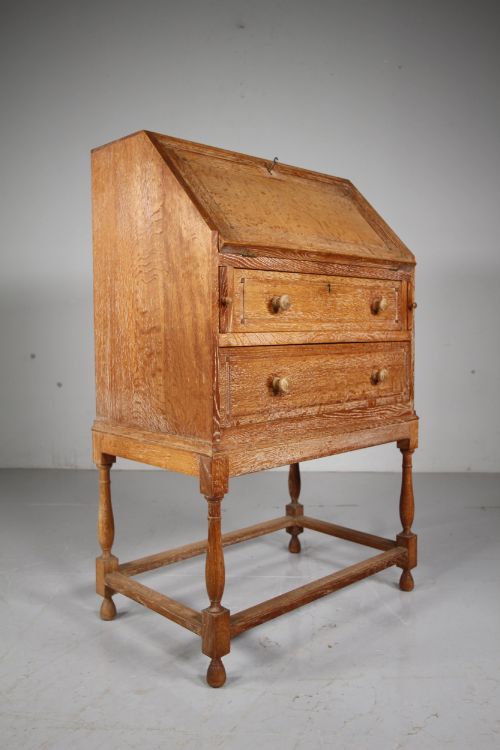
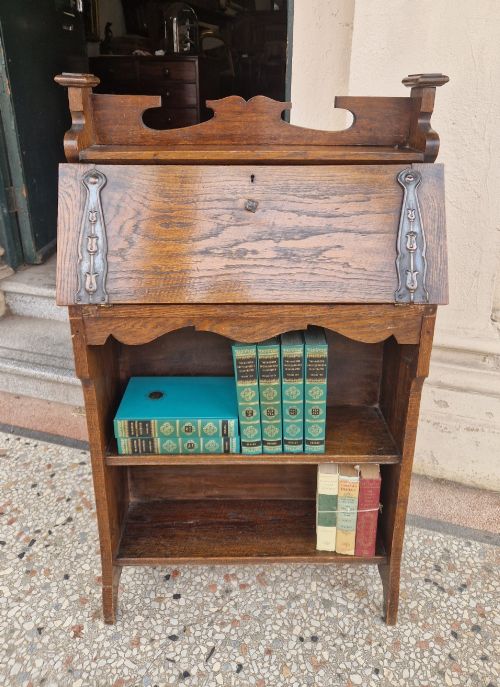
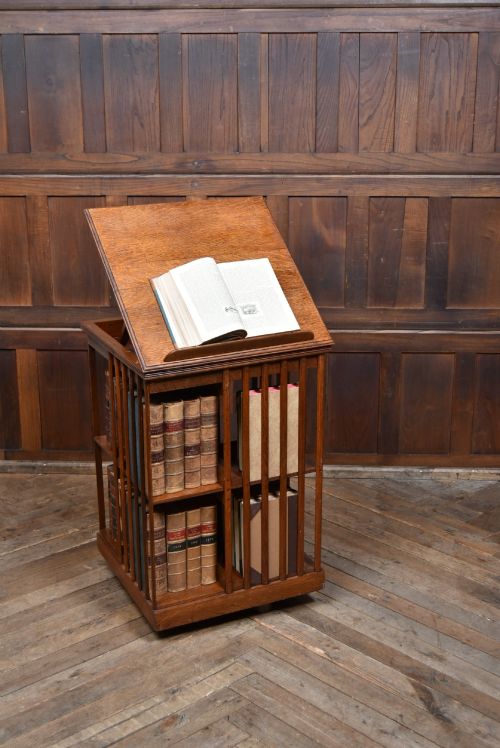
A slanted oak desk encompasses writing furniture spanning from the seventeenth century through the Edwardian period, appearing as fall front bureaux, bureau bookcases, and compact desk boxes.
The Edwardian iterations dominate the selection alongside eighteenth century and Georgian examples, often incorporating fitted drawers and pigeonholes beneath the sloping lid.
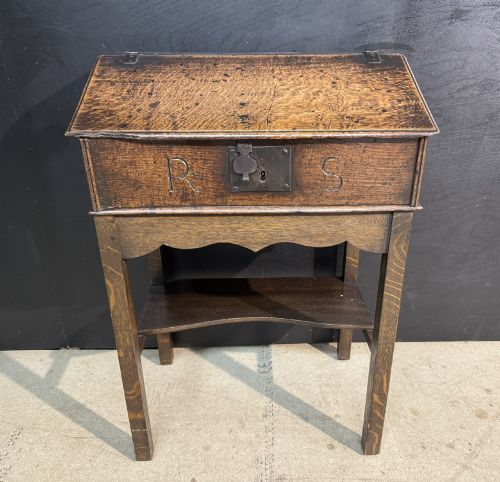
Early variants include seventeenth century writing slopes and Bible boxes designed for portable use or tabletop placement, while later twentieth century pieces reflect Arts and Crafts and revival styles.
Craftsmanship and design
Quality separates examples by the crispness of carved details, such as Jacobean style motifs or Green Man reliefs, and the complexity of the stepped interior compartments.
Selected pieces bear maker labels from workshops such as Heals of London or named makers like Arthur Basil Reynolds and Stanley Webb Davies, elevating their standing among collectors.
Materials paired with oak across the selection include leather, brass, glass, iron, copper, and pollard oak.
Heals of London·Arthur Basil Reynolds·Stanley Webb Davies
The Slanted Oak Desk Glossary
- Bureau
- A writing desk featuring a sloping lid that drops down to form a writing surface. This fall front conceals an arrangement of small drawers and pigeonholes.
- Bureau bookcase
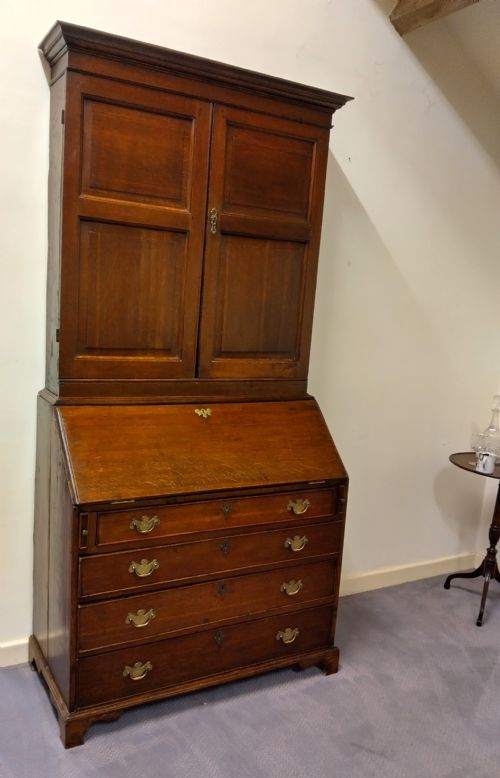
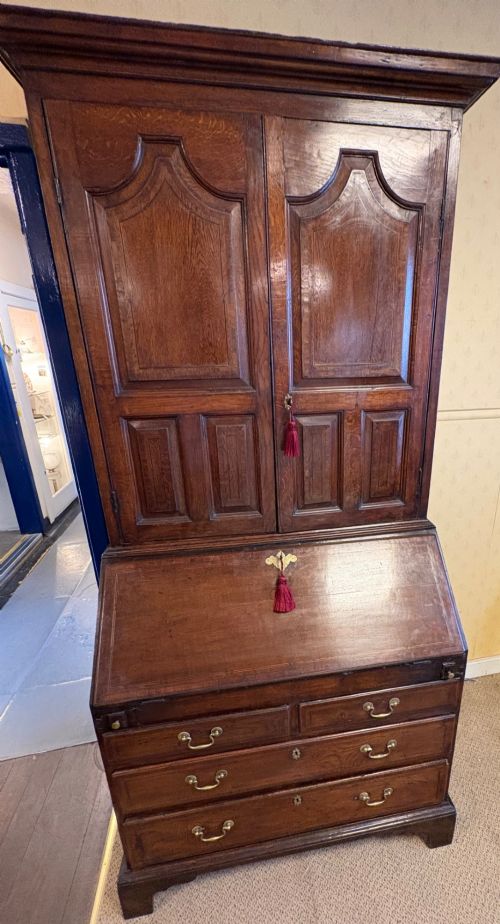
- A combination furniture form featuring a bureau base with a glazed or panelled bookcase superstructure above. These tall pieces maximise storage for books and writing materials.
- Fall front
- A hinged flap on a desk that pulls down or slants forward to create a horizontal or inclined writing surface. It locks upright to secure the interior contents.
- Writing slope
- A portable box with a slanted lid designed to hold paper and writing implements. Early versions rest on tables before the development of dedicated desk frames.
- Linenfold
- A style of carved wooden panelling resembling folded vertical linen fabric. This decorative relief work appears frequently on Edwardian and revival oak furniture.
Slanted Oak Desk: Frequently Asked Questions
What is a slanted oak desk called?
These pieces are most frequently identified in historical contexts as bureaux or writing desks. Compact tabletop versions from earlier centuries are often catalogued as writing slope boxes or Bible boxes.
Larger combination pieces that incorporate shelving above the writing surface are designated as bureau bookcases.
How do I date an oak bureau?
Dating relies on observing construction methods, hardware types, and stylistic details such as panel carving or bracket feet. Seventeenth and eighteenth-century examples display hand-cut joinery and simpler interior layouts.
Edwardian and 1920s revival pieces often exhibit machine-cut elements, golden oak finishes, or maker labels corresponding to specific Arts and Crafts workshops.
Where were these desks placed?
Historically utilised in studies, libraries, and administrative spaces, these desks provided a secure, private area for correspondence and record keeping. The sloped writing surface accommodated handwritten documents before the widespread use of typewriters.
Today, they function effectively in modern home offices or living areas as writing surfaces with built-in document storage.
What does a stepped interior mean?
A stepped interior refers to the arrangement of interior pigeonholes and small drawers built into tiers that recede in steps beneath the fall front. This multi-level configuration added visual depth and compartmentalised storage for letters and nibs.
Finer examples invest considerable craftsmanship into secret compartments and carved central doors within this stepped framework.