


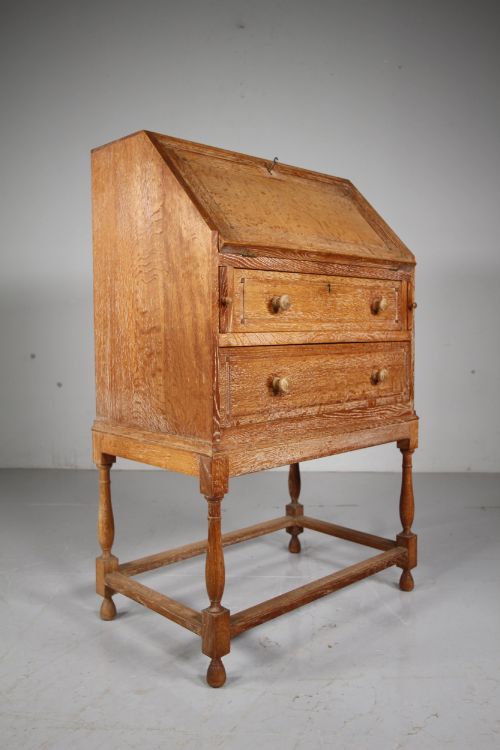
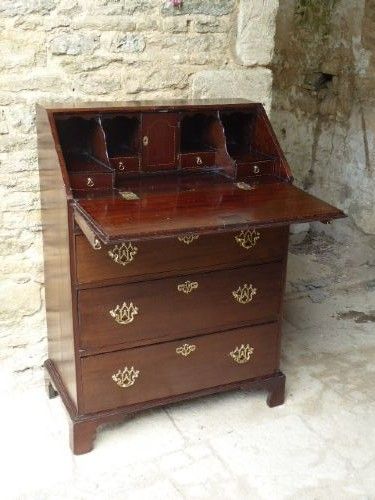
Slant Front Writing Slope
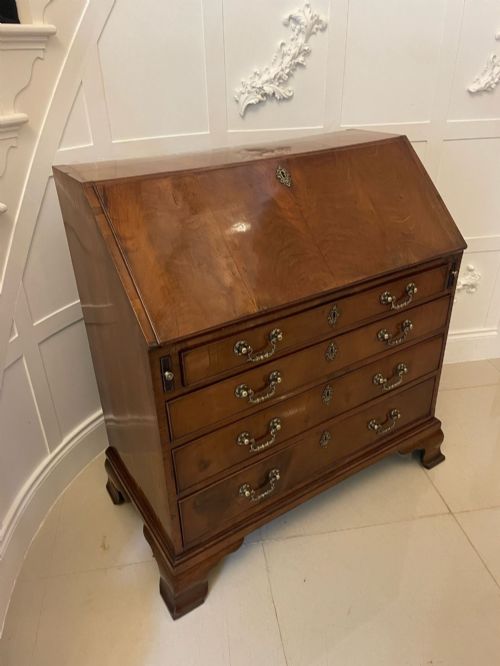
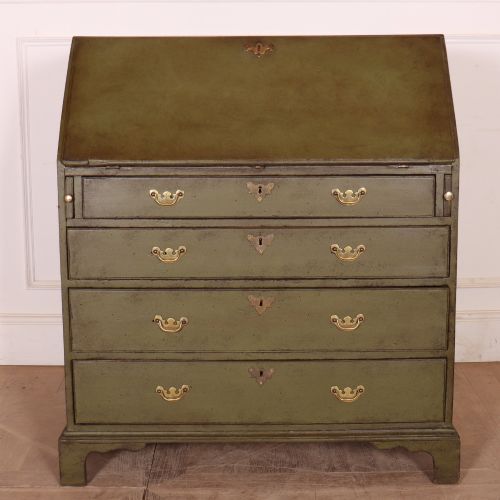
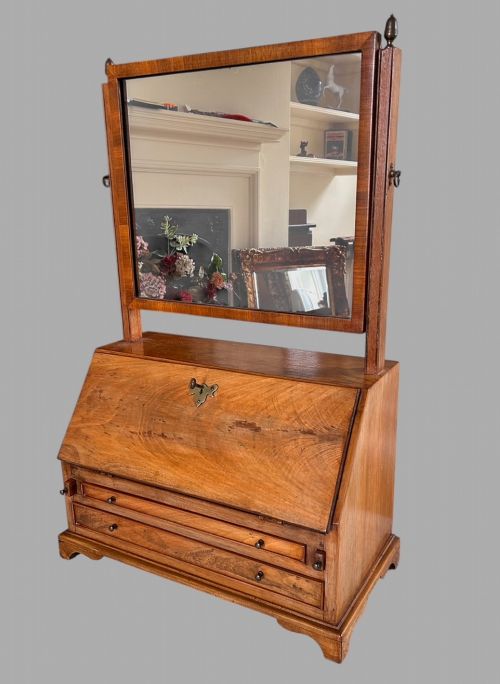
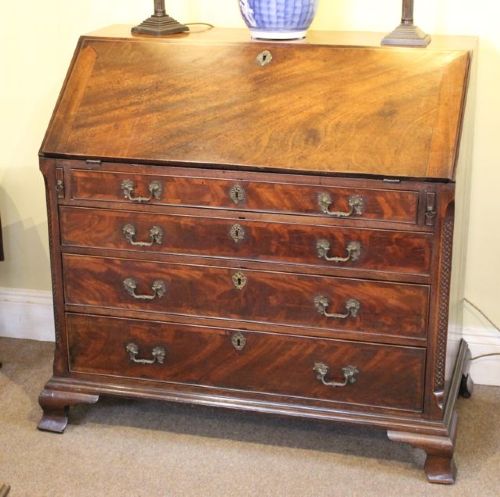
A slant front writing slope provides a hinged fall-front writing surface above drawers or a stand, offering a compact workspace with concealed compartments.
Slant Front Writing Slope
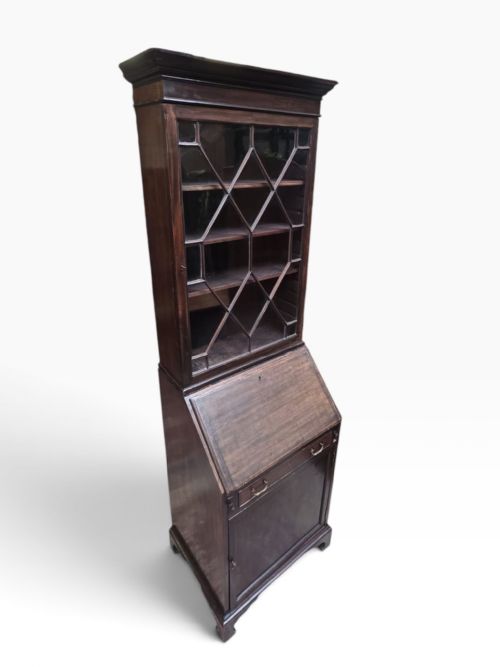
When you search for a slant front writing slope, you encounter pieces designed for private correspondence and storage, spanning centuries from the seventeenth century through the Edwardian era. The forms range from small table-top boxes to large bureau bookcases and desks on stands, encompassing styles such as Georgian, Queen Anne, and Arts and Crafts.
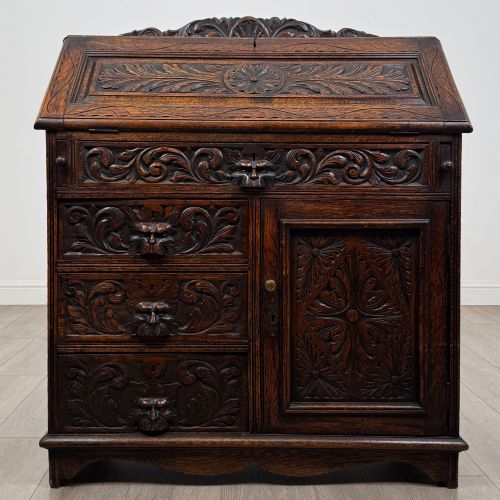
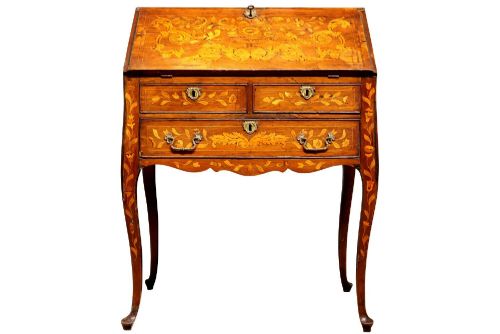
The selection includes regional interpretations and revival pieces, such as Jacobean style oak writing slopes and Dutch floral marquetry examples. These variations show how cabinet makers adapted the form to suit changing domestic interiors.
Materials and Construction
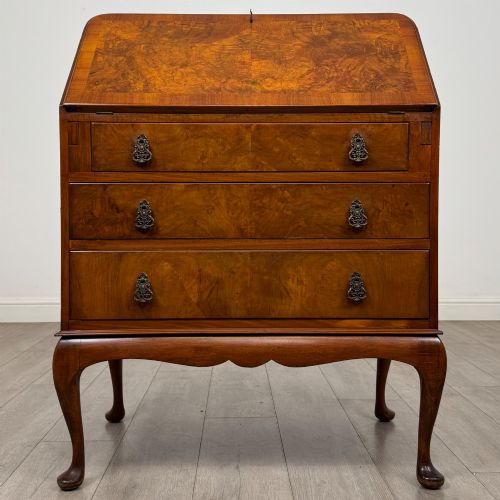
Cabinet makers built these pieces using solid timbers like oak and mahogany, often applying figured veneers such as burr walnut or satinwood to the fall-front and drawer fronts. Secondary woods like cedarwood appear internally, while brass mounts and hinges provide structural and decorative reinforcement.
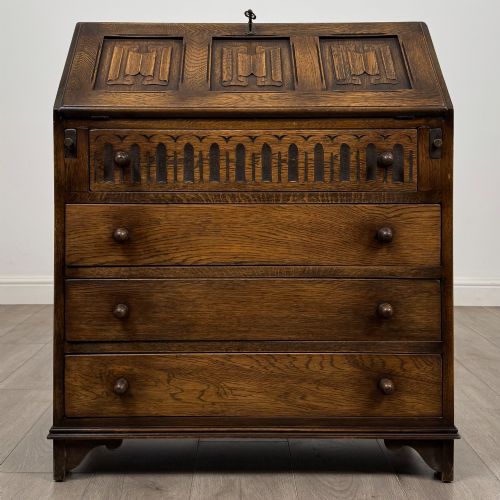
Surface decoration relies on techniques including hand carving, such as green man motifs and linenfold panels, alongside intricate floral marquetry and painted finishes. Leather inserts frequently line the interior writing surfaces of the slopes.
Listings feature woods including mahogany, oak, walnut, burr walnut, satinwood, and amboyna.
Proportion and Detail
Quality rests on the selection of timber and the precision of the cabinet work, particularly in the internal configuration of drawers and pigeonholes. Finely figured burr walnut or satinwood veneers demonstrate superior material choice compared to plain surfaces.
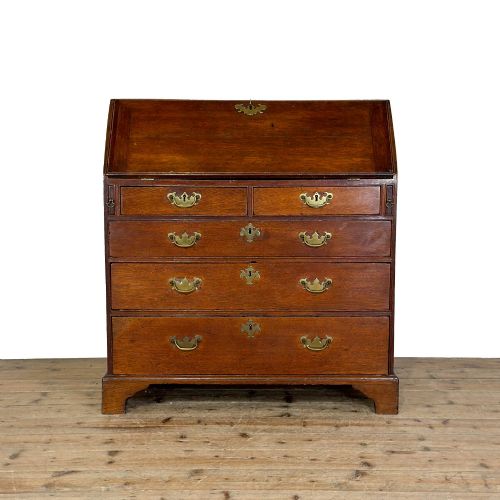
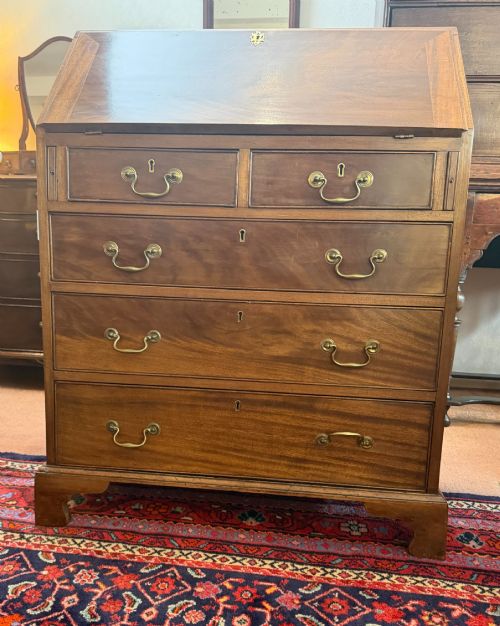
The integration of decorative elements, from carved oak details to inlaid marquetry, distinguishes standard production from finer workshop output. Original brass hardware and well-executed secondary timbers further indicate a higher standard of construction.
Heals of London·Stanley Webb Davies
The Slant Front Writing Slope Glossary
- Bureau
- A desk featuring a sloping hinged lid that opens to form a writing surface. This term often applies interchangeably with slant front writing slopes in British furniture.
- Fall-front
- The hinged panel that drops forward to create the writing slope. It conceals the internal compartments when closed.
- Marquetry
- Decorative veneer patterns formed from pieces of wood, ivory, or shell fitted into a wood foundation. Floral motifs appear frequently on Dutch examples.
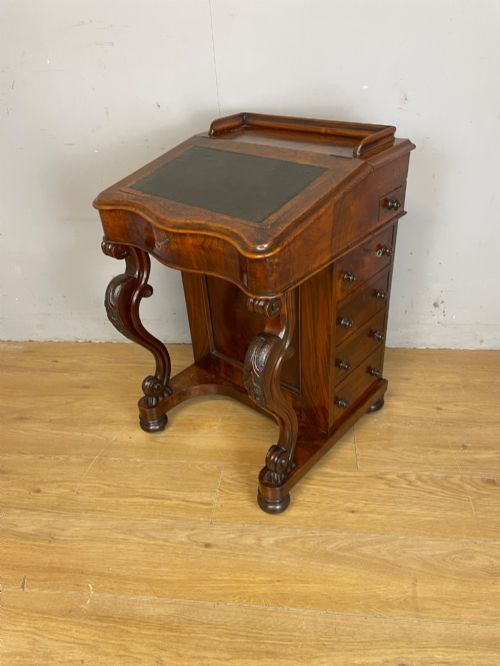
- Davenport
- A compact form of small desk featuring a sloping writing surface and drawers opening to the side. These typically date from the nineteenth century.
- Linenfold
- A style of wood carving that mimics folded fabric. This appears on oak panels in various revival pieces.
Slant Front Writing Slope: Frequently Asked Questions
What is a slant front writing slope?
A slant front writing slope is a desk with a hinged lid that angles downward to provide a surface for writing. Inside, it contains small drawers and pigeonholes for stationery.
These pieces range from small portable boxes placed on tables to substantial standing furniture incorporating chests of drawers.
How were these desks used historically?
People utilised these slopes for private correspondence, record keeping, and storing documents. The lockable fall-front protected confidential papers from prying eyes.
The internal compartments kept inkwells, quills, and paper organised within a compact footprint.
Where should I place a writing slope at home?
These compact pieces fit well in studies, living rooms, or hallways where floor space is limited. Their enclosed fronts conceal paperwork when not in use, maintaining a tidy room.
Pairing a desk with a simple chair or stool allows it to function as a practical writing station.
How do I identify the period of a slope?
Dating relies on timber choice, construction methods, and stylistic details. Oak construction and carved motifs often point to seventeenth or eighteenth century origins, whilst satinwood and lighter veneers frequently indicate later periods.
Internal drawer construction and secondary woods provide further clues to the manufacturing date.