
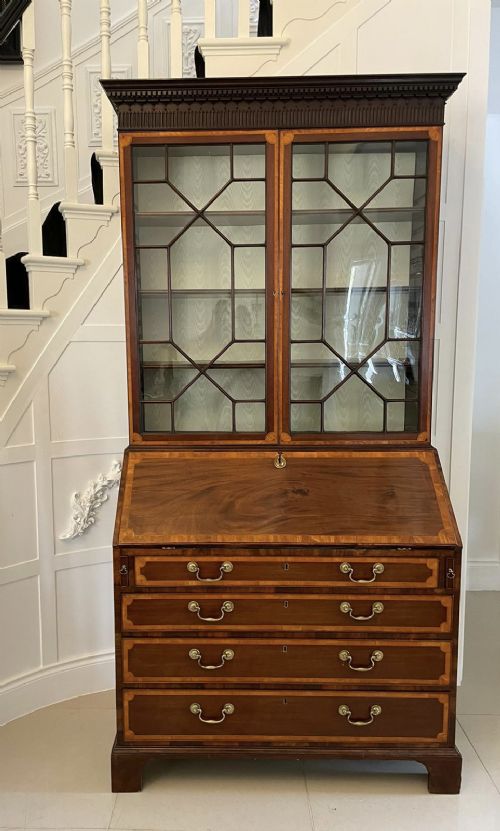
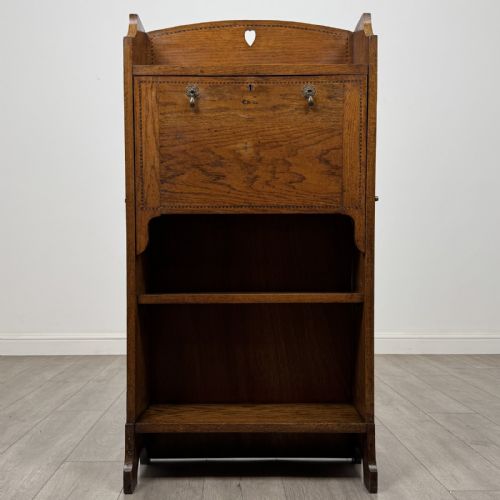
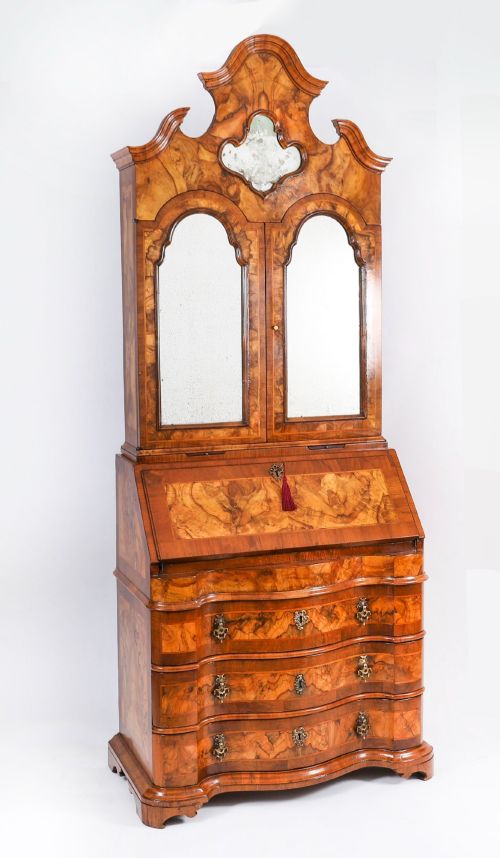
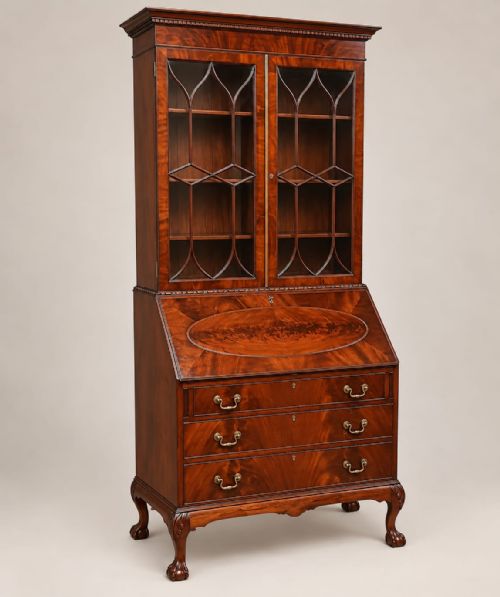
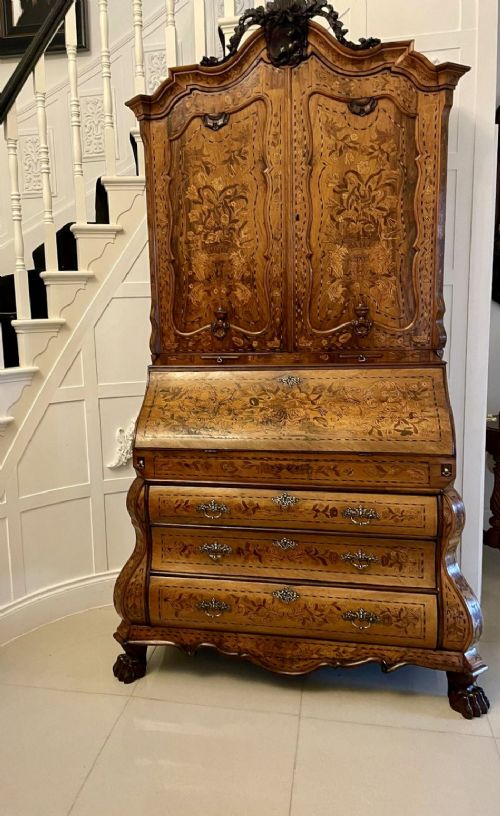
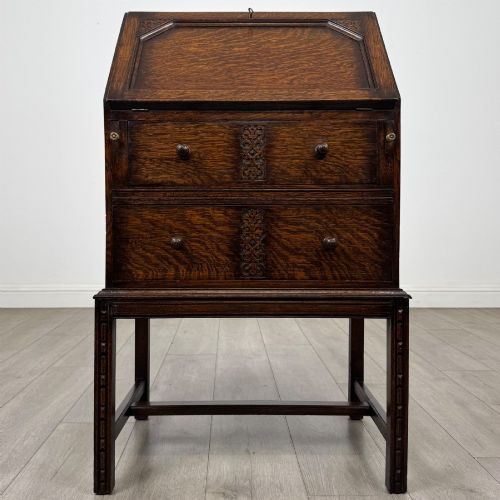
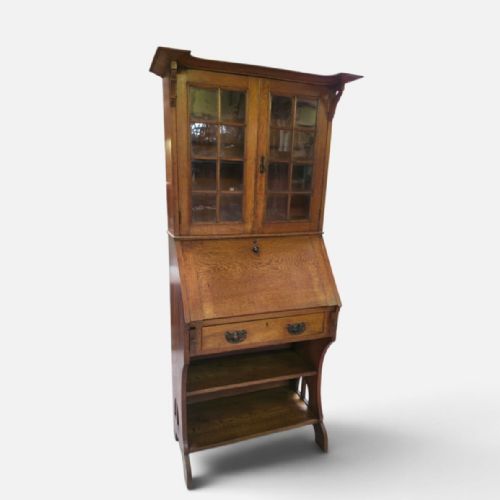
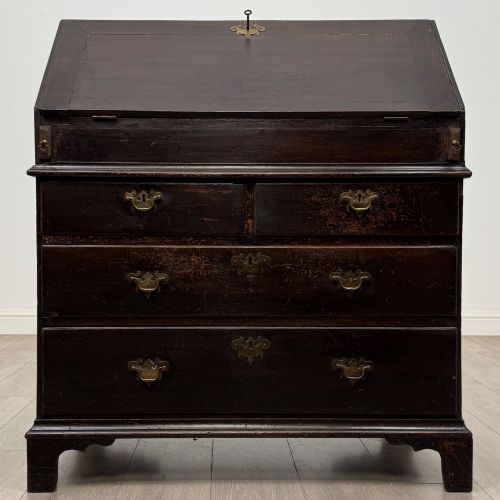
Slant Front Writing Cabinet
A slant front writing cabinet provides a clever sloping surface that drops down to reveal fitted interiors for correspondence.
Slant Front Writing Cabinet
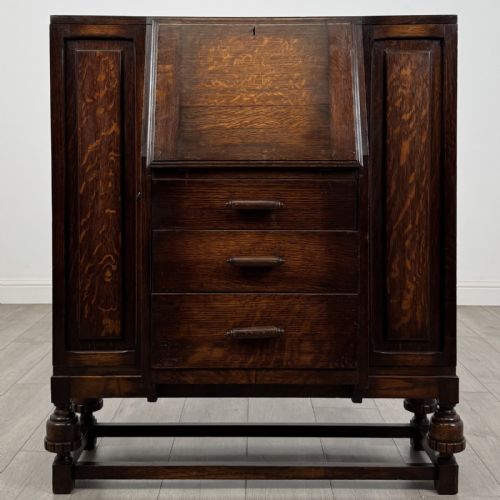
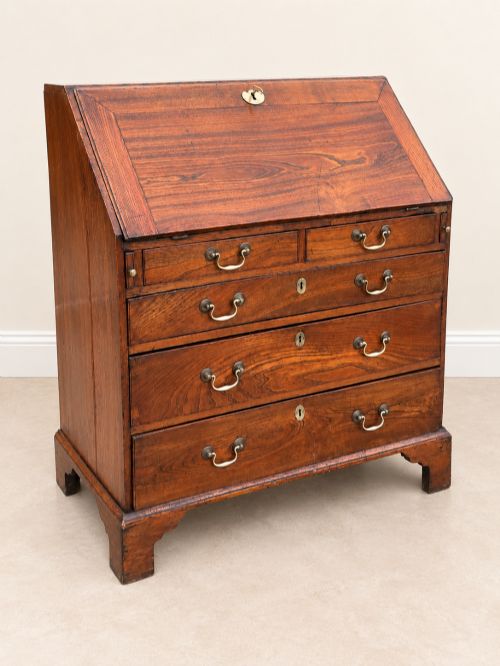
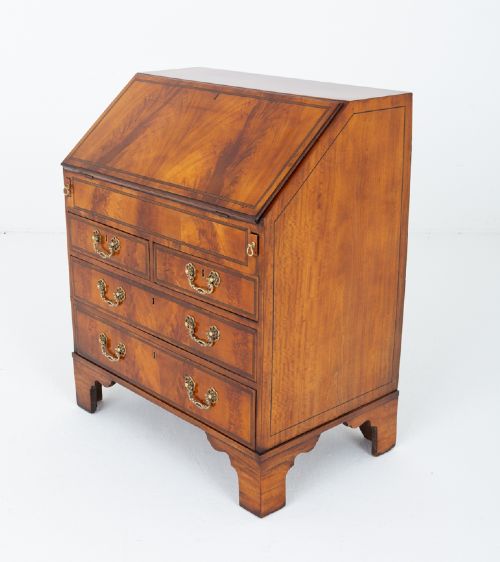
A slant front writing cabinet combines a desk and a storage unit, featuring a hinged writing flap that conceals small drawers and pigeonholes when closed. These pieces appear across multiple eras, ranging from 17th century examples to Edwardian and 1920s reinterpretations.
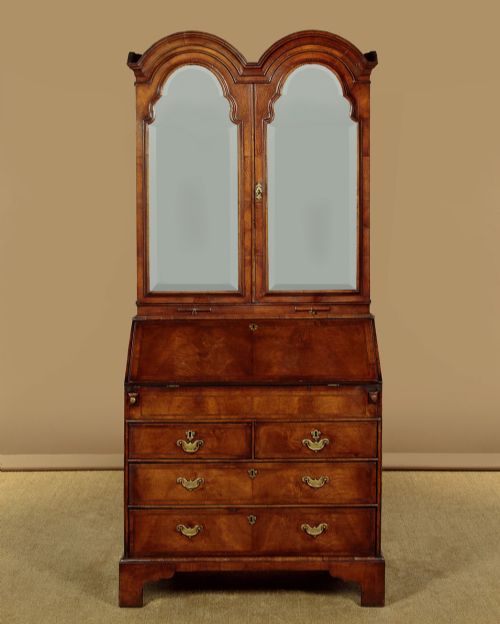
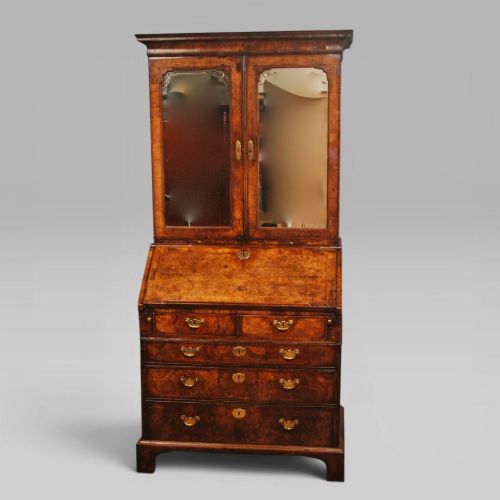
The form includes standalone desks as well as taller bureau bookcases with glazed or panelled upper sections. Oak and mahogany are common materials, alongside burr walnut versions that showcase elaborate grain patterns.
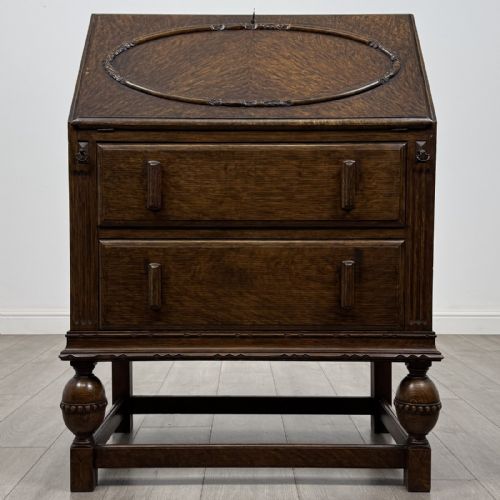
Buyers frequently encounter Edwardian oak variations and 18th century Georgian mahogany or walnut models. Many incorporate fitted stepped interiors designed for holding letters and writing equipment.
Construction and Materials
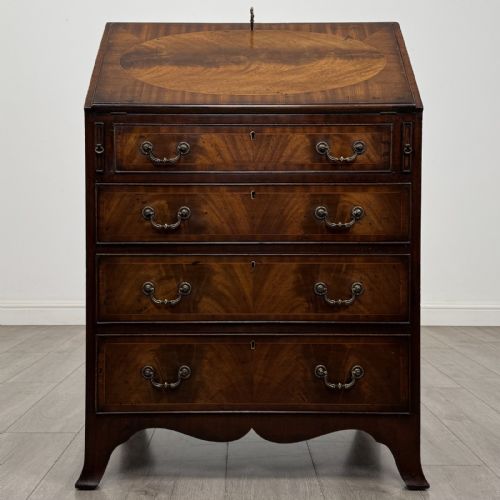
Cabinet makers utilised solid timbers and selected veneers, applying mahogany, oak, walnut, and yew wood across different periods. Flame mahogany and burr walnut provided decorative figured surfaces for the exterior falls and drawer fronts.
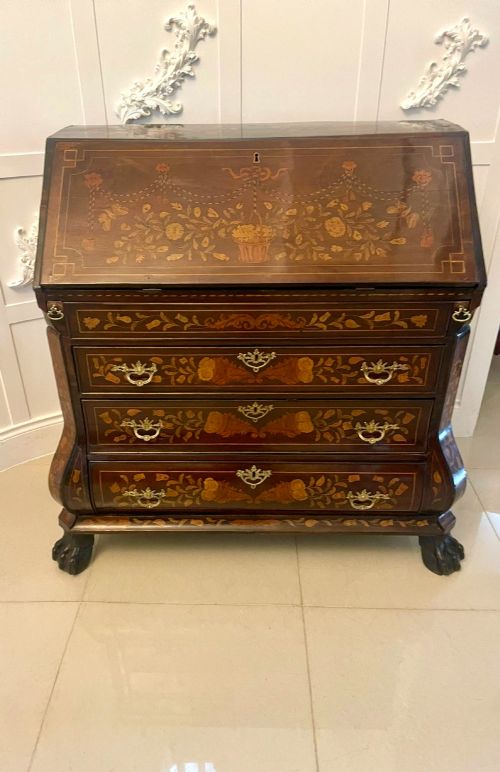
Detailed techniques include floral marquetry inlay, herringbone stringing, and linenfold carving. Brass hardware such as escutcheons and handles complete the construction, while specific iterations incorporate inset leather writing surfaces.
One remarkably adaptable early oak bureau bookcase has been successfully converted to house a television.
Factors of Quality
The calibre of a slant front writing cabinet depends on the choice of timber and the precision of its veneers. Figured grains and complex marquetry inlay distinguish finer examples from plain constructions.
Internal joinery dictates worth, particularly the complexity of the stepped interior arrangement and the condition of the hidden compartments. The integration of the fall front mechanism and the retention of original brass fittings also influence the standard of the piece.
Arthur Basil Reynolds·Larkin·Gillows
The Slant Front Writing Cabinet Glossary
- Bureau
- A desk with a sloping writing flap and internal compartments. This term often interchanges with writing cabinet in historical records.
- Fall front
- The hinged panel that drops forward to create a horizontal writing surface. It conceals the internal drawers when closed.
- Marquetry
- Decorative patterns formed by inserting pieces of coloured wood or other materials into a veneer. It appears on sophisticated 18th century examples.
- Escutcheon
- A flat plate of brass surrounding a keyhole. It protects the surrounding wood from wear around the lock.
- Step interior
- A multi-tiered arrangement of internal drawers and pigeonholes inside the cabinet. This feature organises stationery and correspondence.
Slant Front Writing Cabinet: Frequently Asked Questions
What is a slant front writing cabinet?
A slant front writing cabinet is a piece of furniture featuring an angled lid that folds down for writing. Inside, it contains small compartments and drawers for letters.
These cabinets range from compact desks to large bureau bookcases with shelving above. They provide enclosed workspace while keeping papers hidden.
How do I identify the period?
Period identification relies on timber choice, construction methods, and stylistic details. 17th century and Queen Anne examples often feature burr walnut and herringbone inlay.
Georgian pieces lean towards mahogany, whilst Edwardian and 1920s versions frequently utilise oak with carved linenfold or ebonised finishes.
Where were they used?
These cabinets served in private studies, libraries, and bedrooms for managing personal correspondence and household accounts. The lockable fall front kept sensitive documents secure.
In larger homes, bureau bookcases held family libraries alongside writing materials. They functioned as multi-purpose furniture for daily administrative tasks.
How do I care for the wood?
Maintenance involves keeping the timber away from direct sunlight and heat sources to prevent veneer lifting. Regular dusting with a dry cloth preserves the finish.
Leather writing surfaces benefit from occasional specialised conditioning to prevent cracking. Wax polishing maintains the sheen on walnut and mahogany surfaces.