
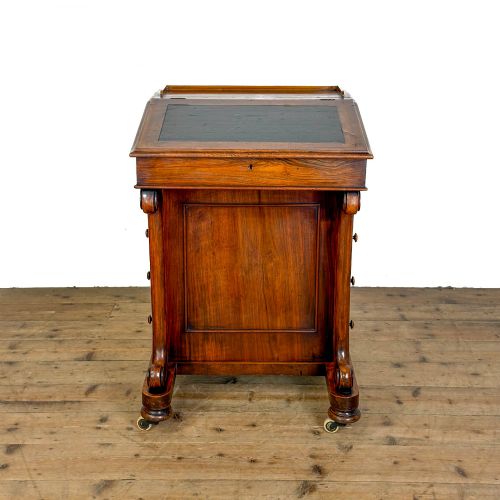
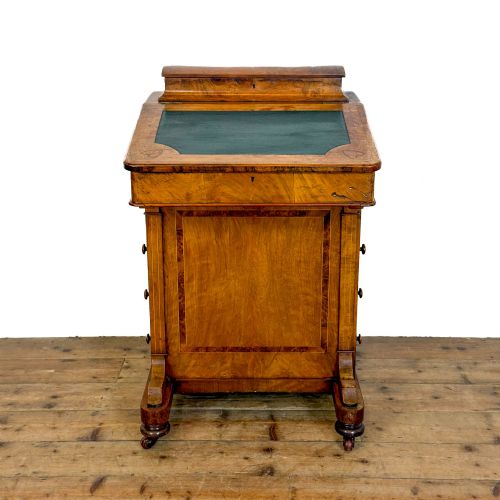


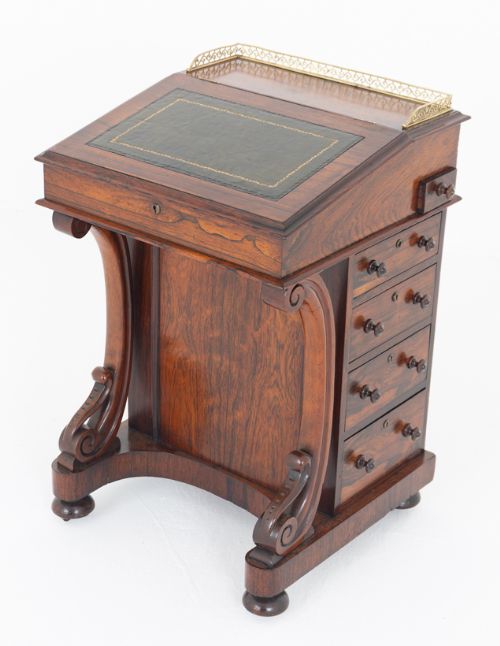


Slant Front Davenport
A slant front davenport is a compact writing desk offering enclosed storage and a sloped writing surface, ideal for a refined study.
Slant Front Davenport
A slant front davenport is a small, freestanding writing desk designed with a hinged, sloping top above a bank of drawers. These pieces appeared across the Georgian, Regency, William IV, and Victorian eras, remaining popular through the Edwardian period.
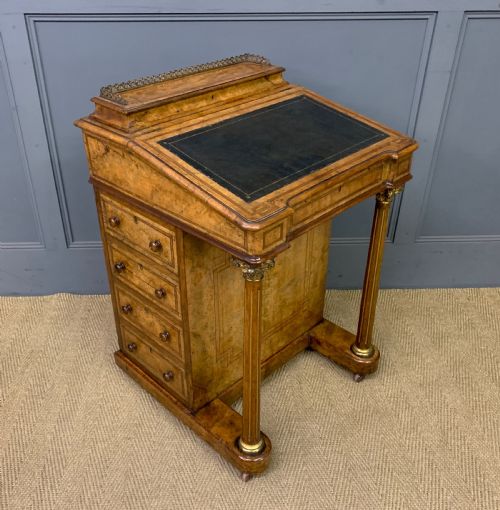
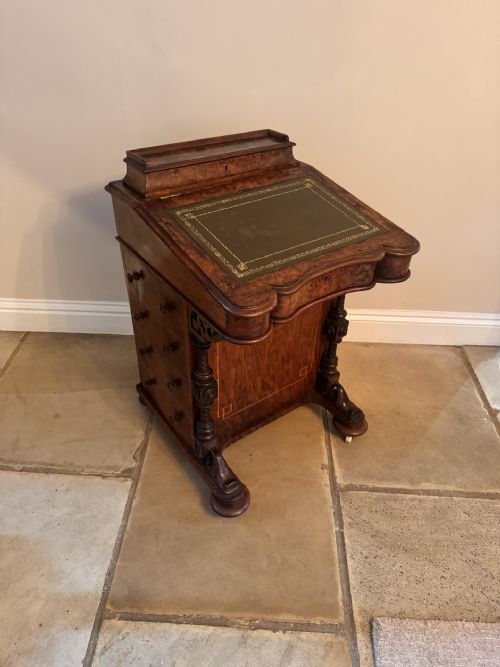
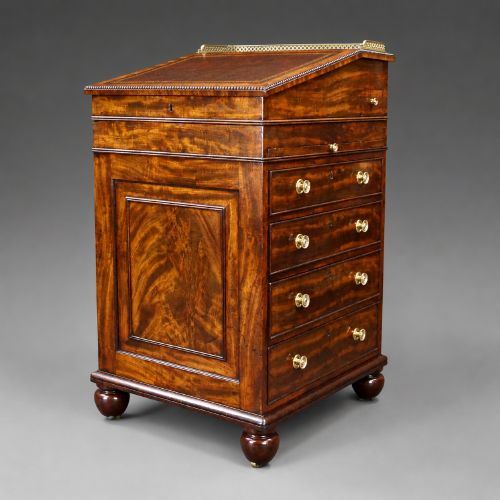
The most common examples encountered on this page date from the Victorian period and are fashioned from burr walnut or mahogany. Makers often incorporated sliding tops, interior compartments, and side drawers fitted with brass hardware.
Described variously as writing desks, bureaux, or secretaires, these pieces combine domestic utility with cabinet-making flair. Their compact footprint made them well-suited for smaller reception rooms and private chambers.
How they were made
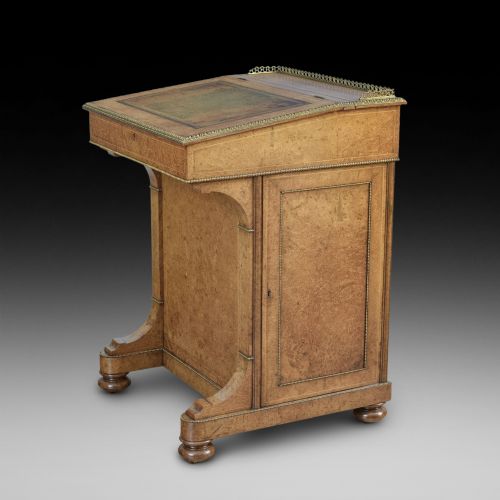
Cabinet-makers constructed these desks using solid timbers overlaid with highly figured veneers such as burr walnut, flame mahogany, pollard oak, rosewood, and amboyna. These decorative veneers were carefully matched across the sloped lids and drawer fronts to create symmetrical patterns.
Structural elements frequently incorporated secondary woods, while functional surfaces were lined with tooled leather for writing. Brass mounts, handles, and inset galleries added both durability and decorative contrast to the timber frames.
Internal mechanisms included sliding tops and pivoting compartments designed to maximise storage within a restricted footprint. Drawers were typically arranged down one side, sometimes balanced by dummy drawers on the reverse.
Listings feature woods including burr walnut, flame mahogany, pollard oak, rosewood, and amboyna across Georgian, Regency, and Victorian periods.
What varies in quality
The choice of timber grain and veneer selection dictates much of the visual distinction across these desks. Highly figured burr walnut, pollard oak, and flame mahogany denote workshops employing superior stock.
The integration of marquetry inlay, brass mounts, and secondary detailing separates standard production models from exceptional commissions. Attributions to known makers like Gillows indicate higher standards of construction and design sophistication.
Gillows
The Slant Front Davenport Glossary
- Burr walnut
- A figured timber harvested from walnut tree growths, valued for its swirling grain patterns. It appeared frequently on Victorian slant front davenports.
- Marquetry
- The art of applying decorative veneer pieces to a structure to form geometric or floral pictures. It is often seen on the lids of Victorian walnut desks.
- Secretaire
- A piece of furniture containing a writing drawer or fold-down writing flap concealing pigeonholes and small compartments. Many davenports incorporate this internal arrangement.
- Sliding top
- A mechanism allowing the upper writing section to push forward independently of the pedestal base. This feature permits a more comfortable seating position.
Slant Front Davenport: Frequently Asked Questions
What is a slant front davenport?
A slant front davenport is a compact writing desk featuring a sloping top over a pedestal of drawers. These pieces provide a dedicated writing surface combined with enclosed compartment storage.
Originating in the Georgian period and continuing through the Victorian era, they were designed for domestic studies and drawing rooms where space was valued.
How were these desks used historically?
These desks served as private writing stations for correspondence, record-keeping, and estate management. The sloping lid provided a comfortable angle for writing letters.
Internal pigeonholes and small drawers kept stationery organised, while the main pedestal drawers secured personal papers and household accounts.
How do I identify a Victorian davenport?
Victorian examples frequently utilise burr walnut or mahogany veneers, often accented with marquetry inlay or brass mounts. They typically feature a bank of drawers down one side.
Earlier pieces from the Georgian and Regency periods tend to show simpler mahogany or rosewood construction, sometimes bearing maker stamps from firms like Gillows.
Where do I place a davenport in a room?
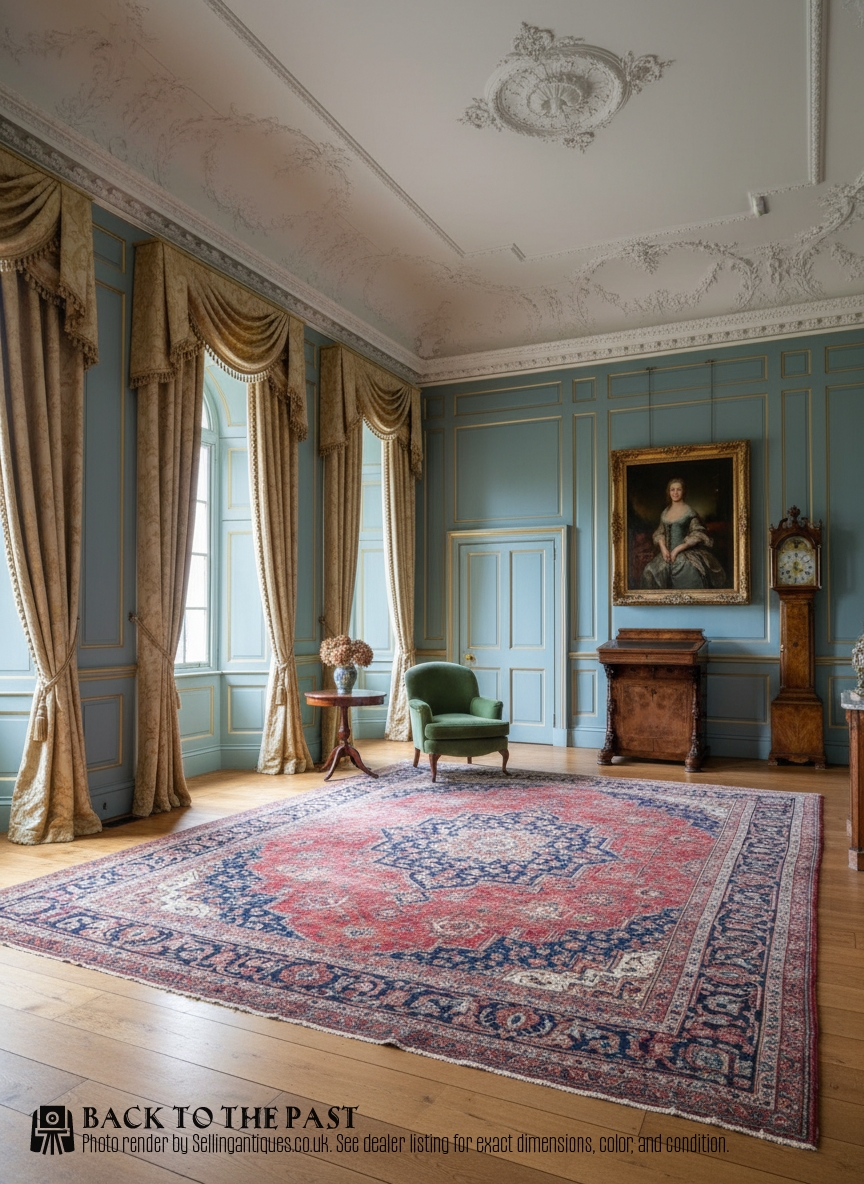
Because many nineteenth-century examples are finished on all sides as freestanding pieces, they can sit away from walls in the centre of a room. Their modest scale allows them to function in studies or living spaces.
Ensuring adequate clearance for the side drawers and any sliding top mechanism helps integrate the desk into a modern interior layout.