
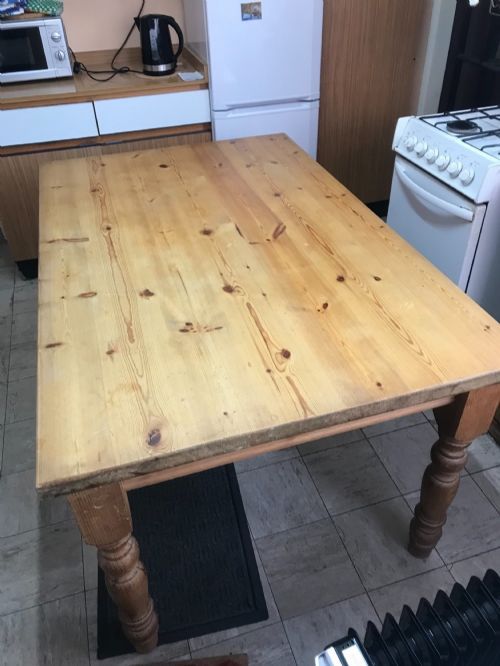
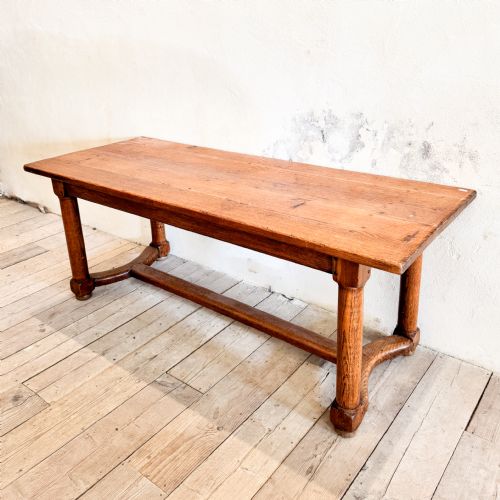


Six Leg Dining Table
A six leg dining table offers ample proportions and solid stability, bringing substantial presence to family meals.

Six Leg Dining Table
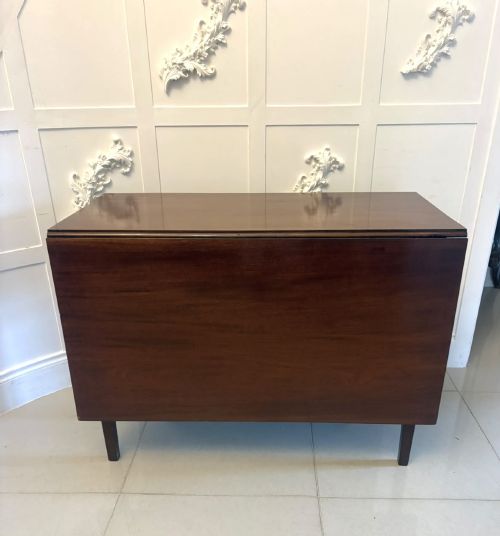
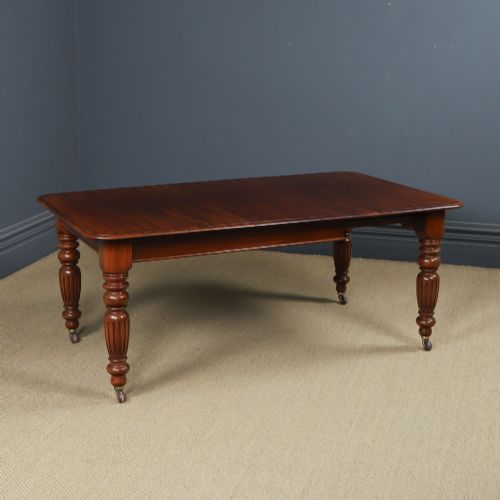
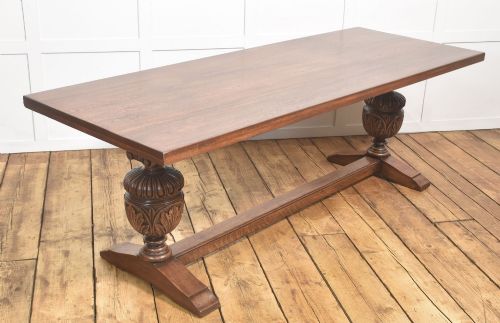
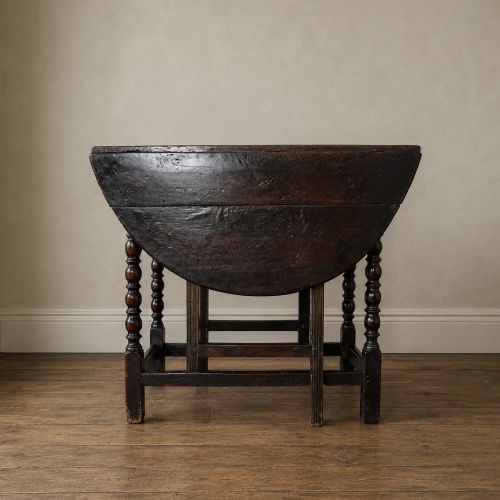
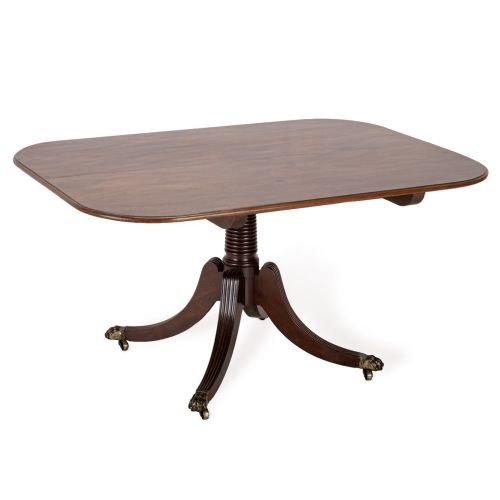
A six leg dining table appears in several distinct formats across this selection, most commonly as a sturdy oak gateleg drop leaf table or an extended mahogany dining piece from the Georgian and Victorian eras. These large boards accommodate gatherings easily, utilising extra structural supports for safety and balance.
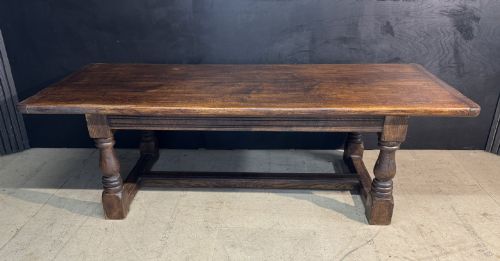
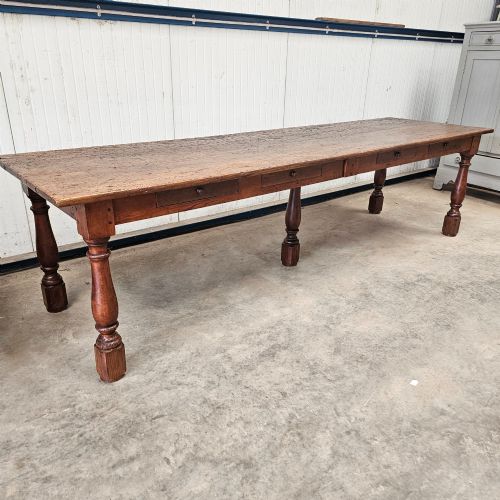
Alongside timber gateleg designs, the evidence records robust refectory tables in oak alongside cherrywood, chestnut, and pine kitchen versions. Buyers frequently encounter pieces hailing from the 18th, 19th, and early 20th centuries, reflecting centuries of domestic dining habits in English country houses and farmhouses.
Materials and Techniques
Makers constructed these tables primarily from dense hardwoods like oak and mahogany, supplemented by utilitarian softwoods such as pine for kitchen and farmhouse variants. Carpenters frequently employed turned legs, gateleg actions, and drop leaves to maximise space and flexibility.
Joinery methods relied on traditional framing techniques to support extended timber surfaces, occasionally incorporating brass fittings, iron reinforcement, or carved details depending on the stylistic period.
Listings feature timbers including oak, mahogany, pine, cherrywood, and chestnut spanning periods from the 17th century through the Edwardian era.
Assessing Quality
The highest quality examples demonstrate careful selection of figured timber grain, stable structural joints, and proportional harmony across all six legs. Superior pieces retain their original operating mechanisms, whether drop leaf actions or extension runners.
Lesser items may show heavy alterations, replacement timbers, or compromised structural integrity from decades of heavy domestic service. The degree of preservation in the original surface finish ultimately distinguishes standard utilitarian boards from finer formal dining furniture.
The Six Leg Dining Table Glossary
- Gateleg table
- A table with hinged leaves supported by legs that swing outward like gates. This clever folding mechanism allows the furniture to expand for meals and contract when floor space is required.
- Refectory table
- A long, narrow dining table traditionally used in monastic refectories and later adopted in large country houses. They typically feature sturdy stretcher rails connecting the lower legs for enhanced stability.
- Drop leaf
- A hinged flap of wood attached to the main table top that can be raised and supported. It provides versatile surface area adjustments without requiring separate storage leaves.
- Cabriole leg
- A furniture leg that curves outward in a convex arc and then bends inward in a concave arc, terminating in a pad or foot. This design references classical animal forms popular in Georgian cabinet making.
- Tilt-top table
- A table featuring a mechanism that allows the top to pivot to a vertical position when not in use. This clever engineering saved valuable floor space in smaller period rooms.
Six Leg Dining Table: Frequently Asked Questions
How do I seat six people comfortably?
Selecting a six leg dining table ensures sufficient clearance between supports for chairs and diners. Look for formats with adequate leg spacing to allow comfortable knee room.
Gateleg and extending models provide flexible footprints that adapt easily to different seating arrangements in daily use.
Are these tables suitable for everyday family dining?
Many examples originate from farmhouse and kitchen settings constructed from durable oak, pine, or chestnut. These robust timbers handle daily domestic life with ease.
Routine maintenance involves gentle cleaning and prompt wiping of moisture to protect the historic timber surfaces.
How can I tell a Georgian table from a Victorian one?
Georgian pieces often display refined mahogany construction, slender turned or cabriole legs, and understated classical proportions. Cabinet makers of this era focused on elegant joinery and figured wood grains.
Victorian iterations frequently present heavier proportions, extending mechanisms, and more robust structural framing designed for larger family households.
What is the advantage of six legs?
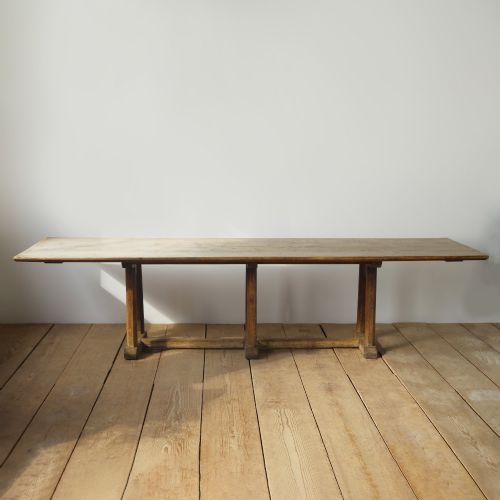
A sixth leg provides crucial central support for long timber boards, preventing the centre from sagging under weight. This extra reinforcement proves especially important on extending dining tables and drop leaf configurations.
It distributes weight evenly across the floorboards and maintains the structural alignment over decades of use.