
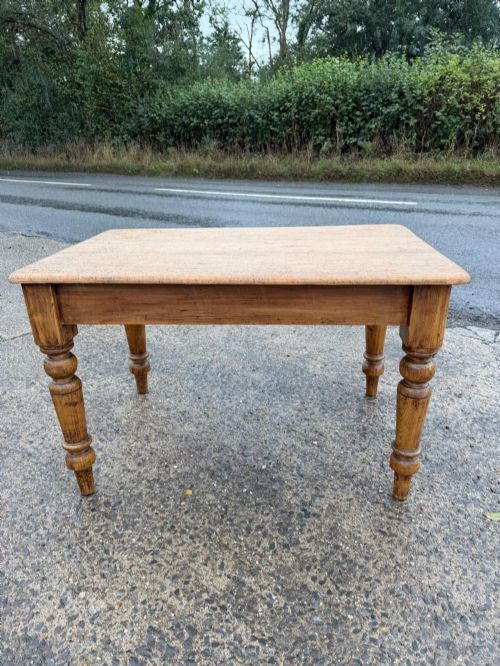
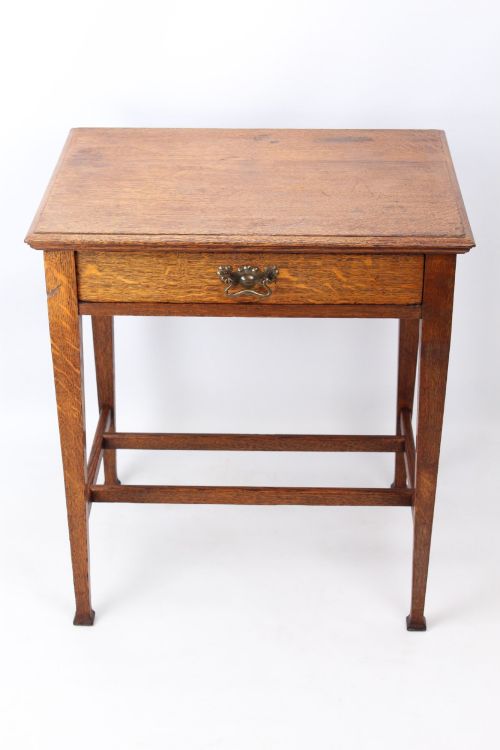
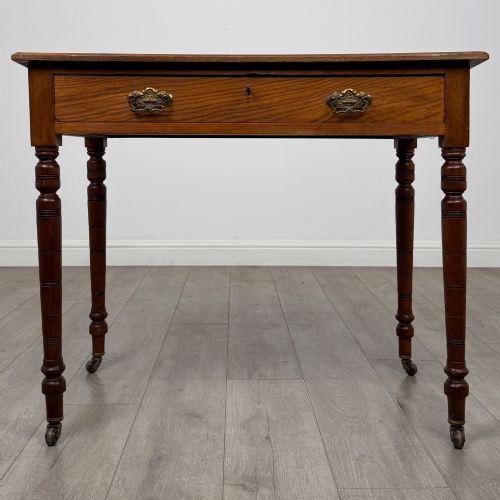
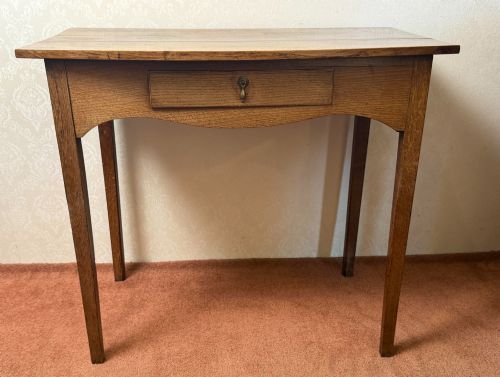
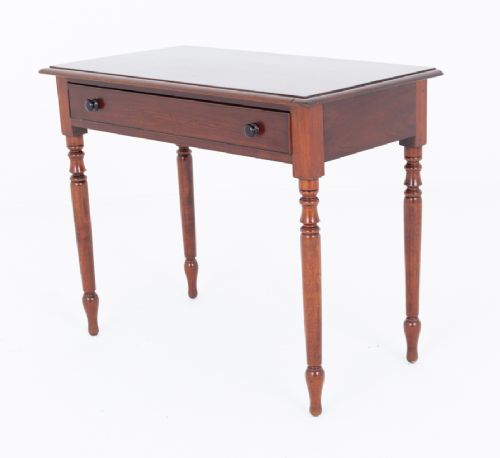
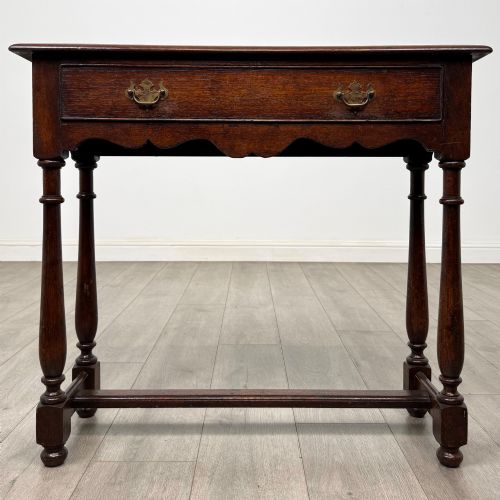

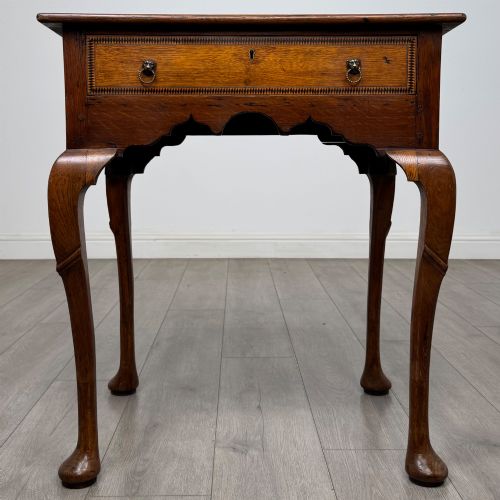
Single Drawer Writing Desk
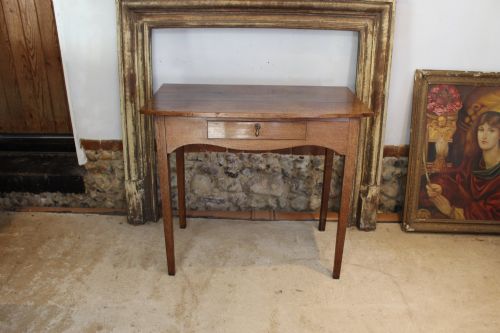
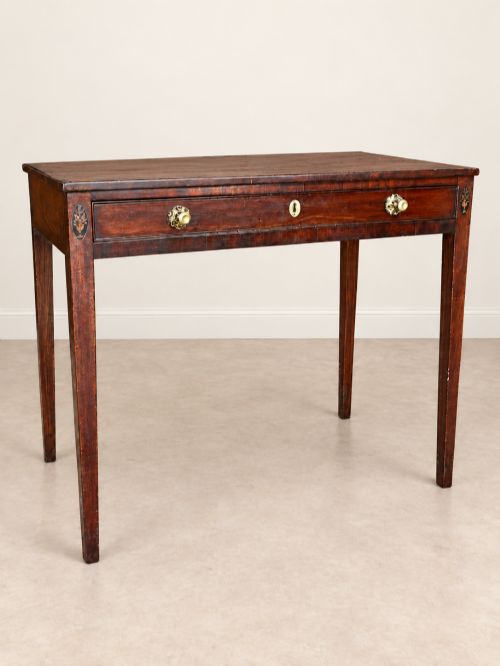
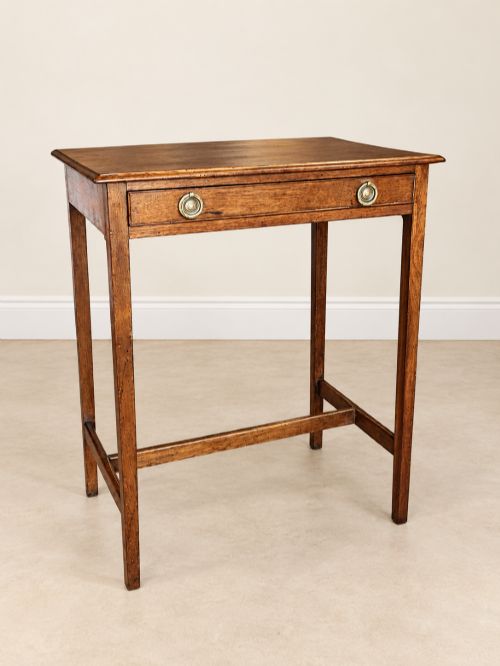
A single drawer writing desk offers compact workspace and traditional craftsmanship, spanning Georgian elegance down to sturdy Victorian pine.
Single Drawer Writing Desk
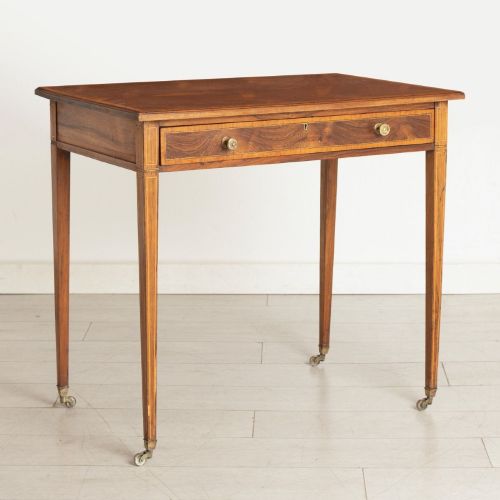
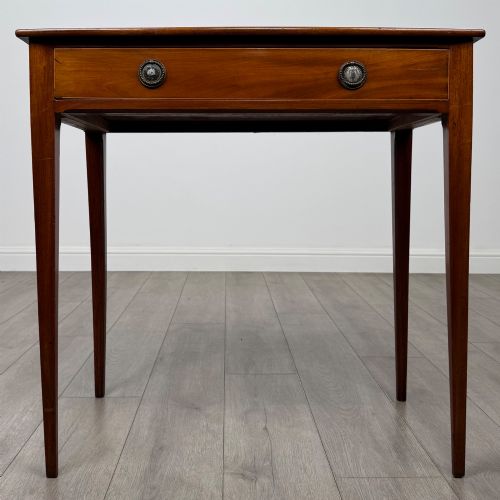
A single drawer writing desk combines the surface utility of a side table with discreet storage, appearing across the Georgian, Victorian, and Edwardian periods. Buyers search for these pieces to furnish studies, bedrooms, and halls with functional antique character.
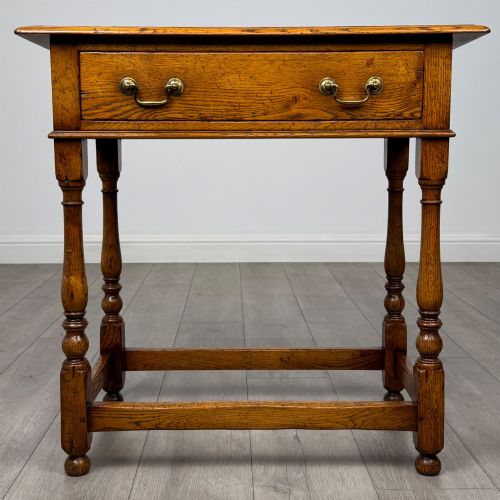
The most common examples on this page are mahogany and oak pieces from the eighteenth and nineteenth centuries, often taking the form of lowboys, side tables, or dedicated writing tables. These versions balance modest proportions with practical writing surfaces.
Regional variations span formal English mahogany designs to rustic pine farmhouse tables and occasional Italian or Empire period pieces. Each style retains the signature single frieze drawer beneath the main plank.
Materials and Construction
Cabinetmakers constructed these desks primarily in hardwoods like mahogany, oak, walnut, and rosewood, alongside softer utility timbers such as pine. Drawer construction typically relied on hand-cut dovetails to ensure durability under daily friction.
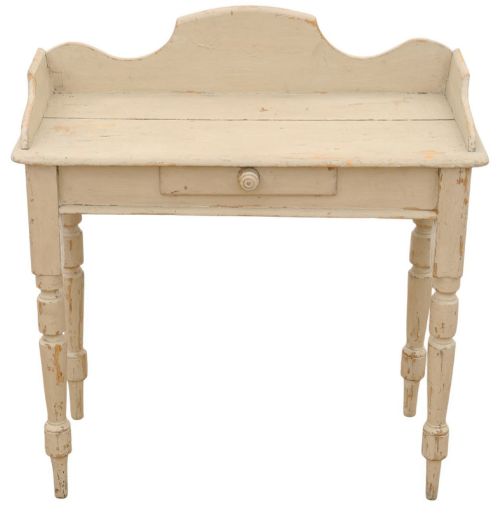
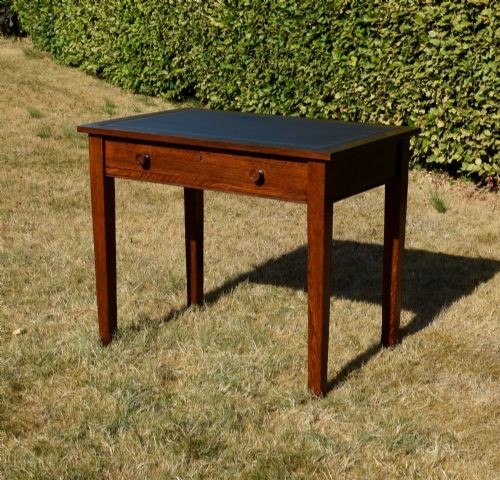
Surfaces frequently feature inset leather writing panels or polished timber tops, complemented by brass drop handles or turned wooden knobs. Certain country and Victorian examples retain original painted finishes on the base or legs.
Listings span the eighteenth, nineteenth, and early twentieth centuries, constructed in mahogany, oak, walnut, pine, rosewood, and yew wood.
Assessing Quality and Merit
Quality rests primarily in timber selection and the integrity of the joinery, distinguishing finely figured mahogany or quarter-sawn oak from utilitarian pine. Superior examples exhibit crisp moulding details and timber chosen for rich grain pattern rather than hidden patches.
The degree of original hardware, smooth drawer action, and untouched patination elevate a piece significantly. Altered legs or replaced drawer linings alter the historic integrity of the desk.
The Single Drawer Writing Desk Glossary
- Lowboy
- A small oak or mahogany table with one or more drawers, originating in the late seventeenth century and frequently used as a dressing or writing surface.
- Frieze
- The horizontal band running directly beneath the table top, which houses the single drawer in these writing desks.
- Dovetail
- A traditional joint formed by interlocking wedge-shaped fingers, used to construct strong drawer boxes.
- Patina
- The surface sheen and mellowing developed by antique timber over centuries of handling, exposure, and polishing.
- Quartersawn
- Timber cut radially from the log, producing a stable board with prominent growth rings and distinct figuring.
Single Drawer Writing Desk: Frequently Asked Questions
Can I use these desks for modern laptops?
Most antique writing desks offer sufficient surface area for a laptop, though traditional writing heights can sit slightly lower than modern office desks. Checking the internal clearance beneath the single drawer ensures adequate knee room.
Protecting the timber or leather surface with a suitable desk pad prevents scratches while maintaining the historic finish of the writing top.
What is the difference between a side table and a writing desk?
A side table prioritises display and general surface space, whereas a writing desk specifically incorporates a frieze drawer designed to hold writing implements and paper. Many period pieces served both functions interchangeably.
Looking for fitted interior compartments or an inset leather panel often signals a primary purpose for writing rather than general hall or side table use.
How should I care for an antique oak or mahogany desk?
Maintain the timber by applying traditional beeswax sparingly and buffing with a soft cloth to preserve the natural lustre of the wood. Avoid placing the desk near direct heat sources or strong sunlight, which causes timber to dry out and split.
Leather writing inserts benefit from occasional specialist conditioning to prevent cracking while retaining their original colour.