
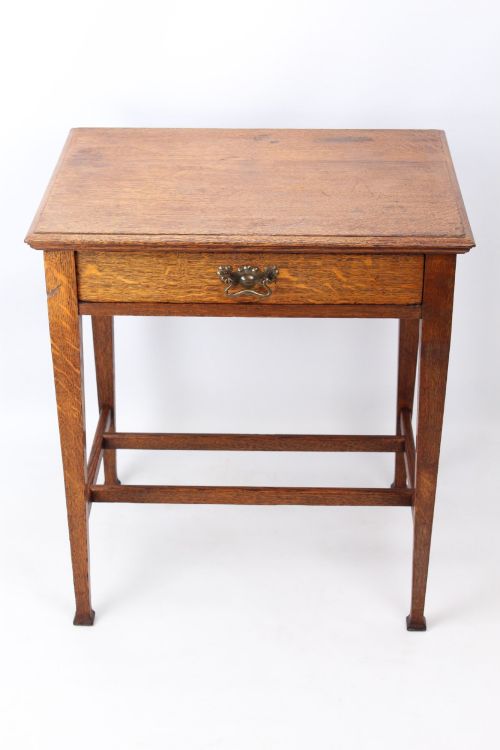
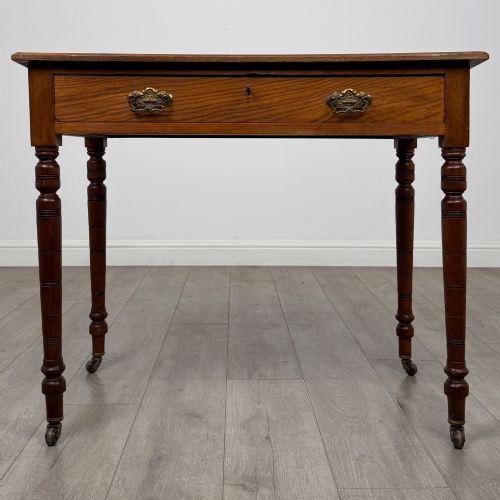
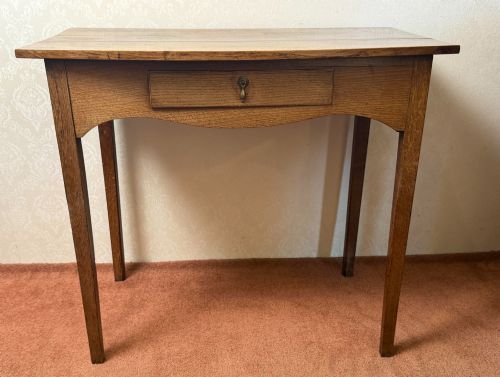
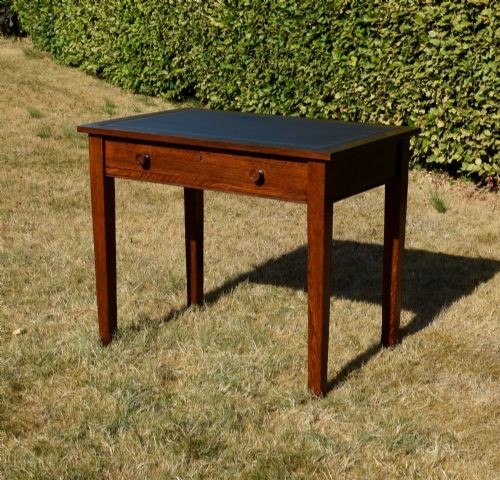
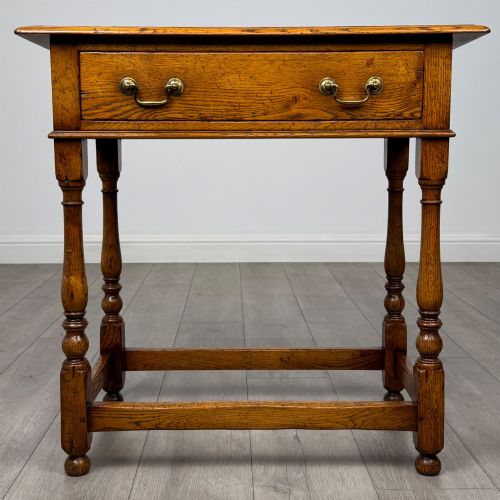
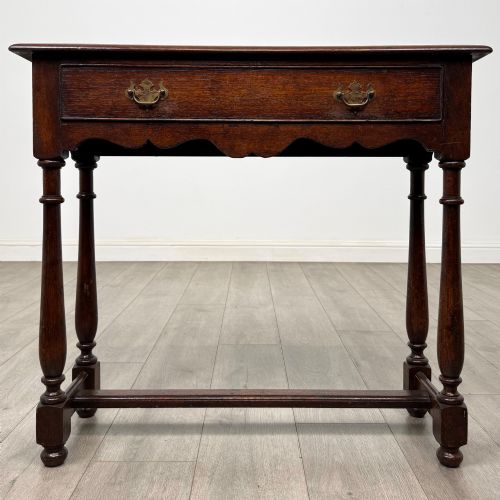
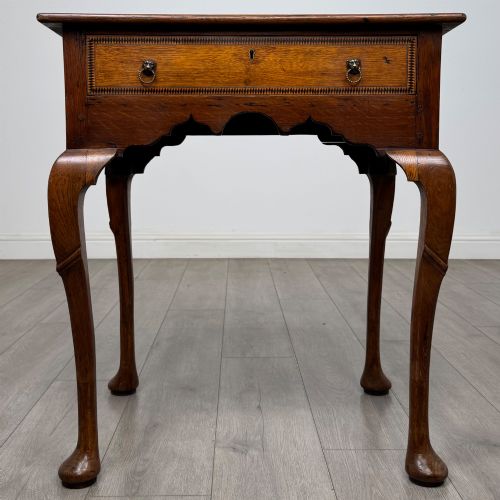
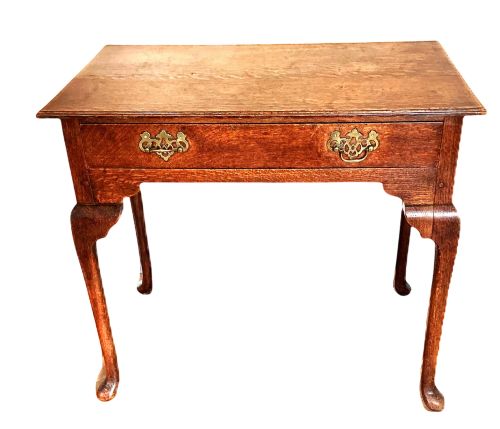
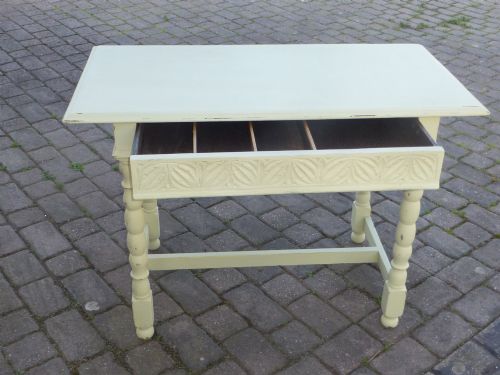


Single Drawer Oak Desk
A single drawer oak desk brings solid timber grain and a functional writing surface into a room without dominating the floor space.
Single Drawer Oak Desk
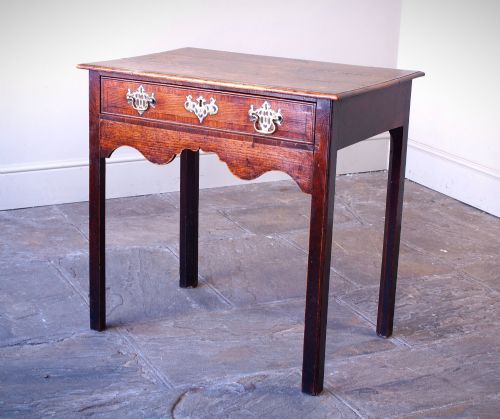
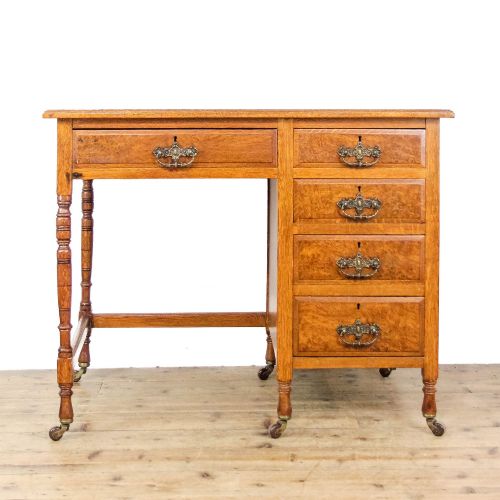
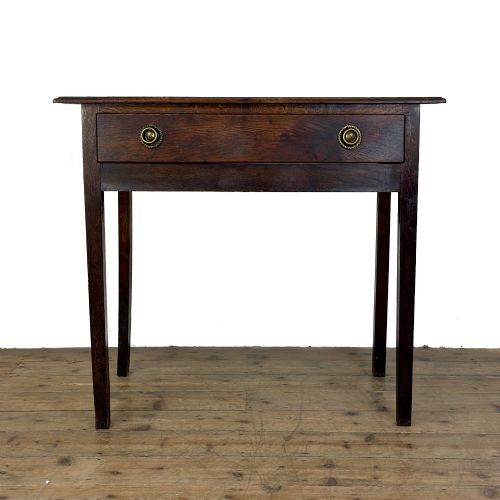
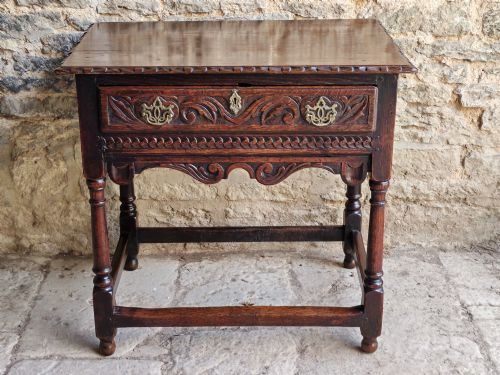
A single drawer oak desk serves as a compact writing table, side table, lowboy or console, uniting utility with domestic presence. The forms span seventeenth-century tavern tables, eighteenth-century Georgian lowboys, Victorian writing tables and Edwardian pieces.
Most examples encountered here lean towards English country styles and Georgian proportions, constructed with a single fitted drawer beneath the writing surface. The working heights and surface areas vary from intimate writing spaces to modest hall tables.
Assessing quality and proportion
The standard of a piece rests on the selection of the oak timber, the crispness of the mouldings and the fidelity of the period construction. Superior examples retain their original brass hardware, unwarped plank tops and smooth drawer action.
Distinctions in quality emerge in the balance of the legs, whether straight tapered, cabriole or turned, and the subtlety of the drawer framing. Later alterations or replaced timber components alter the integrity of the piece.
A few stubborn drawers stubbornly refuse to slide without their original iron-shod keys turned just so.
Holland and Sons
The Single Drawer Oak Desk Glossary
- Lowboy
- A small side table with one or more drawers, originating in the late seventeenth century and frequently used as a dressing or writing table. They typically feature graceful cabriole or turned legs.
- Writing Table
- A freestanding desk designed primarily for correspondence rather than storage, offering a flat surface and a shallow frieze drawer. These appear across Georgian, Victorian and Edwardian periods.
- Console Table
- A table designed to stand against a wall, sometimes secured to it, which functions as a hall or side piece. The form incorporates single or multiple drawers depending on the regional tradition.
- Fitted Drawer
- A drawer constructed specifically within the frame of a table or desk, often retaining original internal dividers or locks. The interior secondary woods often help indicate the period of manufacture.
- Golden Oak
- A description applied to timber finished to highlight the warm, honey-toned colour of the grain. This appearance is particularly common in pieces from the Edwardian era and the Arts and Crafts movement.
Single Drawer Oak Desk: Frequently Asked Questions
How do I date an oak desk?
Dating relies on examining the construction methods, handle hardware and timber preparation visible inside the drawer and beneath the top. Earlier pieces display hand-cut joinery and pegged joints, while later examples show more uniform machine sawing.
Changes in style from seventeenth-century turned legs to Georgian cabriole supports and Edwardian simplicity provide clear chronological markers.
Where should I place a lowboy?
A lowboy serves well as a writing surface in a study, a hall table for keys and post, or a dressing table in a bedroom. Its shallow depth allows it to sit comfortably in narrow corridors or smaller rooms.
Keep the piece away from direct heat sources and strong sunlight to protect the oak timber and any leather writing inserts.
Did these desks have locks?
Many writing tables and lowboys included a central drawer fitted with a brass lock to secure personal papers and valuables. Surviving keys or the presence of an escutcheon indicate this original security feature.
Drawers without locks were typical of simpler side tables adapted for general domestic utility rather than confidential correspondence.
How do I care for antique oak?
Maintaining oak furniture involves dusting with a dry cloth and applying natural beeswax sparingly to nourish the dry timber. Avoid silicone sprays and excessive moisture which can damage the polish and grain.
Stable room temperatures prevent the solid oak panels from splitting or warping as seasons change.